In the bitter cold of a February night in 1891, a police constable’s lantern cut through the darkness of a railway arch in Whitechapel, revealing a scene that would haunt London for decades. A woman lay in a pool of blood, her throat slashed, her life ebbing away. This was not just another murder in the East End—it was a crime that would reignite the terror of Jack the Ripper and lead investigators to the brink of capturing the world’s most infamous serial killer.
The woman was Frances Coles, a 31-year-old bottle-stopper turned streetwalker, whose life had been a desperate struggle against poverty and deception. Found at 2:15 AM on February 13, 1891, under the Great Eastern Railway bridge in Swallow Gardens, her death would become the final entry in the Whitechapel Murder file—a case that almost caught the Ripper, but ultimately slipped through the cracks of Victorian justice.
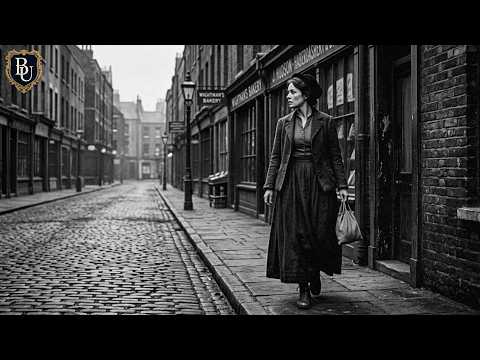
Frances was born in 1859 in Bermondsey, the daughter of a shoemaker and an Irish immigrant. Her childhood was marked by the grinding poverty of the Victorian working class, and by her early teens, her father had entered the workhouse, taking Frances and her younger brother with him for a time. The experience left a deep mark on her—she would visit her father in the workhouse for the rest of her life, maintaining a facade of respectability that hid the harsh reality of her existence.
By 1880, Frances had moved to Whitechapel, finding work as a bottle-stopper at a wholesale druggist’s. But the pay was meager, the work backbreaking, and soon she turned to prostitution to survive. She lived in common lodging-houses in Thrawl Street and Flower and Dean Street—streets that had become infamous during the Ripper murders of 1888. Known on the streets as “Carroty Nell” for her reddish hair, she used various aliases and kept her true life hidden from her family, especially her father, to whom she spun a tale of respectable work and lodging.
On the night of February 12, 1891, Frances’s life intersected with that of James Thomas Sadler, a 53-year-old fireman and merchant seaman. The two had known each other for years—Sadler was a former client—and they spent the day drinking together. But the day took a dark turn when Sadler was robbed in Thrawl Street by a woman in a red shawl and two accomplices. Frances was present but did not intervene, and the ensuing argument between her and Sadler led to their separation.
By midnight, Frances was homeless and penniless, evicted from her lodging-house for failing to pay the fourpence for a bed. She wandered the streets until about 1:45 AM, when she met Ellen Callana, a fellow prostitute, in Commercial Street. A man wearing a flat cap—a “cheese-cutter”—approached them. He struck Callana in the face when she refused him, then turned his attention to Frances. Despite Callana’s warning, Frances went with him, walking toward the Minories. She was never seen alive again.
At 2:10 AM, PC Ernest Thompson, on only his second solo patrol, heard footsteps retreating into the darkness as he approached the railway arch in Swallow Gardens. He found Frances Coles on the ground, her throat cut three times. She appeared to open and close one eye as he knelt beside her, but she died before help arrived. The killer had vanished into the night, and the investigation that followed would grip the nation—and nearly ensnare Jack the Ripper himself.
The investigation moved with the urgency that Whitechapel had come to expect. Within hours, Detective Inspector Henry Moore of Scotland Yard’s Criminal Investigation Department arrived at the scene, and by dawn, the machinery of a full murder inquiry was in motion. Superintendent Thomas Arnold took overall charge, and the name James Thomas Sadler was already circulating among the lodging-house keepers of the district.
Sadler was arrested at the docks on February 14, taken to Leman Street police station, and charged with wilful murder. The news spread like wildfire. A crowd gathered outside the station, hostile and hungry for a scapegoat after three years of unsolved killings. “Jack the Ripper has been caught at last!” the newspapers cried, and the pressure on the police to secure a conviction became immense.
The evidence against Sadler, however, was circumstantial at best. Witnesses placed him with Frances on the days before her death. A waiter testified that a man identified as Sadler had staggered into his coffee house at 6 AM on the 13th, drunk and complaining of broken ribs. But no one had seen Sadler at Swallow Gardens. No weapon was found. And the medical evidence, when it came, would prove deeply troubling to the prosecution.
Dr. George Baxter Phillips, the divisional surgeon who had performed post-mortems on several of the 1888 victims, conducted the examination of Frances Coles. His findings were precise and damning in their implications. The throat had been cut three times—deep, decisive wounds inflicted with a sharp blade. There were bruises on the back of her head, consistent with being thrown violently to the ground before the knife was used. Death had come quickly from loss of blood.
But what Phillips did not find was equally significant. There was no mutilation of the abdomen. No post-mortem dissection. None of the hallmarks that had defined the Ripper’s work in 1888. “The wounds do not correspond with those of the Whitechapel murders of 1888,” Phillips would later testify. “They bear no resemblance to that series.”
The inquest opened on February 14 at the Working Lads’ Institute in Whitechapel, with Coroner Wynne Edwin Baxter presiding—the same coroner who had overseen the inquests of Mary Ann Nichols, Annie Chapman, and Elizabeth Stride. The courtroom was packed. The press gallery was full. Every detail was reported, analyzed, and debated across the country.
Ellen Callana took the stand and described the man in the cheese-cutter cap. She had refused him, she said, and he had struck her in the eye. Frances had gone with him anyway. “I warned her not to go,” Callana testified. “But she went.” The man was never identified. Sadler was not that man—or at least, no evidence could prove he was.
Other witnesses painted a picture of Sadler’s movements. Duncan Campbell, a seaman, testified that he had bought a folding knife from Sadler at about 10:30 AM on February 13—hours after the murder. The blade was clean. If Sadler had used it to kill Frances, where was the blood? The prosecution had no answer.
Sarah Fleming, the deputy of the lodging-house at 8 Whites Row, confirmed that Frances had been evicted at midnight for lack of fourpence. The timeline was tightening, but the gaps remained. Between midnight and 1:45 AM, Frances’s movements were a blank. And between 1:45 and 2:15, the only witness was a man who had vanished into the shadows.
On February 27, the jury returned its verdict: wilful murder against some person or persons unknown. They added a commendation for the police, praising their conduct in apprehending Sadler—a curious gesture, given that the man they had arrested was never brought to trial.
At the Thames Police Court, the case against Sadler collapsed under its own weight. The defence hammered at the gaps: the alibi witnesses who placed him near the docks, the medical evidence that undermined the Ripper connection, the absence of any direct link to the scene. On March 3, 1891, the prosecution announced that no further evidence would be offered. Sadler was discharged and walked free.
The crowd outside the court was furious. They had wanted a monster, and they had been given a man who might have been nothing more than a drunken sailor in the wrong place at the wrong time. The newspapers that had crowned him Jack the Ripper now faced the threat of libel suits. Sadler himself pursued at least one newspaper for damages—one of the earliest recorded cases of media accountability in a sensational murder case.
But the question that lingered, the one that would not die, was the one Dr. Phillips had raised in his testimony. If Sadler was not the Ripper, then who was? And if the Ripper had not killed Frances Coles, then her murderer was still out there—another unknown face in the endless, crowded darkness of Whitechapel.
The file remained open, but the investigation had effectively ended. No other suspect was ever named. The man in the cheese-cutter cap, the one Ellen Callana had warned Frances against, was never found. The footsteps PC Thompson heard retreating into the night belonged to someone who simply disappeared into the labyrinth of the East End.
Frances Coles was buried in the East London Cemetery at Plaistow, a few yards from the grave of Elizabeth Stride—one of the Ripper’s canonical victims, whose inquest had also been overseen by Wynne Baxter. The proximity of the two graves was noted in the press at the time, a grim coincidence that seemed to bind the two women together in death as they had been bound in life by the same streets, the same poverty, and the same violence.
The funeral itself became a spectacle. An estimated 15,000 people gathered at the cemetery on the day the burial was first announced, only to find it had been postponed. When the actual ceremony took place, the crowd was even larger—perhaps 20,000 by contemporary estimates. Most of them had never known Frances Coles. They came because the weight of three years of unsolved murders had found, at last, a place to gather.
James Thomas Sadler returned to his life. He had been held for nearly three weeks, branded in the press as Jack the Ripper, and released without charge. In December 1891, he was involved in an assault on his wife, Sarah. In May 1892, he faced threats against her. They separated permanently in January 1893, and Sadler took lodgings at 108 Farad Street, Camberwell.
These facts belong to the record that follows Sadler beyond the Coles case. They shape the portrait of a man who was arrested for murder and released—but they do not answer the question of whether the arrest was justified or the identification accurate.
The police file on the Whitechapel murders, which had begun in 1888 as an administrative response to a series of killings in a concentrated area, accumulated entries from April 1888 onward. It reached eleven names before it was closed. Frances Coles was the last.
No conviction was ever obtained for any of the murders recorded in that file. No individual was ever definitively identified as the perpetrator of any of the major killings. The file was closed. But the questions it raised were not.
The legal proceedings in the Coles case concluded with Sadler’s release on March 3, 1891. No further legal action followed. The inquest’s verdict—wilful murder against some person or persons unknown—remained the final official characterization of the case. It was never revisited by any coroner, court, or official body in the years that followed.
The case file, including the signed statement of James Thomas Sadler, is preserved under reference C621 983 in the National Archives. The joint report of Inspector Henry Moore and Superintendent Thomas Arnold, dated March 3, 1891, is part of the same collection. The reconstructed inquest proceedings, drawn from contemporary newspaper reports, are accessible through archival resources maintained by researchers in the field.
What the record does not contain is the identity of the man Ellen Callana described wearing the cheese-cutter cap in Commercial Street in the early hours of February 13, 1891. It does not contain an explanation for why Frances Coles, despite Callana’s warning, agreed to accompany a man who had just struck Callana in the face.
It does not contain an account of what happened between Frances Coles and the man in the cheese-cutter cap in the interval between Commercial Street and Swallow Gardens. The record contains only the beginning and end of that roughly thirty-minute interval. The meeting in Commercial Street at 1:45 AM, and PC Thompson’s discovery at the railway arch at about 2:15 AM.
What happened between those two points in the streets of Whitechapel on that cold February morning in 1891 was witnessed by no one whose testimony entered the documentary record. And it was never reconstructed with any certainty.
James William Coles remained a inmate of the Bermondsey workhouse on Tanner Street. Every Friday, Frances had crossed the Thames to visit him. Every Sunday, she had walked with him to church. He accepted her story of respectable work and lodging without question, and the records suggest he died without ever knowing the truth of her life in Whitechapel.
What the file cannot tell us is what Frances carried with her in those final weeks—the weight of a double life maintained for years, the exhaustion of deception, the small dignities she preserved for a father who never stopped believing in her.
Her grave lies a few yards from Elizabeth Stride’s in the East London Cemetery at Plaistow. Two women, bound in death by the same streets, the same poverty, the same violence. The file closed with Frances’s name. But the questions it raised were never answered.
What do you think the record leaves out—and does the silence itself tell us something about the lives history chooses to forget?
Report this article
Select a reason for reporting:






