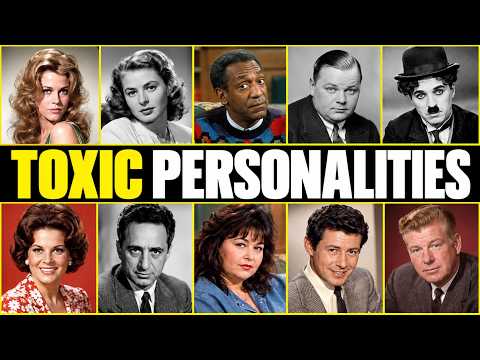
In the golden age of television, fame was a double-edged sword. One wrong move—a hug, a joke, a photograph—could turn a beloved star into the most hated person in America overnight. The backlash was swift, organized, and often brutal, costing careers and sometimes lives. These are the stories of 13 icons who faced the wrath of a nation, and the moments that defined their downfalls.
Some earned every bit of the hatred. Others were victims of circumstance, their private lives clashing with public personas. But all of them discovered that in the court of public opinion, perception is everything—and forgiveness is rare.
Number 13: Sammy Davis Jr. He was a trailblazing entertainer, a man who broke racial barriers in Las Vegas and beyond. But in August 1972, a spontaneous hug with President Richard Nixon at the Republican National Convention ignited a firestorm. For many black Americans, already disillusioned by Nixon’s civil rights record, the image was a betrayal. “He was booed at performances. He lost a substantial part of his audience.” Davis had believed he could influence change from within, but the public saw only a cozy embrace with the enemy. He spent years trying to recover, never fully succeeding. Yet his life was a series of battles: hate mail after marrying May Britt in 1960, abuse after converting to Judaism, and a car crash that cost him an eye. Through it all, he kept performing, a testament to resilience in the face of relentless scrutiny.
Davis’s story is a reminder that even the most gifted can be reduced to a single moment. But he wasn’t alone. The list continues with those who fell from grace for reasons that, decades later, seem almost absurd.
Number 12: Jimmy Swaggart. He built a television ministry empire, preaching morality while condemning others. In 1988, his hypocrisy was exposed when a private investigator—hired by a rival preacher he had accused—photographed him with a prostitute. His tearful, vague confession—“I have sinned against you and my God”—became a national punchline. Defrocked and disgraced, he was caught again in 1991, this time claiming the Lord told him it was “none of their business.” The ministry survived, but his reputation never did. The irony? It was a war between preachers that brought him down, a competitor using his own tactics.
Swaggart’s downfall was as much about schadenfreude as morality. The public delighted in seeing a self-righteous figure humbled. But for others on this list, the hatred was less about justice and more about a changing world.
Number 11: Jim Bakker. With his wife Tammy Faye, Bakker ran PTL, a televangelist empire that raked in over $100 million a year. But in 1987, a sex scandal and financial fraud unraveled everything. He sold lifetime memberships to a theme park hotel that didn’t exist, defrauding thousands of small donors. Convicted of fraud, he served five years. The anger was visceral because the victims were ordinary people. Tammy Faye, once ridiculed, was later reassessed for her compassionate work with AIDS patients—a rare redemption arc. Bakker returned to TV selling survival food, a far cry from his glory days.
The Bakker saga highlighted the dark side of televangelism, but it was the betrayal of trust that stung most. As we delve deeper, we’ll see how some stars were destroyed by their own actions, while others were casualties of societal shifts.
Number 10: Arthur Godfrey. In 1953, Godfrey was the biggest star on television, his warmth selling products and winning hearts. But live on air, he fired singer Julius La Rosa, declaring it his “swan song”—without telling La Rosa first. The public was horrified. “It turned out that a great many people did not enjoy watching a powerful man humiliate an employee on camera.” Godfrey’s folksy image crumbled; ratings plummeted, and he was finished as a major figure within years. His explanation—that La Rosa had “lost his humility”—only made it worse. It was a masterclass in self-destruction, proving that authenticity, once questioned, is impossible to reclaim.
Godfrey’s fall was swift and complete, a cautionary tale about the perils of live television. But the stories that follow are even more tangled, involving love triangles, political stands, and the unforgiving nature of fame.
Number 9: Eddie Fisher. In the 1950s, Fisher was a chart-topping singer with a wholesome image, married to Debbie Reynolds. When his best friend Mike Todd died, Fisher comforted Todd’s widow, Elizabeth Taylor—and soon left Reynolds for her. The scandal was massive: his TV show was canceled, record sales collapsed, and he was branded a homewrecker. Taylor later left him for Richard Burton, and Fisher never recovered. The coverage ignored the grief that drove them together, focusing instead on betrayal. Fisher’s career was over before he was 35, his legacy reduced to a single tabloid headline.
Fisher’s story is one of passion and poor choices, but it also reveals how the media shapes narratives. The public loves a villain, and Fisher fit the bill perfectly. Yet, as we’ll see, some villains are made, not born.
Number 8: Roseanne Barr. She is the rare figure who managed to become the most hated woman in America twice, thirty years apart, for entirely different reasons. In July 1990, she sang the national anthem at a San Diego Padres game, deliberately off-key, then spat and grabbed her crotch in a crude imitation of a ballplayer. The reaction consumed the media for a week; even President George H.W. Bush called it “disgraceful.” She was burned in effigy. Sponsors complained. And yet, it cost her nothing durable—because in 1990, there was no mechanism for outrage to reach advertisers within hours.
Then came May 2018. Her revival of Roseanne had premiered to over 18 million viewers, the biggest comedy launch in years. ABC had already ordered a second season. Then she posted a racist comparison about a former White House advisor on social media in the early hours of the morning, and by that afternoon, ABC had canceled the series. The cast was out of work instantly; the show was rebuilt around them without her. She lost the same series twice, both times over her own conduct—and she has spent the years since arguing about both incidents rather than letting either go.
What gets lost in the noise is that Roseanne was, at her best, a genuinely important American comedian. The original series was the only network show of its era that took working-class life seriously—people worrying about a utility bill, fighting over a paycheck. She fought the studio hard to keep it that way. That is a real achievement, and it is why 18 million people tuned in for the revival. It also does not travel in the same sentence as the tweet, and she has never found a way to make it.
Number 7: Elia Kazan. He was one of the most important directors in American theater and film—the man behind A Streetcar Named Desire, On the Waterfront, and East of Eden, and a co-founder of the Actors Studio. But in 1952, he appeared before the House Un-American Activities Committee and named eight people who had been in the Communist Party with him in the 1930s. Naming names ended careers. Several of the people he identified did not work again for years; some never did. He then took out a full-page advertisement in the New York Times defending his decision and encouraging others to do the same—converting a private compromise into a public position.
The hatred within his own profession lasted the rest of his life. When he was given an honorary Academy Award in 1999 at age 89, a significant portion of the audience refused to stand or applaud, and it was televised. The room split on camera, 47 years after the testimony. Nick Nolte and Ed Harris sat with their arms folded. Karl Malden and Warren Beatty stood. Martin Scorsese and Robert De Niro presented the award. Nobody in that room was confused about what was being argued over, in front of a billion people.
Kazan never apologized. He said repeatedly that he would do it again—which is at least consistent, and which is also why nobody forgave him. The argument he made was that the Communist Party was a genuinely authoritarian organization and that exposing it was a public duty. A number of serious people agreed with him. The difficulty is what the testimony actually purchased. Kazan kept working at the highest level for another thirty years, while several of the men he named lost theirs. And On the Waterfront, made two years later, is a film about a man who does the right thing by informing. He always denied it was a defense of his own conduct. Almost nobody ever believed him.
Number 6: Anita Bryant. She was a singer and beauty queen who became one of the most familiar faces on American television through the 1960s and ’70s, largely as the public face of Florida orange juice. Then in 1977, she led a campaign in Dade County, Florida, to repeal a local ordinance banning discrimination on the basis of sexual orientation. The campaign was called Save Our Children, and its central argument was that gay people were a danger to the young. It won the repeal. It also made her the single most hated public figure in gay America—and destroyed her career completely.
There was a national boycott of Florida orange juice, effective enough that the citrus commission eventually did not renew her contract. She was hit in the face with a pie on live television in 1977, and her response—a prayer for the man who had done it—was widely replayed. Her recording career ended. Her bookings dried up. She divorced, which cost her the remaining support of the conservative churches who had backed her. She spent the following decades in relative obscurity, attempting business ventures that mostly failed.
The campaign she ran had consequences far beyond her own career. The repeal energized similar efforts in several states, and it also did something its organizers did not anticipate: it handed the gay rights movement in America a single identifiable opponent and a national focus. The boycott that followed was one of the first genuinely effective consumer campaigns of its kind, and it is still studied as a model. Harvey Milk and others pointed to her explicitly as the best organizing tool they had been given. She said decades later that she regretted the tone rather than the substance. Her own granddaughter came out publicly in 2021 and spoke about the family fracture it caused. Bryant, by then in her 80s, did not change her position. A woman whose career was destroyed by a campaign against gay people ended up with the same argument inside her own family fifty years on—and the outcome there was not a boycott or a pie, but an estrangement.
Number 5: Charlie Chaplin. For thirty years he was the most recognizable human on earth, then America turned. He never took citizenship, was probed by J. Edgar Hoover for years, and a 1943 paternity suit—despite blood tests excluding him—still found against him. In 1952, while he sailed to Europe to promote Limelight, the Attorney General revoked his re-entry permit. He did not return for twenty years. When he finally accepted an honorary Oscar in 1972, the ovation lasted twelve minutes—the longest in ceremony history. By then, almost everyone who had driven him out was dead.
Number 4: Fatty Arbuckle. In 1921, he was as beloved as Chaplin. After actress Virginia Rappe died following a party in his suite, Hearst’s papers invented lurid details. Tried three times, he was acquitted in 1922—the jury issuing a written apology. It made no difference. His films were pulled, he was banned by the industry’s new censorship body, and no studio would employ him. He died at 46, the day after signing a new contract. The scandal, Hearst reportedly said, sold more newspapers than the sinking of the Lusitania.
Number 3: Bill Cosby. For thirty years, he was America’s most trusted man on television. Then, in late 2014, a comedian’s routine went viral, and dozens of women came forward with accounts spanning five decades. Convicted in 2018, he served nearly three years before Pennsylvania’s Supreme Court overturned the verdict in 2021 on procedural grounds—not a finding of innocence. Reruns were pulled, degrees rescinded, and his legacy remains comprehensively rejected.
Number 2: Ingrid Bergman. In 1949, she left her husband for director Roberto Rossellini and became pregnant. The backlash was extraordinary. A U.S. Senator denounced her on the Senate floor as a “powerful influence for evil.” She did not work in an American film for seven years. She returned in 1956 to win her second Oscar. In 1972, the Senate formally apologized.
Number 1: Jane Fonda. In July 1972, she traveled to North Vietnam and was photographed sitting on an anti-aircraft gun. That image made her “Hanoi Jane” for over fifty years. She has apologized repeatedly for the photograph while never retracting her opposition to the war. She won two Academy Awards and built an enormous second career—yet remains genuinely hated by millions over a picture taken when she was 34.
Looking at all thirteen, the striking thing is how few were hated for the worst thing they actually did. The machinery of public hatred has never had much to do with the seriousness of the offense—it has to do with whether the story is easy to tell, and whether somebody with a printing press or a network decides to tell it. Which of these downfalls do you think was the most unjust—and which one did they truly earn?
Report this article
Select a reason for reporting:






