The explosion tore through the ruins like a thunderclap from hell, shrapnel screaming through the frozen air. General Friedrich Paulus, a man who had risen from academic strategist to commander of an entire army, felt the searing pain as metal ripped into his flesh. Around him, the city of Stalingrad—once a thriving industrial hub—now lay in utter desolation, a graveyard of shattered buildings and frozen corpses after more than six months of brutal siege.
But the physical wound was nothing compared to the realization that was about to dawn on him and his men. The Sixth Army was not just losing ground; they were losing everything.
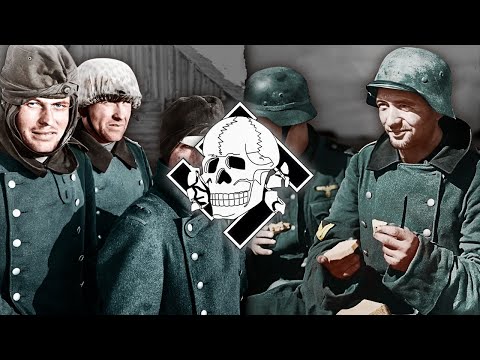
Paulus watched helplessly as his troops, positioned west of the city, began to falter. Soviet forces advanced relentlessly toward the Serita River, tightening the noose day by day. The orders from Berlin were chillingly clear: “Resist to the last man and the last bullet.” Surrender was treason, punishable by death. Hitler’s refusal to authorize any retreat had already sealed the fate of attempts to break the Soviet encirclement.
In the frozen streets, German soldiers huddled in basements and ruins, their breath misting in the icy air. They were starving, wounded, and stricken with typhus. The city had become a tomb, the stench of decay permeating everything. “Comrades, we must hold out to the last bullet. It is God’s will,” came the absurd order over the radio. Radio operator Gottfried Graber listened in horror, realizing this was not a military command but a death sentence disguised as heroism.
On January 30th, 1943—the tenth anniversary of Hitler’s rise to power—the soldiers of the Sixth Army finally understood the truth. Nobody was coming to rescue them. No aerial support, no relief force. They were alone in the cauldron, surrounded by an enemy that grew stronger by the hour. Paulus, now gravely ill with dysentery, could barely direct his troops, yet he refused to relinquish command.
That same day, he sent a desperate message to Hitler. The response was a promotion to field marshal—a cynical gesture meant to push him toward suicide rather than surrender. Hitler believed no German field marshal had ever surrendered, and he expected Paulus to uphold that tradition. But Paulus would become the first.
The scene inside the pocket was apocalyptic. Soldiers hid in the basement of a department store, the Univermag, surrounded by rubble and death. Soviet soldiers descended into the underground, offering surrender. On February 2nd, 1943, Paulus accepted. Before marching into captivity, the German soldiers were forced to clear the rubble and stack their dead comrades in piles for cremation. Of the more than 90,000 who surrendered, only about 6,000 would ever see Germany again.
But the story of Stalingrad was not just one of military defeat—it was a human tragedy of unimaginable proportions. The letters from the frozen front lines reveal the despair, the doubt, and the shattered faith of men who had believed in Hitler’s promises. As one soldier wrote, “If what we were promised isn’t true, then Germany is lost.”
The Sixth Army had marched into Stalingrad expecting victory. Instead, they found a frozen hell from which there was no escape.
The prisoners’ columns stretched for miles across the white steppe, a river of gray-coated men shuffling through the snow. Guards on horseback circled them like wolves, rifles slung across their backs. Those who stumbled and could not rise were left where they fell, their bodies quickly swallowed by the drifting snow. The march itself was a weapon, and the Soviets wielded it without mercy.
At night, the prisoners were herded into open fields or roofless barns. There was no food, no medicine, no warmth. Men huddled together for survival, their breath freezing on their beards, their fingers blackening with frostbite. In the morning, the dead were dragged aside and the column moved on. The living envied the dead.
When they finally reached the railheads, the nightmare only deepened. Boxcars built for cattle were packed with eighty or a hundred men each, the doors sealed shut. The journeys lasted days, sometimes weeks. Of the first 30,000 sent east in this manner, fewer than half arrived alive. The rest were buried in shallow graves along the tracks, their names recorded in Soviet ledgers that would not surface for decades.
In the camps—Beketovka, Krasnoarmeysk, and later the distant wastes of Uzbekistan and Kazakhstan—the survivors faced a new enemy: starvation. The daily ration was a thin soup of cabbage leaves and water, occasionally supplemented by a piece of black bread the size of a fist. Dysentery and typhus swept through the barracks with terrifying speed. The medical huts were empty of supplies, staffed by exhausted Soviet doctors who could do little more than watch.
It was in these camps that the true scale of the tragedy revealed itself. In Beketovka alone, half of the 27,078 prisoners registered between February and June 1943 would die. The guards kept count with chalk marks on wooden boards, erasing the dead each morning as if they had never existed. Burial parties worked through the night, stacking corpses in frozen pits until the ground thawed enough to cover them.
Yet amid the horror, strange alliances formed. Some Soviet guards, themselves barely fed, shared what little they had with the prisoners. A few German officers, recognizing the futility of hatred, began to speak with their captors—not as enemies, but as men who had seen the same abyss. It was from these conversations that the seeds of the National Committee for a Free Germany would grow.
General Walther von Seydlitz was among the first to cross that line. From his prison hut, he watched the other generals—Paulus included—cling to their tattered loyalty to Hitler. He saw what they refused to see: that the Germany they had sworn to defend no longer existed. The Führer had abandoned them, sacrificed them for a symbol. And symbols, Seydlitz understood, could be replaced.
In Moscow, Soviet intelligence officers took note of his discontent. They had plans for men like Seydlitz—men whose disillusionment could be turned into a weapon. The League of German Officers was born in a re-education center at Lunovo, its founders carefully selected, its message broadcast across the front lines. “German soldiers,” the leaflets read, “your generals have seen the truth. Hitler is leading you to destruction. Surrender, and live.”
The Gestapo’s response was swift and brutal. Seydlitz’s family was arrested, his property seized, his name struck from the rolls of the officer corps. In Berlin, Field Marshals were summoned to sign declarations of loyalty, their signatures collected like ransom notes. But the damage was done. The leaflets fell from the sky like snow, and soldiers on the Eastern Front began to whisper the unthinkable: What if the war is already lost?
Hitler’s reaction was volcanic. He summoned Himmler to the Berghof and demanded a full report on the leaflets’ origin. The Gestapo had already confirmed the signatures were genuine—Seydlitz, Korfes, Latmann, and others. “The contemptible traitor to our holy cause,” the field marshals’ declaration read, and one by one they signed: Rundstedt, Rommel, Kleist, Busch, Weichs, Manstein. Their pens scratched across the paper like knives, but none of them could undo what had been done.
In the camps, the Soviet strategy bore fruit. The re-education centers at Lunovo and later Krasnogorsk became strange academies of disillusionment. German officers who had once commanded divisions now sat in lecture halls, listening to Marxist theory and debating the future of their homeland. Some resisted, clinging to their oath. Others, like Seydlitz, embraced the new faith with the fervor of converts.
“I no longer believe in Hitler,” Seydlitz wrote in a private memorandum. “But I believe in Germany. And Germany must survive, even if the Führer does not.”
The National Committee for a Free Germany broadcast its message across the Eastern Front, its radio signals cutting through the static of war. “German soldiers, your generals have seen the truth. Lay down your arms. Join us in building a new Germany.” The broadcasts were a gamble, and the Soviets knew it. If the German soldiers believed them, the front might crack. If they didn’t, the committee would be exposed as a puppet of Moscow.
But the seeds had been planted. In the trenches, soldiers passed the leaflets hand to hand, reading them by the light of burning buildings. Some tore them up in disgust. Others folded them carefully and hid them in their tunics, next to their letters from home.
Back in Berlin, Goebbels delivered his Sportpalast speech on February 18th, 1943—a desperate attempt to rally a nation reeling from Stalingrad. “Do you want total war?” he screamed, and the audience roared back its approval. But the applause could not mask the truth. The war had turned, and everyone knew it.
In the prisoner camps, the survivors of Stalingrad watched the news arrive with grim satisfaction. They had been sacrificed for a symbol, and now that symbol was crumbling. Some of them—the lucky few—would live to see Germany rebuilt from the ashes. But most would not.
Of the 90,000 who surrendered at Stalingrad, only 6,000 would ever return home. The first prisoners were released in 1949, the last in 1956. By then, the city they had fought for had been rebuilt, its ruins replaced by concrete and steel. The names of the dead were carved into monuments, their sacrifice claimed by a state that had once sought to destroy them.
But the letters they wrote—the final words of men who knew they would not survive—tell a different story. They speak not of glory or honor, but of fear, doubt, and love. They speak of a generation betrayed by its leaders, of promises broken, of faith shattered against the walls of a frozen city.
“If there is a God,” one soldier wrote, “he has betrayed us. I no longer believe.”
The Battle of Stalingrad was over. But the reckoning had only just begun.
The reckoning came quietly, not with fire but with paperwork. In the Nuremberg trials of 1946, Paulus—broken, gray, a ghost of the strategist he had been—rose to testify against the men who had promoted him. “I was a soldier,” he said, his voice flat. “But I was also a witness.” The courtroom listened, and somewhere in the gallery a woman wept for a son she would never see again.
Seydlitz was tried by the Soviets in 1950, sentenced to twenty-five years, then released in 1955. He returned to West Germany expecting a hero’s welcome and found only suspicion. His death sentence from the Third Reich was nullified, but the whispers followed him to the grave. He had been used by both sides, and neither had forgiven him for it.
Meanwhile, the last of the prisoners trickled home through the 1950s, men who had survived the camps only to find their cities rebuilt, their families moved on, their stories unwelcome. “You were in Stalingrad?” people would ask, then change the subject. The silence was its own kind of camp.
In the end, the frozen city taught the world a lesson it has never fully learned: that empires build monuments to their dead and forget their living. The letters remain—thousands of them, stacked in archives, their ink fading but their words still sharp as shrapnel.
What do we owe the men who wrote them?
Report this article
Select a reason for reporting:






