Hollywood’s Golden Age was a time of dazzling premieres, larger-than-life stars, and unforgettable films. But behind the glittering façade, a darker reality lurked—one of crushing pressure, personal demons, and profound despair. For some of the most beloved actors of the era, the weight of fame, financial ruin, and societal stigma proved too much to bear. Their stories, often overshadowed by their on-screen triumphs, reveal the devastating human cost of stardom.
From Ross Alexander’s heartbreaking struggles with grief and sexuality to George Reeves’ mysterious death that still sparks debate, these actors faced challenges that the public never saw. Their tragic ends are not just footnotes in Hollywood history but stark reminders of the immense pressures faced by those who bring magic to our screens. Join us as we honor their memories and explore the hidden battles behind the glamour.
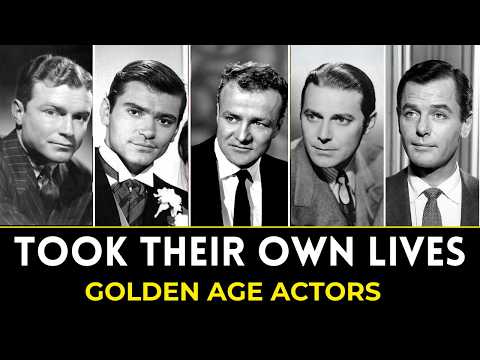
Ross Alexander was a rising star in the early 1930s, known for his charismatic performances in films like Captain Blood and A Midsummer Night’s Dream. But behind the scenes, his life was unraveling. The suicide of his first wife, actress Aleta Freel, in 1935 left him devastated. Struggling with his sexuality in an era when homosexuality was stigmatized, and burdened by mounting debts and a declining career, Alexander became despondent. On January 2, 1937, at just 29 years old, he died from a self-inflicted gunshot wound in the barn behind his Los Angeles home. His death was a shocking reminder of the personal turmoil that could hide behind a successful career.
George Reeves, forever known as television’s Superman, seemed to have it all. Yet the role that made him famous also typecast him, making it nearly impossible to find other work. On June 16, 1959, Reeves was found dead from a gunshot wound at his home in Benedict Canyon. Officially ruled a suicide, the circumstances were murky—inconsistent statements from those present, a lack of gunpowder residue tests, and rumors of romantic entanglements fueled theories of accidental death or foul play. His mysterious end has fascinated the public for decades, a tragic coda to a life lived in the shadow of the Man of Steel.
James Whale, the brilliant director behind Frankenstein and Bride of Frankenstein, faced his own monsters later in life. Openly gay in a time when it was socially unacceptable, Whale endured societal pressures and the decline of his career after a series of strokes. On May 29, 1957, at 67, he drowned in his swimming pool, leaving a suicide note expressing his despair and desire for peace. His death highlighted the struggles of artists dealing with identity and mental health, even as his groundbreaking films continued to influence cinema.
Don “Red” Barry, the tough-shooting star of B-Westerns, saw his career fade in the 1950s. Battling alcoholism and troubled relationships, Barry died from a self-inflicted gunshot wound on July 17, 1980, at 68, after a domestic dispute with his estranged wife. His story underscores the difficulties actors face when fame slips away and the industry evolves beyond them.
Gig Young won an Academy Award for They Shoot Horses, Don’t They?, but his personal life was a battlefield of alcoholism and failed marriages. On October 19, 1978, Young and his fifth wife, Kim Schmidt, were found dead in their Manhattan apartment—a murder-suicide just weeks after their wedding. His declining mental health and career frustrations culminated in a shocking act that stunned the entertainment community.
Philip Loeb, beloved as Jake Goldberg on The Goldbergs, saw his career destroyed by the Hollywood Blacklist. Accused of being a communist sympathizer during the McCarthy era, he was pressured to resign and struggled to find work. On September 1, 1955, at 64, Loeb died by suicide in a New York hotel, overdosing on sleeping pills. His story is a chilling reminder of the devastating impact of the Red Scare on innocent lives.
Carl Dane, a popular silent film comedian, couldn’t transition to sound films due to his thick accent. Facing financial ruin, he even ran a hot dog stand near the studio where he once starred. On April 14, 1934, at 47, Dane died from a self-inflicted gunshot wound in his Los Angeles apartment. His tragedy illustrates how quickly fame can vanish and the brutal impact of technological shifts on artists.
John Bowers, a silent film star who appeared in over 90 films, saw his career falter with the advent of sound. On November 17, 1936, at 50, Bowers reportedly sailed into the Pacific Ocean from Santa Monica in a small boat, and his body washed ashore days later. His presumed suicide is often cited as inspiration for the character Norman Maine in A Star is Born, reflecting the harsh realities faced by many silent film actors.
Paul Bern, a respected director and producer at MGM, married rising star Jean Harlow in July 1932. Just two months later, on September 5, 1932, at 42, Bern was found dead from a gunshot wound in his Beverly Hills home. Officially ruled a suicide, inconsistencies and MGM’s swift actions fueled speculation of murder or accident. The scandal was one of Hollywood’s earliest mysteries, highlighting the lengths studios would go to protect their stars.
Max Linder, a pioneering French actor and director, was one of the first international film stars. His career was interrupted by World War I, and he suffered from depression and the effects of gas exposure. On October 31, 1925, at 41, Linder and his wife, Hélène Peters, died in a suicide pact in a Paris hotel room, leaving behind their 15-month-old daughter. His death marked the end of a trailblazing career and underscored the pressures of early cinema.
These are just a few of the many Golden Age actors whose lives ended in tragedy. Their stories remind us that behind the glamour and fame, real people faced real struggles—often alone and in silence. As we continue, we’ll explore more of these heartbreaking tales and the lasting impact they left on Hollywood.
George Sanders, the suave British actor who won an Oscar for All About Eve, seemed to embody effortless sophistication. Yet his final years were marked by dementia and declining health. On April 25, 1972, at 65, Sanders was found dead in a hotel room in Castelldefels, Spain, having overdosed on barbiturates. His suicide note was characteristically witty—a weary farewell from a man who had grown tired of life. His death drew attention to the often-overlooked struggles of aging actors facing mental decline.
Charles Boyer, the French-born romantic lead of Gaslight and Algiers, was nominated for four Academy Awards. His marriage to British actress Pat Paterson lasted 44 years, a rare Hollywood love story. When Pat died of cancer on August 24, 1978, Boyer was overcome with grief. Just two days later, on August 26—two days before his 79th birthday—he died by suicide in Phoenix, Arizona, ingesting a lethal dose of barbiturates. His death underscored the profound impact of personal loss and the depths of devotion.
Pete Duel, star of the television series Alias Smith and Jones, was only 31 when his life ended. Struggling with depression and alcohol abuse, Duel died from a self-inflicted gunshot wound on December 31, 1971, at his Hollywood Hills home. His girlfriend, Diane Ray, was present at the time. The producers decided to continue the show with a different actor, but Duel’s sudden death shocked fans and highlighted the pressures of fame on young performers.
Brian Keith, beloved for The Parent Trap and Family Affair, faced a devastating final year. Diagnosed with lung cancer and empyema, he endured severe health problems. Then, in April 1997, his daughter Daisy died by suicide. On June 24, 1997, at 75, Keith died from a self-inflicted gunshot wound at his Malibu home. His death was a culmination of physical suffering and emotional pain, drawing attention to the struggles of those dealing with chronic illness and grief.
Richard Farnsworth began as a stuntman in the 1930s before earning Academy Award nominations for Comes a Horseman and The Straight Story. In his final years, he suffered from terminal metastatic prostate cancer, which caused excruciating pain and limited his mobility. On October 6, 2000, at 80, Farnsworth died from a self-inflicted gunshot wound at his ranch in Lincoln, New Mexico. His decision was influenced by his desire to avoid further suffering, highlighting issues of terminal illness and pain management.
John Hall, known for adventure films like The Hurricane and Arabian Nights, faced a terminal diagnosis of incurable bladder cancer. On December 13, 1979, at 64, Hall died from a self-inflicted gunshot wound at his North Hollywood home. His death was a response to his diagnosis and the suffering he endured, bringing attention to the personal challenges faced by individuals coping with severe illness.
These actors, like so many others, were drawn to Hollywood’s promise of fame and fortune. Yet the industry’s relentless pressures—typecasting, career decline, financial ruin, and personal loss—often proved unbearable. Their stories are not just tragedies but cautionary tales about the human cost of stardom.
As we reflect on their lives, we must also consider the legacy they left behind. Their performances continue to entertain and inspire, even as their personal struggles remind us of the fragility of those who bring magic to our screens.
The Golden Age of Hollywood may be over, but the lessons of its hidden struggles remain relevant today. Mental health, addiction, and the pressures of fame are still challenges faced by many in the entertainment industry. By remembering these actors, we honor their memories and acknowledge the importance of compassion and support for those who entertain us.
Their stories, though separated by decades and circumstances, share a common thread: the crushing weight of an industry that often values image over humanity. These actors gave us unforgettable performances—from Frankenstein’s monster to Superman’s flight—yet many were left to face their darkest moments alone. The Golden Age’s glittering surface concealed a world where vulnerability was weakness, and asking for help could mean career suicide.
Today, the conversation around mental health has evolved, but the pressures of fame remain relentless. Social media amplifies scrutiny, and the demand for perfection persists. If there is a lesson in these tragic lives, it is that no amount of acclaim can shield a person from inner turmoil—and that compassion, not judgment, is what truly sustains us.
As the curtain falls on this tribute, let us remember not just how these stars died, but how they lived—and what they gave us. Their films endure, a testament to their talent, while their struggles serve as a haunting reminder of the price some pay for our entertainment.
What do you think Hollywood—and society—must do to ensure that the pursuit of fame never again comes at the cost of a human life? Share your thoughts in the comments below.
Report this article
Select a reason for reporting:






