The cliffs rose like walls, and the beach offered no cover. The moment the ANZACs landed, machine guns tore through them. Over 11,000 Australians and New Zealanders died on a scrap of land smaller than a Sydney suburb. Gallipoli wasn’t just a defeat—it was a massacre disguised as a mission. Private Ellis Silas from Sydney wrote home, “We are not in hell, but we can see it from here.” He wasn’t being dramatic. He was being accurate.
This is the story of how 60,000 young men from Australia and New Zealand sailed halfway around the world to fight someone else’s war, only to find themselves trapped in trenches so close to the enemy that they could hear them breathing. For eight months, they clung to beaches barely wide enough for a football field, while Turkish bullets picked them off one by one.
But first, how did they end up there? In 1915, the Western Front had grown to a bloody stalemate. Millions were dying in trenches stretching from Belgium to Switzerland, and nobody was winning. Winston Churchill, then First Lord of the Admiralty, had what seemed like a brilliant idea: attack Germany’s ally, the Ottoman Empire, through its back door. The plan was simple on paper. Force the Dardanelles Strait, sail through to Constantinople, knock Turkey out of the war, and open a supply route to Russia. It would be, Churchill promised, over by Christmas.
The Royal Navy would blast through the strait with overwhelming firepower. Then, if needed, a small landing force would mop up whatever Ottoman resistance remained. The problem? The Ottomans weren’t the “sick man of Europe” that British intelligence believed them to be. They had German military advisers, modern weapons, and most importantly, they had Mustafa Kemal—later known as Atatürk—a young officer who understood exactly what the British were planning and how to stop them.
When the British naval assault failed catastrophically in March 1915, losing three battleships to mines and Turkish shore batteries, it gave the Ottomans six crucial weeks to prepare their defenses. But Churchill and the British high command pressed on with the land invasion anyway. That’s how 16,000 ANZACs found themselves sailing toward a death trap.
And what happened when they got there? That’s where the real nightmare begins. The Australian and New Zealand Army Corps—young volunteers who had enlisted thinking they’d be fighting Germans in France—instead found themselves sailing toward Turkey. Most had never seen combat. Many had never left their home countries before. Private Victor Laidlaw from Wellington wrote to his sister, “We’re told we’re going to make history. I just hope we live to read about it.”
April 25th, 1915, 4:30 a.m. In the pre-dawn darkness, rowboats carrying Australian and New Zealand soldiers approached what they thought was Gaba Tepe Beach. Instead, a navigation error had brought them to a narrow cove one mile north—a place that would soon be known as Anzac Cove. As the first boat scraped against the shingle, machine gun fire erupted from the cliffs above. The Turks had been waiting.
Private Keith Arthur from Queensland described it in his diary: “The water turned red immediately. Boys were falling before they even reached the shore. The noise was indescribable. Bullets zipping past your ears. Men screaming, officers shouting orders that nobody could hear.” The beach they’d landed on was barely 8 yards deep before it rose into steep scrub-covered ridges. No cover, no escape, no choice. The only option was to charge uphill into the Turkish guns or die on the beach.
Australian Lieutenant Colonel William Malone from the Wellington Battalion made it 20 yards inland before Turkish snipers found him. A New Zealand officer wrote home, “We landed in hell itself. The Turks had every inch of that beach covered by rifle fire. Every step forward cost us men we couldn’t afford to lose.” But somehow, incredibly, the ANZACs kept going. Australian light horsemen from Western Australia scrambled up impossible cliffs under constant fire. New Zealand infantry charged Turkish trenches with bayonets fixed.
By evening, they had carved out a toehold on the peninsula—a strip of land barely 400 yards deep and less than a mile wide. They had no idea they would be trapped there for the next 8 months. But why couldn’t they break out? The answer lies in what the Turks had been doing during those 6 weeks of preparation.
The ANZAC force wasn’t just Australian. It was a true coalition. The First Australian Division included men from every state—tough bushmen from Queensland, miners from Western Australia, farmers’ sons from Victoria. The New Zealand and Australian Division brought Maori soldiers fighting alongside European New Zealanders, creating one of the most diverse forces in the British Empire.
Each group brought their own fighting style. The Australians, many of whom had grown up in the outback, excelled at sniping and reconnaissance. Private Billy Sing from Queensland became legendary, credited with over 150 confirmed kills from his concealed position overlooking the Turkish trenches. The New Zealanders, particularly the Maori contingent, were fierce close-combat fighters. When Turkish troops broke into Allied trenches, it was often the Maori who drove them back in brutal hand-to-hand fighting.
Private Rangi Manga from the Maori contingent wrote, “We fight like our ancestors, but with modern weapons. The Turkish soldiers respect our courage as we respect theirs.” But the distinctions between Australian and New Zealand units soon blurred. They shared the same trenches, the same water rations, the same diseases, and the same hopeless situation. As Private Jack Simpson from South Australia wrote, “Out here, we’re not Aussies or Kiwis. We’re just Anzacs, and we’re all in this together.”
United by suffering, bonded by blood—but facing an enemy that was ready for them. What made Gallipoli so deadly wasn’t just the terrain. It was the enemy. Mustafa Kemal had studied every inch of the peninsula. He knew exactly where the British would try to land, and he had prepared accordingly.
The Turkish positions were masterpieces of defensive engineering. Machine gun nests were carved into the cliffs with interlocking fields of fire. Artillery positions were presighted on every possible landing beach. Sniper posts were hidden in scrubland that offered perfect concealment. Most importantly, every position was connected by communication trenches that allowed rapid reinforcement.
Kemal’s orders to his men were simple: “I do not order you to attack. I order you to die. In the time which passes until we die, other troops and other commanders can take our places.” It wasn’t a bluff. Turkish soldiers fought with the desperation of men defending their homeland. The Turkish 57th Regiment defending the heights above Anzac Cove was virtually wiped out in the first week of fighting—and they held their ground.
Australian Private Ross McMullen described facing them: “They came at us again and again, even when they were outnumbered. They weren’t fighting for an empire or a cause. They were fighting for their country.” Worse, Kemal constantly rotated his troops. While the ANZACs grew weaker from disease and exhaustion, fresh Turkish divisions kept arriving. Every Australian or New Zealand advance was met by renewed Turkish resistance.
The ANZACs were trapped. But just how bad would it get? The daily reality was worse than anyone back home could imagine. By May 1915, both sides had dug in. The war had become a nightmare of trench warfare on terrain that made the Western Front look comfortable.
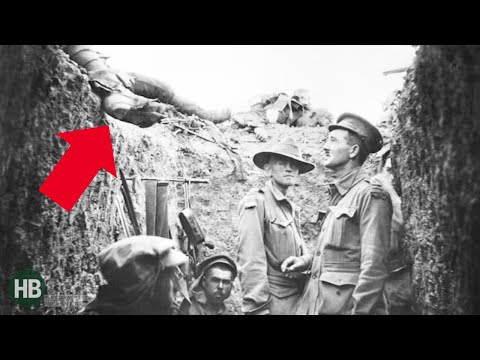
Anzac trenches were carved into hillsides so steep that soldiers had to tie themselves down while sleeping to avoid rolling into no man’s land. The trenches themselves were barely deep enough to protect a crouching man. Private Norman Nicholson from Tasmania wrote, “You couldn’t stand up in daylight without getting shot. We lived like moles, crawling everywhere, never seeing the sun except at dawn and dusk.”
Water was the constant killer. Each man was rationed one water bottle per day in temperatures that reached 100 degrees Fahrenheit. The water that arrived was often contaminated, stored in old gasoline tins that left everything tasting of petroleum. Disease spread like wildfire through the crowded trenches. Dysentery—which the soldiers grimly called the “Gallipoli gallop”—weakened men until they could barely hold their rifles. Typhus and jaundice turned healthy young soldiers into skeletal figures. One medical officer reported that 80% of his men were suffering from some form of illness.
Flies were everywhere. They covered the food, the wounded, and the dead. Private Ellis Silas wrote, “The flies here aren’t just annoying. They’re a plague. They carry disease from the corpses in no man’s land to our food. Every meal is contaminated.” And the corpses were always there. No man’s land between the opposing trenches was sometimes only 15 yards wide—close enough to hear enemy soldiers talking, close enough to smell the dead bodies of both sides rotting in the Mediterranean sun. Truces to collect the dead were rare. Most corpses lay where they fell until the winter rains washed them away.
But the worst battles were still to come. And what happened at Lone Pine and the Nek would show just how badly British command had failed these brave men.
August 1915 brought two battles that would become synonymous with ANZAC courage and British tactical incompetence: Lone Pine and the Nek. Lone Pine was planned as a diversionary attack to draw Turkish attention from the main offensive at Suvla Bay. On August 6th, Australian troops from New South Wales and Victoria were ordered to assault heavily fortified Turkish trenches on Pine Ridge. What they found was a death trap.
The Turks had covered their trenches with heavy logs, creating underground fortresses that were nearly impregnable from above. Australian soldiers had to tear through the log roofs with their bare hands while Turkish defenders fired up at them through gaps in the timber. Private Leonard Keysor from London, serving with the 1st Australian Battalion, described the fighting: “We weren’t fighting in trenches. We were fighting on top of them. The Turks were below us. We were above them. And we were throwing grenades at each other through holes in the roof. It was like fighting in a mineshaft.”
The battle raged for four days. Australians held the surface of the Turkish trenches while Ottoman soldiers held the underground tunnels beneath them. Hand-to-hand combat took place in spaces so confined that men fought with bayonets, knives, and bare hands. Private John Hamilton from South Australia earned the Victoria Cross by single-handedly holding off a Turkish counterattack with grenades until his ammunition ran out—then fighting with his bayonet until relief arrived.
When Lone Pine finally ended, 2,300 Australian casualties had been suffered for a position that couldn’t be held. Seven Victoria Crosses were awarded—the highest number for any single battle in Australian military history. But worse was coming.
Three days later came the Nek. This narrow ridge, barely 150 meters wide, had to be taken to support the New Zealand advance on Chunuk Bair. The plan called for Australian light horsemen—men who had trained to fight on horseback—to charge across open ground in four waves against Turkish machine guns. The preliminary bombardment stopped too early. When the first wave of Western Australians went over the top at 4:23 a.m., the Turkish machine guns were waiting. Of the 150 men in the first line, only one made it more than 10 yards. The rest were cut down in seconds.
Major James McMahon, commanding the 10th Light Horse, knew the attack was hopeless. He requested permission to cancel the remaining waves. The British command refused. Three more waves of Australian light horsemen charged into the same machine guns. 234 men were killed or wounded in 30 minutes for an advance that gained exactly zero ground.
Lieutenant Wilfred Robinson from Perth wrote in his final letter, “We all know this is madness, but we’re Australians. We don’t leave our mates behind.” He died with the fourth wave. Dead before landing. No ground gained.
But why did British command keep ordering these suicidal attacks? The tragedy of the Nek and Lone Pine wasn’t that brave men died. It was that they died for nothing—because of British command failures that were criminal in their incompetence.
General Sir Ian Hamilton commanded the campaign from a ship anchored miles offshore. He never set foot on the peninsula, never saw the terrain his men died for. British intelligence promised 40,000 demoralized defenders; the ANZACs faced 84,000 of the Ottoman army’s finest. “We receive contradictory orders, outdated intelligence, and impossible demands,” wrote Lieutenant Colonel Noel Brazier. “The staff officers making these plans have never been shot at.”
At Chunuk Bair, Lieutenant Colonel William Malone seized the summit—the key to the entire campaign. For 24 hours his men held it. Reinforcements never came, and British naval shells may have fallen on his own trenches. Malone died holding the one position that might have made every sacrifice worthwhile.
By October, the ANZACs were broken. Private Harold Abbott, evacuated at 22, wrote home: “You wouldn’t recognize me. My hair has gone gray, my hands shake, and I wake up screaming every night.” Over half the force became casualties. The Canterbury Battalion lost 75% of its strength.
Then came the final irony: the evacuation was the only thing that went to plan. Over three December nights, 105,000 troops slipped away without losing a single man—a masterpiece of planning eight months too late. Private Victor Laidlaw, among the last to leave, wrote: “We came here as boys thinking we were heroes. We are leaving as men who know the difference between courage and waste.”
They left behind 11,000 graves—and the birth of two nations’ identities. Today the trenches have filled in and poppies grow where young men died. Atatürk’s words still echo over Anzac Cove: “There is no difference between the Johnnies and the Mehmets to us where they lie side by side here in this country of ours.”
Not victory, but remembrance. Not conquest, but character. Lest we forget.
So tell us—when courage is squandered by incompetence, is the sacrifice still worth honoring, or does remembrance risk glorifying the waste?
Report this article
Select a reason for reporting:






