The American liaison officer stared at the map, his jaw clenched. Six days ago, an Australian SAS patrol had walked into the jungle and vanished. No radio signal, no coordinates, no confirmation of life. He picked up the phone and called the Australian base. “Your men have been silent for six days. Are you planning a search and rescue?” A laugh crackled through the receiver. “Planning? They’re working. If something had gone wrong, you’d already know.” The line went dead. A chill ran down his spine.
His own teams checked in every hour, called in air support at first contact, demanded extraction at the slightest complication. But these Australians just disappeared for a week or two and came back with intelligence that turned entire operations upside down. How did they dissolve into the jungle so completely that even their allies lost track of them? The answer began at Swanbourne, on the western coast of Australia, where the army taught ordinary men to do something American special forces never quite mastered: they taught them to disappear.
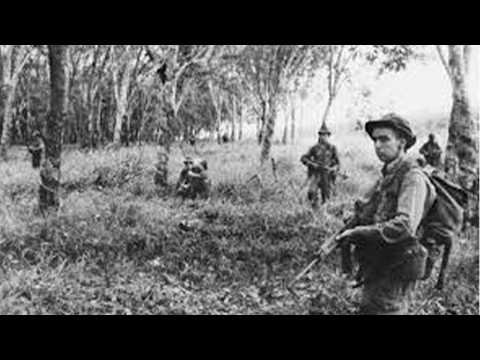
Campbell Barracks sat on the coast near Perth, surrounded by scrubland that Australians call bush. In the 1960s, this unassuming installation housed the Special Air Service Regiment, Australia’s answer to the British SAS. The selection course was brutal by any reasonable standard. Candidates arrived believing they understood physical hardship. Most discovered within days that they understood nothing.
The marches came first. Kilometers of Australian terrain with full combat loads, no set pace, no scheduled breaks, just movement until the instructors decided movement should stop. Men dropped from heat exhaustion, from blisters that covered entire feet, from the simple accumulation of pain that bodies could no longer process. But the physical punishment served a specific purpose beyond endurance testing. It created conditions where psychological weakness became visible. Stress revealed character. Exhaustion stripped away pretense. The instructors were not primarily interested in who could march the farthest. They were interested in who could function when everything hurt and nothing made sense.
Sleep became a distant memory. Food was rationed to the point of constant hunger. The body broke down in predictable stages. First the feet, then the joints, then the will. Instructors watched for specific failure modes. Some candidates quit openly, announcing they could not continue. These were the honest failures. Others broke more quietly, making mistakes that accumulated until they could no longer function. All of these failure modes were acceptable. They indicated men who had reached their limits. But one failure mode was disqualifying in a deeper sense: some candidates could not function without feedback. They needed to know how they were performing. They needed encouragement. They needed the psychological comfort of someone watching, evaluating, confirming that their suffering had purpose. These men revealed a dependency that Australian SAS doctrine considered fatal. They needed external validation to continue. And in the jungle, external validation would not exist.
The key difference from American special forces selection emerged in what happened after the physical testing. American courses tested candidates under continuous observation. Instructors watched. Medical staff stood ready. Evaluation was constant. Candidates knew they were being assessed, knew that help was available, knew that the suffering was controlled and purposeful. Australian selection included phases of genuine isolation. Candidates were given minimal equipment and dropped into the outback with instructions to reach a distant point. No instructors followed them. No safety net existed in any meaningful sense. They were actually alone in terrain that could actually harm them. This was not theatrical. Men got lost. Men made navigation errors that added days to their journeys. Men encountered conditions they were not prepared for and had to improvise solutions without guidance. The isolation was real and the consequences of failure were real.
In that reality, a particular kind of weakness revealed itself. Some candidates could not function without knowing someone was watching. They needed the psychological comfort of potential rescue. They needed connection to authority. They needed, in short, exactly what combat would not provide. These men failed selection not because they lacked physical capability. Many of them were exceptional athletes who had breezed through the physical testing. They failed because they lacked the psychological independence that Australian SAS operations would require. The men who passed had demonstrated something harder to train than fitness. They had proven they could operate in genuine isolation without psychological deterioration. They could make decisions without guidance. They could function when no one was coming to help. They could find within themselves the resources that others sought from external sources.
This capability would prove decisive in Vietnam. But first, it had to be shaped into tactical doctrine that could be taught and replicated. The training that followed selection focused relentlessly on one principle: self-sufficiency. Australian SAS patrols would operate for extended periods without resupply, without reinforcement, without the support structures that American forces considered essential. Navigation training emphasized terrain association over instruments. Patrols memorized maps until they could visualize ground they had never walked. They learned to read landscapes, to recognize ridge lines, drainage patterns, vegetation changes that indicated specific terrain features. They practiced navigating by observation, confirming position through what they saw rather than what instruments told them. Their reasoning was practical and specific. Compass navigation required attention and concentration. In combat, attention was a limited resource. When contact occurred, when patrols moved rapidly under fire, when stress consumed cognitive capacity, compass navigation became unreliable. Bearings were misread, pace counts were lost, position became uncertain precisely when certainty mattered most. Terrain association navigation remained functional under stress because it relied on recognition rather than calculation. A patrol that truly knew the ground could navigate by simply looking around. They could confirm position in seconds rather than minutes. They could maintain orientation during evasion without stopping to shoot azimuths. Patrols that could navigate without instruments could navigate without stopping. They could move continuously under pressure. They could evade pursuit while maintaining orientation toward their objective or extraction point. And they could navigate without transmitting position updates because they always knew exactly where they were.
Movement training emphasized patience over speed in ways that American doctrine found almost incomprehensible. Australian patrols would move slowly through jungle, far more slowly than American recommended rates of advance. The pace seemed inefficient, even absurd, until its purpose became clear. Slow movement enabled noise discipline that faster movement made physically impossible. Every step could be evaluated before weight was committed. Every potential sound source—dry leaves, loose branches, unstable footing—could be identified and avoided. A patrol moving at 100 meters per hour left no acoustic signature. A patrol moving at American speeds announced itself to anyone with an earshot. The slow pace also enabled continuous observation that faster movement precluded. Fast-moving patrols focused on the destination. They looked ahead, assessed routes, maintained progress toward objectives. Their attention was consumed by the mechanics of movement itself. Slow-moving patrols focused on everything around them. They had time to study the jungle, to notice details that faster patrols missed, to detect signs of enemy presence that faster patrols would have walked past without seeing. The intelligence value of this observation was substantial. Australian patrols found trails that aerial reconnaissance had never detected. They located camps that had remained hidden for months. They gathered information through patience that speed would have prevented.
But the most distinctive element of Australian training was the radio doctrine. And this is where the difference from American methods became absolute and irreducible. Australian instructors taught that radio transmission was inherently dangerous. Every signal, no matter how brief, created electromagnetic emission that could be detected. Enemy direction-finding equipment could locate transmission sources. Multiple intercept stations could triangulate positions with meaningful precision. This was not theoretical. The enemy in Vietnam had invested significantly in radio direction-finding capability. They monitored frequencies used by American and Allied forces. They detected transmissions and used that detection for tactical purposes. The implications were stark and specific. A patrol that transmitted regularly provided the enemy with position updates. Not precise positions—direction finding was not that accurate—but approximate locations that enabled concentration of forces. If the enemy knew a patrol was in a particular area, they could search that area. They could set ambushes on likely routes. They could position forces to intercept. American patrols transmitted hourly. That meant hourly confirmation that a patrol was operating in a particular sector. The enemy could not decode the encrypted messages, but they did not need to. The transmissions themselves were the intelligence. Australian patrols would maintain radio silence for days, sometimes longer. They would complete entire missions without transmitting a single word. The radio was carried for emergencies, situations where the cost of transmission was outweighed by the immediate need for support, but routine communication simply did not occur. This doctrine required everything else in Australian training. Patrols had to navigate without position updates because they would not be sending position updates. They had to handle situations without calling for support because they would not be calling for support. They had to function in true isolation because they would actually be isolated. American training produced soldiers who could survive with support. Australian training produced soldiers who could succeed without it. The distinction was fundamental, and it would become visible almost immediately when Australian forces arrived in Vietnam.
The first Australian SAS squadron deployed to Vietnam in 1966, establishing itself at Nui Dat in Phuoc Tuy province. American liaison officers expected the usual machinery of combined operations: mission planning, communication schedules, support coordination. What they encountered was professional culture shock. Australian patrols did not submit communication schedules because they did not intend to communicate. They did not request fire support packages because they did not intend to call for fire support.
The friction approached genuine conflict. American coordinators demanded information the Australians would not provide. They expressed concerns about patrol safety that Australian officers dismissed with obvious impatience. Then the statistics became impossible to ignore. American long-range patrols reported contact rates around 70%. Australian patrols reported contact rates below 30%. They found enemy positions but were rarely detected themselves. The disparity demanded explanation.
The Australian explanation was consistent: they were not being detected because they were not transmitting. The enemy monitored Allied radio traffic not for content but for activity. Any transmission indicated a patrol in the area. American units broadcast electromagnetic signatures continuously. Australian units provided none of this. They moved through the jungle without electromagnetic signature, operationally invisible in ways American patrols simply could not achieve.
One patrol became a reference point. A five-man team located what appeared to be a regimental-level headquarters. An American patrol would have transmitted within minutes. The Australian patrol leader ordered continued observation instead. For several days, the team mapped defensive positions, tracked personnel movements, identified communication nodes. They ate cold rations, managed bodily functions without leaving positions, endured insects and humidity without any action that might reveal their presence. When they finally withdrew on foot, they carried intelligence of exceptional value. The strikes that followed were devastatingly effective precisely because the enemy had no warning.
The cultural barriers to adopting these methods proved stronger than any amount of evidence. American commanders who did not know where their forces were felt professionally negligent. Silence generated anxiety that demanded resolution. Australia was a nation built on geographic isolation. Self-reliance was embedded in national identity because self-reliance was often the only option. American military culture was built on different foundations: coordination was strength, communication was capability, the network was the advantage.
When those five men finally emerged from the jungle, they carried intelligence that transformed operations across the region. They had proven once again what Australian patrols proved repeatedly throughout the war. Sometimes the most effective special operations are the ones no one knows are happening. Their radios stayed quiet. Their positions stayed hidden. Their missions stayed successful.
The question they posed to American special operations—can you operate in true silence?—remains unanswered in any complete sense. The jungle ghosts of Phuoc Tuy demonstrated a standard that remains available for any force willing to meet it. Their radio stayed silent, and in that silence they achieved what American noise could never accomplish.
So here is the question that still echoes across decades: if your radio went dark tomorrow and no one was coming to help, would you be the operator who survives—or the one who was never really trained to be alone?
Report this article
Select a reason for reporting:






