What if you could lock eyes with Shaka Zulu, the warrior king who forged an empire, or catch the knowing smile of Ada Lovelace, the visionary who saw the future of machines? Volume 10 of Relax History AI opens a portal to the past, resurrecting twenty legendary figures—from Pharaoh Shishak to President Theodore Roosevelt—with startling realism. This isn’t just history; it’s a face-to-face encounter with the souls who shaped our world.
History books give us names and dates, but they rarely let us feel the pulse of the people behind them. Now, thanks to the magic of artificial intelligence, we can witness the determined gaze of James Madison, the father of the Constitution, or the quiet intensity of Maria Mitchell, the first woman to discover a comet. These aren’t mere portraits; they are windows into the past, crafted with such detail that you can almost hear their voices.
Imagine standing on the deck of a ship with Captain James Cook as he charts unknown waters, or walking beside Henry David Thoreau as he ponders the simplicity of Walden Pond. Each face tells a story of triumph, struggle, and unwavering conviction. From the opulent courts of Empress Dowager Cixi to the bloody battlefields of Shaka Zulu, these AI-reconstructed visages bridge the gap between then and now.
But this is more than a visual feast. It’s a journey into the hearts and minds of those who dared to change the world. Ada Lovelace’s eyes sparkle with the promise of the first algorithm, while Pablo Picasso’s intense stare hints at the revolutionary art that would redefine modernism. These are the faces of rebels, dreamers, and leaders—each one a testament to the power of human ambition.
As we delve into this collection, you’ll meet rulers like Empress Maria Theresa, who wielded power with grace and cunning, and revolutionaries like Sun Yat-sen, whose vision birthed a nation. You’ll witness the fierce determination of Sojourner Truth, whose words still echo in the fight for equality, and the strategic brilliance of Admiral Yi Sun-sin, undefeated in battle. Their stories are our heritage, and through AI, they are no longer distant figures but living presences.
So prepare to be transported. In the following pages, we’ll introduce you to each of these twenty icons, one by one, with their faces brought to life in stunning detail. But first, let us set the stage with a glimpse of what’s to come—a taste of the drama, the passion, and the legacy that these individuals left behind.
Stay tuned as we unveil the first face: James Madison, the quiet genius who shaped a nation. His story is just the beginning of a remarkable journey through time.
The screen flickers, and then a face emerges from the digital mist—a face that history remembers but few have truly seen. James Madison, the fourth President of the United States, stares back at you with calm, intelligent eyes. His receding hairline and thoughtful expression speak of a mind constantly at work.
Born in 1751, Madison was the architect of the Constitution, the father of the Bill of Rights, and the co-author of the Federalist Papers. Through AI, we can now look into the eyes of the man who shaped American democracy. His gaze is steady, revealing a quiet determination that belied his small stature.
As the image sharpens, you notice the fine lines around his eyes, the slight furrow of his brow. This is a man who spent countless hours debating, writing, and compromising to forge a nation. His legacy is etched not in monuments, but in the very fabric of American law.
Next, the scene shifts to the night sky. A young woman gazes upward through a telescope, her face illuminated by starlight. Maria Mitchell, America’s first female astronomer, discovered a comet in 1847 that would bear her name. Her eyes sparkle with curiosity and defiance.
She was the first woman elected to the American Academy of Arts and Sciences and a tireless advocate for women’s education. As a professor at Vassar College, she inspired generations. Through AI, her face reflects the boundless wonder of the cosmos she loved.
Then, the roar of the ocean fills your ears. Captain James Cook stands on the deck of his ship, wind whipping his hair, eyes fixed on the horizon. His voyages mapped the Pacific, charted Australia’s eastern coast, and brought New Zealand into the world’s view. His face is weathered, a testament to years at sea, yet his expression is one of unwavering resolve.
The journey continues with Henry David Thoreau, whose penetrating gaze seems to look beyond the material world. His book Walden, a reflection on simple living, continues to inspire those seeking meaning in nature. His face, framed by a modest beard, exudes a quiet wisdom.
From the tranquil woods of Concord, we are transported to the opulent Forbidden City. Empress Dowager Cixi, one of history’s most controversial rulers, sits on her throne. Her eyes, sharp and calculating, reveal the cunning that kept her in power for nearly five decades. The AI reconstruction captures the intricate details of her imperial attire and the weight of her rule.
Then, a flicker of binary code—Ada Lovelace appears, her face alight with the thrill of invention. She was the first to envision a machine that could not only calculate but create. Her notes on Charles Babbage’s Analytical Engine laid the foundation for modern computing. Her smile hints at the future she imagined.
Pablo Picasso’s intense stare follows, his eyes burning with creative fire. Co-founder of Cubism, his work shattered conventions and redefined art. The AI brings out the intensity of a genius who saw the world differently.
Empress Maria Theresa, the only woman to rule the Habsburg Empire, appears with regal poise. Mother of sixteen children, she used marriage as a diplomatic tool and reformed her empire. Her face shows the strength and wisdom of a true leader.
Arthur Phillip, first governor of New South Wales, gazes out with a vision of a just society. He commanded the First Fleet and laid the foundations of modern Australia. His expression is one of hope and determination.
Giotto di Bondone, the pioneer of Renaissance art, looks at you with the eyes of a revolutionary. His frescoes introduced emotion and realism to religious art, influencing generations. His face reflects the humility of a master.
Sun Yat-sen, the father of modern China, appears with a visionary gleam. His Three Principles of the People inspired a nation. The AI captures his resolute spirit.
Rabindranath Tagore, the first Asian Nobel laureate in literature, radiates wisdom. His poetry and music continue to resonate. His eyes hold the depth of a philosopher.
Pharaoh Shishak I, the biblical conqueror, stands with a commanding presence. His military campaigns reasserted Egypt’s power. His face is stern, a testament to his rule.
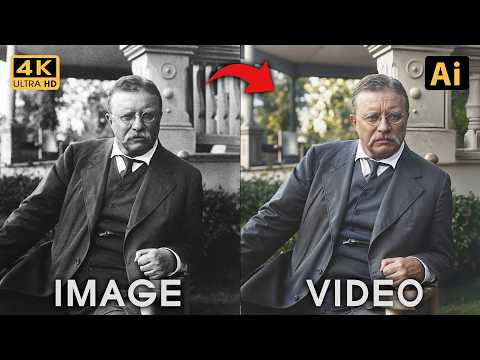
Theodore Roosevelt, the Rough Rider president, grins with infectious energy. His Square Deal and conservation efforts left a lasting mark. His eyes twinkle with adventure.
Sojourner Truth, born into slavery, speaks with fiery passion. Her words, “Ain’t I a woman?” still echo. Her face is a symbol of strength.
Pope, the Pueblo leader, gazes with quiet defiance. He led the revolt against Spanish rule. His expression is one of resilience.
Admiral Yi Sun-sin, undefeated in battle, appears with calm authority. His turtle ships and tactical genius saved Korea. His face shows unwavering loyalty.
Matthew Flinders, the navigator who charted Australia, looks out with determination. His maps were crucial to geography. His eyes reflect the vastness of the seas.
Pythagoras, the ancient philosopher, gazes with mathematical precision. His theorem and belief in numbers as the essence of the universe laid the groundwork for science. His face is serene.
Finally, Shaka Zulu, the warrior king, stands with fierce pride. He united the Zulu tribes and built an empire. His eyes burn with power and determination.
Each face is a door to the past, and through AI, we can step through. But these are not just images; they are invitations to explore the lives, the struggles, and the triumphs of those who came before. History is no longer words on a page—it is a living, breathing encounter.
As the journey continues, we will delve deeper into each of these twenty legends, uncovering their stories, their secrets, and their legacies. The past is waiting, and it has a face.
But a face alone cannot tell the whole story. Behind every reconstructed gaze lies a choice, a sacrifice, a moment that tipped the scales of history. What did Madison whisper to Hamilton in the sweltering Philadelphia summer of 1787? What terror gripped Maria Mitchell the night she first saw that faint smudge of light through her telescope? These are the questions that make the past breathe.
Consider Sojourner Truth, who never knew her own birthday. Born into bondage in a place called Swartekill, she was sold away from her parents at nine years old, traded for a flock of sheep. And yet, when she finally spoke before a crowd of white suffragists, her voice thundered with the authority of a woman who had already conquered the unthinkable. The AI captures the fire, but it is the story that gives the fire meaning.
The same is true of Admiral Yi Sun-sin. Thirteen ships against three hundred and thirty. The odds were so absurd that his own courtiers begged him to retreat. He answered not with fear, but with a narrow strait, a rising tide, and a wall of iron-clad turtle ships that turned the sea into a graveyard for invaders. His calm face in the reconstruction is no accident—it reflects a commander who had already accepted death and decided to win anyway.
And then there is Shaka Zulu. The warrior king who rose from a fatherless childhood to forge a nation from scattered clans. He reinvented warfare itself—shortening the throwing spear into a stabbing blade, teaching his warriors to fight at close quarters, to move in the crescent formation that would swallow their enemies whole. His eyes in the AI portrait are not cruel; they are calculating, always calculating.
But history is never just about the victors. It is also about the survivors. Pope, the Pueblo leader, watched his people suffer under Spanish forced labor and religious persecution. In 1680, he orchestrated a revolt so swift and so complete that the Spanish were driven from New Mexico for over a decade—a feat no other indigenous leader in North America achieved. His face carries the weight of a man who knew the cost of freedom.
Each of these twenty figures stands at a crossroads where a single decision echoed through centuries. Ada Lovelace, dying of cancer at thirty-six, wrote notes that would not be fully understood for a hundred years. Theodore Roosevelt, the youngest president, survived an assassin’s bullet and finished a speech before seeking medical help. The AI brings us their faces, but it is their choices that bring us to our knees.
Now, as the portal widens, we step closer to the first of these legends. The story of James Madison is about to unfold—not as a dry chapter in a textbook, but as a living drama of ambition, compromise, and the fragile birth of an idea called America.
Madison’s story ends not with a monument, but with a warning: a republic is only as strong as the compromises it can survive. He gave us the framework, but he could not give us the wisdom to use it.
As the last page of Volume 10 turns, the faces fade—Shaka’s fierce pride, Ada’s knowing smile, Sojourner’s unbreakable fire—but their questions remain. What would they say if they could see us now?
History is no longer just words on a page. It is a mirror. And the past is waiting, with a face, for you to look back.
Which of these twenty legends would you want to meet first—and what would you ask them? Tell us in the comments below.
Report this article
Select a reason for reporting:






