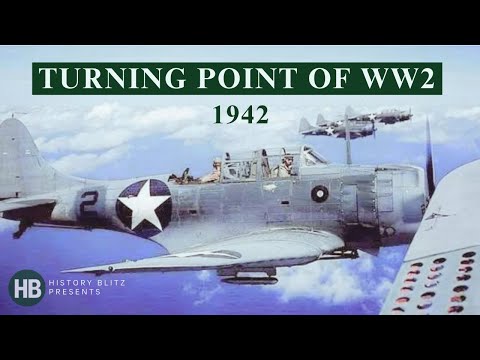
The Pacific was a Japanese lake. From the frozen Aleutians to the steamy jungles of New Guinea, from the borders of India to the far-flung Marshall Islands, the Rising Sun cast its shadow over millions. The attack on Pearl Harbor had crippled the U.S. Pacific Fleet, and subsequent victories had given Japan an aura of invincibility. But in the first days of 1942, a quiet revolution was underway—one that would shift the balance of power forever.
Deep in the basement of a building in Pearl Harbor, a team of American codebreakers, led by the brilliant Joseph Rochefort, achieved the impossible. They had cracked JN-25, the Japanese Navy’s operational code. For the first time, the United States could anticipate Japan’s next move. And what they discovered sent shockwaves through the highest levels of command: Japan was planning a massive assault on Midway Atoll, a tiny speck of land that would serve as a springboard for an invasion of Hawaii itself.
Admiral Isoroku Yamamoto, the mastermind behind Pearl Harbor, devised a complex plan. He would lure the remaining American carriers into a trap, using a diversionary attack on the Aleutian Islands to draw them north, while his main fleet—four of Japan’s finest carriers—would strike Midway. The trap was set. But Yamamoto had underestimated his enemy.
American intelligence had not only deciphered the plan but also confirmed Midway was the target through a clever ruse: a false message about a water shortage on the island, which the Japanese promptly relayed, confirming their objective. Admiral Chester Nimitz, commander of the U.S. Pacific Fleet, now had the upper hand. He positioned his three carriers—USS Enterprise, USS Hornet, and the hastily repaired USS Yorktown—to lie in wait.
The stage was set for one of the most decisive naval battles in history. On June 4, 1942, the Japanese fleet under Admiral Chuichi Nagumo launched its first wave against Midway. The attack caused damage, but the American airfield remained operational. Nagumo, unaware of the American carriers nearby, hesitated. He ordered his planes to rearm for a second strike on Midway, but then a scout plane reported sighting an American carrier. The Japanese admiral was caught in a dilemma: his decks were crowded with planes, fuel, and bombs, and he had to choose between attacking the island or the ships.
At that critical moment, American torpedo bombers appeared. They flew low and slow, easy prey for Japanese fighters. Nearly all were shot down, but their sacrifice was not in vain. They pulled the Japanese combat air patrol down to low altitude, leaving the skies above the Japanese carriers wide open. Then, from the northeast, came the dive bombers. In a span of just five minutes, three Japanese carriers—Akagi, Kaga, and Soryu—were transformed into blazing infernos. The fourth, Hiryu, launched a counterattack that crippled the Yorktown, but American bombers soon found and destroyed her too.
As the sun set on June 4, 1942, the Imperial Japanese Navy had suffered a catastrophic defeat. Four fleet carriers, hundreds of aircraft, and thousands of experienced pilots and crewmen were lost—losses Japan could never replace. The battle was over, but the war was far from finished. The victory at Midway was a turning point, but it was only the beginning of a long and bloody road to Tokyo.
In the weeks that followed, the full weight of the Midway disaster settled over the Japanese High Command like a shroud. Admiral Yamamoto, the architect of Pearl Harbor, had staked everything on a single throw of the dice—and lost. The loss of four fleet carriers was devastating, but the loss of the veteran aircrews was catastrophic. Japan’s industrial might could build new ships; it could not manufacture decades of combat experience overnight.
For the Americans, the mood in Pearl Harbor was electric. Sailors who had spent months recovering from the humiliation of December 7th now walked with a new swagger. Nimitz, calm and deliberate as ever, understood that Midway had bought him something precious: time. But he also knew that the Japanese still possessed a formidable fleet, and that they would not simply fade away.
The first major test of America’s newfound confidence came in August 1942, on a jungle-choked island in the Solomon chain called Guadalcanal. Here, the strategy of island hopping was born—bypassing Japan’s strongest fortresses and striking where they were weakest. Marines landed on the beaches with the memory of Midway still fresh, believing they could not be beaten. They were about to learn that the Japanese soldier fought with a ferocity the Pacific had never seen.
The campaign dragged on for six brutal months. Naval battles raged offshore in the dead of night, and the waters between Guadalcanal and Savo Island became known as Ironbottom Sound for the number of ships that sank beneath its waves. On land, Marines fought through sweltering heat, malaria, and an enemy who rarely surrendered.
Yet inch by inch, the Americans held. When the island was finally secured in February 1943, the tide of the Pacific War had undeniably turned. Japan was now on the defensive, and the United States had a forward base from which to continue its relentless push northward.
Back in Tokyo, the military leadership wrestled with a grim reality. The pre-war assumption that America lacked the stomach for a long war had been shattered. Every month, new American carriers rolled off the slipways—the Essex-class fleet carriers, built in astonishing numbers. Meanwhile, Japan’s replacement pilots were rushed through training with a fraction of the hours their predecessors had received.
The next major blow came in the Central Pacific. In November 1943, American forces stormed the beaches of Tarawa in the Gilbert Islands. The battle was short but savage, a preview of the bloody amphibious assaults to come. The lessons of Tarawa—the need for better landing craft, naval bombardment, and coordination—would be paid for in blood on islands whose names would soon echo through history: Saipan, Guam, Iwo Jima, and Okinawa.
By mid-1944, the American island-hopping campaign had brought B-29 bombers within striking distance of the Japanese home islands. The capture of the Marianas, particularly Saipan, was a dagger aimed at Tokyo’s heart. From these new airfields, the United States could launch devastating firebombing raids on Japanese cities, and the Empire’s war production began to crumble under the relentless assault.
The Battle of the Philippine Sea in June 1944 sealed the fate of what remained of Japan’s naval aviation. In what American pilots grimly called the “Great Marianas Turkey Shoot,” nearly 600 Japanese aircraft were destroyed in a single day. The Imperial Navy’s carrier force, already a shadow of its former self, was effectively annihilated. Japan could no longer contest the seas.
Yet the closer the Americans drew to the home islands, the more ferocious the resistance became. On Iwo Jima, a barren volcanic rock barely eight square miles in size, Japanese defenders burrowed deep into the earth, fighting from a labyrinth of tunnels and caves. The Marines who landed there in February 1945 expected a swift victory. Instead, they faced thirty-six days of hell.
When the island was finally declared secure, more than 6,800 Americans lay dead—the bloodiest single battle in the history of the United States Marine Corps. The iconic image of the flag raised atop Mount Suribachi became a symbol of sacrifice that would endure for generations. But the cost had shaken even the most hardened commanders.
Okinawa, the next stepping stone, proved even more terrible. The invasion began on April 1, 1945, and the fighting dragged on for eighty-two days. Japanese kamikaze pilots hurled themselves against the American fleet in waves, sinking dozens of ships and killing thousands of sailors. On land, the Japanese army fought with a desperate fury, and hundreds of thousands of civilians were caught in the crossfire.
Among the dead were General Simon Bolivar Buckner Jr., the highest-ranking American officer killed by enemy fire during the entire war. By the time Okinawa fell, over 12,000 Americans had been killed, along with more than 100,000 Japanese soldiers and an estimated 150,000 Okinawan civilians. It was a glimpse of what an invasion of Japan itself might cost.
In Washington, planners grimly calculated the toll of Operation Downfall—the proposed invasion of the Japanese home islands. Estimates ranged from hundreds of thousands to more than a million Allied casualties. The Japanese military, meanwhile, was preparing to fight to the last man, mobilizing civilians into militia units armed with bamboo spears and training schoolgirls to serve as suicide attackers.
Something had to break the deadlock. In the summer of 1945, a secret project born of fear—that Nazi Germany might build an atomic bomb first—reached its terrible conclusion in the New Mexico desert. On July 16, the Trinity test lit the dawn sky with a fire brighter than the sun, and the world crossed a threshold from which there was no return.
President Harry Truman, who had assumed office only months earlier after Franklin Roosevelt’s death, faced a decision of unimaginable weight. An invasion would mean staggering casualties on both sides. A blockade and continued firebombing might starve Japan into surrender, but the war would drag on indefinitely. And there was another consideration: the Soviet Union had pledged to enter the war against Japan in August, and American leaders were wary of Soviet ambitions in Asia.
On August 6, 1945, the B-29 bomber Enola Gay dropped a single weapon over the city of Hiroshima. In an instant, an entire city was erased. Three days later, a second bomb fell on Nagasaki. Between the two attacks, well over 100,000 people were killed, with thousands more dying in the months and years that followed from radiation sickness.
The devastation was beyond anything humanity had witnessed. Emperor Hirohito, in an unprecedented radio address to his people, announced Japan’s surrender. On September 2, 1945, aboard the battleship USS Missouri in Tokyo Bay, Japanese officials signed the instrument of surrender. World War II was over.
The formal surrender on the deck of the Missouri brought six years of global conflict to a close, but the world that emerged was unrecognizable from the one that had entered it. The old colonial empires were crumbling, and two new superpowers—the United States and the Soviet Union—stood poised for a decades-long struggle that would define the coming age.
For the men who had fought at Midway, the victory had been a turning point not just in the war, but in their own lives. Many returned home to build families and careers, carrying with them memories of sacrifice and camaraderie that would never fade. The tiny atoll itself, once a remote outpost, became a symbol of American resolve.
Historians would later debate the legacies of the atomic bombings and the morality of total war, but one thing remained certain: the Battle of Midway had altered the course of history. It proved that intelligence and courage could overcome overwhelming odds, and it set in motion the events that led to Japan’s ultimate defeat.
Today, Midway Atoll is a national wildlife refuge, its waters teeming with marine life and its skies filled with seabirds. Yet beneath the waves lie the wrecks of the Japanese carriers, silent monuments to the men who fought and died there. The lessons of Midway—the importance of vigilance, the value of sacrifice, and the unpredictable nature of war—continue to resonate.
As we look back on that pivotal year of 1942, we are reminded that even in the darkest hours, the tide can turn. The courage of those who fought at Midway and across the Pacific ensured that freedom would prevail. Their legacy is our responsibility to remember.
What do you think was the most decisive moment of the Pacific War? Share your thoughts in the comments below.
Report this article
Select a reason for reporting:






