On a cold February morning in 1968, as the nuclear attack submarine USS Scorpion prepared to slip her moorings at Norfolk Naval Base, one man stood on the dock and felt nothing but relief. Electrician’s Mate Dan Rogers watched the sleek black hull disappear into the gray waters of Hampton Roads, knowing he had narrowly escaped what he believed was certain death.
Rogers had spent months aboard the Scorpion, witnessing firsthand the deteriorating condition of what the Navy proudly proclaimed as one of America’s most advanced nuclear submarines. Oil leaked from hydraulic systems, seawater seeped through propeller shaft seals, and emergency ballast systems failed to function properly. The crew had taken to calling their vessel the USS Scraperon, a dark joke that masked genuine fear about the submarine’s seaworthiness.
Just weeks before that February departure, Rogers had made an unprecedented decision that would ultimately save his life. In a letter to his commanding officer, he formally requested a transfer, stating bluntly that everyone aboard the Scorpion was in danger. It was a career-threatening move that required courage few sailors possessed. But Rogers had seen enough. He knew that beneath the Navy’s polished exterior lay a submarine that was pushing the boundaries of operational safety far beyond acceptable limits.
Three months later, on May 22nd, 1968, Rogers’ fears would prove tragically prophetic when the USS Scorpion vanished beneath the Atlantic Ocean, taking 99 men to their eternal rest in the deepest grave imaginable.
The loss of the Scorpion remains one of the most enduring mysteries of the Cold War—a puzzle that has generated countless theories but no definitive answers. What makes this tragedy even more haunting is that it occurred during what naval historians now call the year of lost submarines, when four nations lost submarines within months of each other, creating an atmosphere of suspicion and paranoia that gripped the underwater fleets of the world.
To understand how America came to lose one of its most sophisticated nuclear submarines, we must first examine the revolutionary vessel that was the USS Scorpion. She was a Skipjack-class nuclear attack submarine representing the cutting edge of underwater warfare technology in the early 1960s. With her distinctive teardrop hull borrowed from the experimental USS Albacore, the Scorpion could achieve speeds of over 33 knots submerged, making her faster underwater than most surface vessels.
The Skipjack class marked a revolutionary departure from previous submarine designs. Where earlier submarines resembled surface ships that could dive, the Skipjacks were true underwater vessels, optimized for submerged performance rather than surface operations. Their single propeller and streamlined hull allowed for unprecedented maneuverability, with the ability to turn in their own length and climb or dive like an aircraft.
Built by General Dynamics Electric Boat in Groton, Connecticut, the Scorpion was laid down in August 1958 and commissioned in July 1960. She displaced over 3,500 tons when submerged and stretched 252 feet in length. Her S5W nuclear reactor provided virtually unlimited endurance, constrained only by food supplies and crew fatigue. The submarine’s armament consisted of six 21-inch torpedo tubes loaded with the Navy’s most advanced weapons, including the Mark 37 acoustic homing torpedo and the nuclear-tipped Mark 45 ASTOR anti-submarine torpedo. These weapons gave the Scorpion the ability to engage and destroy enemy submarines at ranges that would have been impossible for conventional torpedoes.
Commander Francis Atwood Slattery assumed command of the Scorpion in October 1967. Born in Maine in 1931, Slattery was a Naval Academy graduate who had dedicated his career to submarine warfare. At 36 years old, he represented the new generation of nuclear submarine commanders—men who had grown up with atomic power and understood its immense potential. Under Slattery’s command, the Scorpion continued her role as one of the Atlantic Fleet’s premier attack submarines, conducting training exercises and operational deployments that took her across the world’s oceans.
But beneath the surface of these routine operations lay a more sinister reality that few outside the submarine community understood. The early 1960s had seen the tragic loss of the USS Thresher, America’s most advanced attack submarine at the time. The Thresher had imploded during deep-sea trials in April 1963, killing all 129 men aboard. The disaster had shocked the submarine community and led to the creation of the SUBSAFE program, a comprehensive safety initiative designed to prevent similar catastrophes. SUBSAFE required extensive testing and certification of all submarine systems critical to watertight integrity and emergency recovery. The program mandated rigorous quality control procedures, material traceability requirements, and comprehensive inspections that could extend submarine overhauls by months or even years.
For a Navy struggling to maintain operational readiness during the height of the Cold War, these safety requirements created significant scheduling pressures. When the Scorpion entered Norfolk Naval Shipyard in February 1967 for what should have been a comprehensive overhaul, the submarine was desperately in need of attention. Her hull showed signs of wear, her systems required extensive maintenance, and her crew had compiled over 100 unfulfilled work orders documenting various mechanical problems. However, operational demands during the Cold War were relentless. Intelligence missions required submarines to be at sea, not in shipyards, and the Navy faced pressure to keep its most capable vessels operational.
The decision was made to conduct what officials termed an experimental accelerated overhaul procedure on the Scorpion, bypassing many of the safety checks and improvements that SUBSAFE required. The rushed overhaul relied on jury-rigged spare parts and quick fixes rather than comprehensive system replacements. Repair crews working under intense time pressure completed their work in just seven months rather than the typical 18 to 24 months required for a full SUBSAFE overhaul. The result was a submarine that returned to operational status without SUBSAFE certification, making her one of only four submarines in the Atlantic Fleet to lack this crucial safety designation.
And the consequences of this decision became apparent almost immediately. The Scorpion’s crew reported chronic problems with hydraulics, a malfunctioning emergency blow system, and leaking seawater shut-off valves. The submarine’s diving depth was restricted to just 300 feet, less than half the normal operational depth for her class. Oil leaked from the conning tower as she departed Hampton Roads, leaving a visible slick on the water’s surface.
It was against this backdrop of mechanical problems and safety concerns that Dan Rogers made his fateful decision to request a transfer. Rogers had served aboard the Scorpion for over a year and had witnessed the gradual deterioration of the submarine’s condition. He observed oil leaks in hydraulic systems, seawater seeping through propeller shaft seals, and emergency systems that simply did not work when tested. Perhaps most disturbing was an incident that had occurred three months before the Scorpion’s final deployment. During high-speed underwater maneuvers, the submarine had begun to vibrate so violently that she seemed to corkscrew through the water, sending massive pieces of equipment swaying on their rubber mountings. The cause was never diagnosed, and the crew feared the problem could reoccur at any time with potentially catastrophic results.
Rogers’ transfer request was approved, and he watched from the dock as his former shipmates departed for what would become their final voyage. Standing beside him were the families of the 99 men aboard—wives and children who had come to say goodbye, unaware that they would never see their loved ones again.
The Scorpion’s final deployment began as a routine NATO exercise in the Mediterranean Sea. The submarine departed Norfolk in February 1968 and spent the next three months conducting training operations with Allied navies, serving as a target for anti-submarine warfare exercises that helped prepare NATO forces for potential conflicts with Soviet submarines. By all accounts, the Mediterranean deployment proceeded without major incident, though the submarine’s mechanical problems persisted. Crew members wrote letters home describing continuing hydraulic leaks, equipment failures, and the general deterioration of their vessel’s condition. Some described their submarine as being held together by little more than prayer and determination.
On May 16th, 1968, the Scorpion departed the Spanish naval base at Rota for her journey home to Norfolk. The crew was looking forward to returning to their families for Memorial Day weekend, but their homecoming would be delayed by a last-minute change in orders that would prove fateful.
Admiral Arnold Schade, commander of the Atlantic submarine fleet, issued classified orders diverting the Scorpion toward the Canary Islands to observe unusual Soviet naval activity. A small flotilla consisting of an Echo II-class nuclear submarine, a submarine rescue vessel, and two hydrographic survey ships had been detected conducting what intelligence analysts described as hydro-acoustic operations. These Soviet vessels were believed to be gathering intelligence on the American SOSUS underwater surveillance network—the secret system of seafloor hydrophones that allowed the United States to track submarine movements across the Atlantic Ocean. Any Soviet attempt to map or disrupt SOSUS represented a serious threat to American naval security, making surveillance of these operations a high priority.
The Scorpion’s mission was to observe the Soviet flotilla from a safe distance, gathering intelligence on their activities and capabilities. It was exactly the type of sensitive operation that required the stealth and endurance that only a nuclear submarine could provide.
On the evening of May 21st, 1968, Commander Slattery brought his submarine to periscope depth to transmit a routine position report. The message, relayed through a Navy communication station in Greece, indicated that the Scorpion was proceeding at 15 knots at a depth of 350 feet, closing on the Soviet formation to begin surveillance operations.
Those would be the last words ever heard from the USS Scorpion and her crew of 99 men.
When the submarine failed to arrive at Norfolk Naval Base on the morning of May 27th as scheduled, families gathered at the pier in growing anxiety. A spring storm lashed the Virginia coast with wind and rain, but the weather could not explain the submarine’s absence. By evening, the Navy had officially declared the Scorpion overdue and launched what would become one of the largest search and rescue operations in maritime history.
What the families did not know was that the Navy had already detected evidence of the Scorpion’s fate. The SOSUS underwater surveillance network had recorded a series of acoustic events on May 22nd that suggested an underwater explosion followed by the sounds of a submarine breaking apart as it exceeded its crush depth. These recordings, classified at the highest levels, indicated that the Scorpion had suffered a catastrophic failure while submerged.
The search for the missing submarine involved dozens of ships and aircraft scouring the Atlantic Ocean over an area covering thousands of square miles. For days, hopes rose and fell as search crews investigated false contacts and unconfirmed radio signals. One transmission that included the submarine’s code name Brandywine raised hopes briefly before being dismissed as either a hoax or interference from another source.
On June 5th, 1968, the Navy officially declared the Scorpion and her crew presumed lost, ending the immediate search and rescue phase of the operation. But the larger question of what had happened to America’s most advanced attack submarine remained unanswered, and the Navy was determined to find the wreck and discover the truth.
The task of locating the Scorpion fell to Dr. John Craven, chief scientist of the Navy’s Deep Submergence Systems Project and a pioneer in the application of Bayesian search theory to underwater recovery operations. Craven had previously used mathematical probability methods to locate a lost hydrogen bomb in the Mediterranean Sea, and his techniques represented the most advanced search methods available at the time.
Craven’s approach involved creating detailed probability maps based on multiple theories about what might have happened to the submarine. He assembled teams of experts who generated nine different scenarios for the Scorpion’s loss, ranging from mechanical failure to enemy action, and assigned probability values to each possibility. The acoustic data from SOSUS provided crucial clues about the submarine’s final moments. Analysis of the recorded sounds suggested that the Scorpion had been traveling eastward, away from her planned course to Norfolk, when the catastrophic event occurred. This unexpected direction change would later support theories that the submarine had attempted an emergency maneuver in response to some onboard crisis.
Using sophisticated computer models and careful analysis of ocean currents, water depth, and the submarine’s probable speed and heading, Craven’s team created a detailed search grid covering hundreds of square miles of ocean floor. The most likely location for the wreck was identified as an area approximately 400 miles southwest of the Azores, where the ocean depth exceeded 11,000 feet.
The search vessel chosen for this daunting task was the USNS Mizar, a civilian-operated oceanographic research ship equipped with sophisticated underwater cameras and magnetic detection equipment. The Mizar had previously located the wreck of the USS Thresher and possessed the specialized capabilities needed to search in the deep Atlantic Ocean.
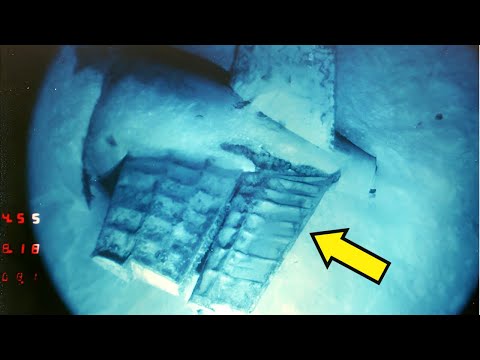
On October 28th, 1968, after months of methodical searching guided by Craven’s probability calculations, the Mizar’s cameras finally captured images of twisted metal and debris scattered across the ocean floor. The distinctive teardrop shape of a Skipjack-class submarine was unmistakable, even crushed and broken by the immense pressure of the deep ocean. The wreck of the USS Scorpion lay in pieces, her hull split into several sections by the devastating effects of implosion and impact with the seafloor. The submarine’s sail had been torn away, and her operations compartment had collapsed inward under pressure that exceeded 1,700 pounds per square inch. Despite the destruction, enough of the submarine remained intact to provide clues about her final moments.
The discovery marked the beginning of a new phase. Navy experts pored over thousands of photographs and debris, and each theory found its champion. One centered on a malfunctioning Mark 37 torpedo—a hot run that could turn the weapon against its own launcher. The Scorpion’s eastward heading seemed to support it, suggesting Slattery had ordered a 180-degree emergency turn to trigger the torpedo’s anti-friendly-fire mechanism.
Another pointed to the trash disposal unit, awaiting a replacement latch. A flooding failure there could have reached the massive 69-ton battery bank. Recovered battery covers bore metal fragments driven inward with force possible only from high-velocity explosions in air—meaning that compartment was dry when it blew.
A third theory involved hydrogen gas from battery charging. The SOSUS recordings captured two distinct explosions half a second apart, matching a hydrogen blast triggering a secondary detonation. The most controversial theory—Soviet attack—found no credible evidence; the small flotilla the Scorpion shadowed lacked the firepower to threaten her.
The court of inquiry’s final report, issued in January 1969, concluded that the certain cause of the loss could not be ascertained. That inconclusive finding has fueled decades of speculation.
What is certain is that the tragedy changed submarine safety forever. Never again would the Navy rush an overhaul at the expense of safety; SUBSAFE became absolute. The Mark 37 was redesigned, and new procedures guarded against hydrogen accumulation.
Today the Scorpion rests in 11,000 feet of water, a silent monument to 99 men, her reactor and torpedoes regularly monitored. The sea has kept her final secret. But her legacy endures in every sailor who dives safely because of lessons paid in blood.
What do you believe really happened to the USS Scorpion on that May night in 1968?
Report this article
Select a reason for reporting:






