You never forget the first time you see an A-10 Warthog in action. The bone-rattling roar of its GAU-8 Avenger cannon, the iconic BRRRRT that echoes across the valley, and the knowledge that salvation is raining down from above. For the men and women on the ground, that sound is the difference between life and death.
But behind that awe-inspiring firepower lies a story of dedication, sacrifice, and a bond unlike any other in military aviation. This is the story of the A-10, the pilots who fly it, and the soldiers who owe their lives to the “Grunts in the Sky.”
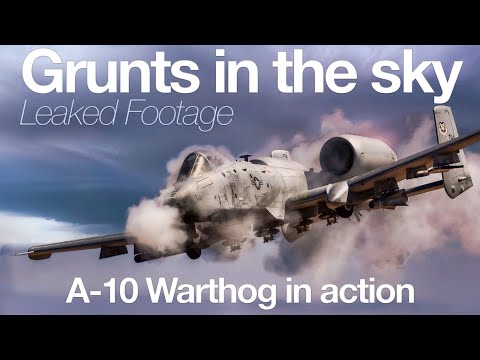
In the cockpit of an A-10, the mission is simple: protect the guy on the ground. “It’s all my soul and being is the guy on the ground,” says one pilot. “He could be an 18-year-old kid with a rifle. That’s all he has, and I’m here to protect him.” That singular focus sets the A-10 apart from every other aircraft in the inventory.
The journey to becoming an A-10 pilot is often serendipitous. For one pilot, it began in a hobby shop in 1979, staring at a Revell model of the then-new aircraft. “I looked at the box and thought, what in the world is that?” he recalls. For another, it was a chance encounter in a campus bar in 2003, where three guys in flight suits talked about the thrill of flying fighters. That conversation struck a nerve and set him on a path he never imagined.
Training to fly the Warthog is intense, and the stakes are high. Pilots compete for their dream aircraft, and the A-10 is often at the top of the list. “I was torn between the F-15E and the A-10,” admits one pilot. “But a respected instructor told me, ‘Mitchell, which patch do I wear on my shoulder on Friday?’ And that patch was always the A-10.” That endorsement sealed the deal.
The A-10’s baptism by fire came during Desert Storm, where it proved its mettle against Iraqi tanks. “You never forget when you look down and realize someone is trying to shoot you down, and you have to kill him first,” says a seasoned pilot. The aircraft’s titanium bathtub and redundant systems brought pilots home, while its fearsome cannon decimated enemy armor.
But the A-10 is more than a tank killer. It’s a precision strike platform, a search and rescue asset, and a guardian angel for troops in contact. “We hear him get scared. We attack. We hear him get excited. Now it’s happening. Good hit, good hit, good hit.” That personal connection is what makes the A-10 mission so unique.
In the mountains of Afghanistan, the A-10’s presence is often enough to deter enemy attacks. “The sound is so distinct it literally shakes the ground,” says one soldier. “You hear it first when it shoots, and then you hear an echo from the gun in the sky. That sound right there just drives 11 bravos nuts.” It’s the sound of freedom, a reassurance that someone is watching over them.
As the sun sets on another day in the desert, the A-10 pilots return to base, knowing they’ve made a difference. But tomorrow brings new challenges, new missions, and new opportunities to save lives. The Grunts in the Sky will be ready, as they always are.
For the pilots, the bond with the ground troops is forged in hours of listening to a voice on the radio—a voice that becomes a person, a life, a responsibility. “We hear him take cover. We hear him breathing hard,” one pilot explains. “And it becomes a very personal, very personal mission, especially when you start hearing about guys taking wounded down there. It hits very, very close to home.”
That intimacy is unique to close air support. Unlike air interdiction or air-to-air combat, where the effects are abstract and delayed, the A-10 pilot sees the results of his work in real time. “You can’t really grasp the benefits of it right away,” he says. “You’re going to wait a certain time to see the effects. But close air support is about the guy on the ground.”
The A-10’s mission has evolved from its Cold War origins as a tank-killer to a precision-strike platform in the mountains of Afghanistan. “The same gun we used to kill the main battle tanks in 1991 is the same gun we can use to shoot a single insurgent fleeing on a motorcycle,” a pilot notes. The aircraft’s sensors and avionics have been upgraded, allowing it to generate precise coordinates and deliver ordnance with pinpoint accuracy.
But technology never replaces the human element. “The sensors are amazing,” he admits. “They enable precision strikes. But they will never replace just looking out of my cockpit and seeing the battle space, the big picture.” That big picture includes the ANA soldiers, the Afghan National Army, whose nervous body language speaks volumes before the first shot is fired.
On a dusty patrol south of the FOB, the tension is palpable. The village of Espandi is a known hotspot, and the intel is sketchy. “It just felt weird from the moment we got down there,” recalls a soldier. “There was high tension. You could feel it in the ANA’s body language, his nervous movement back and forth.” The patrol spreads out, link-up complete, but the feeling of unease lingers.
When the ambush comes, it’s sudden and precise. “We were about 500 meters outside the village and started taking some pretty accurate fire,” the soldier says. “There was no cover. The best you can do is spread out, get fire superiority, and wait for air support.” Communications are spotty, but the A-10s are already on station, pushed down to their position.
Within minutes, the Warthogs are working with the Joint Forward Observer on the ground. “I’ve got your position south of the tree line,” the pilot radios. The A-10s make a show of force, a power demonstration that sends a clear message to the enemy. “The A-10 has proven itself time and again as a real nightmare for the enemy,” a pilot says with quiet pride. “Just its mere presence alone is enough to keep the enemy at bay.”
The ground troops, pinned down and taking harassing fire, hear the distinctive sound of the Avenger cannon. “You hear it first when it shoots, and then you hear an echo from the gun in the sky,” a soldier describes. “That sound right there just drives 11 bravos nuts.” The enemy fire slackens, then stops. The A-10s have done their job.
For the pilots, the reward is not medals or accolades. It’s the voice on the radio, the one that was scared and now is excited. “Good hit, good hit, good hit,” the ground commander calls out. The mission is complete. The guy on the ground is safe. And tomorrow, the Grunts in the Sky will do it all over again.
The bond between the A-10 and the ground troops is not just tactical—it’s deeply personal. “Any one of these guys could take the radio if I get shot in the face,” says one pilot, “and employ the aircraft. They’re really professional, very well-trained. If you’ve got a random Joe who doesn’t know what to do, these guys can pull it out of them.” That trust is earned through years of training and shared experience.
For the soldiers on the ground, the A-10 is more than a weapon—it’s a lifeline. “To win a war, you need boots on the ground,” a soldier explains, “and to have boots on the ground, you need support. And you need the right kind of support. That’s the A-10.” The aircraft’s loiter time, armor, and firepower make it uniquely suited to the close fight.
But the A-10’s future is not without controversy. The Air Force has repeatedly tried to retire the fleet, arguing that it’s obsolete in an era of stealth and precision-guided munitions. “Some people see it as ugly,” a pilot admits. “Who wants to fly that thing? But you know what? It was built for one mission, and it does it better than anything else.” The Warthog’s advocates in Congress and the Army have kept it flying, but the debate continues.
In the meantime, the A-10 continues to prove its worth in conflicts around the world. From the deserts of Iraq to the mountains of Afghanistan, the Warthog has answered the call. “When people look back 10, 20, 30, 40, 50 years from now,” a pilot reflects, “they’ll see this airframe, and it will always be known as a legend.” The sound of the Avenger cannon, the sight of the Warthog’s distinctive silhouette, and the knowledge that help is on the way—these are the things that define the A-10’s legacy.
As the sun rises on another day in the desert, the pilots of the 74th Fighter Squadron prepare for their next mission. The intel brief is grim: Taliban commanders are massing in the Espandi valley, and the ground troops are moving in. “We’re going into the heat of it,” the flight lead warns. “Keep your eyes open and be vigilant.” The A-10s will be there, as they always are, ready to rain down fire and steel in defense of the guy on the ground.
The Warthog’s story is far from over. With each passing year, it defies its critics and exceeds expectations. “It’s the sound of freedom,” a soldier says simply. “It’s the sound of not messing with me.” And as long as there are troops in contact, the A-10 will be there, a guardian angel with a 30mm cannon, ready to answer the call.
The mission that day in Espandi would become another chapter in the A-10’s storied history. The Taliban had massed in the valley, and the ground troops were moving in. “We’re going into the heat of it,” the flight lead warned. The Warthogs launched at dawn, their distinctive silhouette cutting through the morning haze.
On the ground, the soldiers moved cautiously through the village. The intel was good—weapons caches, enemy fighters, the works. But nothing prepares you for the moment the first shot rings out. “Contact! Contact!” The radio crackled with urgency. The A-10s were already overhead, circling like hawks.
What happened next was textbook close air support. The Warthogs rolled in, their Avenger cannons roaring. “Good hits! Good hits!” the ground commander shouted. The enemy fire faltered, then stopped. The soldiers pushed forward, clearing the village house by house. By nightfall, the mission was complete.
Back at base, the pilots debriefed over coffee. “That’s why we fly this thing,” one said, tapping the table. “Not for the medals. For the guy on the radio who gets to go home to his family.” The A-10 had done it again—saved the day, protected the grunts, and lived to fight another day.
The Warthog may be old, may be ugly, may be controversial. But as long as there are troops in contact, it will be there. “It’s the sound of freedom,” a soldier said. “It’s the sound of not messing with me.” And that sound—the BRRRRT of the Avenger—will echo through history.
What’s your favorite story of the A-10 Warthog? Share it in the comments below.
Report this article
Select a reason for reporting:






