What if the dead could speak? What if the dust of the frontier could be brushed away to reveal the faces of those who lived and died by the gun? In a stunning fusion of history and technology, 20 of the Wild West’s most notorious figures have been brought back to life through artificial intelligence, their features reconstructed from archival photographs and eyewitness accounts. The result is a gallery of ghosts, each stare a challenge, each scar a story.
From lawmen who stood tall against impossible odds to outlaws who laughed in the face of the gallows, these are the men and women who carved their names into the American frontier. Their lives were violent, their deaths often brutal, and their legends immortal. Now, for the first time, we can look into their eyes and wonder: what would they think of us?
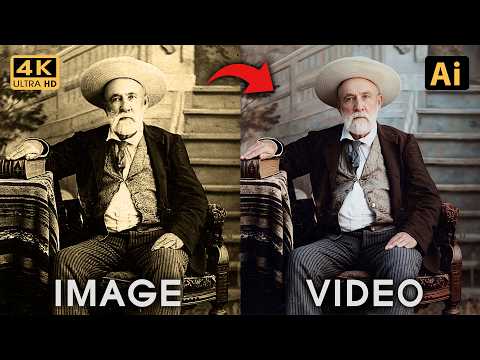
Take Elfego Baca, the legendary lawman of New Mexico. In 1884, he found himself pinned down by a mob of 80 armed cowboys. For 33 hours, he held them off, surviving a hail of bullets that would have killed any ordinary man. When the dust settled, Baca walked away without a scratch, and a legend was born. His face, now resurrected, still carries the calm defiance of a man who refused to die.
Then there’s Cherokee Bill, a man of mixed heritage who terrorized the Indian Territory. Born Crawford Goldsby, he was barely 20 when he was hanged, but in his short life he left a trail of blood and fear. The AI image shows a young man with cold eyes and a set jaw—a boy who became a monster.
But not all legends were outlaws. Judge Roy Bean, the self-proclaimed “Law West of the Pecos,” dispensed justice from a saloon, his rulings as unpredictable as the frontier itself. His portrait reveals a man with a twinkle in his eye, a jester in a judge’s robe. And Pearl Hart, the lady bandit who robbed a stagecoach and captivated the nation, stares back with a mix of defiance and charm.
These faces, frozen in time and revived by code, remind us that the Wild West was not just a place but a state of mind—a world where courage and cruelty walked hand in hand. As you gaze into these eyes, you might feel a chill. Because they are not just history. They are a mirror.
And this is only the beginning. The frontier holds many more secrets, and the dead have many more stories to tell.
Consider Tom Horn, the hired gun whose name still sparks debate. Scout, detective, executioner—Horn wore many hats, but it was the rope that finally fit him. His AI portrait shows a lean, weathered man with eyes that seem to look right through you. Some say he killed a boy. Others swear he was framed. Either way, the ghost of Tom Horn still haunts the Wyoming plains.
Then there’s Curly Bill Brocius, the outlaw king of Tombstone. His sneer is almost audible in the reconstructed image—a man who killed a marshal and dared the Earps to come for him. When Wyatt Earp finally pulled the trigger in 1882, it ended more than a life. It ended an era of outlaw swagger that Curly Bill embodied.
And what of Soapy Smith? The con man’s con man, who built a criminal empire on charm and sleight of hand. His portrait reveals a dapper gentleman with a sly smile—a man who could sell you your own watch and make you thank him for the privilege. Soapy died in a shootout in Alaska, but his spirit of cunning lives on in every scam that followed.
William Quantrill stares out from his image with the cold fury of a guerrilla leader. The Lawrence Massacre stains his name, but his face shows no remorse—only the hard calculation of a man at war with the world. He was hunted like a dog and shot down in Kentucky, yet his shadow stretched across the entire frontier.
Not every legend was a killer. Lillian Smith, the sharpshooter who rivaled Annie Oakley, beams with youthful confidence in her restored portrait. She was a teenager when she joined Buffalo Bill’s show, and her aim was as deadly as her smile. Her story reminds us that the West was also a stage, and women like Lillian stole the show.
But the West was not only a stage for the living—it was a stage for the dead as well. Ned Christie, the Cherokee warrior who held off U.S. marshals for five years, stares back with quiet dignity. His portrait is a study in contradiction: a man branded an outlaw by the law, yet revered as a hero by his people. The AI has captured something in his eyes—not anger, but endurance.
Clay Allison is another face that refuses to soften. Known for carrying an enemy’s skull as a trophy, his reconstructed image bristles with barely contained violence. He claimed he never killed a man who didn’t need killing—a line that sounds like a joke until you realize he meant every word. His death, crushed under a wagon wheel, was as bizarre as his life.
Then there is Big Nose Kate, the fiery companion of Doc Holliday. Her portrait shows a woman who has seen too much and survived it all—a saloon girl, a nurse, an accomplice, and a legend in her own right. She outlived nearly everyone from the Tombstone days, dying in 1940 at the age of ninety. The AI image captures her sharp gaze, as if she is sizing up the viewer and finding them wanting.
And Cynthia Ann Parker—her story is perhaps the most heartbreaking of all. Captured by the Comanche as a child, she became one of them, married a chief, and bore a son who would become the last great Comanche leader. Rescued against her will, she spent her final years lost between two worlds. Her portrait is tinged with sorrow, a woman who never truly belonged anywhere.
Then there’s Black Jack Ketchum, the train robber whose botched hanging made him a macabre legend. The AI image shows a man with a grim set to his jaw, as if he already knew how his story would end. In 1901, the rope snapped his head clean off—a death so gruesome it overshadowed his crimes. He was the only man in New Mexico ever hanged for train robbery, and his ghost still rides the rails in the stories they tell.
But for every outlaw, there was a lawman. Dallas Stoudenmire, the marshal of El Paso, stares out with the cold focus of a man who once killed four men in five seconds. His portrait is all sharp angles and hard eyes—a reminder that in the Wild West, justice was often just another word for speed.
And John Chisum, the cattle baron who built an empire on the Pecos River, looks every bit the shrewd businessman he was. His face is weathered but calculating, the face of a man who played both sides of the Lincoln County War and walked away richer for it.
Then there is Mickey Free, the Apache scout who bridged two worlds. Kidnapped as a child and raised among the Apache, he later served the U.S. Army with deadly efficiency. His portrait is a puzzle—part white, part native, and entirely his own man. He symbolizes the tragedy of a frontier where identity was never simple.
And finally, Emmett Dalton, the youngest of the Dalton gang, who survived being shot twenty-three times and lived to tell the tale. His AI image shows a man who has cheated death and knows it. He became a writer and actor, turning his outlaw past into a paycheck. In many ways, he was the first of these legends to understand the power of the image—something the AI has now made literal.
These faces, brought back from the dust, are more than curiosities. They are warnings and wonders. They remind us that the Wild West was not just a place—it was a test of what people become when the rules fall away. And as we look into their eyes, we might just see a little of ourselves.
But the gallery is not complete. There are faces yet to be summoned from the void, stories that still whisper in the wind. Frank James, the elder brother who outlived his infamous sibling, surrendered and walked free—a rare ending in a world that usually demanded blood. His portrait would show a man who learned to live with his sins.
And Bill Doolin, the cunning outlaw who escaped capture time and again, only to fall to a posse’s bullets in 1896. His face would be a study in defiance, the last flicker of a dying outlaw age.
These twenty legends, now resurrected, remind us that the frontier was never truly tamed. It lives on in every scar, every stare, every story passed down through generations. The Wild West was not a place—it was a fever dream that still burns in the American soul.
So look into their eyes. Ask yourself: who among them would you ride beside? Who would you fear? And who, after all this time, still has a story worth telling?
Which of these legends should we revive next—and what secrets do you think their faces still hide? Leave your thoughts in the comments below.
Report this article
Select a reason for reporting:






