The roar of the A-10’s cannon is not just a sound—it’s a promise. A promise to the 18-year-old rifleman on the ground that he is not alone. A promise to the enemy that they have made a fatal mistake. For decades, the Warthog has been the angel of mercy and the angel of death, all wrapped in a titanium bathtub. But how did this ungainly aircraft become the most beloved and feared machine in the sky? The answer lies in the hearts of the pilots who fly it and the soldiers who pray for its arrival.
It starts with a simple truth: “The number one priority is always to save guys on the ground,” says one pilot. That ethos is baked into every rivet of the A-10. Unlike other aircraft designed for air superiority or deep strike, the Warthog was built for one mission—close air support. It’s a flying tank, a gun with wings, and its pilots are cut from a different cloth.
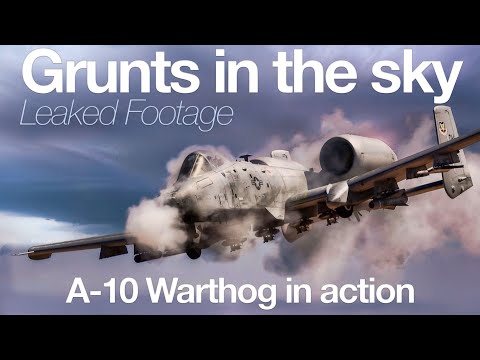
For many pilots, the love affair begins in childhood. One recalls a hobby shop in 1979, staring at a Revell model of the then-new A-10. “I was like, what in the world is that?” he laughs. That curiosity became a calling. Years later, when given the choice between an F-15E and an A-10, he didn’t hesitate. “The patch he always had on was A-10,” he says of his mentor. That patch was a badge of honor, a sign of belonging to a brotherhood dedicated to the grunts.
But the bond goes both ways. “We hear him get scared,” a pilot says of the ground commander. “We hear the bullets fly. We hear him take cover. We hear him breathing hard.” It’s personal. When the radio crackles with a plea for help, the A-10 is already rolling in, its massive cannon ready to unleash hell. The sound of that gun—a deafening BRRRRT—is the most beautiful music a trapped soldier can hear.
In the deserts of Afghanistan, that sound saved lives. A patrol ambushed outside the village of Espandi found themselves pinned down, taking accurate fire with no cover. “I have your position south of the tree line,” came the calm voice over the radio. Within minutes, A-10s were on station, their mere presence enough to make the enemy melt away. “The A-10 has proven itself again and again as being a real nightmare for the enemy,” says a ground commander. “Just its mere presence alone is enough to hold the enemy at bay.”
That presence is more than just firepower—it’s psychological warfare. “That sound right there drives 11 bravos nuts,” laughs one soldier. “It’s the sound of freedom.” But it’s also the sound of reassurance, a signal that someone up there cares. “It scares everyone and shows you that you’re in good hands,” adds another. For the pilots, it’s a sacred trust. “My whole soul and being is that guy on the ground,” one says. “He could be an 18-year-old kid with a rifle. That’s all he has, and I’m here to protect him.”
Yet the A-10’s future is never certain. The Air Force has tried to retire it multiple times, only to be met with fierce resistance from the Army and Congress. Why? Because the Warthog does something no other aircraft can: it loiters for hours, carries a massive payload, and flies low and slow, putting eyes on the target. It’s a flying Swiss Army knife, and its pilots are artisans of destruction.
As one veteran pilot puts it, “The same gun we used to kill the main battle tanks in 1991 is the same gun where we can shoot a single insurgent fleeing on a motorcycle.” That versatility is unmatched. But it’s the human connection that truly sets the A-10 apart. “We have this personal connection with the people we work so closely with,” says a pilot. “We hear him get excited. ‘Now it’s happening. That’s it. Good hit, good hit.'” Those moments are why the Warthog remains in the fight.
So the next time you see an A-10 in the sky, listen for the growl. It’s the sound of grunts who refuse to give up, of pilots who fly with their hearts, and of an aircraft that was written off as ugly but became a legend. The story of the Warthog is far from over—and the men on the ground are counting on it.
But the story of the A-10 is not just about the past. It’s about the present, where the aircraft continues to evolve. “We’ve transformed into a precision attack platform at medium altitude,” explains one pilot, “because the plane has been upgraded and modified to do that.” The sensors are now extraordinary, generating untouched coordinates that land right on target. Yet, as he quickly adds, “they will never replace just looking out of my cockpit and seeing the battle space—the big picture.”
That big picture is what the Warthog was made for. Low and slow, with a titanium bathtub protecting the pilot and a 30mm cannon that can shred tanks or take out a single insurgent on a motorcycle. “It’s a testimony to the aircraft,” says a veteran, “that the same gun we used in 1991 is still the same gun today.” But the mission has shifted. From linear battlefields to counterinsurgency, the A-10 has adapted without losing its soul.
What hasn’t changed is the relationship with the ground troops. “Any of these guys could take the radio if I get shot in the face,” says a pilot. “They’re really professional, very well-trained.” That trust is mutual. Soldiers know that when an A-10 is on station, they have a guardian angel overhead. “If you have a random Joe who doesn’t know what to do, those guys can pull it from them,” he adds. It’s that kind of hands-on support that makes the Warthog irreplaceable.
And yet, the fight to keep it flying never ends. Every few years, the Air Force proposes retirement, and every few years, the Army and Congress push back. Why? Because the A-10 does something no other aircraft can: it loiters for hours, carries a massive payload, and flies low and slow, putting eyes on the target. It’s a flying Swiss Army knife, and its pilots are artisans of destruction.
As one pilot puts it, “To win a war, you need boots on the ground, and to have boots on the ground, you need support. And you need the right kind of support—and that’s the A-10.” It’s a simple equation that Washington sometimes forgets, but the troops never do. “Even just a sound,” says a soldier, “or telling the ground commander, ‘Hey, A-10s are on the way’—it picks him up a little.”
That sound—the distinctive growl of the Warthog—is so recognizable that it literally shakes the ground. “You hear it first when it shoots, and then you hear an echo from the gun in the sky,” says one grunt. “That sound right there drives 11 bravos nuts. It’s amazing.” Another laughs: “I’m just peeing my pants. It’s the sound of banality of freedom, but it really is. It’s just a sound of ‘don’t mess with me.'”
For the pilots, the reward is not medals or glory. It’s the voice on the radio, the one that says, “Good hit, good hit, good hit.” It’s knowing that an 18-year-old with a rifle gets to go home. “We take it very, very close to home,” says a pilot. “No one ever wants to hear that.” But they do hear it, and they keep flying. Because the A-10 is more than a plane—it’s a promise. And as long as there are grunts on the ground, that promise will be kept.
But the promise is getting harder to keep. In the corridors of the Pentagon, a different kind of battle is being fought—not with bullets, but with budgets. “The Air Force has tried to retire it multiple times,” says one retired general, “and every time, the Army screams bloody murder.” The reason is simple: no other aircraft can do what the Warthog does. The F-35, touted as its replacement, is fast and stealthy, but it can’t loiter for hours at low altitude. It can’t take a hit and keep flying. And it certainly can’t bring the psychological comfort that comes from that distinctive growl.
Pilots who fly the A-10 are the first to admit its limitations. “It’s slow. It’s ugly. It’s not stealthy,” one says with a grin. “But when a guy on the ground is out of options, he doesn’t care about stealth. He cares about who’s coming to save him.” That blunt honesty is part of the Warthog culture. There’s no pretense, no glamour—just a job to do and a promise to keep.
The aircraft itself is a testament to rugged engineering. Its titanium bathtub, designed to protect the pilot from ground fire, has saved countless lives. “We’ve had A-10s come back with holes in them that would have downed any other plane,” says a maintenance chief. “The pilots walk away. That’s the difference.” It’s not just a machine—it’s a guardian angel with wings.
And yet, the men who fly it know the clock is ticking. “Every year, we hear rumors that this is it, this is the last deployment,” says one pilot. “But we keep going. We keep flying. Because as long as there’s a guy on the ground who needs us, we’ll be there.” That dedication is why the A-10 has outlasted its critics and why it remains the most requested aircraft by ground commanders in combat zones.
The bond between pilot and grunt is forged in moments of shared danger. “We hear him take cover. We hear him breathing hard,” a pilot recalls. “And then we roll in, and we hear him say, ‘Good hit, good hit.’ That’s everything.” It’s a connection that transcends rank, service branch, or politics. It’s human.
As the sun sets over another dusty forward operating base, the A-10s sit on the ramp, their engines cooling. Ground crews swarm over them, patching holes, loading ammunition, preparing for the next call. Somewhere out there, a patrol is moving through hostile territory, and they know that if things go wrong, the Warthog will answer. “That sound,” says one soldier, “is the sound of hope.”
But hope is fragile. The Air Force’s plan to retire the A-10 by the late 2020s looms like a storm cloud on the horizon. Lawmakers have fought back, mandating studies and blocking funding cuts, but the writing is on the wall. “We’re a dying breed,” admits one pilot. “But we’re not dead yet.”
That stubborn refusal to die is written into the Warthog’s DNA. From the hobby shop shelf in 1979 to the dusty ramp in Afghanistan, the A-10 has always been the underdog—misunderstood, underestimated, and utterly indispensable. “Some people see it as ugly. Who wants to fly that thing?” one pilot muses. “But you know what? It was built for one job, and it does that job better than anything ever made.”
So when the last A-10 finally rolls to a stop and the engines go quiet, it won’t be the end. The legend will live in every soldier who looked up and heard that growl, in every pilot who flew low and slow into the fight, and in every 18-year-old kid who made it home because someone up there cared. “It’s a sound of ‘don’t mess with me,'” a grunt said. That sound will echo long after the last round is fired.
The Warthog was never meant to be pretty. It was meant to be there. And for the men on the ground, that’s all that ever mattered. “We’re primarily a support element for the Army,” a pilot says. “We care about the guy on the ground.” That simple creed is the A-10’s true legacy—a promise that outlasts budgets, politics, and time itself.
But the question remains: when the last Warthog retires, who will answer the call? Will the next generation of aircraft carry that same soul, or will the sound of freedom fade into memory? What do you think—can any plane truly replace the A-10? Share your thoughts below.
Report this article
Select a reason for reporting:






