Bart Millard sat in the dimly lit room, his fingers trembling as they hovered over the piano keys. The melody that would become the best-selling Christian single of all time was already playing in his head, but the words—those came from a place of deep, unhealed pain. He closed his eyes and saw his father’s face, twisted with rage, then softened by tears. “I can only imagine what it will be like,” he whispered, the lyrics pouring out like a confession. In just ten minutes, the song was written, but it had taken a lifetime to live.
That lifetime began in the 1980s, in a small Texas town where the heat shimmered off the asphalt and secrets stayed locked behind closed doors. Bart was just a boy when his mother walked out, leaving him with a father who had once been a gentle giant but had turned into something else entirely—a monster created by a tragic accident.
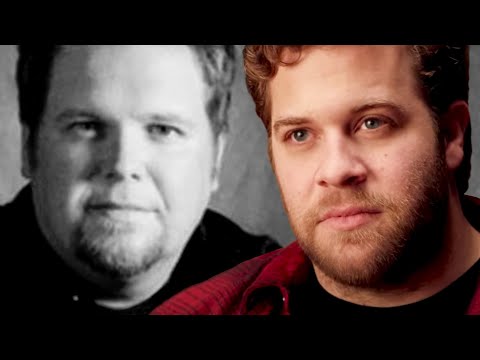
Arthur Millard was not always a man to be feared. Before Bart was born, Arthur was a star football player, a teddy bear of a man with a booming laugh and a soft heart. But a devastating head injury on a construction site changed everything. “When he woke up, he had the foulest mouth and the worst temper,” Bart recalled. “It took twelve people to hold him down.” The man who emerged from that coma was a stranger—volatile, violent, and unpredictable.
Bart became his punching bag. Beatings were as routine as breakfast, sometimes three or four times a week. “If he got embarrassed or cut off in traffic, he would take a swing at me,” Bart said. The abuse was worse than what the movie showed—a razor strap, a broken plate over his head, bruises so deep he couldn’t lie on his back for hours. Yet, in the midst of the horror, there were moments of twisted tenderness, like the night his father saw the welts on his back and broke down crying.
But the movie took liberties. Bart’s mother actually left when he was three, not thirteen. His older brother Stephen was erased from the story entirely. And the timeline of his father’s cancer was condensed for dramatic effect. The real Bart was still living at home when his father was diagnosed with pancreatic cancer, and he witnessed firsthand the transformation of a monster into a man of faith. “I got a front row seat to see this guy go from being a monster to falling desperately in love with Jesus,” Bart said.
It was that transformation that inspired the song. At his father’s funeral, Bart’s grandmother said, “I can only imagine what your dad’s seeing now.” The phrase stuck with him for years, scribbled on notebooks and napkins, until finally, in 1998—seven years after his father’s death—he sat down at the piano and finished it.
As Bart played the final chord, he felt a peace he hadn’t known in years. But the journey was far from over. The song would go on to touch millions, but the road to get there was paved with heartache, forgiveness, and a love that refused to die.
The phone rang at two in the morning, and Bart nearly knocked over the lamp reaching for it. It was Shannon, her voice shaky but determined. “Bart, I heard the song. I just… I had to call.” He hadn’t spoken to her in weeks, not since the breakup he’d written into the movie script—the one that never actually happened in real life. In reality, Shannon had been by his side through everything, from high school youth group to the hospital hallways where his father fought cancer.
But the movie needed drama, so the writers invented a split. Bart laughed about it later, telling interviewers, “My wife was my first girlfriend in eighth grade. We never broke up. They just needed something to fill the screen time.” What the movie didn’t show was the real Shannon—the one who sat with him in the waiting room, who held his hand when his father died, who would eventually become his wife on November 8, 1997.
Back in the studio, the producer tapped the glass. “Again, Bart. From the top.” He nodded, but his mind drifted to the will. His father had left him six hundred dollars a month—barely enough to cover rent, but enough to keep chasing the dream. “He set it up so I could follow my music,” Bart said. “I got the final check the same week ‘I Can Only Imagine’ hit number one.”
The irony wasn’t lost on him. His father had spent years breaking him down, and in the end, he’d built him back up—posthumously, with a monthly check and a phrase that wouldn’t leave his head. “I can only imagine.” His grandmother had said it at the funeral, and now the whole world was singing it back to him.
But the song almost didn’t belong to him. Amy Grant had recorded it first, and the movie showed her calling him up on stage during a concert—a dramatic moment that never happened. “She gave the song back to me before the show,” Bart clarified. “She knew it would be a career maker. She told me to perform it with her.” No surprises, no sudden change of heart. Just a generous artist handing a young songwriter the break of a lifetime.
Still, the weight of it pressed on him. Every time he sang the chorus, he saw his father’s face—not the monster, but the man who had cried when he saw the bruises. The man who had fallen in love with Jesus in a hospital bed. The man who, in his final months, had become someone Bart wanted to be like.
MercyMe hit the road that spring, playing small churches and coffeehouses. The band name came from his grandmother, of course—“Mercy me!” she’d exclaimed when he told her he wanted to be a singer. It stuck. And as the crowds grew, so did the letters. People wrote to Bart about their own fathers, their own monsters, their own moments of impossible grace.
One letter stood out. A teenage boy from Oklahoma wrote: “My dad beat me too. I didn’t think God could forgive him. Then I heard your song.” Bart read it three times before folding it into his pocket. He didn’t have an answer. He still didn’t. But he knew the song was bigger than him now—bigger than the abuse, bigger than the cancer, bigger than the movie that would one day be made about his life.
He stepped onto the stage that night, the lights hot on his face, and closed his eyes. The opening chords of “I Can Only Imagine” filled the room, and for a moment, he was back in that dim little room with the piano, ten minutes and a lifetime colliding.
The tour bus rattled down a stretch of highway outside Amarillo, and Bart stared at the letter again. The boy’s handwriting was messy, the paper creased from being folded and unfolded too many times. “I didn’t think God could forgive him.” The words sat heavy in his chest, heavier than any memory of the razor strap.
He pulled out his phone and called Shannon. It rang twice before she picked up, the sound of their kids shouting in the background. “You okay?” she asked, because she always knew. He told her about the letter, about the boy, about the strange guilt that came with being someone’s answer when he still had so many questions of his own.
Shannon was quiet for a moment. “Bart, you don’t have to have all the answers. You just have to tell the truth.” It was the same thing she’d told him in high school, back when they were thirteen and fifteen and the only thing he knew about love was that his father had never quite figured it out.
He hung up and stared out the window at the flat Texas horizon. The truth. That was the thing the movie would never fully capture—not the beatings, not the broken plate, but the slow, agonizing work of forgiveness. It hadn’t happened overnight. It had happened in hospital rooms and funeral homes and years of silence.
His mind drifted back to the last conversation he’d ever had with his father. Arthur was thin by then, his voice a rasp, his hands folded over a Bible he’d never touched before the diagnosis. “I don’t know why God let me live this long,” Arthur had said. “I don’t deserve it.”
Bart had wanted to argue, to list every bruise and every sleepless night, but something stopped him. Instead he said, “Maybe He’s not done with you yet.” His father had laughed—a hollow, broken sound—and then he’d cried. Not the way he cried that night he saw the welts, but differently. Quieter. Like a man finally letting go of something he’d been carrying for decades.
A week later, Arthur Millard was gone. The funeral was small, the casket plain, the flowers from Bart’s grandmother’s garden. She stood by the grave and said the words that would follow him for the rest of his life: “I can only imagine what your dad’s seeing now.”
He hadn’t written the song then. He couldn’t. The grief was too fresh, too tangled with anger and relief and a love he didn’t know how to name. It took seven years—seven years of playing bars and churches, of marrying Shannon, of watching his own sons grow and wondering what kind of father he would be.
The bus hit a pothole and jolted him back to the present. His phone buzzed. A text from the producer: “Amy Grant wants to meet. She’s heard the demo.”
Bart exhaled slowly. He’d been told the song was special, but special didn’t always mean anything in Nashville. He typed back a quick reply and tucked the letter into his Bible, right next to the page where his father had underlined a verse in shaky handwriting: For I know the plans I have for you.
He didn’t know if his father had really believed that at the end, or if he’d just wanted to. But as the bus rolled on toward the next town, Bart realized it didn’t matter. The song wasn’t about certainty. It was about imagination—the holy, aching space between what we know and what we hope.
The stage lights were waiting. And somewhere out there, a teenage boy from Oklahoma was waiting too.
The years that followed were a blur of tour buses and crowded arenas, but the song never lost its weight. Every night, Bart would close his eyes and let the words rise from that same dim room where he’d first whispered them. “I can only imagine,” he sang, and the crowd sang back, a thousand voices carrying a prayer he still didn’t fully understand.
He thought of the movie they’d make one day—the actors, the script, the dramatic breakup that never happened. He thought of his brother Stephen, absent from the story, and his mother, who had reconciled with Arthur before the end. “They can’t fit everything,” Shannon reminded him. “They’re telling the heart, not the timeline.”
She was right. The heart was this: a monster who became a man of faith. A boy who became a singer. A song written in ten minutes that took a lifetime to live.
Bart stepped off the bus one last time, the Texas wind warm on his face, and smiled. His father was gone, but the check still came every month—not enough to live on, but enough to remember. Enough to imagine.
What would you sing if you could only imagine?
Report this article
Select a reason for reporting:






