The silence in the grand hall was absolute, a heavy blanket that smothered even the faintest breath. Then, a single, crystalline note pierced the air—a sound so pure it seemed to fracture reality itself. From the shadows, a figure emerged, his fingers dancing over invisible keys, his eyes closed in rapture. It was him. Johann Sebastian Bach, alive again.
But this was no ordinary concert. This was a resurrection. One by one, they returned: Beethoven, his deaf ears now hearing every whisper of the cosmos; Mozart, his childlike grin belying centuries of genius; Tchaikovsky, his heart finally free from the torment that had haunted him. Each had been pulled from the annals of history, their music never truly dead, but their presence now a shockwave through time.
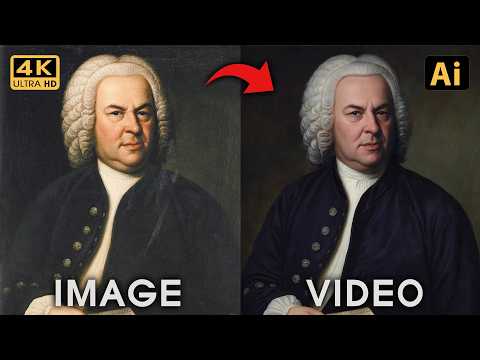
The air crackled with anticipation. The audience, a mix of scholars, skeptics, and awestruck fans, sat frozen. They had come expecting a hologram, a clever AI reconstruction. They had not expected this. The figures were solid, their movements fluid, their eyes brimming with the memories of lifetimes long past. Bach stepped forward, his voice a low rumble: “We have been waiting,” he said, “for someone to listen.”
Behind him, the others materialized, each a legend reborn. Beethoven’s scowl was tempered by a glint of curiosity. Mozart winked at a woman in the front row, who gasped and clutched her chest. Chopin, pale and ethereal, drifted toward the piano, his fingers brushing the keys as if greeting an old friend. The room held its breath.
This was not a séance. It was a reckoning. For centuries, their music had been studied, dissected, and revered. But now, they were here to answer the questions that had lingered in the margins of history. What drove them? What haunted them? And what did they think of the world their melodies had shaped?
As the first chords of a Bach fugue filled the hall, the boundaries between past and present dissolved. The audience leaned in, tears streaming down faces, as the impossible became real. “We are not ghosts,” Mozart said, his voice light but piercing. “We are the echoes you refused to forget.”
But why now? What force had torn the veil between worlds? The answer, it seemed, lay not in the music alone, but in the silence that had preceded it—a silence that had grown too loud to ignore. And as the concert began, each composer stepped into the spotlight, ready to share not just their art, but the secrets they had carried to the grave.
Bach’s fugue dissolved into a hush, and the spotlight shifted. Beethoven rose from his chair, his wild hair a silver halo, his gaze sweeping the audience with a ferocity that made the scholars flinch. “You ask why we have come,” he said, his voice a gravelly thunder. “Because you have forgotten how to listen with your souls.”
He strode to the grand piano, his fingers finding the keys with an intimacy that defied his deafness. The opening bars of the Moonlight Sonata rippled through the hall, but slower than any recording, each note a heavy drop of regret. Then he stopped, mid-phrase, and turned. “I wrote this for a love I could never have,” he confessed. “And you have turned it into a ringtone.”
A nervous laugh rippled through the crowd, but Beethoven’s face remained stone. He was not joking. Mozart, ever the showman, bounded forward and clapped him on the shoulder. “Ludwig, my friend, you always did have a flair for the dramatic,” he said, then spun to face the audience with a grin. “He’s right, though. You’ve made us into statues—gilded, untouchable. But we were messy. We were broke. We were alive.”
He gestured toward Chopin, who stood by the piano, his translucent fingers trembling. “Frédéric here once told me he dreamed of his homeland every night. And what do you do with his nocturnes? Play them in elevators.” Chopin lowered his eyes, a faint blush coloring his ghostly cheeks. “It is true,” he whispered. “But the longing… it never left.”
The hall seemed to darken, the chandeliers dimming as if the composers themselves were drawing the light inward. Tchaikovsky stepped forward, his hands clasped, his expression raw. “You know my pain,” he said softly. “You know how I suffered. But do you know why I kept writing?” He paused, and the silence was a living thing. “Because beauty is not a comfort. It is a defiance.”
From the back of the stage, a new figure emerged—Fanny Mendelssohn, her presence a quiet storm. She had been watching, waiting. Now she walked to the center, her eyes blazing with a fire that centuries of obscurity had not quenched. “You praised my brother,” she said, her voice steady. “You played his music and called it genius. But you forgot mine. You published it under his name and called it his.”
Felix Mendelssohn, who had been standing in the shadows, stepped forward, his face stricken. “Fanny, I—” She raised a hand, silencing him. “I do not blame you, brother. I blame the world that made you the only door I could knock on.” She turned to the audience. “I wrote over four hundred works. How many of you can name one?”
A heavy silence answered her. Then, from the front row, a young woman raised her hand, tears glistening. “I can,” she said, her voice shaking. “The Easter Sonata. I played it for my audition.” Fanny’s stern expression softened, and for the first time, she smiled—a fragile, luminous thing. “Then you are why I came back.”
But before the moment could settle, a new sound cut through the hall—a low, dissonant chord that made the air vibrate. Wagner stepped from the wings, his eyes burning with a dark intensity. “Enough sentiment,” he growled. “You want to know why we are here? It is not for your tears. It is because music is being killed—by algorithms, by convenience, by your endless hunger for noise.”
He raised his hand, and the hall’s walls seemed to dissolve, revealing a vision: a world of screens, of playlists curated by machines, of symphonies reduced to background hum. “You have the power to create,” Wagner thundered, “yet you choose to consume. We did not die for this.”
Brahms, who had been silent until now, stepped beside him, his expression weary but resolute. “He is right,” he said quietly. “I spent my life trying to honor the past while forging something new. But you—you have stopped forging. You only replay.”
The audience sat stunned, the weight of the accusation pressing down on them. And in that moment, the composers turned as one toward the back of the stage, where a final figure waited—a woman with a gentle smile and eyes that held the wisdom of a thousand songs. Clara Schumann stepped forward, her presence a quiet balm. “Enough,” she said, her voice warm but firm. “We did not come to scold. We came to remind.”
She walked to the piano and sat down, her hands poised above the keys. “Let us show you what we mean.” And as her fingers descended, the first notes of a new piece—something never heard before, something born of the space between centuries—filled the hall, and the audience leaned forward, breathless, as the story of their return began to unfold in earnest.
The melody Clara played was unlike anything the hall had ever heard. It began with a simple phrase—almost a lullaby—then unfurled into a conversation between voices, each one distinct, each one aching. It was a duet written for two pianos that existed only in her memory, a piece she had never committed to paper.
Robert Schumann, seated at the edge of the stage, buried his face in his hands. “I remember that,” he choked. “You played it for me the night before I… before I lost myself.” Clara did not stop playing, but her eyes found his across the stage, and in them was a forgiveness that spanned decades.
When the final chord faded, the silence was different now—not heavy, but full. Verdi rose, his barrel chest swelling with emotion. “This is what you have forgotten,” he declared. “Music is not a product. It is a conversation between souls.” He gestured toward the audience. “You sit there, phones in hand, waiting for the next distraction. But we are here, speaking to you. Will you answer?”
A man in the third row—a music critic known for his savage reviews—stood up, his face pale. “I have spent my career analyzing your work,” he said, his voice trembling. “But I never once asked what you felt.” He turned to Beethoven. “What did you feel when you wrote the Ninth?”
Beethoven regarded him for a long moment, then walked to the edge of the stage. “I felt nothing,” he said, and the hall gasped. “Nothing but the music. My ears were dead, but my mind—my mind was a cathedral of sound. I did not write for you. I wrote because I had no choice.” He paused, his scowl softening. “And that is what you lack. You create only when it is convenient. We created because we could not breathe otherwise.”
Chopin, who had drifted to the harpsichord, let his fingers wander over the keys, producing a fragile, wandering melody. “I wrote for the piano because it was the only voice that never left me,” he murmured. “When I was ill, when I was alone, when Poland was a dream I could not touch—the piano listened. It never interrupted. It never judged.”
Mozart, for once, said nothing. He simply walked to the center of the stage and began to hum—a tune so simple, so pure, that several audience members found themselves humming along without realizing it. Then he stopped, grinning. “See? You remember. You just forgot you remembered.”
But the mood shifted when a young woman in the balcony raised her voice. “What about us?” she called out. “What about the composers you never mention? The women, the people of color, the ones history erased?”
Fanny Mendelssohn exchanged a glance with Clara, then stepped forward. “You are right to ask,” she said. “We were not the only ones. There are hundreds—thousands—whose music was silenced. We are here to open the door, not to stand in it.” She looked toward the wings, and a new figure emerged—a woman with dark eyes and a regal bearing, her presence commanding instant attention.
“Allow me to introduce myself,” the newcomer said, her voice rich with authority. “I am Hildegard von Bingen. You may have heard of my chants. But I suspect you have not heard of the countless women who came after me and were forgotten.”
The audience stirred, and the composers on stage parted to make room for her. Hildegard walked to the center, her medieval robes rustling, and raised her hands. “We are not here to perform for you,” she said. “We are here to ask you a question: what will you do with the silence we have broken?”
The hall fell still, and the composers turned toward the audience, their eyes expectant. The answer, it seemed, was not theirs to give.
The silence stretched, taut as a string about to snap. Then the young woman in the balcony spoke again, her voice steadier now. “We will listen,” she said. “Not just to you—but to the ones you brought with you.”
Hildegard smiled, and the composers on stage seemed to exhale. Bach stepped forward one last time. “Then our work is done,” he said. “The rest is yours.”
One by one, they began to fade—not into darkness, but into light, their forms dissolving into the very air they had thickened with sound. Mozart blew a kiss. Beethoven nodded once, sharply. Chopin’s last glance lingered on the piano.
And then they were gone, leaving only the echo of a question: What will you create now that you know the cost of silence?
What will you do with the music they gave you?
Report this article
Select a reason for reporting:






