Somewhere in the archives of Wright Field, Ohio, buried under decades of declassified documents, lies a set of engineering drawings for an engine that should have changed the world. It described a 24-cylinder, 9,350-cubic-inch piston engine projected to produce 5,000 horsepower—more than twice the displacement of the largest mass-produced American radial. And yet, you have almost certainly never heard of it.
The complete engine was never built. The aircraft it was meant to power flew with something else entirely. The company that developed it walked away the moment the contract was canceled. The story of the Studebaker XH-9350 is not a story of failure—it is the story of what happens when an industry pushes a technology to its absolute limit, only to discover at the exact moment of completion that the entire technology has been rendered obsolete.
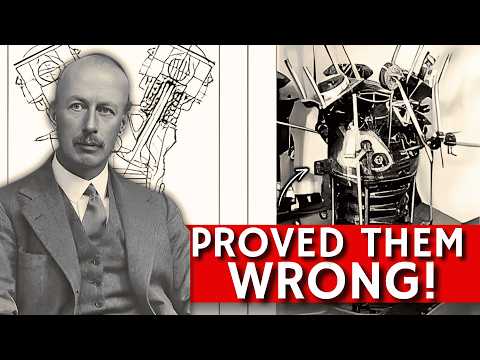
It is the story of an engineer named Samuel Heron, who spent two decades arguing that piston engines had far more potential than anyone believed—and who turned out to be completely correct at precisely the moment when being correct stopped mattering. And it is the story of how a company best known for building cars and trucks found itself at the center of one of the most ambitious engine development programs in American history.
To understand why any of this happened, you have to start not in a factory or a laboratory, but in the skies over Europe in the 1930s, where the performance gap between American and European aviation was becoming impossible to ignore. While American designers produced workmanlike machines like the Curtiss P-36 Hawk, the Germans were flying prototypes of the Messerschmitt Bf 109, and the British were developing the Supermarine Spitfire and Hawker Hurricane, both powered by the Rolls-Royce Merlin—a liquid-cooled V12 that represented some of the finest engineering then available.
The gap was not just in airframe design; it was in power plants. The Americans had excellent air-cooled radials, but liquid-cooled engines—the kind that could be mounted with low frontal drag in a slender fighter fuselage—were falling behind. Engineers at the United States Army Air Corps understood this clearly, and they had been trying to address it since the early 1930s through a research program so ambitious that it barely seemed credible at the time. They called it the Hyper Engine Project.
The Hyper Engine concept began with a challenge. In the late 1920s, a British engineer named Harry Ricardo—one of the most respected names in combustion science—wrote a paper arguing that the conventional poppet valve piston engine had essentially reached its limit. Ricardo believed that to achieve the kind of power density the military was asking for, you would need to move to sleeve valve designs or diesel compression ignition, because poppet valves simply could not handle the thermal stress of very high output operation without failing.
Ricardo was not speaking from ignorance. His Bristol sleeve valve engines were among the most powerful British engines of the war. But his claim that poppet valves had reached their limit was precisely the kind of categorical declaration that engineers at Wright Field could not accept without testing it. And among those engineers was a man who had very specific reasons to believe Ricardo was wrong.
By the time Ricardo was publishing his pessimistic conclusions, Heron had already been working for several years on a technology that would directly address the central problem Ricardo had identified. In 1925, while employed at the Army Air Corps Engineering Center at Wright Field, Heron developed the sodium-cooled exhaust valve. It was one of those ideas that seems obvious in retrospect but required genuine insight to conceive.
The exhaust valve in a high-performance aircraft engine was among the most thermally stressed components in the entire machine. At high power settings, exhaust valve temperatures could reach levels that caused the metal to soften, to pit, to fail prematurely. The fundamental issue was thermal: heat could not be conducted away from the valve head quickly enough through a conventional solid stem. This was the ceiling that Ricardo had identified and interpreted as a fundamental limit of the poppet valve engine.
Heron saw it differently. He saw it as a heat management problem—a solvable engineering problem rather than an insurmountable physical barrier. His solution was elegant: a valve with a hollow stem partially filled with sodium. At temperatures above 98°C, sodium melts into a liquid. As the engine ran, the liquid sodium would slosh back and forth inside the hollow stem with every opening and closing cycle of the valve, carrying heat from the hot valve head down the stem, where it could be transferred to the valve guide and from there into the cooling system.
The valve ran dramatically cooler. The detonation risk that Ricardo had identified as the ceiling for poppet valve performance was pushed significantly higher. With that single innovation, Heron had demonstrated that the conventional piston engine had considerably more headroom than anyone had believed.
The Wright J-5 Whirlwind, the engine that carried Charles Lindbergh across the Atlantic in 1927, was among the earliest production engines to benefit from this technology. And the Allison V-1710 that powered early versions of the P-38 Lightning and the Curtiss P-40 Warhawk adopted sodium-cooled valves as a matter of course. Heron’s influence on American engine development was pervasive, extending in both directions—toward the practical engineering of production power plants and toward the theoretical framework of what high output engines could eventually achieve.
He did not stop there. Through the late 1920s and into the 1930s, Heron worked on the broader hyper cylinder project, an effort to define what a piston engine cylinder would look like if it was designed specifically to extract maximum power from minimum displacement. The project goal was specific and demanding: 1 horsepower per cubic inch of displacement at a weight of less than 1 lb per horsepower delivered. No production engine at the time came remotely close to those numbers.
The Continental E-1640, the 12-cylinder horizontally opposed engine that emerged as one of the clearest products of the hyper program, proved the concept was viable and demonstrated that Ricardo’s ceiling could be exceeded with the right combination of valve design, octane rating, and supercharging. The ideas Heron had developed found their way into the Allison engines, into Wright’s successive radial designs, and eventually into the philosophical framework that would shape the most ambitious piston engine program in American history.
Heron’s contribution was also instrumental in the broader story of aviation fuel development. He was one of the key figures who understood and advocated for the relationship between fuel octane rating and engine output at a time when most people in the industry were not yet thinking in those terms. The arrival of 100 octane aviation fuel in the late 1930s had an immediate and dramatic effect on the performance of every supercharged aircraft engine in service. A Merlin engine that produced 1,000 horsepower on 87 octane fuel could produce substantially more when the higher octane fuel prevented the detonation that had previously limited boost pressure and thus limited power. Keith Park’s fighter squadrons defending Southern England against the Luftwaffe in the summer of 1940 were flying on better fuel than the Germans, and that margin of chemical advantage was partly Heron’s legacy.
But none of those engines were large enough for what the Army Air Corps had in mind by the early 1940s. Because while engineers like Heron were exploring the upper limits of specific power output—power per cubic inch, power per pound—the strategic planners of the United States military were developing requirements that pointed in a different direction entirely. They needed not just high specific output; they needed total output on a scale that dwarfed anything previously attempted.
The reason was a bomber, and not just any bomber. The aircraft that would eventually become the Consolidated B-36 Peacemaker, the largest piston-engined bomber ever to enter mass production, a machine so enormous that it strained the imagination of the people designing it. The B-36 program grew directly out of a strategic nightmare that haunted American war planners in the very darkest months of 1940 and 1941. France had fallen. The Battle of Britain had just been survived, and the outcome had been far from certain. The Atlantic was contested, and the prospect of losing Britain entirely as an Allied base from which to project American air power over Europe was not a theoretical concern. It was a scenario that serious people at the highest levels of the American military establishment were actively planning for.
If Britain fell, if the United States lost all its European staging areas, how would American air power reach German targets? The answer, if there was one, lay in a bomber that could fly from the continental United States, cross the Atlantic, drop bombs on European targets, and return home without ever needing a forward base. That requirement translated directly into numbers: a 10,000-lb bomb load delivered to a target 5,000 miles away with a 5,000-ft runway takeoff.
In November of 1941, Consolidated Vultee, later known as Convair, won the contract with its Model 36 design, beating out Boeing’s competing proposal. The B-36 that eventually emerged had a wingspan of 230 feet, wider than a football field, and a fuselage 162 feet long. It required enormous fuel capacity and enormous power, which meant the engine question was not a peripheral detail but the central engineering problem of the entire program.
Pratt & Whitney was working on the R-4360 Wasp Major, a 28-cylinder, four-row air-cooled radial that would eventually become the largest displacement aviation piston engine to be mass-produced in the United States. At its peak, with turbocharging, the Wasp Major could generate 4,300 horsepower. That was extraordinary. The R-4360 cylinders were arranged in a characteristic spiral pattern, four rows of seven cylinders each, offset from one another to allow airflow to reach the rear rows, giving the engine a shape that inspired its popular nickname of “corncob.” But even the Wasp Major, in multiple installations on the B-36, only brought the bomber to the margins of what the performance requirements demanded.
Before the Wasp Major was even fully developed, before the B-36 program had settled on its final engine configuration, the Army Air Corps had already commissioned a separate and even more audacious attempt to solve the power problem differently. Not through multiple installations of large radials, not through the jet auxiliary that would eventually be bolted onto the B-36’s wings, but through a single massive liquid-cooled piston engine of unprecedented displacement and unprecedented output. The program was designated MX-232, and the Army went looking for a company to build it.
The search for a development partner revealed how stretched the established aircraft engine industry already was by 1941. The Army needed engineering capability, manufacturing capacity, and availability—a combination almost impossible to find in wartime America. The search converged on a South Bend, Indiana automotive manufacturer whose primary products until a year earlier had been passenger cars and light trucks: the Studebaker Corporation.
Studebaker had been an American institution since before the Civil War, building wagons that carried settlers westward and supplied Union forces. By the 1930s it was producing elegant, well-engineered automobiles like the Commander and the President, earning a reputation for quiet engineering excellence. When the war came, it pivoted to military production with striking effectiveness, turning out the US 6 truck by the tens of thousands and developing the M29 Weasel entirely in-house.
Crucially, Studebaker had already demonstrated it could build aircraft engines. Since January 1941, the company had been producing the Wright R-1820 Cyclone under license—the nine-cylinder radial that powered every Boeing B-17 Flying Fortress. Studebaker eventually delivered 63,789 of these engines, more than any other single manufacturer. The Army knew Studebaker could manage a complex manufacturing program. What they needed to know was whether Studebaker could manage this one.
The answer arrived in 1942 in the form of an engineer. The Army was willing to give Studebaker the MX-232 contract, but on the condition that the company find a qualified chief engineer to lead development. The automotive expertise available in South Bend did not extend to the aerodynamic and thermodynamic challenges of a liquid-cooled aircraft engine operating at the absolute frontier of piston technology. The man they found was Norman Nevin Tilly.
Tilly brought exactly the specialized knowledge the project required. He understood aircraft engine design at a level of detail no amount of automotive experience could substitute for—supercharger matching, valve timing for high-altitude performance, the thermal management challenges of liquid cooling under extreme power loading, and the combustion science essential to making an engine of this size run reliably. With Tilly in place as technical lead, the contract was signed, the laboratory space was designated, and the most extraordinary piston engine development program in American history quietly began.
The conceptual challenge was not simply scaling up existing technology. It was rethinking the entire architectural framework of the large aircraft engine from first principles. The Army’s requirement was unambiguous: 5,000 or more horsepower from a single installation, at altitude performance sufficient for strategic bombing, with fuel efficiency that could support intercontinental range. No existing engine came close.
The Rolls-Royce Merlin in its most powerful wartime development produced about 1,900 horsepower. What Studebaker was being asked to build would need nearly twice that output, with better fuel efficiency, in an installation geometry dictated by the enormous wing structure of a very large bomber. The geometry constraint was fundamental to every subsequent engineering decision.
A single large engine in a conventional installation would sit in a nacelle below or mounted in the wing. For an engine producing 5,000 horsepower, the diameter required by a conventional radial configuration would be enormous, creating aerodynamic drag that would directly erode the range efficiency the whole project existed to achieve. The Army’s answer was to specify a buried wing installation. The engine would sit inside the wing structure with only the propeller shaft and gearbox extending forward into the airstream.
This was not a new idea. The Continental I-1430 had been designed as an opposed engine specifically so it could fit inside a wing. The Allison V-1710 in the Lockheed P-38 Lightning ran buried in the twin tail booms for the same reason. But for an engine of the displacement and power being contemplated for MX-232, the geometry problem was unprecedented.
The solution Tilly’s team arrived at was the H layout configuration—two flat, horizontally opposed banks of cylinders stacked one above the other, sharing a common crankcase, with two crankshafts geared together driving a single output shaft. The layout produces an engine that is wide and low rather than round and tall, a shape that integrates naturally into the profile of an aircraft wing.
The H configuration was not unique. The Napier Sabre was itself an H engine, its 24 cylinders arranged in four banks of six, and its experience had demonstrated both the potential and the challenges of this approach. But where the Sabre had 24 cylinders displacing around 3,600 cubic inches, what Tilly was designing would have 24 cylinders displacing 9,350 cubic inches. Each individual cylinder would be substantially larger than those in any comparable operational engine.
The bore—the diameter of each cylinder—was 8 inches. The stroke—the distance each piston traveled—was 7.8 inches. To put those numbers in context, the cylinders of the Rolls-Royce Merlin had a bore of 5.5 inches and a stroke of 6 inches. The Merlin cylinders were already producing more power per cubic inch than any production engine before them, and they did it with exquisite precision manufacturing. Tilly’s cylinders were not just larger; they were operating in a different physical regime entirely, one where the combustion process, the valve timing, and the structural loads on every component would need to be understood and managed from the beginning without the benefit of accumulated industrial experience.
The assembled engine, when the design was fully worked out, would measure 240 inches in length including its propeller reduction gearbox—20 feet from end to end. Its width across the full extent of the cylinder banks would be 105 inches, nearly 9 feet. Its height would be 40 inches. These were not the dimensions of an aircraft engine. They were the dimensions of a locomotive component.
The estimated weight was approximately 7,000 pounds, which meant that a single installation, uninstalled and without its accessory systems, weighed roughly as much as a loaded B-17 crew of ten men combined with all their equipment and a substantial portion of their bomb load. And yet this 7,000-pound mass of aluminum, steel, and engineering precision was supposed to sit inside the wing of a strategic bomber with enough structural space remaining for fuel tanks, control runs, and the structural members that held the whole enormous aircraft together.
The power output at the other end of this enormous mass of metal would be 5,000 horsepower at 2,200 revolutions per minute. To achieve that output required more than merely scaling up the cylinder dimensions. At the bore-to-stroke ratio and cylinder volume being designed, getting the combustion process to happen correctly and completely in the available time was a genuine technical challenge.
Larger cylinders meant larger combustion chambers, which meant the flame front from the spark plug had farther to travel to consume the air-fuel mixture before the piston moved away and diluted the combustion event. If the combustion front did not propagate fast enough, unburned fuel would remain in the chamber, power would be lost, and heat would build up in ways the engine could not tolerate.
Heron’s sodium-cooled valve technology was central to the thermal management strategy. The exhaust valves in these enormous cylinders would carry more heat than those of any previously designed aircraft engine, and without the sodium cooling principle Heron had developed two decades earlier, the valve failure rate would have been catastrophic. But valve temperatures were only part of the challenge.
The ignition itself had to be managed with unusual precision across a volume of combustible mixture substantially larger than anything the aircraft engine industry had previously attempted. Multiple ignition points per cylinder, carefully phased to ensure complete combustion propagation across the full bore, were part of the solution being explored. The designation X-9350 carried the X prefix specifically because these ignition and combustion challenges had not yet been fully resolved. The engine remained experimental in the most literal sense of the word—a machine whose full performance envelope had still to be mapped through testing rather than confirmed by successful service experience.
The induction system presented its own set of demands. At 5,000 horsepower, the engine needed to consume air at a rate that staggered the imagination. The solution was turbocharging, and not modest turbocharging. The design called for two General Electric CH-5 turbochargers, each one a substantial piece of machinery in its own right, each weighing 265 pounds, and together capable of moving 14,500 cubic feet of air per minute through the induction system.
The GE turbocharger program was itself one of the engineering achievements of the war. The CH-5 and its relatives were the systems that allowed the B-17 and the B-24 Liberator to operate at the high altitudes where their defensive formations and fighter cover tactics worked best. Without turbocharging, the naturally aspirated engines that powered the first production bombers lost power rapidly as altitude increased, because the air at high altitude was too thin to support the same combustion process that worked at sea level. For the XH-9350, the two CH-5 units would work together to maintain the charge density the enormous cylinders needed at the operational altitudes a long-range strategic bomber would require, effectively giving the engine something approaching sea level breathing performance at altitudes where thinner air would otherwise have reduced it to a fraction of its rated output.
The propeller arrangement was equally ambitious. A single output shaft driving a conventional propeller would not work efficiently at the power level the engine produced. Too much torque through a single large propeller created aerodynamic problems. The solution was a coaxially mounted pair of contra-rotating propellers—two propellers on concentric shafts turning in opposite directions.
The counter-rotation canceled out the torque reaction that would otherwise have required significant control input to manage, and distributed the power load across a larger total disk area, keeping individual blade loading within manageable limits. This arrangement was not unique to the XH-9350. The Bristol contra-prop system had been tested on various British aircraft, and the de Havilland Hornet used contra-rotating propellers on each of its Merlin engines in the naval Sea Hornet variant. But integrating contra-rotation into the gearbox of an engine this large added mechanical complexity that the design team had to work through carefully, because the gearbox itself—handling the full output of 5,000 horsepower—was already one of the most highly loaded transmission systems in the history of aviation.
Testing began not with a complete engine, but with individual cylinders, which was the only rational approach to a program of this scale and complexity. Building and testing a complete 24-cylinder engine before the individual cylinder design had been proven would have been extraordinarily wasteful of time and resources. If a fundamental problem with the combustion process, or the valve timing, or the cooling system revealed itself only after a complete engine had been assembled, the cost of redesign would have been enormous.
Instead, Tilly’s team built single-cylinder test rigs that allowed individual components to be run at full-load conditions in isolation. This approach was not unique to the XH-9350 program; it was standard practice in serious aircraft engine development work. The engineers at Wright Field, who oversaw the technical program, had used similar methods during the development of the hyper cylinder program that had led, eventually, to the Continental XE-1430. But the scale of the single-cylinder rig required for the XH-9350’s enormous cylinders was itself a significant engineering undertaking. A test cell capable of absorbing the output of one cylinder at full power—which could represent over 200 horsepower from a single cylinder in the 8-inch bore configuration—needed to be designed and built from scratch, since nothing equivalent existed in the South Bend facility when the program began.
Thousands of hours of dyno testing were accumulated on these single-cylinder rigs, systematically mapping out the performance of different valve timings, different ignition strategies, different fuel-air ratios, different cooling configurations. The team varied the composition and timing of the charge mixture, the temperature of the cooling water flowing through the jackets, the advance curve of the ignition timing, and the lift and duration of the inlet and exhaust valves, logging the effects of each change on power output, fuel consumption, and exhaust temperature. Each variable interacted with the others in ways that could not always be predicted from theory alone, which was precisely why the testing program was so extensive.
The process was painstaking and methodical. When a problem emerged—and problems always emerged, because no one had ever operated a cylinder of this size under these conditions before—the single-cylinder testing program was the instrument through which it was identified and addressed. The program was also how the team refined the fuel consumption figures that were central to the entire project’s strategic rationale. The Army had specified that fuel efficiency was a paramount requirement, because the bomber the engine was intended to power needed enough range to cross oceans and return. An engine that produced 5,000 horsepower but drank fuel at a ruinous rate would defeat the entire purpose of the program. Every fuel map, every power curve, every thermal efficiency measurement obtained from those single-cylinder rigs fed back into the design refinement process, producing an iterative improvement cycle that was, by all accounts, yielding incredible results.
The strategic nightmare that had given birth to the MX-232 program—the prospect of losing Britain, of needing to bomb Europe from North America without forward bases—was receding into the realm of historical might-have-beens. The B-36, which would have been the XH-9350’s natural home, was still years from completion. And the war, however much remained to be done, was trending in a direction that made the five-year timeline of a brand new engine development program look increasingly difficult to justify in terms of wartime priority.
Meanwhile, something else was happening in workshops and laboratories in England, Germany, and the United States that none of the MX-232 program’s planners had been able to fully anticipate when the project began. The jet engine—Frank Whittle’s elegant and initially dismissed idea of using the thermodynamic efficiency of a continuous combustion process in a rotating turbine rather than the reciprocating fury of a piston—was moving from laboratory curiosity to operational reality with breathtaking speed.
Hans von Ohain in Germany had flown the world’s first jet-powered aircraft, the Heinkel He 178, on August 27, 1939, five days before Germany invaded Poland to begin the war. The Messerschmitt Me 262, the twin-jet fighter that would become the fastest combat aircraft of the war, was flying operationally by 1944, terrifying the bomber crews of the Eighth Air Force who encountered it over Germany. It could reach nearly 560 mph and carried four 30-mm cannons. Frank Whittle’s engine had powered the Gloster Meteor, Britain’s first jet fighter, which entered service with the Royal Air Force in 1944. In the United States, General Electric had taken Whittle’s designs and produced the American versions that powered the Lockheed P-80 Shooting Star.
The Lockheed P-80, in particular, was the shape of the future: a clean, elegant, fast jet fighter that required no propeller, no propeller reduction gearbox, no complex valve timing, no turbocharger matching to a piston engine, no sodium-cooled exhaust valves, no fuel mixture management across 24 cylinders. It simply took in air, burned fuel, and pushed the exhaust out the back. The comparison was not lost on anyone following the industry closely.
The jet engine’s power-to-weight ratio, while not yet matching the best piston engines at low altitude and low speed, improved dramatically with altitude because thin air affected its operation far less than it affected a supercharged piston engine. At the high altitudes where long-range strategic bombers needed to operate, the jet’s advantage was becoming even more pronounced. More power, less weight, fewer moving parts, lower maintenance burden, better altitude performance. The calculus was becoming increasingly obvious to everyone in the industry.
The B-36’s total piston output was roughly 21,000 horsepower from those six engines, plus the thrust of the four jet pods that were added from the B-36D variant onward. Its wingspan was 230 feet. Its crew was 15 people on extended missions. It could theoretically carry a bomb load of 86,000 pounds. And it required maintenance on a scale that was almost medieval in its labor intensity. The R-4360 engines, for all their power, were notoriously demanding, with spark plug servicing alone requiring hours of work on each of the 28 cylinders per engine.
There was no longer any burning need for an entirely new 5,000-horsepower piston engine of unprecedented complexity that had not yet been built in complete form. The Studebaker Corporation’s executives, who had taken on the MX-232 contract as a wartime contribution rather than as a core business investment, had never pretended to be enthusiastic about aircraft engines as a long-term commercial venture. There was no viable civilian market for an engine of this size and specialization. The airlines were not going to be buying 9,350-cubic-inch piston power plants for their passenger aircraft.
Studebaker returned to building cars and trucks, and a few years later began producing General Electric J47 turbojet engines under license for the Korean War. A quiet final irony: the company that had come closest to the pinnacle of piston engine development now building the type of engine that had made their masterpiece irrelevant. The J47 was itself the engine that powered the early Boeing B-47 Stratofortress, the swept-wing strategic bomber that represented the direction American air power was actually heading—the direction that made engines like the XH-9350 artifacts of a technological path not taken.
Studebaker would close its last American factory in 1963, a casualty of changed markets, management decisions, and the long-term pressures on the independent American automaker that the Big Three ultimately could not be resisted. The aviation chapter of its history—from the Wright R-1820 Cyclones built for B-17s to the J47 turbojets for the Stratofortress—was a parenthesis in a story that had always been primarily about cars and trucks. A parenthesis that contained at its center the most ambitious piston engine program in American history.
What is remarkable, looking back at the XH-9350 from a distance of more than eighty years, is how technically sound the project actually was. The engine was never built in complete form, but the single-cylinder testing produced data sufficient to validate the core design assumptions. The 5,000-horsepower target was credible. The fuel efficiency numbers were achievable. The technical problems that had been encountered—the ignition propagation challenges, the combustion chamber geometry issues at such large bore dimensions, the thermal management demands on the cooling system—were being addressed systematically and were not considered unsolvable by the people closest to the work.
If the war had continued, if the strategic need had remained pressing, if the jet engine had developed more slowly than it actually did, there is every reason to believe the XH-9350 would have been built and would have run. Sam Heron’s foundational insight that poppet valve engines still had enormous undeveloped potential had been validated at every step of the development process. Harry Ricardo had been wrong, or at least more wrong than right. The piston engine, pushed to its absolute extreme by the Hyper program and its offspring—including this extraordinary machine from an Indiana automobile company—had proven capable of far more than anyone imagined in 1927 when Ricardo’s pessimistic paper first circulated.
The Napier Sabre, the most powerful operational piston engine to actually fly in meaningful numbers, vindicated part of Ricardo’s concern about complexity, but Heron’s approach—rooted in sodium-cooled valves and high-octane fuel rather than sleeve valves and compression ignition—had proven equally capable of reaching the theoretical ceiling. And yet, none of that was enough to save it. The laws of thermodynamics are indifferent to engineering elegance and sunk costs alike.
Studebaker’s own engineers and executives seem to have understood this clearly in the autumn of 1945. There were no appeals for continued funding, no arguments that the program deserved to reach completion on its own merits, no proposals for alternative applications of the technology in marine or industrial or railway power plants where an engine of this output might conceivably have found a use. The company simply wanted to return to building cars. It had done its part.
It had taken on a program that no established aircraft engine manufacturer had been willing or able to accept, had staffed it with the right expertise, had built the test facilities from nothing, had accumulated thousands of hours of data that proved the concept was sound, and had done all of this while simultaneously producing some 63,000 aircraft engines and hundreds of thousands of military vehicles. It was, by any reasonable measure, one of the most complete wartime manufacturing contributions made by any American civilian corporation. The fact that the program’s central achievement—the XH-9350 design itself—never became an actual flying engine was not a failure of Studebaker’s commitment or capability. It was a consequence of history moving faster than development programs can.
But the story of the XH-9350 is ultimately the story of an engine that arrived at a closing door. The Gloster Meteor had entered Royal Air Force service while Tilly’s engineers were refining their single-cylinder test data. The Lockheed P-80 Shooting Star was being prepared for production while the MX-232 program was still technically active. The jet engine did not defeat the XH-9350 in any head-to-head comparison of engineering quality. It defeated it on a different axis entirely. It made the entire category obsolete before the finest example of that category had a chance to demonstrate what it could do.
The drawings went back to Wright Field in the autumn of 1945. The 9,350-cubic-inch H-layout engine with its two coaxial contra-rotating propellers, its pair of 265-pound GE turbochargers, its sodium-cooled valves bearing Heron’s intellectual legacy, and its 5,000-horsepower output remained exactly what the X prefix had always promised it was. Experimental. Not a failed experiment, but an unfinished one. Stopped not by its own inadequacy, but by the arrival of a different future than the one it had been designed to inhabit.
The most powerful piston aircraft engine ever designed never turned a propeller in a complete assembly. And because it never flew, because no aircraft was ever built around it, because no performance record was ever set with it, history gave it almost nothing. No famous aircraft to attach its name to, no famous mission to give it meaning, no legend to keep it alive in the literature of aviation. Only the drawings remain, and the memory of the engineers who knew what they had almost built. The piston engine age ended not with the roar of the most powerful example ever conceived, but with the quiet, relentless persistence of a turbine that needed no valves, no pistons, and no sodium at all.
What do you think—was the XH-9350 a tragic waste of genius, or a necessary proof that an era had reached its natural end?
Report this article
Select a reason for reporting: