Wildlife biologists conducting routine animal surveys across the upper Midwest over the past fifteen years have encountered a consistent surprise. Bobcats captured in traps or recorded by trail cameras have been consistently larger than the size ranges documented in scientific reference books and historical records for the region. The animals being measured and weighed are larger than any reasonable expectation for a species whose size norms were considered well established for decades. Something has been changing with Midwest bobcats, and the trend has accelerated over the years.
The bobcat is the most widespread wild cat in North America, ranging from southern Canada to northern Mexico. Size varies across this range according to Bergmann’s rule, the biological principle that individuals in colder climates tend to be larger than those in warmer regions. This is generally understood as a thermoregulation adaptation, since larger bodies retain heat more efficiently.
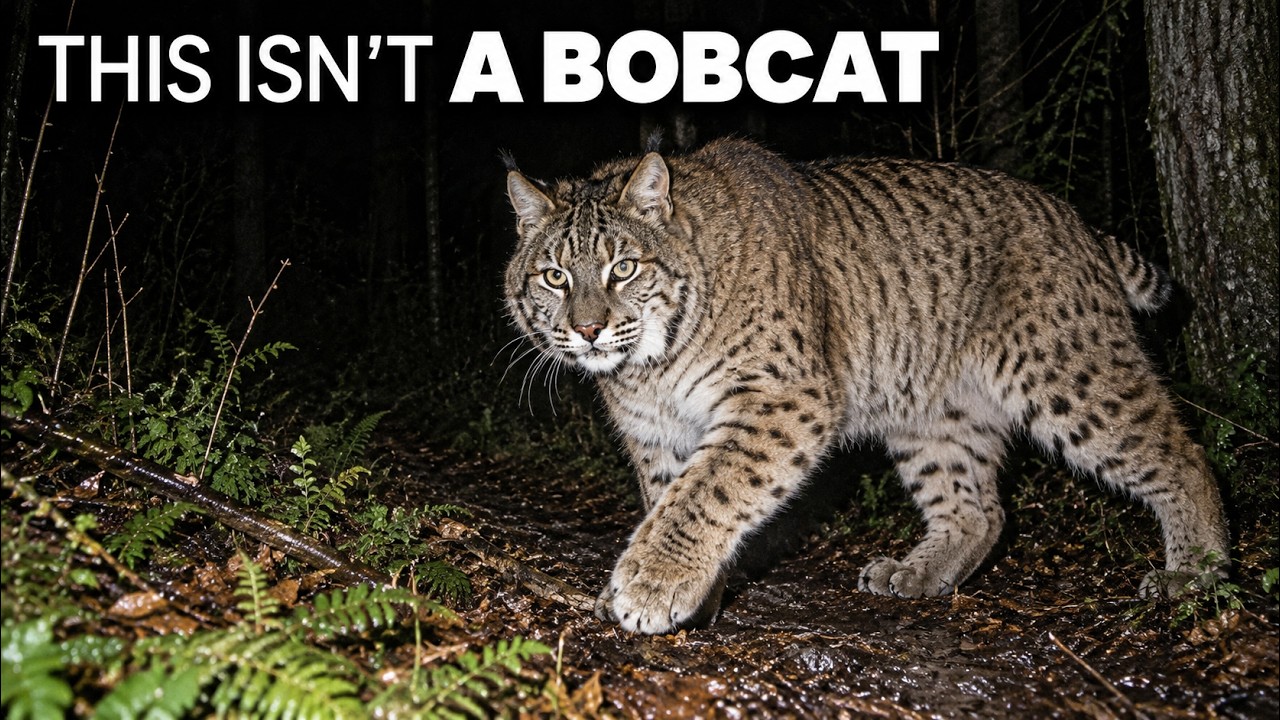
Male bobcats in northern populations typically weigh between 20 and 30 pounds according to reference materials, with animals over 30 pounds representing the exceptional end of the distribution. Females are notably smaller, usually weighing between 12 and 20 pounds. The Midwest sits in the middle of this size range geographically, so animals in Iowa, Illinois, Indiana, Ohio, and Wisconsin were expected to be moderately sized.
The first unusual records began appearing in state wildlife agency survey data in the late 1990s and early 2000s. Animals weighed at check stations during fur-trapping seasons came in above the expected range, not by small margins but substantially. A male bobcat in Iowa weighed 43 pounds, another in Wisconsin weighed 38 pounds. Illinois records showed animals at weights that would have been considered extreme outliers in the historical distribution, but they appeared frequently enough to suggest they were not isolated cases.
Body length data accompanying many of the weight records confirmed the animals were structurally larger, not simply heavier. Length measurements rose alongside weight measurements, meaning the bobcats were genuinely longer, heavier-boned, and skeletally different from the animals described by the historical baseline.
To understand the current situation, it helps to know how close the bobcat came to disappearing from most of the Midwest during the twentieth century. A combination of intensive fur trapping, habitat loss from agricultural expansion, and active persecution by people who viewed bobcats as threats to poultry and small livestock reduced populations across multiple states to minimal levels.
Iowa provides a useful case study. State wildlife records indicate bobcat populations were at their lowest documented levels in the 1950s and 1960s, with sightings concentrated in the wooded hills of southern counties and the animal effectively absent from most of the state. Similar patterns occurred in Illinois, Indiana, and Ohio, where bobcats were functionally eliminated across large portions of their historical range. Wisconsin maintained a more continuous presence in its northern forest regions, but numbers there were also heavily suppressed.
Recovery began in the 1980s and accelerated through the 1990s and 2000s. Lower fur prices reduced trapping pressure, state and federal regulations tightened seasons and methods, and forest regrowth on Conservation Reserve Program lands across the agricultural Midwest created habitat that had not existed for decades. Public attitudes toward predators shifted from hostility toward tolerance, allowing populations to rebuild. Iowa now has a regulated bobcat hunting season, itself evidence of how far the population has recovered from near disappearance in the mid-twentieth century.
The clearest picture of what is happening with bobcat sizes comes from check station data collected by states with regulated hunting seasons. Each bobcat brought to a check station is weighed, measured, sexed, aged if possible, and its harvest location recorded. This produces longitudinal data that allows researchers to track changes in population size distributions over decades.
Iowa State University researchers analyzing three decades of check station records found a significant statistical shift toward increased male bobcat weights throughout the collection period. The entire distribution moved, not just a few exceptional animals. Animals in the middle of the weight distribution became heavier, and animals at the upper end became notably heavier. Average adult male weights in the later years of the dataset were significantly higher than in the early years, beyond what could be attributed to sampling variation.
The gender difference is important. While female bobcat weights also increased, the most dramatic changes appear in male size distributions. This aligns with expectations if the driver is improved nutritional condition rather than genetic change. Males are more responsive to nutritional variation in most cat species.
The geographic pattern within the Midwest adds another layer. The largest size increases are concentrated in the most agriculturally modified landscapes, such as Iowa and Illinois, where row-crop agriculture dominates and supports high densities of prey species bobcats eat. States with denser forest cover show size increases, but somewhat less dramatic ones. This spatial pattern is consistent with a food availability explanation.
Age-class analysis answers whether the size increases represent individual animals growing larger due to better condition or whether the population is producing structurally larger animals. When researchers classify check station data by age class using tooth wear and cementum ring analysis, they find that animals of the same estimated age are heavier in recent data compared to historical data. Younger age classes are heavier too, indicating animals are reaching larger sizes faster and growing at a quicker pace toward larger final body sizes than animals in the past. This is the signature of improved early-life nutrition, where better conditions during critical growth periods produce permanently larger individuals.
The modern agricultural landscape of the Midwest is highly productive from the perspective of a medium-sized predator that feeds on small mammals and rabbits. Row-crop agriculture supports rodent populations at densities that pre-agricultural prairie and forest environments never reached. The combination of abundant grain, vegetative cover in field edges and drainage ditches, and the removal of most natural rodent predators has produced enormous numbers of mice, voles, and rats across the agricultural Midwest. Conservation Reserve Program fields, federally subsidized lands that converted tens of millions of acres of marginal farmland to grass and shrub cover, function as rodent factories. Surveys consistently show small mammal densities in these fields exceeding those of natural grassland habitats.
The explosion in white-tailed deer populations across the eastern United States over the past half century adds another dimension. Deer were historically not an important component of the bobcat diet except in cases of opportunity, but larger bobcats, especially large males, can take fawns and in some documented cases adult deer. The dense deer populations supported by the modern Midwest represent a prey resource not equally available to historically sized bobcats. Larger bobcats that can exploit a wider range of prey sizes, including fawns, access caloric resources that smaller animals cannot efficiently use.
Rabbit populations, which form the backbone of the bobcat diet across much of the Midwest, have also changed. Cottontail rabbits in agricultural landscapes have access to abundant year-round food resources, breed prolifically, and produce large litters during extended seasons. Bobcats hunting in the agricultural Midwest are hunting rabbits in an environment that supports greater rabbit densities than historical records suggest, and they do so year-round rather than facing the seasonal prey crashes characteristic of less modified landscapes.
Winter survival is a particularly important dimension. In the northern part of the Midwest range, winter historically limited bobcat physical condition more than any other season. Snow depth restricts movement, prey becomes scarcer and harder to catch, and the energetic demands of thermoregulation in cold weather are substantial. A bobcat entering winter in better condition, with larger fat reserves gained from abundant fall hunting, survives better and emerges in spring in physical condition that allows breeding. Females in better condition in spring produce larger litters and wean heavier kittens with higher survival rates through their first winter. The year-round prey abundance in farmland breaks the historical pattern of winter prey crashes that limited population condition, and the cumulative effect of multiple generations of better winter survival shows up in the size data.
The relationship between bobcats and coyotes is one of the more interesting and least appreciated dynamics in Midwest wildlife ecology. The two species overlap substantially in diet, habitat use, and geographic range, which might suggest a competitive relationship where coyotes, being larger and more socially organized, suppress bobcat populations. The actual data shows something more complex.
GPS tracking research on bobcats and coyotes in Midwest landscapes shows the two animals partition their use of shared landscapes, but not in ways that indicate simple coyote dominance. Bobcats in areas with high coyote densities select habitats that avoid open environments where coyotes are most active, concentrating instead on brushy and wooded corridors where bobcat hunting advantages such as patience, stealth, and ambush ability outweigh coyote advantages in speed and pack support. This spatial partitioning allows the two species to coexist at higher densities than simple competition theory might predict.
The less intuitive dimension of the coyote-bobcat relationship involves prey. Coyotes are effective predators of rabbits and small rodents, and high coyote populations can reduce prey numbers in open areas. This might seem bad for bobcats, but habitat partitioning means coyotes reduce prey in the open habitats bobcats use least, while prey in brushy habitats preferred by bobcats experience much less coyote pressure. Bobcats in the Midwest may actually be hunting in prey-rich habitats that have been relieved of competition, producing better nutritional conditions than would exist in a landscape entirely without coyotes.
The absence of apex predators adds another layer. Wolves and mountain lions, which historically would have suppressed coyote populations through direct predation and behavioral displacement, are practically absent from the entire agricultural Midwest. This absence has allowed coyote populations to reach densities exceeding historical levels, affecting prey communities in open landscapes and potentially concentrating prey in edge habitats where bobcats hunt.
GPS tracking studies show that large male bobcats display less avoidance of coyotes compared to smaller individuals. A large adult male bobcat in the Midwest is not an animal routinely threatened by coyotes, and behavioral data indicates large males are less restricted in habitat use by coyote presence than smaller animals. If larger body size translates to fewer competitive constraints in the environment, there is a selective advantage to large size in the current Midwest predator community that may not have existed historically.
The population bottleneck that Midwest bobcats experienced during the mid-twentieth century had genetic consequences that the subsequent recovery has had to work through. When a population drops to very low numbers, it experiences a founder effect. The genetic diversity of the recovering population reflects the diversity of the few animals that survived the bottleneck rather than the full diversity of the original population. If the animals that survived and founded the recovering populations happened to carry genetic variants associated with larger body size, those variants would be overrepresented in the recovering population.
The more interesting genetic mechanism is hybrid vigor, commonly known as heterosis. As bobcat populations expanded from bottleneck survivors and began recolonizing their former range, animals from previously isolated remnant populations began meeting and interbreeding. Offspring of parents from genetically divergent lineages often show improved fitness across multiple traits, including body size, compared to offspring of more genetically similar parents. In a recovering, expanding population, the mixing of previously isolated lineages can produce a pulse of hybrid vigor that temporarily amplifies performance measures, including body size.
Genetic sampling of Midwest bobcats shows evidence of interbreeding and mixing consistent with this hypothesis. Animals sampled in the core of the expanding population show genetic diversity patterns indicating they are products of lineages recently isolated from each other. The timing of the most dramatic size increases roughly coincides with the period when expanding populations from different source areas were meeting and producing mixed offspring.
Whether the size changes represent a temporary hybrid vigor effect that will moderate as the population gene pool stabilizes, or a more permanent shift in population size distribution, is a question requiring long-term data to answer. What is clear is that the recovering Midwest bobcat population has unusual genetic dynamics compared to a stable, connected population, and these dynamics likely contribute to the observed size patterns.
Selection pressure may also be at work. If the current Midwest landscape genuinely favors larger body size, if larger bobcats have better access to abundant prey, better ability to defend territories against current competitors, and produce offspring that survive at higher rates due to those advantages, then selection may reinforce what hybrid vigor and founder effects started. Natural selection favoring larger body size over multiple generations of bobcats would produce a permanent genetic shift in population size distribution rather than a transient effect.
Trappers and hunters noticed the size trend before scientific documentation caught up with it. Experienced trappers who worked the same river corridors and timber edges for twenty or thirty years, who had an internal mental reference for what they expected to catch, began describing animals that consistently exceeded that reference. Stories circulated in the trapping community about males that required rechecking on the scale because the numbers seemed wrong, about animals whose tracks prompted speculation about something other than a bobcat before the animal itself was identified.
State wildlife agencies that maintained carcass weight records through fur harvest management programs had datasets spanning decades. When agencies began systematic analysis of long-term weight records in response to informal reports from the trapping community, the statistical pattern confirmed what trappers were describing. The informal observers had been right. The collaborative relationship between state wildlife agencies and the trapping community in documenting this trend produced a monitoring infrastructure that would not otherwise have existed. Trappers, aware their observations were being taken seriously, became more careful about recording accurate weights, documenting geographic locations, and submitting teeth and other structures for age determination.
Trappers also describe behavioral changes accompanying the size changes. Many experienced trappers working the same waterways for decades describe larger animals that occupy broader territories than past bobcats, show less wariness of human presence than they recall from earlier in their careers, and behave more boldly in interactions with competing species like coyotes. These behavioral observations, if accurate, suggest the size changes are accompanied by behavioral changes that multiply the ecological impact of larger bobcats in the landscape.
Body size is one of the most important determinants of a predator’s ecological role, affecting everything from what prey it can catch to how large an area it defends and how it interacts with competing predators. A Midwest bobcat population whose average size has shifted significantly upward is ecologically a different predator community than existed fifty years ago.
The expansion of prey size range enabled by larger bobcats is perhaps the most direct ecological consequence. A 40-pound bobcat can prey on things a 25-pound bobcat would not typically attempt. Large adult rabbits, early spring fawns, wild turkeys, and other prey representing larger caloric meals than the typical bobcat efficiently pursues. This shift in available prey size changes how the predator interacts with the prey community and how much competitive pressure bobcats exert on other predators targeting the same prey.
Territorial implications of larger body size compound this effect. Larger male cats defend broader territories, meaning the density of large male bobcats in any area is lower than the density of smaller males. This changes the distribution of predator effects across the landscape, with fewer, larger territories and more intensive predation pressure within each one.
State hunting seasons and harvest guidelines for bobcats were established based on population data reflecting historical size distributions. Sustainable harvest pressure for a population of smaller animals may function differently on a population of larger animals with different territorial distributions, reproduction rates, and roles in the prey community. Several Midwest states have begun reviews of their bobcat hunting regulations in light of changing population characteristics.
The carrying capacity question is complicated by the size data in interesting ways. If larger bobcats have broader territories, an area can support fewer bobcats per unit area than it would if the animals were smaller. But larger bobcats may also be more effective at exploiting the prey base, with each individual exerting greater predation pressure on the prey community per unit area than a smaller animal. Whether the net effect on prey populations is greater or lesser than what a higher density of smaller bobcats would produce depends on the specific prey species and the specific area. Research to answer this question in the Midwest context is still in its early stages.
The Midwest bobcat is not the same animal it was fifty years ago. It recovered from the brink of disappearance, and in its recovery it has changed. Better prey availability in an agricultural region that supports prey at densities that did not exist historically, genetic mixing of previously isolated populations producing a generation of animals with hybrid vigor benefits, and a competitive landscape reshaped by the absence of apex predators and the presence of coyotes in complex ways that may counterintuitively create space for large bobcat growth, have resulted in an animal that routinely reaches sizes once considered exceptional. Trappers noticed it first. Scientists confirmed what field observers reported. The data now indicate something that wildlife managers are still working to incorporate into their models and regulations. Bobcats in the Midwest are larger than they were, and the larger animal establishing itself in the region is having a greater ecological impact than its recent predecessors.






