
The Illinois River’s invasive Asian carp are suddenly vanishing, and scientists were stunned by the real cause. For years, the massive fish threatened to invade the Great Lakes, prompting costly
In stretches of the Illinois River, Asian carp once made up 70% of everything alive. Today, in the upper pools closest to Chicago, their numbers have fallen by more than 90%. Nobody can point to the weapon that did it.Illinois spent over a billion dollars fighting these fish, so everyone assumed the money finally worked. Then scientists checked, and the real cause was not the money, not the barrie…

Australia released 26 Tasmanian devils into mainland bushland teeming with feral cats, betting their bone-crushing jaws could shift the balance of an ecosystem under siege. Scientists watched these scavengers move through predator territory, tracking how they hunted, fed, and left carcasses stripped bare.
In November 2020, two Tasmanian devils named Lisa and Lenny were released into the Barrington Wildlife Sanctuary in New South Wales, marking the beginning of a project to reintroduce the species to mainland Australia after an absence of roughly 3,000 years. The release was part of a larger effort involving 26 devils, all bred through a program run by the conservation group Aussie Ark. The goal was…

They released just 30 predators into the wild—then the snakes started vanishing. Wildlife teams had spent years tracking an invasive snake population that was devastating local species, and the plan seemed straightforward: introduce a limited number of natural hunters to regain control.
In 1979, Japan released about 30 small mongooses on Amami Oshima, a remote island in the warm waters between Kyushu and Okinawa. The animals were intended to control the local population of the habu, a venomous pit viper responsible for hundreds of bites each year across the Amami Islands.The habu is a nocturnal snake that can grow past two meters. It hunts using heat-sensing pits between its eyes…

Armored catfish are vanishing from Florida’s rivers, and scientists have finally identified what’s preying on them. These invasive fish, protected by tough bony plates, seemed nearly untouchable in the state’s waterways.
For four years, Dr. Ryan Allisson had been conducting population density surveys in Florida’s Peace and Hillsborough rivers. He knew what the numbers should look like, having established the monitoring protocol himself, with fixed stations and consistent survey lines walked the same way each field season so that real changes would appear as trends rather than noise.In the winter of 2022, three sur…

Ten years after billions of oysters were dumped into the Chesapeake Bay, scientists returned to measure the results—and what they found completely defied expectations. The massive restoration project was launched to revive a species nearly wiped out by overfishing and pollution.
The Chesapeake Bay’s oyster population had fallen to roughly 0.3 percent of its historical levels by 2011, a decline that contributed to the collapse of the estuary’s broader ecosystem. The loss of oysters, which once filtered the bay’s water and built the structure of its floor, led to murky water, oxygen depletion, the disappearance of underwater grasses, and a sharp decline in commercial fisher…

Der meistgehasste Fisch Amerikas verschwindet plötzlich aus den Flüssen – und die Retter sind nicht die teuren Regierungsbarrieren. Jahrelang dominierten asiatische Karpfen das Illinois-River-System, verdrängten einheimische Arten und machten bis zu 90 Prozent der Biomasse aus.
Im Einzugsgebiet des Illinois River zeichnet sich seit einigen Jahren ein unerwarteter Wandel ab. Fischer, die ihre Netze einholen, finden darin immer seltener die invasiven asiatischen Karpfen, die das Flusssystem über Jahrzehnte dominiert hatten. Die Bestände dieser Art, die zeitweise einen Großteil der Biomasse des Flusses ausmachte, gehen deutlich zurück.Die Ursache dafür liegt nicht in den au…

In 1948, Idaho officials parachuted 76 beavers into a forest they’d deemed dead, a last-ditch effort born of conflict with local residents. The rodents were meant to restore collapsed waterways, but nobody predicted what they would ultimately create.
In August 1948, a twin-engine plane lifted off from a small airstrip in McCall, Idaho, carrying eight wooden crates. Inside were 76 live beavers. The pilot climbed to about 700 feet over the Chamberlain Basin, a remote valley in the mountains of central Idaho, and the crew pushed the crates out one at a time. Each crate had a parachute strapped to the top. When the last parachute settled, 75 beave…
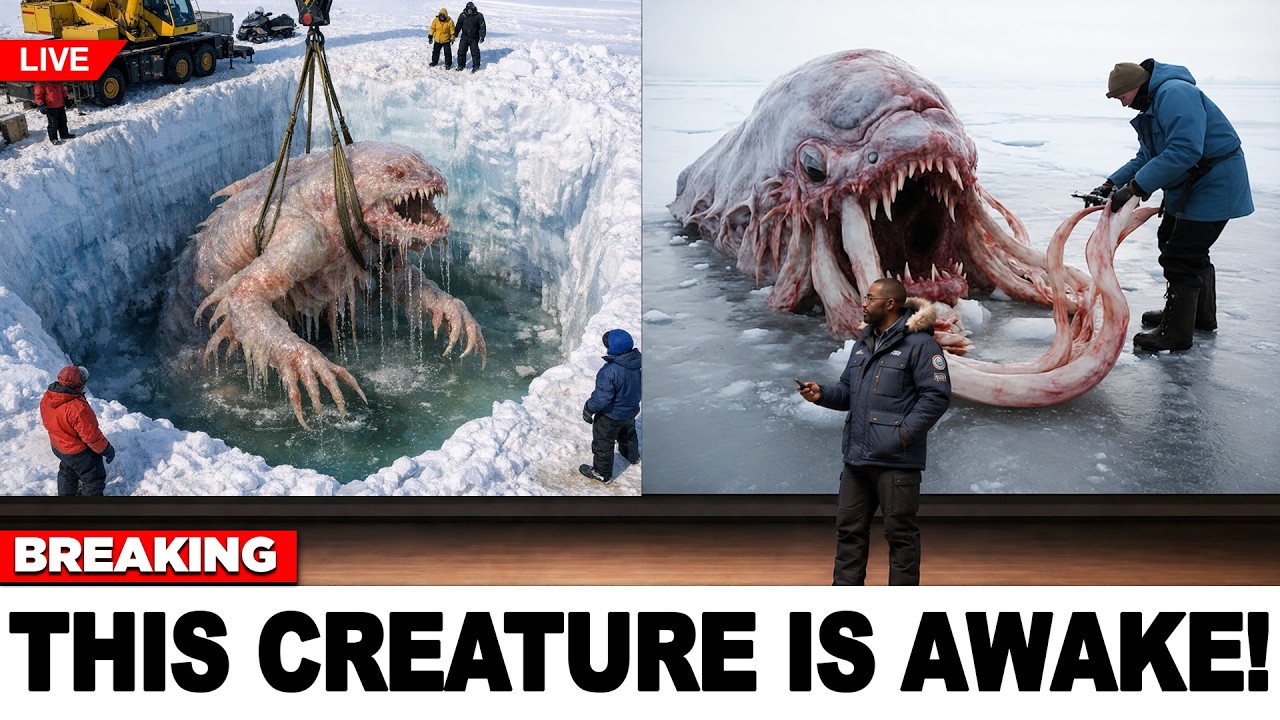
A research team reported a live object moving beneath Antarctica’s ice—and no one has returned since. The discovery came during a routine deep-ice survey, when sensors suddenly detected biological activity far below the surface where life should be impossible.
In 2021, a team drilling for sediment samples on the Filchner-Ronne Ice Shelf in Antarctica made an unexpected biological discovery. The researchers, who were focused on geological work rather than marine biology, lowered a camera into a borehole and found a boulder on the seafloor covered with living animals, including sponges and other stationary organisms. The location was roughly 260 kilometer…
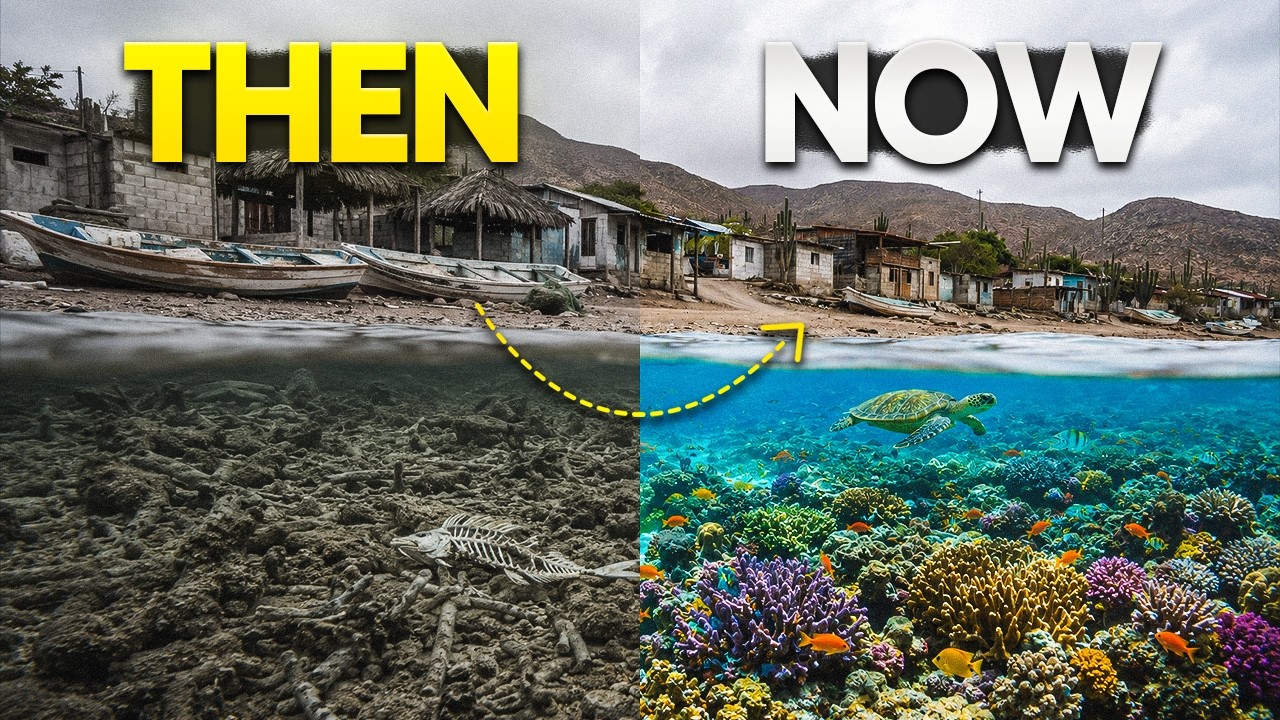
In Cabo Pulmo, the ocean was nearly empty—decades of overfishing had stripped the reef until locals could barely catch enough to eat. Then the village made one desperate decision: ban all fishing in their waters.
Cabo Pulmo sits on the eastern cape of the Baja Peninsula, where the Gulf of California narrows toward some of the warmest, most nutrient-rich water in the eastern Pacific. The reef there, roughly 20,000 years old, is the only living hard coral formation on the west coast of North America. It was once part of what Jacques Cousteau called the aquarium of the world.By the early 1990s, that aquarium…
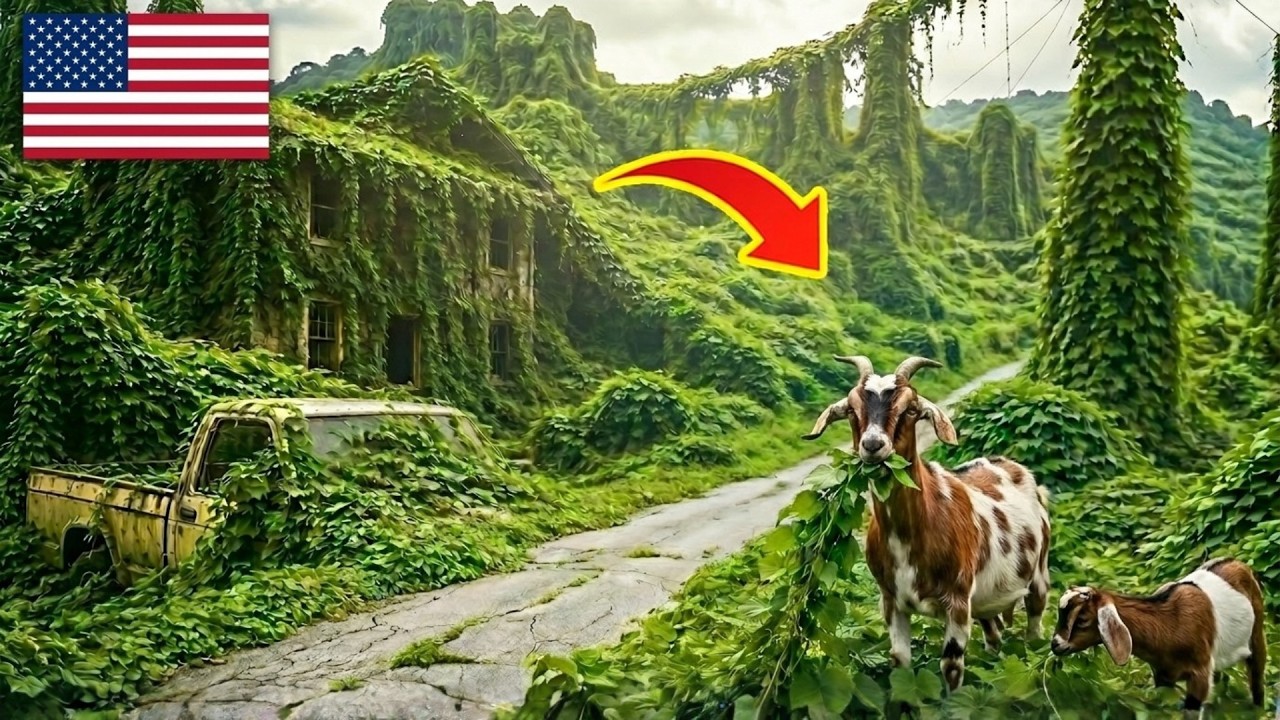
The US dumped $500 million into fighting kudzu, the vine that swallowed the South—only for three unexpected species to do the job for free. For decades, scientists waged chemical and mechanical war as the invasive plant smothered forests and power lines.
Kudzu first arrived in the United States in 1876 at the Centennial Exposition in Philadelphia, where Japan displayed it as a garden ornamental. For the next half century, it grew mainly on southern porches, cultivated for shade and its purple flowers. Farmers largely ignored it, and they had practical reasons. A kudzu field took years to establish, the tangled vines were difficult to cut and bale…