Scientists studying great white sharks off Guadalupe Island, approximately 150 miles from the coast of Baja California, Mexico, documented an unusual injury on an adult female shark in 2024. The roughly 15-foot shark carried a large, healed circular scar around her torso, just behind the pectoral fins. The wound measured about 42 inches across, a size larger than the shark’s own head from snout to gill slits.
Guadalupe Island is a well-known site for observing great white sharks. The water clarity there, which often exceeds 100 feet, and the local seal and sea lion populations draw sharks from across the Pacific. Researchers and dive crews have cataloged individual sharks in the region for decades, using unique scars, fin shapes, and pigmentation to track returning animals. The wound on this female stood out because the bite pattern and size did not match any known injury from a documented shark in the area.
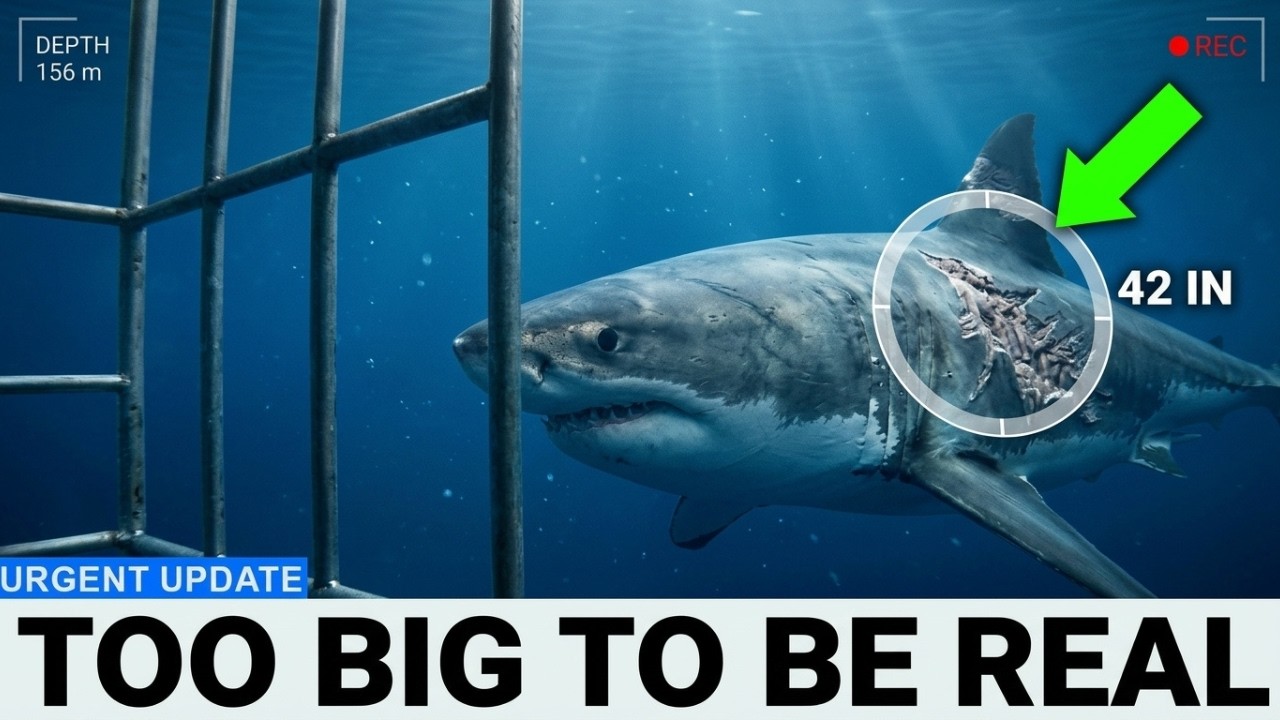
Sharks do bite each other. Mating behavior commonly leaves wounds on the head, gill region, and pectoral fins of females. Territorial interactions typically target the head or gills. The scar on this female, however, was located around the middle of the body, a position associated with a capture bite aimed at subduing prey rather than a social interaction. The size of the bite mark suggested an attacker roughly 25 to 30 feet long, a size exceeding confirmed records for great white sharks.
Several explanations have been proposed. One theory suggests a much larger great white shark, an individual at the extreme upper end of the species’ possible size range, could have made the attack. Such animals, sometimes called ghost giants, may avoid coastal areas and human observation as they age, spending most of their time in deeper water. This idea remains speculative, as no shark of that size has been scientifically confirmed.
Another theory involves orcas, which are known to prey on great white sharks in some regions. Documented attacks by orcas, however, produce different wound patterns. Their teeth are conical and blunt, designed for gripping, and their documented technique for killing sharks involves flipping the shark over and biting into the abdomen to remove the liver. The circular, serrated bite mark on the Guadalupe female is not consistent with that behavior.
An incident from 2014 off the coast of Australia offers a related data point. A research team had tagged a 9-foot great white shark with a device that recorded depth, temperature, and location. Several months after the tag was attached, the data showed the shark diving to nearly 2,000 feet, followed by a sudden temperature spike to about 80 degrees Fahrenheit that persisted for days. The tag was later expelled and recovered at the surface. The data suggested the shark had been consumed by a large, warm-bodied animal capable of operating at significant depths, although no species matching that description has been confirmed.
The possibility that large, undocumented sharks exist in deep water has been raised repeatedly, but mainstream marine science does not support the idea that the extinct shark species Otodus megalodon survives in the modern ocean. Megalodon fossils date from roughly 23 million to 3.6 million years ago, and the species is believed to have inhabited warm, shallow seas. The adaptations required for survival in deep, cold water would have been substantial, and there is no fossil or observational evidence that such a transition occurred.
Other candidates exist among living species. Sleeper sharks, including the Pacific sleeper shark and the Greenland shark, are large, slow-moving animals capable of operating at extreme depths. Greenland sharks have been confirmed at lengths exceeding 20 feet, with some estimates suggesting individuals near 24 feet. A particularly large sleeper shark could theoretically prey on a smaller great white, though no specimen of sufficient size has been documented.
Climate change has also been proposed as a factor that could bring great white sharks into contact with unfamiliar predators more frequently. As surface waters warm, some species may shift their ranges or dive deeper to find preferred temperatures. Deeper water contains predators adapted to darkness and cold, and encounters between species that normally remain separated may become more common.
The female great white observed at Guadalupe Island survived her attack and continued normal hunting behavior. Her scar has healed, and she has been seen cruising the waters around the island as usual. Because sharks that are killed and consumed leave no remains, the only evidence of such predation comes from survivors like this one.
The bite mark on this shark is among the largest documented on a great white. It indicates the presence of an animal with jaws wider than the shark’s own head, operating somewhere below the depths routinely observed by researchers. The identity of that animal remains unknown.






