In 2001, biologists in California took 37 orphaned sea otter pups that had been found sick or stranded along the coast and released them into Elkhorn Slough, an estuary about 20 miles north of Monterey Bay. At the time, the site was in poor condition: more than half of its marshland had eroded since the 1950s, algae blooms were choking the eelgrass, and burrowing shore crabs were destabilizing the banks by feeding on the roots of pickleweed. It was not an obvious place to expect wildlife recovery.
The otters came from a program run by the Monterey Bay Aquarium. For years, the aquarium had struggled to raise orphaned pups successfully. Pups raised by human caretakers often imprinted on people and could not survive on their own. That changed in 2001, when a 2-week-old orphan was introduced to Toola, a female otter that had been rescued with a medical condition that made her unable to return to the wild. Toola adopted the pup and taught it to groom, dive, and forage. Over her lifetime, she raised 13 orphans in this way. Another surrogate, Rosa, raised 15 pups before her death in 2024 at age 24.
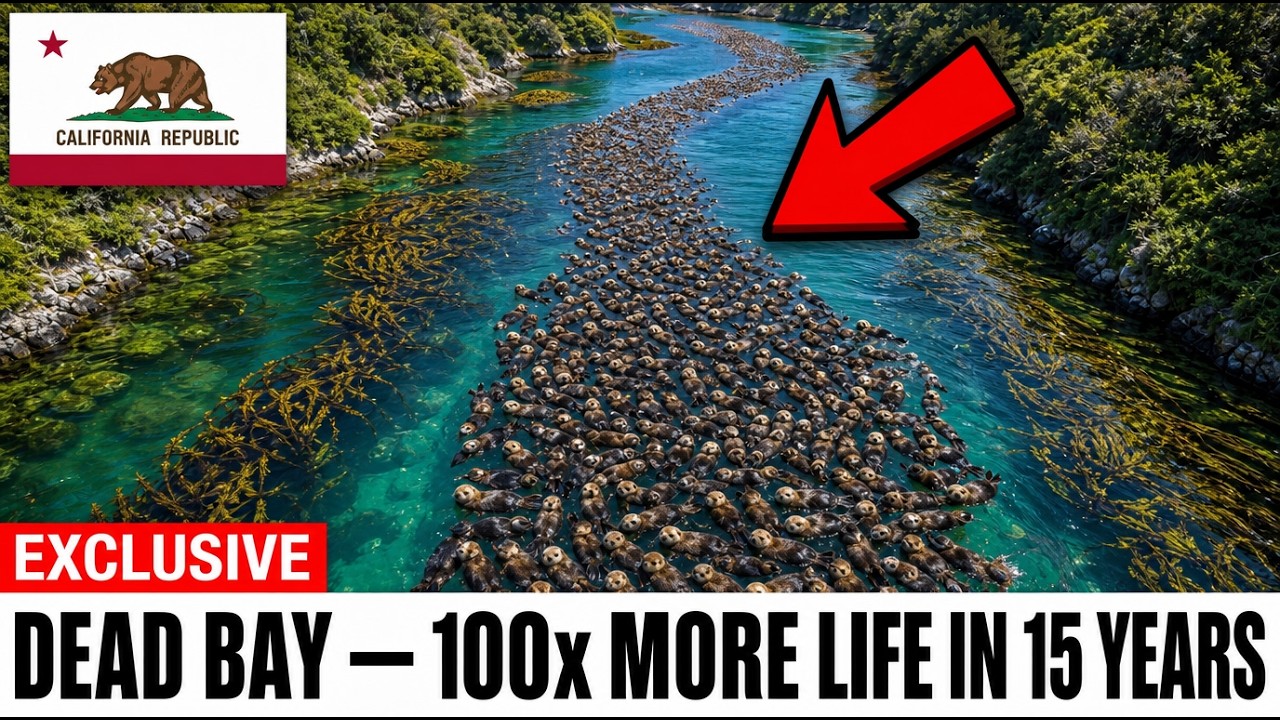
Between 2001 and 2016, the aquarium released 37 surrogate-raised otters into Elkhorn Slough. They were chosen for that location partly because the quiet, food-rich waters offered a sheltered nursery with few predators, and partly because they had no previous territory to return to, so they stayed and bred. By 2008, surrogate-raised females were among the first otters to give birth in the slough. Today, more than 120 southern sea otters live there, with researchers attributing more than half of the population growth to the released animals and their descendants.
The population increase had ecological effects that went beyond the otters themselves. Sea otters eat about a quarter of their body weight in food each day, and crabs are a staple of their diet in the slough. As otter numbers grew, the crab population dropped. That allowed small grazing animals, such as sea slugs, to increase, and those grazers fed on algae that had been covering the eelgrass. With the algae controlled, eelgrass meadows began expanding in areas where otters were most active. Researchers at the University of California documented this pattern and published their findings in 2013.
A second study, published in the journal Nature in 2024, examined the marsh banks themselves. Researchers compared sections of marsh with and without otters and found that erosion had slowed by about 69% on average after the otter population recovered, and by 80 to 90% in areas with the most otters. The mechanism was indirect: fewer crabs meant fewer roots destroyed, which allowed pickleweed to hold the soil in place. The same food chain that restored eelgrass was also stabilizing the shoreline.
Similar effects have been documented in the open ocean along the central California coast, where otters eat sea urchins. When urchins are left unchecked, they can destroy kelp forests. Where otters are present, they keep urchin populations in check, and the kelp survives. Kelp forests absorb carbon dioxide from the water, and studies have estimated that kelp protected by sea otters can store significantly more carbon than kelp exposed to unchecked urchin grazing.
The otters’ appetite for shellfish has also created friction. Commercial and recreational fishers have at times opposed otter range expansion over concerns that the animals would reduce crab, clam, and urchin populations. In some cases, otters were illegally shot. Research has generally found that otter populations do not eliminate the fisheries these communities depend on, though the concerns remain part of the debate over reintroduction.
In 2024, a federal feasibility assessment concluded that reintroducing sea otters to parts of the coast where they have been absent for over a century would benefit the marine ecosystem and could help the recovery of the threatened southern sea otter. Some tribal groups, including the Kashia Band of Pomo Indians in Northern California and tribes in Oregon, have voiced support for reintroduction. The Monterey Bay Aquarium expanded its sea otter facility in 2025. By that year, nearly 300 orphaned and stranded otters had been raised and released through the program.
The southern sea otter remains listed as threatened. Current counts estimate about 3,000 animals, occupying roughly 13% of their historical range. The population continues to face risks from disease and changing ocean conditions. The recovery at Elkhorn Slough is nonetheless regarded as a documented example of how restoring a native predator can help stabilize a damaged ecosystem. The marsh is eroding more slowly, the eelgrass is spreading, and the descendants of the 37 released orphans remain in the estuary, with no direct role in the ecological changes beyond their normal feeding and breeding behavior.






