Archaeologists unearthed something in America that doesn’t match human history, igniting a fierce debate. The discovery surfaced at a site long studied by experts, who assumed they understood its timeline.

Archaeologists in Peru have confirmed that the ancient city of Caral, located in the Huaura province north of Lima, was part of the oldest known civilization in the Americas. The site, abandoned more than 3,000 years ago, has been the subject of extensive excavation and conservation work over the past eight years, leading to new insights into its history and purpose.

Caral was a central hub of the Caral-Supe civilization, which existed more than 5,000 years ago. This society developed concurrently with the Sumerians in Mesopotamia and early construction efforts in Egypt, though it did so in isolation. Peru is now considered one of six places where civilization first emerged, largely due to the discoveries at Caral.
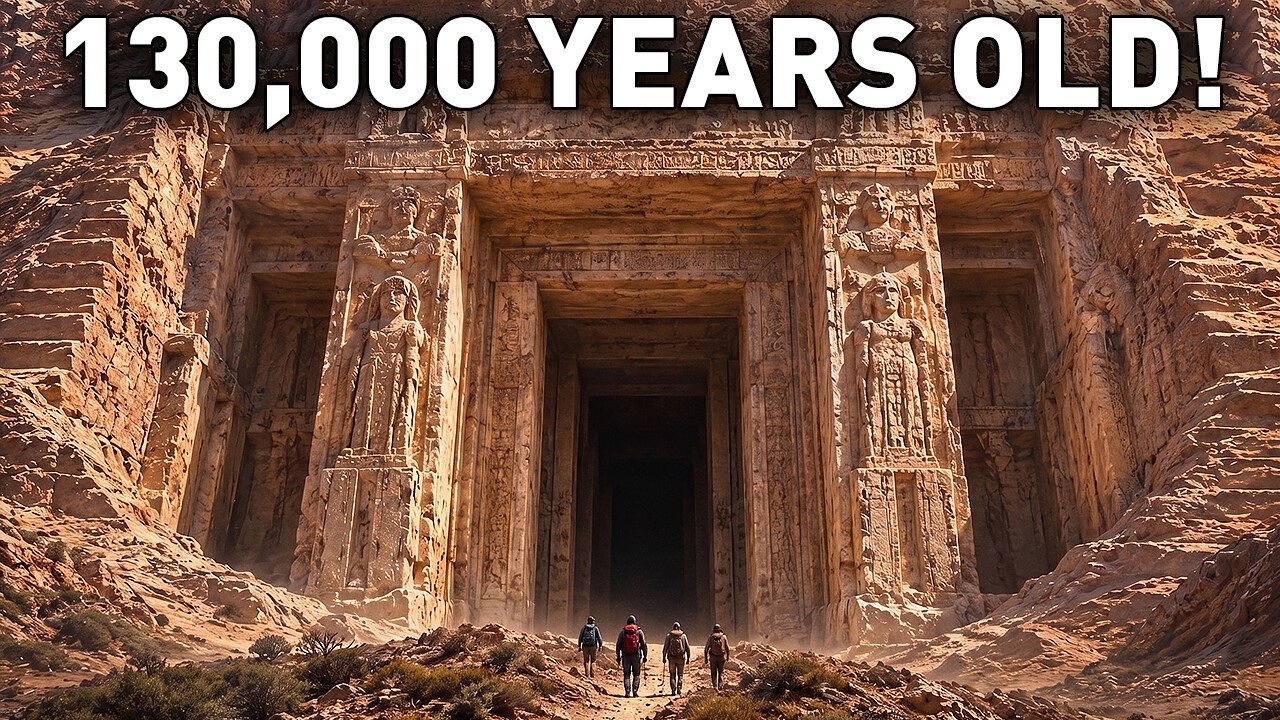
Archaeologists unearthed something in America that doesn't match human history, igniting a fierce debate. The discovery surfaced at a site long studied by experts, who assumed they understood its timeline.

The people of Caral did not use pottery or writing, but they built substantial architecture, including stepped pyramids and large sunken plazas. Researchers have identified as many as 30 major metropolitan centers across the Caral region. The largest pyramid, known as Piramide Mayor, stands nearly 100 feet tall and covers an area roughly the size of four football fields. The scale of these constructions indicates organized labor and strong leadership.

The ruins were first noted in the 1940s, but their significance was not recognized until the 1990s. The advanced architecture led some to believe the structures were modern, but studies in 2001 confirmed that Caral was the oldest known civilization in the Americas. The society is believed to have existed from around 3,000 to 1,800 BCE, flourishing in isolation for roughly 4,000 years. No fortifications, battle gear, or signs of conflict have been found, suggesting a society focused on commerce and ceremony.

Recent excavations at a related site, Pinayco, uncovered 18 structures, including temples, residential complexes, and a large circular plaza. Researchers found clay sculptures depicting human figures and animals, stone tools, and flutes made from bird bones. They also discovered pututus, trumpets made from large shells brought from the Pacific Ocean.

Pinayco is located farther inland than other Caral cities, a position that may have allowed it to serve as a trading hub between coastal and highland villages. One theory suggests it played a key role in trading hematite, a mineral used to make red pigment. The site has been nicknamed the city of social integration due to this likely role.

The reason for the civilization’s decline remains unclear. There is no evidence of a single catastrophic event such as an earthquake or flood. A likely explanation is a shift in climate that caused long droughts, affecting farming and forcing people to abandon their cities. Researchers consider it probable that several factors, possibly including internal organizational issues, contributed to the collapse. The exact cause remains unproven.

The site at Pinayco has recently been opened to the public. It is located about a four-and-a-half-hour drive from Lima and can be reached by private vehicle or tourist services. For those unable to travel, a virtual museum dedicated to Caral offers ten thematic rooms with photos, videos, and infographics.


Related Posts

Florida’s ocean floor just collapsed, with sudden oceanic sinkholes emerging off the coast. Massive craters have opened beneath the water, swallowing sandbars and reshaping the seafloor in hours.

In late 2024, a NOAA research vessel mapping the continental shelf near the Florida Straits identified large circular depressions on the seafloor. Some of these sinkholes measured over 300 feet across and descended deeper than a 30-story building. Underwater drone footage showed sediment columns spiraling downward and water currents flowing into the voids. Researchers determined that these feature…

Deep beneath Colorado’s Mesa Verde, scientists have confirmed something startling—a sprawling network of hidden chambers and tunnels carved into the rock, untouched for centuries. For decades, researchers believed the ancient cliff dwellings were the region’s only marvel, but new scans have revealed a far larger subterranean world lurking below the surface.

In the summer of 2023, a survey team used ground-penetrating radar beneath Mesa Verde National Park in Colorado. The equipment detected something unexpected below the surface. The data suggested a network of chambers and passages under part of the mesa. The findings raised questions about the history of a site that has been studied for over a century.Mesa Verde is located in the southwestern corne…

Scientists reopened an underwater cave sealed for 40,000 years and immediately knew something was off. The ancient chamber, hidden beneath the depths, had remained untouched since the Ice Age.

In 2007, cave divers mapping underwater tunnels near Tulum, Mexico, found a large submerged chamber they named Hoyo Negro. The room, about 100 feet deep, contained scattered animal bones and a nearly complete human skeleton. The discovery led to years of research by the Mexican National Institute of Anthropology and History (INAH) and a team of international scientists.The human remains belonged t…

A 12-billion-gallon Florida lake vanished overnight, leaving stunned residents staring at a giant muddy hole. The massive Lake Jackson basin suddenly drained completely as its natural plumbing gave way.

Lake Jackson, a 4,000-acre lake just outside Tallahassee, Florida, drained into underground caves through a sinkhole in its floor over the course of several months. The lake, which once held about 12 billion gallons of water, is now largely exposed mud and sediment. The drain began in late November 2025, after months of drought in the region, and continued into early 2026. By March, vegetation was…

The Oregon coast has just been shut down by federal authorities, but they won’t say why. Divers reportedly surfaced with something from the deep that triggered an immediate, unprecedented closure.

Axial Seamount, an underwater volcano located roughly 300 miles off the Oregon coast, is showing signs that it may erupt before the end of 2025. Scientists have been monitoring the volcano closely since it last erupted in 2015, and recent data indicates the seafloor around it is inflating at a faster rate than it did before its previous eruptions in 1998, 2011, and 2015. The volcano sits along the…

Beneath Tennessee, a fault line stirs with a threat geologists call more terrifying than the legendary New Madrid zone. Scientists have long mapped the region’s seismic history, but new research reveals a hidden danger capable of producing catastrophic ground shaking across the mid-South.

A magnitude 4.1 earthquake centered near Greenback, Tennessee, rattled homes and woke residents in the region this morning. The tremor was felt as far away as Charlotte and Atlanta.The event drew renewed attention to a seismic zone beneath the Appalachian region that scientists monitor for larger potential earthquakes. The East Tennessee Seismic Zone stretches roughly 300 miles from Alabama throug…

Leave a Reply

Your email address will not be published. Required fields are marked *




