It was supposed to be a lighthearted comedy, a whimsical tale of a grumpy castaway and a gaggle of schoolgirls on a tropical island. But behind the sunny façade of Father Goose, a storm of bizarre accidents, legal threats, and shocking secrets was brewing. From a title that nearly sparked a lawsuit to a tragic accident the studio tried to bury, the making of this 1964 hit was anything but smooth sailing.
What really happened when Cary Grant, Hollywood’s most polished gentleman, decided to play a scruffy, drunken beach bum? The answer involves a near-drowning, a recycled submarine, and a leading man who was finally ready to drop the act. This is the story of the film that let Cary Grant be himself—and almost sank in the process.
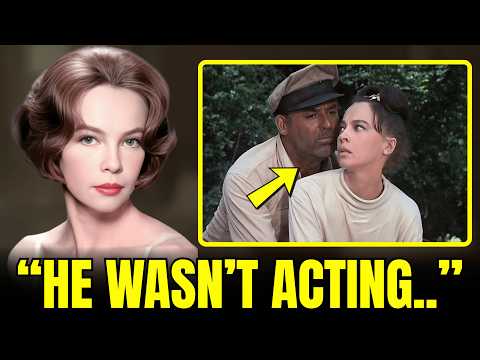
The trouble began before a single frame was shot. Universal Pictures discovered that the title Father Goose was already the name of a 1934 biography about silent film legend Maxine Sennett. The estate threatened to sue, and studio executives panicked. They drafted alternate titles like The Reluctant Patriot and Island Watchdog, but Cary Grant hated every one. “About as funny as wet sand,” he reportedly said, insisting the rhyming title was perfect for the film’s ironic tone. Lawyers scrambled to prove the new story had no connection to the old book, and after tense negotiations, Universal secured limited clearance. The title stayed, but the battle had just begun.
Grant, meanwhile, was fighting his own war—against his image. At 60, he was tired of playing the flawless romantic hero. When the script for Father Goose arrived, he laughed out loud, not at the jokes, but at how much he recognized himself in Walter Ecklund, the cynical loner hiding behind sarcasm and whiskey. “Walter was closer to me than anyone realizes,” Grant later confessed. He improvised lines, adjusted gestures, and even asked the director to let him look disheveled on camera. For an actor obsessed with control, it was liberation.
The film’s cleverness extended beyond Grant’s performance. In one scene, his character is given the radio code name “Mother Goose”—a detail most viewers dismissed as a joke. But historians later revealed it was rooted in real World War II espionage. British intelligence often assigned mismatched or gender-reversed code names to confuse enemy interceptors. Writer Peter Stone, fascinated by spy protocols, slipped this truth into the screenplay. Early drafts used “Aunt Goose,” but Grant vetoed it, quipping that he refused to sound like a pantomime dame. The result was a subtle double entendre: a reluctant hero broadcasting under a name fit for a children’s book, while enemy forces were genuinely fooled by such tricks in real life.
But not everything behind the scenes was so clever. During the Jamaican shoot, a genuine tragedy struck. A camera technician drowned while filming water scenes off Ocho Rios when a sudden swell overturned his support raft. Universal suspended production for 48 hours and ordered all reports sealed to protect the film’s family-friendly image. Grant, shaken, quietly donated to the man’s family. Years later, he referenced the incident without naming the film: “Even when we’re playing war for laughs, the sea never jokes.” The line now circulates among Grant historians as his unspoken tribute.
And then there was the day the dinghy nearly sank. During a tank shoot simulating rough seas, Grant, Leslie Caron, and several child actors boarded a small wooden boat. When the wave machines churned and water began pouring in, crew members shouted in alarm. But Grant, ever calm, cracked a joke: “Smile, kids. It’ll sell the picture.” A studio photographer, thinking it was part of the scene, captured the moment—Grant grinning through splashing waves with terrified yet laughing children around him. The photo was published worldwide as a carefree island adventure. In reality, the boat was moments from sinking.
As the production lurched from one crisis to the next, no one could have predicted that this chaotic, offbeat comedy would become one of the year’s biggest hits—or that it would mark the beginning of the end for Cary Grant’s legendary career. But that’s a story for another time.
The chaos on set was matched only by the chaos on screen. In one of the film’s most thrilling moments, a Japanese submarine fires a torpedo at Grant’s battered sailboat. Audiences gasped, never suspecting that the footage wasn’t filmed for Father Goose at all. It was lifted wholesale from Operation Petticoat, the 1959 Grant comedy. Both were Universal productions, and to save thousands on effects, the studio simply reused the miniature submarine shot, color-correcting the water and speeding up the reel to disguise it.
“I’ve been torpedoed by myself,” Grant reportedly joked when he learned of the recycling. Sharp-eyed fans later spotted identical wave patterns and smoke trails, but at the time, no one noticed. It was classic old-Hollywood resourcefulness—and a reminder that even a star as polished as Grant wasn’t above a little cinematic déjà vu.
Meanwhile, the film’s tropical paradise was itself an illusion. Every palm-fringed horizon and turquoise shallows came not from the South Pacific but from Jamaica, where director Ralph Nelson shot along the Ocho Rios coastline. The beauty came at a cost: daily thunderstorms delayed filming, equipment rusted in the humid air, and mosquitoes grew so large that Grant nicknamed them “enemy aircraft.” Locals rebuilt the coconut hut sets after each squall, and Grant shared his personal umbrella collection with the makeup artists to keep morale up.
Yet for all the improvisation, some details were meticulously planned. Costume designer Ray Aghayan, who would later earn Oscar and Emmy nominations, began his feature film career here. His challenge was deceptively simple: make an island castaway story visually interesting when everyone wears the same two outfits. He distressed Grant’s shirts by hand daily, washing them in seawater for a lived-in texture, while Leslie Caron’s prim wardrobe loosened scene by scene as her character surrendered to the island’s rhythm.
“Let the clothes tell the story before the actor opens his mouth,” Grant advised the young designer—advice Aghayan carried throughout his career. It was a rare case where costumes evolved with character growth, and critics later praised the film’s sun-worn realism.
Even the smallest props carried hidden jokes. The battered sailboat in the film bears an odd, hard-to-pronounce name: Vrolijkheid, a Dutch word meaning “merriment” or “joy.” Producer Stanley Shapiro, whose grandparents were Dutch immigrants, slipped it in as a private joke. The humor was that Grant’s character, Walter Ecklund, is anything but merry. Grant reportedly practiced saying it between takes and finally gave up, muttering, “No drunk Englishman could ever say that at sea.” Crew members adopted the word as slang for chaos, shouting it whenever a prop failed—like a curse.
And then there were the twins. In a film full of mischievous schoolgirls, two stood out for a reason audiences never knew: they were identical twins playing one role. Laurell and Nicole Félicité portrayed the French sisters, alternating scenes to comply with strict child-labor laws—sometimes even sharing the same costume. Crew members admitted it was nearly impossible to tell which sister appeared in which shot. The twins occasionally swapped lines as a prank until Leslie Caron caught them mid-scene and burst into laughter. The director kept the chaos; it added authenticity to the film’s tone.
But the most surprising secret of all was yet to come—one that involved a hit song, a near-retirement, and a box office upset no one saw coming.
Composer Cy Coleman and lyricist Carolyn Leigh had written Pass Me By as a breezy closing tune, its lyrics—“Let me go on loving and living and let me be”—perfectly capturing Walter Ecklund’s carefree philosophy. Yet in the final cut, only fragments played beneath the credits, buried under dialogue. Coleman was disappointed, believing the song deserved a full spotlight.
Then something strange happened. The melody took flight outside the theater. Jazz singer Peggy Lee recorded it months later, transforming it into a sultry standard. Frank Sinatra followed. The Supremes performed it live on television. Even college marching bands adopted its carefree rhythm. A song written as an afterthought became a cultural anthem for mid-sixties optimism. “That island comedy paid for my piano,” Coleman later joked—and he wasn’t exaggerating. The royalties eclipsed his entire fee from Universal.
For Leslie Caron, hearing the tune on the radio years later was surreal. “It was like Walter and Catherine were still dancing somewhere,” she said. The song that slipped through the cracks of the final cut ended up carrying Father Goose‘s spirit long after audiences forgot where it came from.
Back on set, another quiet revelation was unfolding. Cary Grant had spent three decades perfecting charm—the gentleman spy, the millionaire rogue, the romantic idol. But Father Goose allowed him to play a version of himself stripped of polish: older, crankier, softer around the edges. A man ready to leave the stage. Audiences didn’t realize it, but Grant did.
After filming wrapped, he told friends he finally felt done pretending. Two years later, he made Walk, Don’t Run and quietly retired from acting. No farewell press conference, no grand announcement—just silence and contentment. “Father Goose was me saying goodbye, only with a laugh instead of a bow,” he once said. The decision shocked Hollywood. Studios begged him back, dangling scripts and fortunes. He refused, choosing fatherhood and philanthropy over fame.
Ironically, his portrayal of a reluctant hero who accidentally becomes responsible for others mirrored his own transition from star to family man. The movie that showed him embracing imperfection was the one that freed him from chasing perfection forever.
And then came the twist no one saw coming. In an era dominated by lavish epics like My Fair Lady and Mary Poppins, a small, dialogue-heavy comedy about a drunk on an island became a surprise box office titan. Released quietly in late 1964, Father Goose climbed to the number seven spot for the year, outperforming productions with ten times its budget.
Critics expected it to vanish after Christmas. Instead, it lingered for months, drawing families, veterans, and college crowds intrigued by its offbeat humor. Analysts later called it “comfort cinema” before the term existed. The public had grown weary of perfection; Grant’s scruff, the chaotic kids, and Leslie Caron’s no-nonsense wit felt refreshingly human.
The film’s Oscar win for Best Original Screenplay sealed its legacy. Even Grant’s peers took notice. Audrey Hepburn reportedly sent him a telegram reading, “Congratulations, you’ve proven messy sells.” It was true. Amid the grand technicolor musicals and sweeping dramas, Father Goose soared precisely because it didn’t try to be perfect. It celebrated flaws, laughter, and resilience.
But the story of Father Goose wasn’t quite over. There remained one final secret—a detail so small, so easily missed, that even the most devoted fans had overlooked it for decades. And when it finally surfaced, it would change how audiences watched the film forever.
That final secret was hiding in plain sight: the film’s cheeky historical slip. A radio broadcast announces Singapore fell “this morning”—but it actually fell that afternoon, February 15, 1942. Screenwriter Peter Stone shrugged off the error: “Afternoon doesn’t sound urgent.”
Grant agreed. “We weren’t making a newsreel,” he joked. “We were making entertainment.” Old Hollywood bent truth for emotion, and audiences never noticed.
So Father Goose drifted into legend: a scruffy, sunburned masterpiece that let Cary Grant drop his mask and quietly say goodbye. From lawsuits to borrowed torpedoes, its calm waves hid wild histories.
Which fact surprised you most—the hidden tragedy, the recycled footage, or the real man behind the myth? Tell us below.






