You’ve likely heard the words: “When you go home, tell them of us and say, for your tomorrow, we gave our today.” They echo through Remembrance Sunday services across Britain, etched into memorials and recited with solemn pride. But behind these powerful lines lies a story so harrowing, so pivotal, that it changed the course of World War II—yet it remains almost entirely forgotten. This is the story of the Battle of Kohima, a clash of blood and iron in the jungles of Burma, where a beleaguered garrison stood against impossible odds.
In 1944, the Japanese army launched a daring invasion of India, aiming to topple British rule and secure a decisive victory. Their target: the hilltop town of Kohima, the gateway to the vital supply base at Dimapur. Outnumbered six to one, a multinational force of British, Indian, and Nepalese troops held the line for two weeks of savage hand-to-hand combat. They fought in conditions reminiscent of the Western Front, with grenades lobbed across a tennis court and soldiers reduced to sipping a single pint of water a day under the sweltering sun.
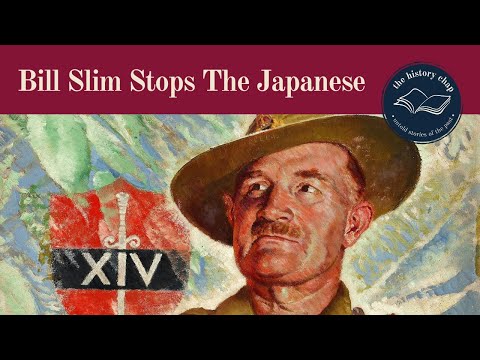
The defenders, many of them non-combat troops pressed into service, refused to surrender. They knew the stakes: if Kohima fell, India would be open to invasion, and the war in Southeast Asia could be lost. As the siege tightened, the garrison shrank to a tiny perimeter, fighting for every inch of ground. The Japanese, confident in their superiority, had not anticipated such fierce resistance. Nor had they anticipated the sheer bloody-mindedness of the ‘Forgotten Army’—the men of the 14th Army who had been overlooked and underestimated.
Among the defenders was Lance Corporal John Harman, a young man whose bravery would earn him the Victoria Cross. On one occasion, he single-handedly charged a Japanese machine-gun nest, calmly counting down a grenade’s fuse before tossing it into the bunker. His actions saved countless lives, but his own story ended in tragedy. Such acts of heroism were commonplace at Kohima, where ordinary men performed extraordinary feats under relentless fire.
The battle raged on, with the Japanese launching wave after wave of attacks. They even swapped their boots for plimsolls to cross the tennis court silently, leading to some of the most surreal and brutal fighting of the war. Soldiers fought hand-to-hand, bayonets and grenades their only companions in the chaos. The stench of death hung heavy in the air, and the living envied the dead.
Yet help was on the way. General William Slim, commander of the 14th Army, airlifted reinforcements and supplies, while artillery pounded the Japanese positions from afar. The siege was finally lifted on April 18th, but the battle was far from over. It would take another vicious month to push the Japanese back, and the cost was staggering.
As the Japanese retreated, they left behind a trail of devastation. Of the 85,000 men who had advanced into India, only 12,000 returned—a casualty rate of 87%. The British and Indian forces suffered over 16,000 casualties, but they had achieved something remarkable: they had broken the myth of Japanese invincibility. The tide of war in Southeast Asia had turned.
Today, the Kohima Epitaph stands as a testament to those who gave everything. But the battle itself remains a footnote in history, overshadowed by the larger conflicts in Europe. As we remember the fallen, it’s time to reclaim this forgotten story—a story of courage, sacrifice, and a victory that helped shape the world we know today.
The road to Kohima had been a nightmare of mud, monsoon rain, and sheer exhaustion. General Sato’s 31st Division had marched through some of the most inhospitable terrain on earth, and they arrived at the ridge with little more than the clothes on their backs and a dwindling supply of rice. They had no heavy artillery, no tanks, and barely enough ammunition for a sustained assault. What they did have was a ferocious belief in their own superiority—and a commander who refused to consider failure.
Inside the perimeter, Colonel Hugh Richards faced a different kind of nightmare. His garrison was a patchwork of units: clerks, cooks, signallers, and convalescents, many of whom had never fired a shot in anger. He ordered every man who could hold a rifle to the line, regardless of training or rank. The defence was organised in depth, with each position prepared to fight in isolation if cut off. There would be no retreat, because there was nowhere to retreat to.
The first Japanese probes came on the night of April 3rd. Small patrols felt their way forward, testing the defences, mapping the British positions. Then, on April 5th, the full weight of the assault began. Wave after wave of Japanese infantry hurled themselves at Garrison Hill, screaming battle cries that echoed through the darkness. The defenders replied with Bren guns, grenades, and cold steel. The slope below the ridge became a killing ground.
What the Japanese had not counted on was the tenacity of the West Kents. These were not raw recruits; they were seasoned soldiers who had fought in the Arakan and knew how to hold a line. When the Japanese broke through one sector, a counter-attack with bayonets drove them back. The fighting was so close that men could hear their enemies breathing, could smell the sweat and blood on them. It was war reduced to its most primal form.
The tennis court became the epicentre of the struggle. On one side, the British dug in behind the low stone wall of the Deputy Commissioner’s garden. On the other, the Japanese occupied the ruins of the bungalow itself. Between them lay just twenty yards of open ground—a space that would be crossed by grenades, bullets, and the bodies of the dead. Neither side could advance without paying a terrible price.
As the days wore on, the defenders grew weaker. Ammunition ran low, and every resupply drop was a gamble against Japanese anti-aircraft fire. Men fought on with bayonets, entrenching tools, and bare fists when their rifles ran dry. The medical station was overwhelmed, its floors slick with blood, and the wounded lay in rows, waiting for a relief that seemed impossible.
Yet the Japanese were suffering too. Their supply lines had been cut by Allied air power, and their soldiers were beginning to starve. General Sato’s men had been told the campaign would be over in three weeks; now they faced a siege with no end in sight. The jungle that had once sheltered them now became a trap, and the monsoon rains turned the battlefield into a swamp of mud and misery.
Still, the attacks continued. On April 12th, the Japanese launched their most ferocious assault yet, using the cover of darkness to infiltrate the British lines. The fighting spilled into the trenches, where men grappled in the mud, stabbing and clubbing each other in a desperate struggle for survival. The West Kents held, but only just. By dawn, the slope in front of their positions was carpeted with Japanese dead.
It was during this phase that Lance Corporal Harman performed the first of his legendary acts. Pinned down by a machine gun that had already killed three of his comrades, he crawled forward alone, a grenade clutched in his hand. Bullets kicked up dirt around him, but he kept moving, counting the seconds on the fuse with a calm that belied the chaos. The explosion silenced the gun, and Harman slipped back to his line without a scratch.
But the Japanese were relentless. Every night brought fresh attacks, and every dawn revealed new horrors. The defenders began to measure time not in hours but in grenades thrown, in attacks repulsed, in the dwindling number of men still standing. And still, the relief column fought its way closer, mile by bloody mile, through jungle and across rivers swollen by rain.
On the morning of April 14th, a new sound cut through the gunfire—the drone of transport aircraft. Canisters of ammunition, water, and medical supplies drifted down on makeshift parachutes, some landing perilously close to Japanese lines. Men risked their lives to drag the precious cargo into the perimeter, and for a brief moment, hope flickered. The air drops were a lifeline, but they were no substitute for the relief force that seemed perpetually just beyond reach.
Colonel Richards knew his garrison could not hold much longer. The perimeter had shrunk to a few hundred yards, and the men were fighting on adrenaline and stubbornness alone. He sent a message to headquarters: “We can hold if reinforced. If not, we will fight to the last man.” The reply came back swift and simple: “Hold on. Help is coming.” But the men on Garrison Hill had heard such promises before.
Among the defenders was a young subaltern from the Assam Regiment, barely nineteen years old. He had lied about his age to enlist and now found himself commanding a platoon of hardened soldiers twice his age. On the night of April 16th, he led a counter-attack that recaptured a vital trench, killing three Japanese soldiers with his revolver before being wounded in the shoulder. He refused evacuation, binding the wound himself and returning to the line.
The Japanese commander, General Sato, was growing desperate. His men were starving, their ammunition nearly exhausted, and the promised resupply had never materialised. For the first time, Japanese soldiers began to surrender—a shameful act in their culture, but starvation and despair had broken their spirit. Sato ordered his officers to shoot any man who tried to give himself up, but the trickle of prisoners could not be stopped.
On April 18th, the first Punjab Regiment finally broke through the Japanese encirclement. The relief column found a garrison that barely resembled an army—men hollow-eyed and skeletal, uniforms in tatters, many too weak to stand. But they had held. Against all odds, they had held. The siege of Kohima was lifted, and the survivors wept openly as the Punjabis marched in.
Yet the battle was not over. The Japanese still occupied the heights around the ridge, and they refused to withdraw. General Slim ordered the 2nd British Division to clear the Japanese from the surrounding hills, and the fighting that followed was every bit as savage as the siege itself. The Dorset Regiment was given the task of retaking the Deputy Commissioner’s bungalow—the site of the tennis court—and they advanced through a hail of fire that seemed to come from every direction.
It was during this phase that Captain John Randall of the Royal Norfolk Regiment earned his posthumous Victoria Cross. Wounded in the knee by a grenade, he refused evacuation and instead crawled into No Man’s Land to drag wounded men back to safety. Two days later, he led an attack on a Japanese bunker, hobbling forward on a makeshift crutch. When his men faltered under heavy fire, he threw himself across the slit of the bunker, absorbing the bullets that would have killed his comrades.
The Japanese fought with the desperation of men who knew they were beaten. They launched banzai charges that were cut down by massed machine-gun fire, and their positions were reduced one by one by artillery and tanks. By mid-May, the ridge was finally in British hands, but the cost had been appalling. The slopes were littered with the dead of both sides, and the stench of decay hung over the battlefield for weeks.
General Sato, his army shattered and starving, made the decision that no Japanese commander had yet dared to make. He ordered a general withdrawal—a retreat that would become a death march through the jungle. Of the 12,000 men who had marched on Kohima, barely a few hundred would survive the ordeal. The road back to Burma was littered with the bodies of soldiers who had died of starvation, disease, and exhaustion.
For the British and Indian forces, the victory at Kohima was a turning point. The myth of Japanese invincibility had been shattered, and the 14th Army—the ‘Forgotten Army’—had proven itself one of the finest fighting forces in the world. General Slim would later write that Kohima was the battle that saved India, and historians would come to regard it as one of the decisive engagements of the war.
But the men who fought there never forgot. For them, Kohima was not a footnote but a scar—a place where youth ended and innocence died. The survivors returned to a Britain that barely knew their names, their sacrifices buried beneath headlines of Normandy and Berlin. The ‘Forgotten Army’ remained forgotten, even as the poppies bloomed on Remembrance Sunday.
Today, the Kohima Epitaph is recited by millions who have never heard of the battle it commemorates. The words are spoken, but the story is lost—a story of men who gave their today so that we might have our tomorrow. Perhaps it is time we remembered not just the words, but the forgotten army that earned them.
So when you hear that epitaph this November, will you think of the men on Garrison Hill—or will they remain forgotten still?






