Step right up, ladies and gentlemen, and prepare to be amazed. Behind the velvet curtains of the circus sideshow, a world of extraordinary individuals defied expectations and challenged perceptions for centuries. From breathtaking acrobatic feats to astonishing displays of human variation, these performers became legends. But their stories are more than just spectacle—they are tales of resilience, creativity, and the unyielding human spirit. Get ready to journey into the extraordinary lives of sideshow stars, where the line between exploitation and empowerment blurs, and where the most remarkable acts are often the ones we least expect.
Imagine a bustling sideshow tent, the air thick with anticipation. Johnny Eck, born with sacral agenesis, emerges—not walking, but effortlessly on his hands. He wasn’t content with simply moving; he became an acrobat, performing handstands and feats that would amaze anyone. He even played basketball and was a talented artist, painter, and sculptor. Johnny’s life extended far beyond the sideshow stage, appearing in Todd Browning’s 1932 classic Freaks. His story is one of incredible resilience and defying limitations.
Then there’s Minnie Woolsey, known as Koo-Koo the Bird Girl. Born in 1880 with Virchow-Seckel syndrome, she embraced her distinct appearance—a small head, beak-like nose, and receding jaw—crafting a persona around it. She wore elaborate costumes decked out in feathers and a dramatic headdress topped with a plume, leaning into that bird girl image. Her performances were mesmerizing, with unique bird-like dances that mimicked flapping wings. Audiences were drawn to her ability to turn her physical traits into a captivating performance.
But not all stories are as uplifting. The Two-Headed Man, often lost to history, was born with parasitic twins—a rare condition where an underdeveloped twin is attached to the body. This resulted in a second smaller head attached to his own. His unusual appearance made him a major draw for curiosity shows, drawing large crowds eager to witness this remarkable and sadly exploitative spectacle. His story reminds us of the fine line between admiration and exploitation.
Maurice Tillet, born in Russia in 1903, looked like any other young man until around 17, when acromegaly caused an overproduction of growth hormone, leading to enlargement of his bones, particularly in his face, hands, and feet. A highly intelligent and cultured individual who spoke nearly 10 languages and wrote poetry, Maurice knew he would be judged on his appearance. So he reinvented himself. He stepped into the theatrical world and in 1937 immigrated to the United States, becoming a star professional wrestler known as the French Angel. He even held the heavyweight championship in the American Wrestling Association. He wasn’t hiding; he was performing, showcasing his strength and resilience.
Daisy and Violet Hilton, conjoined twins born in 1908, joined at the hip and sharing a circulatory system, entered a world that wasn’t always kind to those who were different. Their mother, Kate Skinner, worked for Mary Hilton, who quickly saw the commercial potential in the twins’ unique situation and essentially purchased them from their birth mother. Mary Hilton thrust Daisy and Violet into the world of sideshows, billing them as a must-see spectacle. They traveled extensively, performing across the globe and becoming a fixture in early to mid-20th-century entertainment. They learned to sing and dance, showcasing their talents alongside their physical difference. While they achieved fame and financial success, their lives were largely controlled by those who profited from their condition. They longed for independence and a life free from the often exploitative nature of the sideshow. Tragically, Daisy and Violet Hilton died in 1969 from complications of the Hong Kong flu.
Pip and Flip, conjoined twin sisters known as the Pin Heads, lived with microcephaly, a condition resulting in smaller head size and intellectual disabilities. Often referred to as the Twins of Yucatan, their true origins remain uncertain. They found a home and livelihood within the sometimes exploitative world of sideshows, performing with the Circus of Horrors. Accounts from those who knew them describe them as cheerful, innocent, and even charismatic, captivating audiences not with their difference but with their joyful presence. Their appearance in Todd Browning’s 1932 film Freaks brought them wider recognition and sparked important conversations about how society viewed and treated people with disabilities.
Which performer’s story resonated with you the most and why? Share your thoughts as we continue to uncover the remarkable lives of these unforgettable figures.
Frances O’Connor, born without arms, developed incredible dexterity with her feet. From a young age, she taught herself to perform everyday tasks—eating, drinking, writing, even sewing—using only her feet. At just 15, Frances brought her unique skills to the world stage, joining the renowned Ringling Brothers Circus. Her performances weren’t about showcasing spectacle; they were about demonstrating the incredible things she could accomplish. She would eat, drink, and write letters—all things the audience took for granted—but she did them in a way that surprised and captivated. She transformed the ordinary into the extraordinary.
Joe Martin Lorello, born in 1886, became known as the Owlman due to his incredible neck flexibility. He could turn his head a full 180 degrees, even walking while maintaining that position. It was a sight that left audiences in awe. In 1921, he brought his unique talent to the United States, joining the iconic Barnum and Bailey Circus. This was the Golden Age of the circus, and he quickly became a popular attraction. His fame grew, and in 1940 his remarkable ability was immortalized in a photograph featured in Life Magazine. Sadly, Joe Lorello passed away from a heart attack in 1955.
Pauline Musters, born in the Netherlands in 1876, holds the Guinness World Record for the shortest woman who ever lived, standing at just 21.8 inches tall. With undeniable stage presence and captivating talent, Pauline was a skilled acrobat and a graceful dancer. Her performances defied expectations, showcasing the incredible things a person could achieve regardless of their physical size. Tragically, her life was cut short—she died in New York in 1895 at the young age of 19 from pneumonia and meningitis.
Grace McDaniels, born in 1888, lived with Sturge-Weber syndrome, a rare condition affecting blood vessel development and often resulting in prominent birthmarks on the face. This led to her being billed—somewhat insensitively by today’s standards—as the Mule-Faced Woman. In the 1930s, Grace joined Harry Lewiston’s circus, where her unique appearance drew large crowds. For Grace, the circus provided a means of supporting herself and her son Elmer, who traveled with her across the country. Her story is one of a mother doing whatever it took to provide for her family.
Susie, a woman who lived with a rare and often misunderstood skin condition called ichthyosis—derived from the Greek word for fish—experienced severe dryness and scaling of the skin. In the past, people with this condition were sometimes insensitively referred to as alligator-skinned or fish-scaled people. In Susie’s case, the roughness and cracking of her skin led to the particularly harsh nickname Elephant Skin. Her appearance drew attention in the circus sideshow, where she was presented as a curiosity. While this provided her with a livelihood, it’s crucial to recognize the challenges she faced daily—ichthyosis isn’t simply a cosmetic difference; it can cause significant physical discomfort and require constant care.
Krao Farini, born in Laos in 1876, lived with hypertrichosis, a condition causing excessive hair growth all over the body. This, coupled with certain facial features, led to her being unfairly labeled ‘The Missing Link’—a term suggesting she was somehow less than human, a bridge between humans and apes. Krao was discovered by an explorer who, recognizing the potential for profit, brought her to Europe and exhibited her as a curiosity. She was presented as scientific proof of evolutionary theories, playing on Victorian-era fascination with the exotic and the unknown. From Europe, she was taken to the United States, where she became a star attraction in P.T. Barnum’s shows. Krao’s life underscores the exploitative nature of the sideshow and the harmful impact of labeling individuals based on their physical differences.
Fedor Jeftichew, born in Russia, lived with hypertrichosis—a condition that causes excessive hair growth all over the body, including the face. This gave him a very distinctive appearance, one that unfortunately led to his being exhibited as a human curiosity. Fedor became a star attraction in P.T. Barnum’s famous sideshow, a world that both celebrated and exploited human difference. While the language used to describe him at the time was often dehumanizing, his stage presence and unique appearance captivated audiences. He became a well-known figure in the world of entertainment. Interestingly, Fedor’s physical characteristics are said to have influenced the creation of the beloved Star Wars character Chewbacca decades later—an unexpected connection that highlights the enduring impact of his image, even as we recognize the problematic nature of how he was presented in his own time.
Mary Ann Bevan lived a relatively normal life in Britain, working as a nurse and marrying a man named Thomas Bevan. However, after her marriage, she began experiencing symptoms of acromegaly—a condition that causes excessive growth of bones and tissues, leading to significant changes in her facial features and overall appearance. Tragically, Mary Ann’s husband passed away, leaving her with the responsibility of providing for her children. In a time with limited options for women—particularly single mothers—she made the difficult decision to join the world of sideshows, billed as the Ugliest Woman in the World. Mary Ann endured the insensitive and exploitative nature of this environment to support her family, a sacrifice that speaks to a mother’s fierce devotion.
Let’s transport ourselves back to the thrilling atmosphere of a 1916 circus and meet a truly daring performer: Ed Eana, known as Pansy Chinery. Pansy specialized in an act that required incredible strength, skill, and—let’s be honest—a bit of nerve. She performed an aerial routine swinging high above the crowd, supported only by her teeth. This kind of act was incredibly popular during this era of circus performance; audiences were drawn to the danger and the display of extraordinary physical prowess. Pansy, with her impressive dexterity and sheer bravery, stood out among her peers. She pushed the boundaries of what seemed humanly possible, demonstrating incredible control and flexibility.
Now let’s talk about Bill Durks, a man who at the age of 40 reinvented himself and found unexpected fame in the world of traveling circuses. Living a relatively ordinary life in his Alabama hometown, Bill decided to embrace a rather unusual career path. He crafted a unique persona, billing himself as the Man with Three Eyes and Two Noses. Bill cleverly used makeup to create the illusion of a third eye situated between his two noses. While it was a clever trick, audiences were captivated—the sideshow thrived on the unusual and the unexpected, and Bill’s fabricated anomaly fit the bill perfectly. He quickly became a major draw in traveling circuses, leaving his former life behind to embrace a new existence built on spectacle and illusion.
Alice Elizabeth Doherty, born with hypertrichosis lanuginosa, entered the world covered in a thick layer of fine hair. This unusual trait—while harmless—made her the subject of much curiosity and unfortunately led to her being exhibited in sideshows. Alice’s parents, recognizing the public’s fascination with her appearance, made the difficult decision to display her publicly. While viewed through a modern lens this choice appears exploitative, it’s important to consider the context of the time and the limited options available to families in such circumstances. Billed as the Minnesota Woolly Girl—or sometimes insensitively referred to as the Wolf Child—Alice became a recognizable figure in sideshows. Audiences were captivated by her unique appearance, a stark reminder of the diverse spectrum of human variation.
Lily Valentine was known for her incredible strength and breathtaking trapeze artistry, but what truly set her apart was her audacious act. She would undress while performing her high-flying routine. Imagine the gasps and murmurs from the crowd as she hung suspended high above the ground, gracefully executing her trapeze maneuvers while simultaneously removing her costume. This daring act was a sensation, pushing the boundaries of what was considered acceptable in circus performances and challenging societal norms. What surprised you most about the lives and experiences of these sideshow figures?
The story of Millie and Christine McCoy—often billed as the Two-Headed Nightingale—is one of remarkable resilience and a testament to the human spirit’s ability to overcome adversity. Born into slavery in North Carolina in 1851, Millie and Christine were conjoined twins connected at the lower spine. They faced the double injustice of living with a physical difference and being born into a system that denied them their basic human rights. Despite these immense challenges, their talents shone through. They possessed beautiful singing voices and learned multiple languages. Exploited early in their lives, they were eventually emancipated and gained control over their careers, becoming celebrated performers in the circus world.
Edward Beaupré, a Canadian giant who captivated audiences with his impressive stature and physical prowess, was born Joseph Édouard Beaupré in 1881. Edward stood out from a young age due to his exceptional height. He found a place for himself in the world of sideshows, where his size naturally drew attention. But Edward was more than just tall—he was also incredibly strong. He transitioned into wrestling and became a formidable athlete, showcasing his strength and agility. He even joined the legendary Ringling Brothers and Barnum and Bailey Circus, becoming a star attraction. While life as a giant presented numerous challenges, Edward embraced his unique attributes and used them to build a successful career.
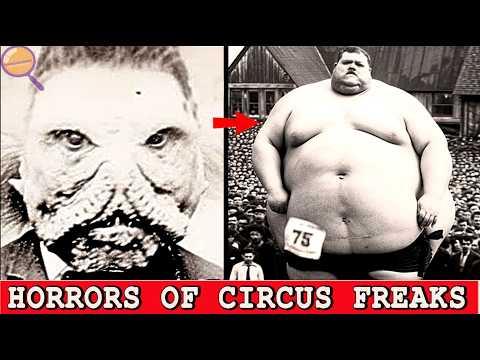
Teo Valenzuela, billed as the Heaviest Man in the World, weighed an astonishing 645 pounds. In an era before widespread understanding of obesity, Teo found a livelihood in showcasing his size. For him, these exhibitions offered support and a form of recognition in his community.
Then there was Unzie, born with albinism. Discovered young by show promoters who saw profit in his difference, he became known simply as ‘The Albino,’ performing with Ringling Brothers and Barnum and Bailey.
Grady Styles Jr., the Lobster Boy, followed a family tradition into the sideshow. But his life was marked by turmoil—in 1978 he committed a horrific act, murdering his daughter’s fiancé, casting a dark shadow over his legacy.
Eli Bowen, born legless in 1844, became the Legless Acrobat, spinning and executing controlled falls with remarkable precision. Aloisia Wagner, the Venus without arms and legs, combed her hair and sewed using only her mouth.
George and Willie Muse, albino Black brothers, were kidnapped in 1899 and billed as Martian ambassadors. Their mother Harriet fought tirelessly until a legal battle secured their freedom.
Joseph Merrick, the Elephant Man, yearned to be seen for the intelligent, sensitive soul beneath his exterior—a story reclaimed by David Lynch’s 1980 film. Pasco Pons crafted a wax face on his tumor to become the Two-Headed Mexican.
Dominique Castana, the Living Skeleton, weighed as little as 110 pounds. Frankie Saluto clowned with a live rabbit. Josephine Myrtle Corbin, the Four-Legged Woman, led a remarkable life. John Jennings, the Modern Samson, bent steel bars. Annie Jones, the Bearded Lady, charmed the world with confidence.
These performers remind us that difference is not deficit. They challenged norms and left an enduring mark on history. Which of their stories will you carry with you—and what does it teach us about how we see one another today?






