On the morning of September 13, 1944, the first Soviet shells tore through the streets of Turda, shattering the uneasy calm that had settled over northern Transylvania. For four years, this land had been a prize awarded by Hitler and Mussolini to Hungary, a decision that had left Romanians seething and Hungarians anxious. Now, the war had come to claim it back—and the price would be paid in blood.
Just weeks earlier, Romania had stunned the world. On August 23, King Michael I and a coalition of opposition leaders arrested Marshal Ion Antonescu, the country’s authoritarian leader, and declared an armistice with the Allies. The sudden defection transformed Romania from a German ally into a battlefield for the Axis retreat. Romanian soldiers who had fought alongside the Wehrmacht until only weeks earlier now found themselves attacking German and Hungarian positions under Soviet command.
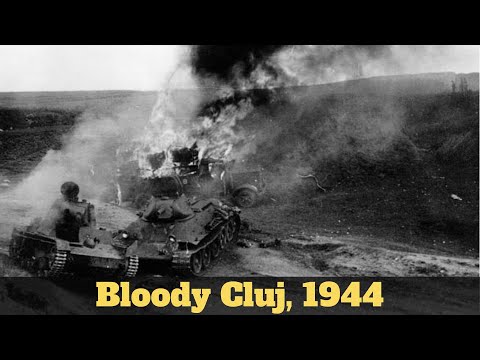
The stakes could not have been higher. For the Soviets, Romania’s defection opened a pathway into central Europe and weakened Germany’s southern flank. For the Germans and Hungarians, northern Transylvania was not just strategic ground—it was a political symbol. Hitler ordered that Cluj be defended to the last possible moment, while Hungarian authorities hoped to preserve their territorial claims. The region became a tinderbox where politics, ethnicity, and military strategy collided.
As Soviet and Romanian forces advanced toward the Mureș and Someș rivers, they met a hastily constructed but determined Axis defense. The German Eighth Army, though understrength, was reinforced by Hungarian units, including the 25th Infantry Division and the 2nd Armored Division. Approximately 120,000 German and Hungarian troops faced a combined Soviet-Romanian force of more than 290,000 soldiers, backed by over a thousand tanks and self-propelled guns. The defenders relied on fortified positions, river crossings, and the rugged terrain to slow the offensive.
The opening engagements were characterized by rapid maneuvers and attempts to seize key transportation hubs. Turda, a town at a critical junction of roads and railways, became the first major flashpoint. On September 13, forward Soviet detachments attempted to enter the town but were repelled by concentrated artillery fire and counterattacks from German armored elements. The battle for Turda soon escalated into a prolonged confrontation, with village after village changing hands under heavy shelling and house-to-house combat.
For the Romanian troops, the motivation was deeply personal. They were fighting to reclaim territory lost in 1940, and their commanders argued for active participation to ensure their claims would be recognized at the postwar settlement. Romanian units, though less well equipped than their Soviet counterparts, displayed determination in reclaiming the land—but they also sustained heavy casualties from Axis counterattacks.
As the fighting spread toward Cluj, the administrative and symbolic center of northern Transylvania, civilians found themselves caught between advancing and retreating armies. In towns like Turda, Iuda, and Târgu Mureș, populations sheltered in basements as artillery duels raged above. Refugee flows increased dramatically, with Hungarian families retreating westward and Romanian civilians preparing for the return of Romanian administration. Reports of reprisals and summary executions emerged on both sides, adding to the atmosphere of fear and uncertainty.
By late September, the front had stabilized into a line of trenches and barricaded streets. The Soviets possessed superiority in manpower and equipment, but the defenders made skillful use of terrain and local counterattacks. Neither side achieved a decisive victory in September, but the escalating scale of operations foreshadowed even more destructive battles to come. The struggle for Cluj had become not only a contest for a strategic city, but also a measure of political will, testing the resolve of armies, governments, and populations caught in the shifting tides of the Eastern Front.
October arrived with the cold bite of autumn, and with it came a shift in the rhythm of the campaign. The Soviet 27th Army and 6th Guards Tank Army, having absorbed the lessons of September’s frontal assaults, began to probe for softer seams in the Axis defensive arc. Reconnaissance units pushed through the forested hills of the Apuseni foothills, searching for passes that could turn the German and Hungarian flanks. The Soviets had learned that brute force alone would not crack Turda—they would need to maneuver.
On the Axis side, the strain was becoming unbearable. The German 23rd Panzer Division, once the backbone of the defense, was reduced to a shadow of its former strength. Fuel shortages left tanks immobilized in their revetments, and crews cannibalized damaged vehicles for spare parts. Hungarian infantry divisions, bled white by weeks of continuous combat, reported declining morale and a growing sense of abandonment by their German allies.
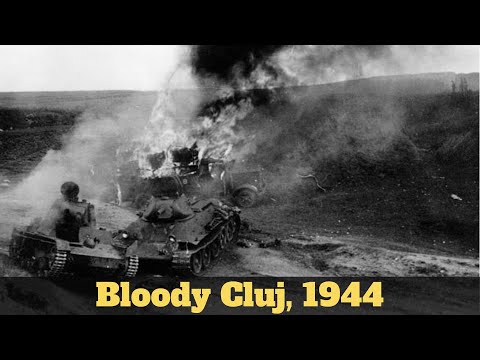
Yet the orders from Berlin and Budapest remained unchanged: hold Cluj at all costs. Hitler regarded the city as a symbol of Axis resolve, while Regent Horthy’s government clung to the hope that retaining northern Transylvania might strengthen Hungary’s bargaining position in any future peace negotiations. For the soldiers in the trenches, these political calculations meant only one thing—more fighting, more dying, and no relief in sight.
The decisive blow came in the third week of October. Soviet artillery, massed in unprecedented concentrations, unleashed a barrage that turned entire villages into smoking craters. Hundreds of guns, mortars, and Katyusha rocket launchers saturated Axis positions along the approaches to Cluj. Entire ridge lines were engulfed in fire as Soviet infantry advanced behind rolling barrages, while Romanian troops moved simultaneously on the flanks.
Romanian detachments engaged in bitter close-quarters fighting to secure the forested hills overlooking the Axis defensive belts. The 20th Infantry Division and elements of the 1st Cavalry Division pressed forward through the Apuseni foothills, their knowledge of the terrain giving them an edge in the tangled woodland. In villages such as Florești and Băița, Romanian troops fought house to house, gradually tightening the ring around the city.
The Axis responded with counterattacks, but their depleted tank reserves could not match the numerical superiority of Soviet armor. Several engagements saw Panzer IVs and StuG III assault guns attempting to blunt the T-34 spearheads, often destroying significant numbers but at the cost of irreplaceable vehicles and crews. By October 23, Soviet rifle regiments had entered the eastern suburbs of Cluj, encountering barricades, fortified houses, and sniper fire.
Inside the city, civilians endured some of the harshest conditions of the campaign. Food shortages reached critical levels, and many families lived underground in cellars or improvised shelters. The constant shifting of authority caused widespread fear—Hungarian residents feared reprisals once Romanian and Soviet troops entered, while Romanian families hoped for reunification but faced the dangers of bombardment and military occupation. Churches, schools, and hospitals were turned into field stations, though medical supplies were grossly insufficient for the numbers of wounded soldiers and civilians.
The turning point came as Soviet forces, supported by Romanian infantry, succeeded in breaking through the Axis defensive arc north of the city. On October 24 and 25, the 6th Guards Tank Army advanced rapidly, threatening to encircle German and Hungarian positions. Recognizing the danger, General Otto Wöhler ordered a general withdrawal westward, seeking to preserve what remained of his forces for the defense of Hungary itself. Hungarian commanders reluctantly complied, aware that continued resistance inside Cluj risked the destruction of entire divisions.
By October 25, Soviet and Romanian units entered Cluj in force, securing the city after days of combat. Axis troops retreated toward Zalău and Oradea, leaving behind destroyed equipment, abandoned ammunition dumps, and devastated urban districts. Romanian authorities quickly reestablished administrative control, raising the Romanian flag over government buildings as crowds of ethnic Romanian residents emerged from their shelters to greet the advancing troops.
For Bucharest, the liberation of Cluj represented both a symbolic and strategic victory, confirming Romania’s reversal of alliances and bolstering its claims to northern Transylvania. The city’s capture marked the collapse of Axis resistance in the region. Though German and Hungarian units continued to fight delaying actions west of the city, the momentum had shifted decisively—the road into Hungary now lay open.
Yet the cost was immense. Tens of thousands of soldiers and civilians had been killed or wounded. Towns and villages lay in ruins, and the landscape bore the scars of one of the bloodiest campaigns fought on Romanian soil. As Soviet and Romanian columns pushed westward toward the Hungarian plain, the soldiers who had survived the battle for Cluj understood that an even larger confrontation awaited them beyond the border.
The retreat from Cluj was not a rout, but it was close to one. German and Hungarian columns clogged the roads leading west toward Zalău and Oradea, harried by Soviet armor and pursued by Romanian infantry who knew every ridge and ford of their reclaimed homeland. General Wöhler’s rear guards fought for every hour they could buy, blowing bridges and mining crossroads, but the initiative had passed irrevocably to the attackers.
Among the Hungarian troops, the mood was one of bitter resignation. The 25th Infantry Division, which had held the hills around Turda through weeks of relentless assault, was now reduced to a fraction of its strength. Officers who had promised their men that Transylvania would never fall now led them westward in silence, their credibility shattered by the speed of the collapse. Desertions mounted as soldiers slipped away to find their families before the front swept past their homes.
For the Romanians, the pursuit carried its own complications. The Fourth Army’s supply lines stretched back across the Carpathians on roads cratered by artillery and choked with refugees. Fuel and ammunition arrived irregularly, and some divisions advanced on foot with only days of rations. Yet the symbolic weight of the campaign drove them forward—every village liberated was a piece of the country restored, and Romanian commanders pressed their advantage while the Axis reeled.
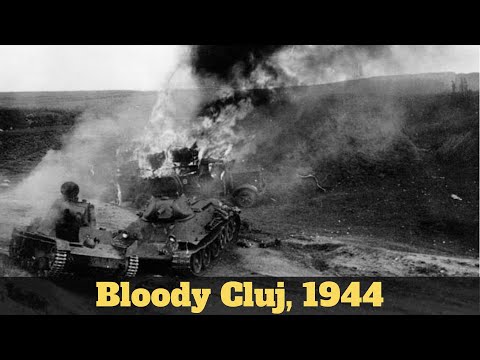
By the final days of October, the fighting had spilled beyond the frontiers of northern Transylvania. Soviet spearheads crossed into the Hungarian plain near Debrecen, where a new and even larger battle was already taking shape. The Transylvanian campaign had served its purpose—it had opened the gateway to central Europe—but it had also consumed men and materiel at a rate neither side could easily sustain.
In Bucharest, the news of Cluj’s fall was met with celebrations that masked deeper anxieties. King Michael’s government issued proclamations hailing the army’s sacrifice, but behind the scenes, officials worried about the Soviet presence that now dominated their country. The same Red Army that had helped reclaim Transylvania showed no inclination to leave, and Romanian politicians understood that their nation’s postwar future would be decided in Moscow as much as in Bucharest.
Across the border, the reaction in Budapest was one of stunned despair. The loss of northern Transylvania, coming on the heels of Romania’s defection, convinced many in the Hungarian leadership that the war was lost. Regent Horthy’s abortive attempt to negotiate a separate peace with the Allies in mid-October had already provoked a German takeover, installing the fascist Arrow Cross regime and plunging Hungary into its final, most destructive months of war.
The human cost of the campaign continued to mount long after the guns moved west. Field hospitals in Cluj and Turda overflowed with wounded soldiers and civilians alike, their corridors lined with stretchers and their supplies exhausted. Burial details worked through the ruins of shattered villages, and the winter that followed brought hunger and disease to populations already stripped of shelter, fuel, and food.
For the ethnic communities of northern Transylvania, the return of Romanian administration brought a reckoning that would echo for decades. Romanian families celebrated reunification, but Hungarian residents faced a wave of reprisals, property seizures, and the quiet fear of what the new order might bring. Neighbors who had lived side by side for generations now regarded one another with suspicion, their relationships poisoned by four years of competing propaganda and the brutalities of war.
As November deepened and the front receded toward the Tisza River, the soldiers who had fought at Turda and Cluj began to grasp the scale of what they had endured. The campaign for northern Transylvania was over—but its consequences, written in ruined towns, broken families, and redrawn maps, were only beginning to unfold. The war in southeastern Europe had entered its final act, and the battles that would decide the fate of Hungary, and ultimately of central Europe itself, awaited beyond the next river crossing.
In the decades that followed, the battlefields around Turda and Cluj were plowed over, their trenches filled and their craters reclaimed by farmland. Yet the memory of October 1944 remained etched into the landscape and the people who survived it. In Romania, the 25th of October became a day of national commemoration, honoring the soldiers who had turned their weapons against their former allies and helped reclaim a lost province.
For the Hungarian communities of northern Transylvania, the same date carried a different meaning—one of loss, displacement, and the painful adjustment to a new political order. The region’s ethnic mosaic, already fractured by four years of competing propaganda, would take generations to mend, and in some places it never fully did.
Historians would later debate whether the campaign’s strategic value justified its human cost, but for the soldiers who fought there, such questions mattered little. They had endured artillery barrages, house-to-house combat, and the bitter cold of a Transylvanian autumn—and they had watched friends fall on hillsides whose names they would carry to their graves.
What lessons do you think the world should draw from the forgotten battles of northern Transylvania in 1944? Share your thoughts in the comments below.






