The general slept soundly, wrapped in the confidence of a security system that had cost millions. Around him, seismic sensors lay buried like nervous veins, thermal cameras swept the darkness, and attack dogs patrolled with disciplined precision. His security officer had assured him: nothing could get through. And yet, as dawn broke, the general walked to his washroom, glanced in the mirror, and froze. A small piece of paper was pressed neatly to his forehead. “You were neutralized by Australian SASR at 0300.” Every sensor had recorded a clean night. Every camera had seen nothing. The four men who had done this were already two kilometers away, brewing tea.
That moment—documented, still discussed in special forces circles from Hereford to Fort Bragg—is the entry point into a story about what the Australian Special Air Service Regiment actually is and how it operates. The legend travels widely, but the mechanism stays identical because it reflects something genuinely true about a particular kind of soldier and a particular kind of intelligence.
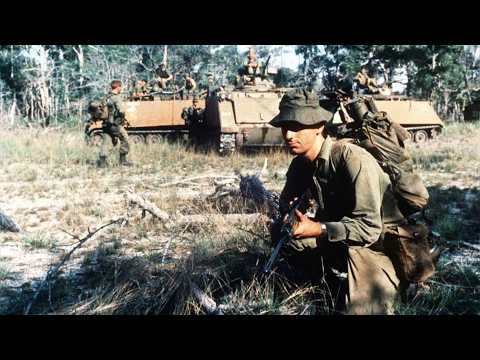
To understand what the Australians walked into that night, you need to understand what the Americans had built. Coalition exercises during the Cold War were massive affairs—tens of thousands of personnel across hundreds of square kilometers. The United States controlled the central command architecture, and the field headquarters assembled for this particular exercise represented the cutting edge of military security doctrine.
Seismic sensors were buried along every approach corridor, sensitive enough to register the footfall of a single adult. Thermal cameras scanned at ranges exceeding 400 meters, detecting body heat in total darkness. German shepherds, trained for scent detection, patrolled the inner perimeter. The patrol schedule was engineered to eliminate predictable gaps. The American general was completely satisfied. He had spent decades in a military culture that placed genuine faith in technological solutions, and that faith was not irrational. American technological superiority had been decisive in multiple conflicts. An institution that produces consistent results from systematic investment does not naturally question the premise.
What his system could not account for was four men who had grown up reading landscape the way other people read newspapers. The four-man SASR patrol received their tasking through the standard exercise framework: simulate a sabotage operation against the allied headquarters. Penetrate the perimeter, reach the command center, leave verifiable proof. In training logic, you send professionals to break the system, study where it fails, and update doctrine.
The patrol spent approximately 24 hours observing the target before moving a meter. That preparation window is not unusual—pre-operation phases typically run longer than the operation itself. But what the Australians were looking for during those 24 hours was something the American security planners had never fully incorporated into their threat model. They were not hunting for gaps in the technology. They were mapping the geometry of where it was pointed and calculating where it was not.
Every camera has a fixed field of view. Every seismic sensor has a detection radius. Every patrol route, however randomized, has a physical logic that forces it to connect one post to another across walkable terrain. Every dog operates in relation to wind direction. The Australians were not trying to defeat any of these systems. They were trying to understand the spatial relationship between them and then simply occupy the geometrically defined spaces between their fields of coverage.
This is a completely different problem from defeating technology, and it is a problem that a man who has spent years tracking cattle and game across dry Australian country is considerably better equipped to solve than the engineer who designed the sensors in a climate-controlled laboratory in Virginia.
The four operators moved after midnight. They did not move as a group. They maintained dispersed formation, each man separated enough to ensure no single camera frame could capture all of them. They selected their initial approach vector against the wind, carrying their scent away from the dog positions. They moved at a pace calculated to generate no seismic signature distinguishable from ambient noise. They were in absolutely no hurry.
The outer perimeter took approximately 40 minutes to cross. There was no drama, no narrow escape, no split-second improvisation. The seismic sensors recorded nothing because the patrol had identified a corridor between two sensor nodes where footfall pressure fell below the detection threshold. The thermal cameras recorded nothing because the men moved through a natural depression that placed them below the effective scanning elevation of the nearest unit. The first ring—the one the Americans had described as the initial impenetrable barrier—was simply no longer present as an obstacle.
The work was only getting started. The middle perimeter contained the dogs, and it presented the most genuinely complex problem of the entire operation. A trained military working dog cannot be fooled by understanding its angles. It responds to smell, to sound, to the involuntary physiological signals that human beings emit when moving through unfamiliar terrain at night.
The Australians knew this well. They also knew something that formal military doctrine tends to under-weight: a dog operating on a long leash with a handler whose alertness has drifted after several uneventful hours is a fundamentally different animal from a dog whose handler is actively searching. The handlers at this stage were doing what every human being does after extended uneventful patrol in cold darkness—their schedule was maintained, but their alertness had settled into the lower frequency hum of habitual watchfulness rather than active searching.
The Australians had been watching this transition for the better part of an hour from outside the perimeter. The difference between a handler looking for something and a handler waiting for something to announce itself is visible to an experienced observer at considerable distance. The patrol moved through the dog line during a scheduled changeover, using the brief window between the departure of one handler team and the arrival of the next. That window lasted approximately six minutes, according to the exercise security schedule—a schedule the Australians had somehow reconstructed with sufficient operational accuracy to use as a timing reference.
Six minutes is not a generous margin. For four men who had been preparing for precisely this moment for 24 hours, it was more than enough. They were through the second perimeter before the replacement handler had finished adjusting his equipment at the guard post 80 meters away.
The inner perimeter, paradoxically, was in certain respects easier than the outer two. The concentration of personnel near the command center created noise, movement, and ambient human activity that provided cover for additional figures moving purposefully among the tents. In a completely silent, empty camp, four strangers would be immediately conspicuous. In a camp with dozens of people checking communications, moving equipment, completing handovers, four more moving figures registered simply as background pattern—purposeful, unhurried, oriented toward an apparent destination.
The Australians moved through the command area not by hiding from the people around them, but by behaving with the same visible purposefulness as everyone else present. The general’s tent was identified through a combination of prior observation and the entirely predictable logic of military headquarters layout, which places the commanding officer’s quarters in a specific spatial relationship to the communications center and operations room that varies remarkably little regardless of which army is doing the planning.
The Australians found the tent in approximately four minutes. The general was asleep. His personal security detail had just completed a circuit and moved to the far side of the compound. The operators entered, completed their mission objective, and were back outside the inner perimeter before the security detail returned to its position. At 0300, the most sophisticated mobile security system the United States Army had assembled for that exercise was thoroughly and comprehensively compromised. The four Australians were beyond the outer wire and moving toward their extraction point before the first gray light appeared on the eastern horizon.
The morning debrief, by every account that has circulated through special forces channels in the years since, was one of the most uncomfortable gatherings in the history of Allied military exercises. The American security officer presented his overnight report—a document recording zero perimeter violations, zero sensor activations, zero anomalous contacts from any of the dog teams, zero incidents of any description throughout the entire night watch. The system had performed flawlessly. Every component had operated within normal parameters. In the formal language of after-action documentation, it was a successful security operation.
Then someone mentioned the general’s forehead. The general himself, to his considerable credit according to those present, did not attempt to protect the reputation of his security apparatus at the expense of the lesson. He had spent his career in an army that treated after-action reviews as sacred, and he understood that the value of an exercise is precisely its capacity to reveal failures before those failures produce irreversible consequences in an operational environment.
He asked, in the carefully measured tone of a man working very hard to contain his fury, exactly how four people had walked through three rings of active security without triggering a single alarm. The answer, delivered by the SASR patrol commander in the understated register that Australians reserve for moments of maximum satisfaction, was essentially this: The technology worked perfectly. Every sensor performed exactly as specified. Every camera captured exactly what it was pointed at. Every dog detected exactly what its handler directed it toward. The system had no flaws. The system was simply pointed at the wrong spaces, and the four men who walked through it had taken the necessary time to understand which spaces those were.
That answer managed to be simultaneously respectful and devastating, which is its own kind of skill. It encapsulates something fundamental about how the SASR approaches an operational problem and why that approach has proved so durably effective against adversaries and training partners alike.
The regiment that produced those four operators was formally established at Campbell Barracks in Swanbourne, Western Australia, in 1957, taking the British SAS model as its template. But the regiment that emerged was shaped by something its British progenitor never fully possessed: a relationship between the soldier and the hard country he trained in that went back generations before the regiment existed.
The Perth Hills are not forgiving—hot, dry, full of vegetation that strips clothing and skin, largely devoid of landmarks a European-trained soldier would find useful. Learning to move through this terrain silently and without visible trace is not a skill a training program instills in weeks. It accumulates across years of exposure, failure, and eventual intuitive mastery. Men who arrive at SASR selection already carrying versions of this skill—stockmen, farmers, station workers—begin with an operational advantage no quantity of technological investment can replicate.
This is not romance. It is practical reality, validated from the jungles of Borneo in the 1960s to the mountains of Afghanistan in the 2000s. In Borneo, the regiment’s earliest operators conducted cross-border reconnaissance through jungle the Indonesians had assessed as impassable for any organized military unit. In Vietnam, enemy forces came to call the patrol area the territory of the MA Rung—the phantoms of the jungle—reporting the sensation of being observed without being able to locate the observers. That sensation turned out to be factually accurate.
The chalk crosses on American armor, the shoelaces tied together on sleeping officers—these were not isolated pranks. They were a pattern, a regiment-wide culture of competitive excellence in low-signature operations. The message was always the same: we were here, we could have done what we came to do, and you did not know until we decided to tell you.
The American response evolved predictably—tighter protocols, expanded sensor networks, more complex patrol schedules. Some improvements were genuine; the margins grew tighter. But a culture of improvisation confronting a culture of technological solution tends to find new angles faster than technology can seal the old ones. Every upgrade introduces new variables, and every variable has geometry, and every geometry has gaps.
The general woke with a note on his forehead. His cameras had seen nothing. His sensors had recorded nothing. His dogs had detected nothing. Somewhere beyond the wire, four men were already brewing tea. The technology had functioned perfectly. That was precisely the problem.
So here is the question that has echoed through briefing rooms from Hereford to Fort Bragg for decades: when the most expensive surveillance architecture in the world can be defeated by four men who simply understood where it wasn’t looking—what exactly are we buying, and what are we still refusing to learn? Tell us in the comments.






