The jungle didn’t care about medals, flag patches, or who had shinier boots. It cared about sweat, silence, and instinct. And when it came to raw survival in Vietnam, the average Australian rookie didn’t just survive—he adapted faster, moved quieter, and lasted longer. But why? What made a wiry young digger from the back country of Queensland superior to a fresh-faced American kid straight out of Fort Benning?
The answer lies in two very different upbringings. American training was polished, structured, and fast—12 weeks of shouting, some time on the range, and a plane ticket to a war zone. Australian rookies, however, were shaped in the mud long before they landed in Phuoc Tuy. Canungra Jungle School didn’t teach you how to fight; it taught you how not to die. How to read bamboo shadows, drink rainwater off leaves, and spot a tripwire by the way a spider rebuilt its web. American rookies needed permission to fire. Australian rookies needed a reason not to. That was the difference.
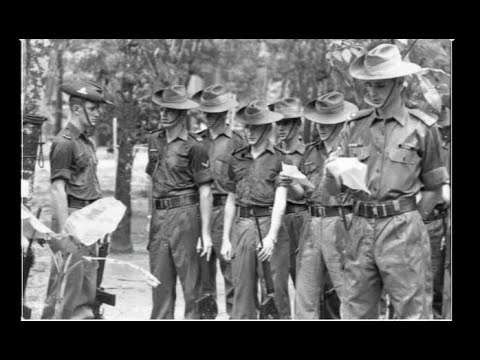
One was taught to shoot on command, the other to watch, listen, and move like mist. The jungle favored the quiet, the patient, the ones who didn’t panic when the green closed in. And out there, the quiet kid from Wagga Wagga who knew how to gut a roo and sleep under a tarp of silence had a better shot than the clean-cut kid from Ohio who needed a generator to sleep. It wasn’t about toughness—it was about belonging to the bush. And the Australian rookies, they belonged.
Before either side fired a shot, their soldiers were forged by two very different systems. The Americans trained for war like they were building cars: efficient, fast, mass-produced. A kid would graduate high school in June, be in basic training barracks by July, and standing in the mud at Da Nang by September. His training taught him how to march, how to fire an M-16 at a paper target, and how to follow orders in formation. It didn’t teach him how to hear a claymore click in the dark, how to tell a mosquito buzz from a tripwire hum, or how to sleep through monsoon thunder in a half-dug shell scrape.
The Australians, on the other hand, trained for something else. Their training didn’t end with drill and discipline. It began when they were tossed into Canungra, the jungle warfare school that didn’t care how loud you could shout, only how quiet you could stay. You learned to live in the bush, not move through it. How to walk 10 km without breaking a twig. How to spot the unnatural straight line of a fishing wire against the chaos of the jungle. You weren’t just fighting the enemy—you were learning to disappear from him.
And more importantly, you weren’t fresh from suburbia. Many Aussie rookies came from farms, cattle stations, logging camps. They’d spent their lives outdoors, fixing engines with wire, sleeping in swags under open skies, driving tractors through heat waves that make most people faint. To them, the jungle wasn’t an exotic nightmare—it was just another form of hard country. The average American rookie, in contrast, might never have held a shovel. He came from climate control, convenience stores, and cars with automatic transmissions. Drop him into the jungle, and it wasn’t just the enemy he had to fear—it was the land itself.
One Aussie veteran once said, “The jungle didn’t welcome us, but at least it didn’t scare us to death. The Yanks, good blokes, brave blokes, but half of them never walked more than a mile before they landed here. We’d been walking all our lives.” That difference showed up on day one of patrol. An American rookie might carry too much gear—too loud, too heavy—and clatter through the bamboo, water sloshing in his canteen, boots squeaking, webbing jingling. The jungle noticed. So did the VC. The Australian rookie? He stripped weight, cut down straps, laced silence into every buckle, walked like a shadow. When he stopped, he stopped breathing. When he moved, he vanished. It wasn’t just training—it was mindset.
American rookies were taught to fight. Australian rookies were taught to survive first, fight later, and win only if unseen. And in a war where most firefights were ambushes, and most deaths came to the first man who moved or spoke, that training wasn’t just smart—it was the difference between going home or becoming a name on a wall.
In Vietnam, noise was death. The jungle didn’t forgive loud feet or careless breath. One rustle, one metallic clink, one whisper in the wrong wind, and the enemy would vanish—or worse, strike first. It wasn’t about how fast you could fire or how much ammo you carried; it was about who heard who first. And this is where the Australian rookie came into his own.
Australian patrol doctrine, especially among SASR and infantry recon units, was built around stealth, patience, and deliberate silence. New soldiers were taught not to talk on patrol at all—not even a whisper. Communication was through hand signals, eye glances, and instinct. A digger once said, “You didn’t speak unless someone was bleeding or already dead.” Even the way they walked was different. Aussie rookies were taught to roll their feet heel to toe, to move in staggered files with 5-m spacing, and to stop every few minutes and just listen. The jungle wasn’t just a battlefield—it was an informant. The birds, the frogs, the insects—they all had a rhythm. When that rhythm changed, the VC were near.
American rookies, often dropped straight into a unit in country, didn’t have that instinct. Not their fault—just different training, different culture. They came in talking, cracking jokes, boots slapping the mud like hammers, webbing rattling with every step. Radios played music, canteens sloshed. Some even wore aftershave. And the enemy noticed. The VC feared the Australians not because they were louder or more aggressive, but because they were invisible. Patrols would vanish into the scrub for days—no sign, no sound—until suddenly a contact report came in and five enemy bodies lay cooling on the trail. The Americans had firepower; the Australians had presence without footprint.
That’s not to say US forces weren’t brave—they were. But even American special forces like LRRPs and SEALs began to take notes from the Aussies. Some units even cross-trained with the SASR and came away stunned. A US Green Beret once reportedly said, “We taught them demolition. They taught us how to vanish.” The Australian rookie didn’t need to be told twice. He understood that in Vietnam, it wasn’t the loudest man who won—it was the one you never saw coming.
A rookie from Townsville might not have combat experience yet, but he had bushcraft, patience, and most of all, he respected the silence. And respect was key. The jungle didn’t care how many stripes you wore; it didn’t care if you’d read the manual. It responded to stillness, awareness, and the ability to wait. Not minutes—hours. The Australians could sit still in an L-shaped ambush for 8 hours, covered in leeches, eyes unblinking. An American rookie might shift, cough, check his watch. One movement, one sound. That was all it took. And that’s why, in the silent war, rookie for rookie, the jungle picked the Australians.
You can train a soldier to shoot, to march, to salute—but you can’t train morale. You either have it or you break. In Vietnam, where the rain never stopped and the fear never slept, the difference between holding the line and falling apart often came down to the man next to you. And in that department, the Australian rookie brought something rare: an unspoken code of mateship.
From day one, Aussie diggers were taught to look after each other—not out of duty, but out of instinct. You carried your own weight, and if the bloke next to you stumbled, you grabbed his pack without a word. They didn’t talk about unit cohesion in a classroom; they lived it in the bush. An American rookie might be assigned to a platoon full of strangers, rotated in mid-tour, expected to earn trust under fire. That’s a hard road. It’s no wonder some cracked—loneliness in the jungle is its own kind of enemy.
But the Australians trained, deployed, and fought as one. Same voices, same slang, same gallows humor. That sense of familiarity, of belonging, became a psychological shield. When things went dark, when the leeches crawled and the mortars screamed, you didn’t think of orders. You thought, “Don’t let my mates down.”
And let’s not forget the humor. Australian rookies brought sarcasm like a bayonet. They mocked death to its face. They named their machine guns Matilda and painted kangaroos on stolen American jeeps. In the middle of a firefight, someone would crack a joke about the rations being worse than the VC, and the line would hold. That wasn’t immaturity—that was survival. In the face of madness, the Aussie rookie didn’t need therapy. He needed a smoke, a laugh, and someone to pass the tin of bully beef. They weren’t fearless, but they were hard to rattle. And when it came to the brutal psychology of jungle warfare, that made all the difference.
In war, statistics don’t always tell the whole story, but the jungle does. And when you listen to the jungle—the mud, the canopy, the silence—you learn very quickly which soldiers belong and which ones are just passing through. The truth is, the American rookie in Vietnam was brave, no question. He was thrown into a war most people didn’t understand, shipped across the world to fight in a language he didn’t speak, in terrain he wasn’t prepared for. He fought with courage, but too often he fought blind.
Many of them were teenagers from cities, trained fast, deployed faster, and plugged into a machine that didn’t have time to teach them the land. If they survived their first firefight, they might become good soldiers. But the jungle ate a lot of them before that moment came.
The Australian rookie, he wasn’t necessarily stronger, smarter, or better armed—but he was slower, calmer, quieter, more deliberate. He arrived with fewer illusions and often with more years on him. Australia’s conscription age was 20, not 18. That made a difference. Two more years of life before war made a man just a bit more patient, and patience was everything. He knew that in Vietnam, aggression got you killed; discipline kept you breathing.
American patrols often learned this the hard way. A hasty movement, a loud radio, a careless fire, and a whole squad could vanish in an ambush. But Australian patrols, especially those led by SAS or trained infantry NCOs, they moved like smoke. Sometimes even American commanders admitted it. A US recon officer once observed, “The Australians didn’t walk through the jungle. They listened to it first.”
And maybe that’s the answer. Australian rookies didn’t come to fight the jungle. They came to survive inside it. They respected it, feared it, and studied it like it was a living organism—because it was. The jungle wasn’t neutral. It noticed you, and over time it made a choice. It chose the ones who respected silence, who understood that stillness was not weakness, that fear, when harnessed, became instinct, that mateship wasn’t a slogan—it was the rope you held onto when everything else fell apart.
So, who was better? That’s a loaded question. But maybe it’s simpler to ask: if you had to walk point on a patrol through hostile jungle—hot, wet, and crawling with VC—would you rather have a green American private behind you, or an Aussie rookie from the bush, eyes sharp, boots silent, and a slouch hat pulled low?
The jungle answered that question a hundred times, and most of the time it whispered back the quiet one, the patient one, the Australian.
Training, discipline, bushcraft—those were all vital. But there was one thing that no manual could replicate, no classroom could teach. Humor. Dark, irreverent, gallows humor. The kind that could survive napalm, punji pits, malaria, and madness. Australian rookies didn’t just fight the war—they laughed at it. Not because it was funny, but because it was the only way to stay sane. One digger once said, “If you didn’t laugh, you’d cry. And we were too bloody tired to cry.”
And laugh they did. They gave their rifles names. They wrote poetry on claymore mines. They painted kangaroo stencils on captured AKs and drew mustaches on enemy propaganda posters. There’s a story—probably half true, half legend—about a young Aussie rookie sitting silently in ambush for two days. When the VC finally walked into the kill zone, his sergeant whispered, “Ready to fire?” The rookie simply replied, “Was beginning to think they’d stood us up.”
That’s the spirit the jungle couldn’t kill. While American rookies often entered Vietnam wide-eyed and overwhelmed, Australian rookies entered with a raised eyebrow and a joke in their pocket. That difference mattered, because humor wasn’t just entertainment—it was resilience. When the rain had soaked through every layer of clothing, when jungle rot had eaten through boots and skin, when the body gave out and all that was left was willpower, sometimes a single sarcastic line could hold the whole patrol together.
And when death came close, as it often did, Australian rookies met it with silence and a smirk. They didn’t brag. They didn’t panic. They didn’t monologue about freedom or flags. They just muttered something like, “Well, that was close, eh?” Lit a cigarette and kept walking.
This attitude baffled the Americans at first. Some saw it as disrespectful. Others, especially the special forces, grew to admire it deeply—because that larrikin edge, that irreverent spark, wasn’t weakness. It was defiance, a refusal to let the war define them. It didn’t mean they didn’t care. It meant they cared so much they had to hide it behind a wall of wit just to function. And that wall saved lives.
So, in the end, was the Australian rookie really better? It depends on how you define better. If you measure by body count, by firepower, maybe the numbers lean one way. But if you measure by who the jungle kept alive, who stayed silent when others shouted, then yes—the Australian rookie wasn’t better by rank or medal. He was better by survival, by stillness, by how few mistakes he made when it counted. If you dropped one green American and one green Australian into the weeds on day one, one might check his map, the other might check the wind.
So here’s the question: if you had to walk point through hostile jungle tomorrow, would you trust an Aussie rookie to cover your six—or would you still take your chances with the loud one?






