In the annals of World War II, amidst the chaos and carnage, a select few soldiers rose above the rest, their names etched into history by a chilling metric: confirmed kills. These were the hunters of men, the ghosts on the battlefield, whose deadly precision turned the tide of countless skirmishes. Their stories are not just of war, but of human endurance, skill, and the grim arithmetic of survival.
From the frozen forests of Finland to the bombed-out streets of Stalingrad, these marksmen became legends. Some fought for ideology, others for country, but all shared an uncanny ability to deal death from afar. Their kill counts are staggering, their methods meticulous, and their legacies enduring. But behind every confirmed kill lies a tale of patience, cunning, and often, profound sacrifice.
Consider the Soviet Union’s Ivan Sidorenko. Rising from humble beginnings, he was initially conscripted into a mortar company during the Battle of Moscow. But when he wasn’t raining explosive shells on German soldiers, Sidorenko carried out his own missions, armed with the standard Mosin-Nagant rifle. He would strike out alone into the outskirts of Moscow, camouflaging himself in the rubble of the scarred city, and snipe the enemy from great distances.
A natural predator fighting on his home turf, Sidorenko began to rack up an impressive number of kills as well as vehicles destroyed. On one mission, he destroyed four enemy vehicles one after another with four shots aimed at the fuel tanks. His commanders recognized the deadly potential of this part-time sniper—both as a killer and a valuable propaganda piece. Sidorenko was given a sniper variant of the Mosin-Nagant and tasked with training recruits. Their training was tough; recruits had to learn to live by Sidorenko’s ethos: one shot, one kill.
Soviet snipers like Sidorenko were hugely influential in the chaotic street-to-street fighting in Russia’s bombed-out cities. Their ability to deliver death from afar spread fear through the German ranks. And rightly so, as by the end of the war, Sidorenko—the USSR’s top sniper and top soldier—boasted 500 confirmed kills.
While Soviet snipers were crawling through the rubble to line up the perfect shot, US infantryman Audie Murphy was leading his platoon from the front with courage so extreme that the US military ran out of medals to give him. His coolness under fire became legendary among US forces. During the Normandy campaign, Murphy killed upwards of 50 enemy soldiers in one devastating attack.
As per his Medal of Honor citation, Murphy was attacked by six tanks and several waves of infantry. Ordering his men back to take cover, he climbed on a burning tank destroyer and fired its machine gun at the enemy. He was alone and exposed to German fire from three sides, but his deadly fire killed dozens of Germans and caused their infantry attack to waver. This was just one of many firefights that justly earned Murphy his deadly reputation. Some sources credit him with around 240 confirmed kills, but this is difficult to check as the figure includes kills from artillery strikes he called in.
Meanwhile, in the Austrian Alps, a young hunter named Matthäus Hetzenauer was scripted into the German army immediately after his 17th birthday. Having grown up hunting in the mountains, he was sent to an elite alpine unit which made use of his special skills. He was later selected for specialized sniper training, which he completed in 1944. The German army of 1944 was in dire need of men and equipment; the Eastern Front had ravaged the once-powerful Wehrmacht, and a seemingly inexhaustible torrent of Soviet soldiers was crashing into the German lines.
Hetzenauer’s unit was deployed to the Hungarian and Slovakian regions of the Carpathian Mountains. The young sniper excelled in this environment, applying the techniques of hunting deer to hunting Soviet machine gunners and commanders. Sometimes he would kill every soldier in an enemy squad just to clear the path to a field commander. In the 10 months Hetzenauer spent fighting the Soviets, he scored 345 confirmed kills—the highest among any German soldier. But like many other snipers, his own estimate is far higher: around 500.
While terrifying, German snipers were not unkillable. British soldier Harry Furness was well aware of this fact, making it his mission to kill as many German snipers as he could. As the British soldier with the highest number of confirmed kills, you could say he was successful. Furness did most of his deadly work in rural France in 1944. He was first and foremost a recon specialist, building concealed positions at night close to the German lines to observe them by day.
On more than one occasion, Furness was trapped completely undetected in a position behind German lines when they advanced unexpectedly. He waited for days without moving until the Germans retreated. Furness returned to HQ that night with the most detailed report of a German unit his commander had ever seen—he had also been gone so long that he was reported missing in action. On other occasions, Furness used his supreme concealment skills to stalk German snipers through the countryside for days. He always searched their positions after firing his shot and ending their lives, taking their scopes as souvenirs. By the end of the war, Furness had filled a crate with German scopes, and his total confirmed kill count reached 117.
We’ve all heard of Finnish sniper Simo Häyhä, but this video would be incomplete without him. The last thing an unlucky enemy soldier never saw, Häyhä earned the nickname White Death during the Second World War and became a Finnish national hero. Fighting the 105-day Winter War between Finland and the USSR was grueling work in the subzero temperatures and waist-deep snow of eastern Finland. Equipment and vehicles quickly broke down; soldiers spent weeks in the wilderness fighting hypothermia as ferociously as they fought their enemy.
In the whitewashed landscape, Häyhä hunted Soviet soldiers like the woodsman he was. He had scattered numerous sniper nests through the forests of eastern Finland, waiting hours in these positions for an unfortunate Soviet to enter his sights. His technique was devastatingly successful. On the 21st of December 1939, Häyhä killed at least 25 enemy soldiers in a single day. Despite his immense skill and growing fame, Häyhä felt he had simply done his duty to Finland. Reports on his kill count vary, but it’s possible it could be as high as 542 confirmed kills. This incredible feat makes him the top-ranked sniper of the war and one of the best snipers to have ever lived.
Czechoslovakian medic and sniper Marie Ljalková is a truly unique case—not just because she was a woman, but because she was proficient with both taking and saving lives. Ljalková volunteered with the First Czechoslovak Independent Field Battalion when it was founded in 1942. This unit was thrown together to stand with the Soviet Red Army in defense of central Europe. Among its ranks were hardened veterans of the Czechoslovak Legion, Slovak prisoners of war, defectors from Nazi-occupied lands, and Czech-speaking volunteers.
At the personal request of Stalin, this cobbled-together unit was launched into combat at the Battle of Sokolovo. Here, the freshly trained sniper Ljalková would make her first mark. Fighting alongside the battle-hardened soldiers of the Soviet Red Army, Ljalková shot seven German soldiers dead, making her a sniper ace. As the wider battle for eastern Europe between fascists and communists dragged on, Ljalková distinguished herself on several occasions. In 1944, Stalin demanded women be removed from combat roles, and Ljalková was sent to a tank unit as its chief medic. By the end of the war, she had 30 kills to her name, but countless more tankers were alive because of her medical expertise.
This next infantryman has the honor of not only the most confirmed kills for his country but also achieved this feat in a single engagement. Nepalese Gurkha rifleman Lachhiman Gurung fought the Japanese while serving the Indian Army under the broader command of the British Empire, earning his place in history and a Victoria Cross. In a single firefight, Gurung was manning the forward-most trench with two comrades, with the rest of his platoon to his rear. On the night of the 12th of May 1945, at least 200 Japanese soldiers attacked his position head-on.
The attack began with a barrage of hand grenades, the majority of which Gurung threw back—except one which killed his comrades and blew off his right hand. When lesser soldiers would have just accepted their fate, Gurung loaded and fired his rifle left-handed for four hours, buying his unit time to regroup. He is credited with single-handedly inspiring other soldiers to defend their position to the last man. When morning came, 31 dead Japanese soldiers lay sprawled directly in front of Gurung’s trench; another 57 lay around the immediate area. It’s likely Gurung killed the majority of these men too. His bravery was so inspiring and critical to his platoon’s defense that all 87 dead Japanese were attributed to him.
Of all the soldiers in this video, this next sniper was undoubtedly the most dedicated to his cause. Born and raised in East Prussia, a German enclave located directly north of Poland, Bruno Sutkus was a true believer in German nationalism. He joined the Hitler Youth as a teenager and progressed through its ranks before joining the SA at the age of 18. The Brownshirts were the first paramilitary wing of the Nazi Party; they were the initial Nazi muscle, starting street fights, intimidating politicians, threatening journalists, and smashing up Jewish-owned businesses. They also organized military training, and this was where young Sutkus learned to shoot.
Sutkus enthusiastically joined the German army as a sniper and fought on the Eastern Front. Brutally meticulous when it came to killing the enemies of Nazism, he insisted on keeping a book detailing every kill he made. He also went as far as to have each kill confirmed by at least one other soldier and checked off by his commander. His count on the final page of his book: 209 confirmed kills.
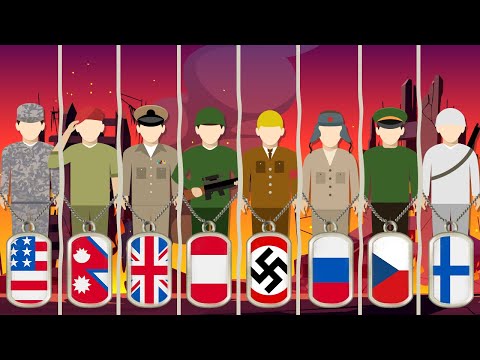
These were just eight soldiers with the most confirmed kills from eight fighting nations. But their stories are far from over. Each one faced unique challenges, employed distinct tactics, and left an indelible mark on the history of warfare. In the next part, we will delve deeper into the lives of these extraordinary individuals, exploring the circumstances that shaped them and the battles that defined them.
Their stories remind us that war is not just a clash of armies, but a crucible of individual will. From Häyhä’s frozen forests to Sutkus’s meticulous ledger, each kill was a moment of terrible clarity. These soldiers were not born legends—they were forged by necessity, ideology, and the raw instinct to survive.
Yet behind every confirmed kill lies a human cost. Sidorenko’s propaganda fame, Murphy’s haunted heroism, Ljalková’s dual mission to save and take lives—all carried burdens we can scarcely imagine. Their legacies are not merely numbers, but warnings about the extremes of human capability.
As the war ended, these marksmen returned to civilian life or faded into history. Their rifles fell silent, but their stories endure. They remain a chilling testament to what one determined person can do—for good or for ill.
Which of these soldiers’ stories shocked you the most—and should we judge them by their kill counts, or by the courage they showed under fire? Share your thoughts below.






