On Threadneedle Street in London, a fortress of thick stone and windowless walls has stood since 1734. Inside, decisions were made that most history books never mention—decisions that didn’t just shape British banking, but helped set the stage for the deadliest conflict in human history. This is not a conspiracy theory. It is documented history, drawn from the Bank of England’s own archives, declassified intelligence files, and the diaries of the men who pulled the levers.
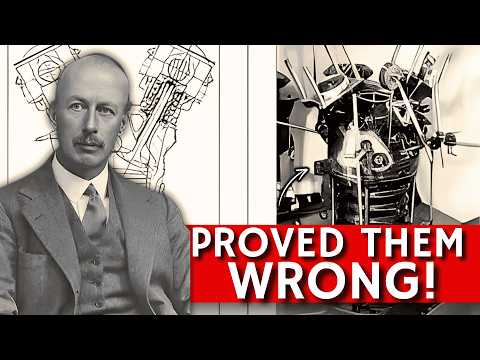
At the center of this story is Montagu Collet Norman, a man so controversial that decades later, the incoming governor of the Bank of England had his portrait removed from the wall. Born in 1871 into banking aristocracy, Norman became governor in 1920 and held the post for 24 years—the longest in the bank’s modern history. Eccentric and theatrical, he wore a broad-brimmed hat and flowing cape, traveled under pseudonyms, and was once described by the Wall Street Journal as the currency dictator of Europe. But his most consequential relationship was with a German named Hjalmar Horace Greeley Schacht—a friendship that would set the stage for World War II.
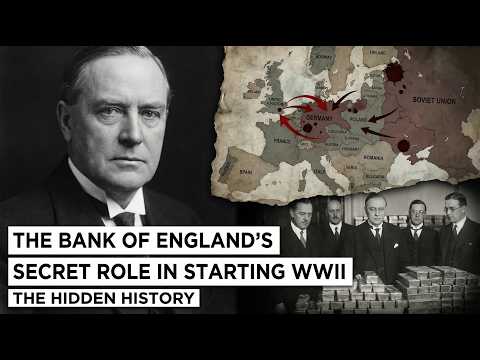
To understand how the Bank of England became entangled with the rise of Nazi Germany, you first have to understand the financial disaster that Europe was drowning in after the First World War. The seeds of World War II weren’t planted in 1939. They were planted in 1919 at the signing of the Treaty of Versailles, when the Allies demanded that Germany pay 132 billion gold marks in reparations—an astronomical sum that economists like John Maynard Keynes warned was impossible. Keynes predicted it would destroy the German economy and sow the seeds of future conflict. History proved him horrifyingly right.
By 1923, Germany’s economy had collapsed into hyperinflation. People burned banknotes for warmth because the money was worth less than firewood. The mark traded at 4.2 trillion to the dollar. Entire life savings evaporated overnight. Pensioners couldn’t afford a loaf of bread. Wheelbarrows full of cash couldn’t buy a week’s groceries. It was economic annihilation on a scale that’s almost impossible to comprehend—and it created a desperate, humiliated population ripe for exploitation by extremists.
The solution to this crisis didn’t come from European diplomacy alone. It came from American bankers and from the Bank of England. And the man who bridged these worlds was Hjalmar Schacht. Born in 1877 to pro-American parents, Schacht was brilliant—he later scored 143 on an IQ test at Nuremberg, the highest of any Nazi leader examined. In 1923, just a week after Hitler’s failed Beer Hall Putsch, Schacht was appointed Germany’s currency commissioner. He had no gold reserves, but he understood something profound: money relies on perceived value, on confidence, on the collective belief that a piece of paper actually means something. And he knew how to manufacture that belief.
This is where the Bank of England enters the picture with enormous consequence. Schacht convinced Montagu Norman to lend Germany $25 million to establish a gold reserve. Just having that reserve—being able to point to it and say, “There is gold backing our currency”—was enough to restore confidence. It was a psychological operation as much as a financial one. And it worked. The hyperinflation ended. A new currency, the Reichsmark, was introduced. And crucially, this success cemented a personal bond between Schacht and Norman that would prove far more consequential than any treaty.
Norman and Schacht didn’t just have a professional relationship. They became genuine friends. They were both members of the Anglo-German Fellowship, a British organization that advocated friendship with Hitler’s Germany. Norman was so close to the Schacht family that he became godfather to one of Schacht’s grandchildren—a child named Norman in his honor. This friendship would translate into action on a global scale.
In late 1923, the Dawes Committee was formed to restructure Germany’s reparations. Chaired by American banker Charles Dawes, the resulting Dawes Plan was formally adopted in 1924, and Montagu Norman was one of its key architects behind the scenes, working closely with Schacht to design a framework that would channel American and British capital into Germany. The plan provided Germany with 800 million Reichsmarks—roughly $200 million—to stabilize its currency and rebuild its industrial base. Half of that money was raised through Wall Street bond issues, floated by J.P. Morgan and quickly oversubscribed.
This created a circular flow of capital that was almost absurd in its design. American banks lent money to Germany. Germany used that money to pay reparations to France and Britain. France and Britain used those reparations to repay their war debts to the United States. American money went to Germany, came back through France and Britain, and ended up back at American banks. It was a giant financial merry-go-round. And as long as American money kept flowing in, everyone was happy.
Over the next few years, the system pumped billions into the German economy. By 1929, U.S. loans to Germany under the Dawes Plan and its successor, the Young Plan, exceeded $3 billion. That money didn’t just sit in bank vaults—it rebuilt German industry, modernized factories, and funded the infrastructure that would later be converted to military production. But the system had a fatal flaw: it was entirely dependent on American loans continuing to flow. And when the stock market crashed in October 1929, that flow stopped almost overnight.
The consequences were immediate and devastating. German banks began to fail. Unemployment exploded from roughly 1.3 million in 1929 to over 6 million by 1932. Industrial production plummeted. The fragile democratic coalition that had governed the Weimar Republic fractured under the pressure. German voters, having experienced the trauma of hyperinflation and now facing mass unemployment, began turning in droves to the political extremes—both the Communist Party on the left and the Nazi Party on the right. The very financial system that Norman and the Anglo-American banking establishment had designed to stabilize Germany ended up destabilizing it catastrophically. And the political beneficiary of that destabilization was Adolf Hitler.
In 1929, a new committee was formed under the chairmanship of Owen Young, head of General Electric, to create a permanent settlement. The resulting Young Plan, adopted in 1930, reduced Germany’s total reparations to 112 billion Reichsmarks payable over 58 years through 1988. But more importantly for our story, the Young Plan created a new institution to manage the payments—an institution that Norman and Schacht had been dreaming about for years: the Bank for International Settlements.
The BIS was established in 1930, headquartered in Basel, Switzerland. On its surface, it was designed to manage Germany’s reparation payments. But Norman and Schacht designed it to be something far more ambitious. Norman enthusiastically described it as an “elite club of central bankers.” Schacht boasted that not a single member of the Young Conference would refuse to claim the idea as his own. The BIS was going to be the central bank of central banks—a place where the men who controlled the money supply of entire nations could meet privately, make deals, and coordinate policy without any interference from elected governments or the general public.
And the key feature of the BIS—and this is absolutely critical to understanding everything that follows—was that it was designed to be immune from government interference. When Norman consulted Walter Layton, the editor of The Economist, about drafting the BIS charter in a way that would protect it from political meddling, Layton told him it simply couldn’t be done, because it’s the right of every democratic government to reserve its freedom of action. Norman and Schacht found a way regardless. The BIS was given legal protections that placed it essentially above national law. Its accounts couldn’t be seized. Its officers couldn’t be arrested. Its records were inviolable. It operated in a kind of financial twilight zone, answerable to no nation, no parliament, no democratic body on earth.
The founders of the BIS included the central banks of Britain, France, Italy, Germany, and Belgium, as well as private American banks connected to the Morgan empire. The Federal Reserve Bank of New York worked hard to establish the BIS but was not listed as a founder. Instead, the U.S. was represented by the First National Bank of New York, J.P. Morgan and Company, and the First National Bank of Chicago—all parts of the Morgan financial network. Japan was also represented by private banks.
Now, with all of this infrastructure in place, let’s fast-forward to the early 1930s, when the consequences of these financial arrangements became catastrophic. After the Wall Street crash of 1929, the circular flow of capital that had sustained the German economy collapsed. The Federal Reserve and J.P. Morgan stopped lending to Germany. In September 1931, Britain itself abandoned the gold standard, which destroyed the international payment system and cut off what remained of the financial lifeline to the Weimar Republic. Germany was plunged back into depression. Unemployment soared to 6 million. The democratic government was fatally weakened.
But here’s what very few people talk about. While the legitimate democratic government of Germany was being financially strangled, the Nazi Party was experiencing a sudden and suspicious influx of cash. In September 1930, fueled by large donations from German industrialists like Fritz Thyssen, the chemical conglomerate IG Farben, and coal magnate Emil Kirdorf, the Nazi Party received 6.4 million votes and vaulted to second place in the Reichstag. After that electoral breakthrough, money from abroad began flowing in with increasing urgency—and the connecting link between Germany’s major industrialists and foreign financiers was Hjalmar Schacht, Montagu Norman’s dear friend.
By 1932, the Nazi Party, despite its growing popularity, was actually in serious financial trouble. Hitler had spent lavishly on his private army, the SA, and on his campaign operations, and he was drowning in debt. According to Otto Lehmann-Russbueldt, writing in his 1934 book Aggression, Hitler was invited to a meeting at the Schroeder Bank in Cologne on January 4th, 1933. At this meeting, leading industrialists and bankers—including Schacht—bailed Hitler out of his financial difficulties and enabled him to cover his enormous debts. In return, Hitler promised to break the power of the trade unions. On May 2nd, 1933, he fulfilled that promise.
Present at that January 4th meeting, according to multiple accounts, were also the Dulles brothers—John Foster and Allen—of the New York law firm Sullivan & Cromwell, which represented the Schroeder Bank. John Foster Dulles would later become Secretary of State, and Allen Dulles would become the first civilian director of the CIA.
Now, according to some historical accounts, including research by Yuri Rubtsov and corroborating documentation, there was also a meeting on January 4th, 1932—one year earlier—between Montagu Norman, Adolf Hitler, and Franz von Papen, at which an agreement on financing the Nazi Party was allegedly reached. It’s important to note that this specific claim is contested by some mainstream historians, and the exact details remain a matter of debate. But what is not debated is the broader pattern. British and American financial interests were deeply intertwined with Germany’s economic and political trajectory, and Norman was at the center of those connections.
What happened after Hitler’s appointment as chancellor in January 1933 is well documented and beyond dispute. Schacht was immediately reappointed as president of the Reichsbank on March 17th. In May 1933, Schacht traveled to the United States, where he met with President Franklin Roosevelt and major Wall Street bankers and secured a credit deal worth roughly $1 billion. The following month, Schacht went to London and met with Montagu Norman. The British agreed to provide approximately $2 billion in additional loans.
And here is the remarkable part. The British raised no objections to Germany’s decision to simply stop paying reparations. Let that sink in for a moment. The democratic Weimar Republic had been crushed, its economy destroyed, its people driven to desperation largely because it couldn’t keep up with reparation payments. But when Hitler’s Nazi government simply announced that it would no longer pay, the Bank of England and the broader British financial establishment essentially accepted it. There were no sanctions, no economic blockades, no serious consequences. The money kept flowing.
And it gets worse. Because once Schacht was reinstated at the Reichsbank, he didn’t just resume normal banking operations. He engineered one of the most ingenious and devious financial schemes in history to secretly fund German rearmament in direct violation of the Treaty of Versailles. It was called the Mefo Bill system.
Here’s how it worked. Schacht created a shell company called the Metallurgische Forschungsgesellschaft—or Mefo for short. On paper, it looked like a metals research firm. In reality, it existed for one purpose: to hide military spending. German arms manufacturers would supply weapons and military equipment to the government. And instead of being paid directly from the government budget, which would have revealed the scale of rearmament, they were paid with Mefo bills. These were essentially IOUs drawn on the shell company and guaranteed by the Reichsbank. The Mefo bills could be traded like commercial paper. Banks accepted them. They circulated through the financial system. And crucially, they didn’t appear on the government’s official budget.
Between 1934 and 1938, the Nazi regime issued roughly 12 billion Reichsmarks in Mefo bills, financing a massive military buildup while keeping the true scale of spending hidden from both the German public and the international community. Now, here’s the connection to our story. The international credibility that allowed the system to function rested in large part on the confidence that the Bank of England and the broader Anglo-American financial establishment had placed in Schacht. He was their man. He was the responsible banker. He was the bulwark of civilization. The international financial community’s trust in Schacht, cultivated over years of personal relationships and institutional cooperation, provided the cover under which Germany secretly rearmed. Without that trust—without the seal of approval from London and New York—the Mefo bill system might never have been able to sustain itself.
In August 1934, Hitler issued a secret memorandum outlining his Four-Year Plan—admitting privately that it rested on foreign financial support. And that support kept flowing. Standard Oil purchased 730,000 acres in Germany and built refineries to fuel the Reich. American patents flowed to Junkers, whose Stuka dive bomber would terrorize Europe. Britain signed the Anglo-German Payments Agreement, and the Bank of England extended credits to ease the transfers. By the late 1930s, Germany was Britain’s primary trading partner.
The Anglo-German Fellowship, founded in 1935, counted fifty parliamentarians, three Bank of England directors, and corporations like Unilever and Lazard Brothers among its ranks. This was not a fringe—it was the establishment itself.
Then came the moment that would define Norman’s legacy. In March 1939, German troops marched into Prague. At gunpoint, Czech bankers signed orders transferring 23 tons of gold held at the Bank of England into Reichsbank accounts. Norman authorized the transfer—days after Britain had frozen all Czech assets. He simply ignored his own government. When the Chancellor asked whether the bank still held Czech gold, Norman deliberately evaded the question.
In the House of Lords, the outrage was fierce. One MP declared it was “to sanction the most notorious outrage of this generation—the rape of Czechoslovakia.” Three months after the last Czech gold was sold through London, Germany invaded Poland.
Even after war began, the Bank for International Settlements kept operating—accepting looted gold, laundering it through neutral countries, keeping the Nazi war machine supplied with Swedish iron ore and Portuguese tungsten. When the war ended, the accounting was never settled. The facilitators were promoted, not punished. Schacht was acquitted at Nuremberg. Norman was elevated to the peerage. McKittrick was decorated by Belgium—the very nation whose gold he had helped launder.
Norman never saw himself as a villain. He believed he was preserving stability, fighting communism, protecting the financial system. But every step of the way—from the Dawes Plan to the Czech gold—he moved the world closer to catastrophe.
The lesson isn’t just about one man or one institution. It’s about what happens when financial power operates in the shadows, answerable to no parliament, no public, no democratic body on earth. The institutions that financed the war didn’t just survive it—they thrived. And the structure remains essentially intact today.
So the next time someone tells you wars are started by politicians and generals, remember this: wars are also funded by bankers, by the movement of gold between numbered accounts, by men who never fire a shot but who sign the papers that make every shot possible.
Did you know about the Czech gold transfer—and does it change how you think about the causes of the war?