America welcomed them into its living room every night—the perfect fathers, the charming bachelors, the lovable sidekicks. But behind the laugh tracks and polished smiles, some of television’s most familiar faces were guarding secrets that could have destroyed their careers in an era when one wrong headline meant the end.
In the Golden Age of TV, being openly gay wasn’t just a risk; it was a career death sentence. Yet some of the medium’s most beloved stars found ways to survive, hiding behind comedy, silence, and characters America thought it understood.
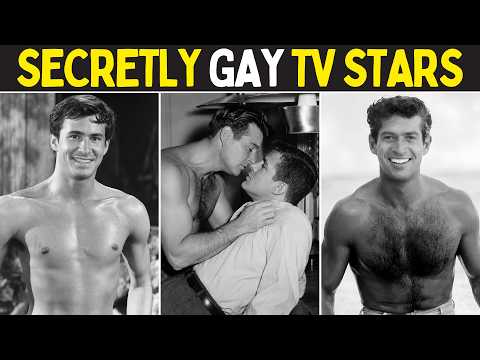
Take Roger C. Carmel, the flamboyant Harry Mudd from Star Trek. His energy was too big for the polite rooms TV usually built, but offscreen he moved carefully through Hollywood’s private rules. Viewers saw the grin and the chaos—never the cost of being different in a business that loved colorful performers but feared honest ones.
Hayden Rorke became famous as Dr. Bellows on I Dream of Jeannie, forever searching for the truth just beneath the surface. Offscreen, he understood better than most how much could stay hidden in plain sight. His story is the quieter tragedy of classic TV: a familiar face, a steady career, and a private truth most viewers never knew.
Jack Larson played the eager reporter chasing Superman, but his own life became one of classic television’s quieter revelations. His long relationship with filmmaker James Bridges gave his story an emotional depth far beyond the newsroom sets of old television.
Ethel Waters had already survived storms most stars could not imagine. Through Beulah and her music, she carried dignity and strength, but her private life was more complex than the roles audiences were allowed to see. Historians have discussed her relationship with dancer Ethel Williams, making Waters an important figure in the hidden history of same-sex love in American entertainment.
These are just a few of the fifty Golden Age TV stars whose stories reveal a world of secrecy, survival, and quiet courage. As we uncover their truths, the reruns will never look the same again.
George Nader looked like the kind of actor the ’50s could easily sell—tall, strong, masculine, and camera ready. But his real significance comes from the life he built away from that image. His long partnership with Mark Miller became one of the better documented same-sex relationships connected to old Hollywood circles.
In an industry where stars were often pushed into fake romances or carefully managed bachelorhood, Nader’s story stands out because it did not depend on tabloid guessing. It had a real emotional center. Behind the handsome publicity stills was a man who found love in a system designed to keep that love invisible.
On Route 66, George Maharis became a moody, magnetic TV heartthrob, driving through America in a Corvette and selling viewers the fantasy of escape. That image made him powerful—he looked like the ’50s giving way to the ’60s, handsome, serious, modern, and slightly dangerous.
But offscreen, his career existed in an era when any suggestion of a hidden private life could become a threat. His story exposes the cruel irony behind his most famous role: on screen, he represented freedom; off screen, freedom had limits.
Sal Mineo became famous through film, but television kept him visible through guest roles and dramas that connected him to the classic entertainment era. Audiences remembered him as sensitive, intense, wounded, and unusually vulnerable for a young male star of his time.
Mineo later spoke about being bisexual—a rare level of openness for an actor from his generation. In a business that demanded young men appear tough, straight, and easily marketable, his emotional openness made him both fascinating and vulnerable.
Anthony Perkins is remembered mostly for Psycho, but his career also crossed into television through dramas and later appearances that kept his face in the public eye. He had a nervous elegance that made him unlike other leading men—fragile, intelligent, charming, and haunted in the same breath.
Off-screen, Perkins lived with a complicated private life, including relationships with men before his marriage to Berry Berenson. Hollywood often loved men who seemed mysterious, as long as the mystery stayed profitable. Perkins became famous playing repression, fear, and hidden identity, which makes his real story feel almost painfully connected to his screen image.
Dirk Bogarde looked like a refined British leading man, but his career quietly challenged one of cinema and television’s strictest taboos. He lived for decades with his partner Anthony Forwood while maintaining the discretion expected of a star shaped by mid-century rules.
His role in Victim made him especially important because the film confronted the persecution and blackmail faced by gay men at a time when the subject was still dangerous. That choice gave his career a moral weight beyond glamour. He helped bring a forbidden truth into serious drama.
Graham Chapman became internationally known through Monty Python’s Flying Circus, one of the most influential comedy shows ever broadcast. Offscreen, Chapman was openly gay at a time when many performers still treated honesty as a career risk.
That made him unusually important in television comedy. He was not merely coded, implied, or whispered about. He was visible in a way older performers rarely could be. Yet his openness did not make his life simple—he dealt with personal struggles and the weight of being different in a world that still preferred silence.
John Inman became a British television icon as Mr. Humphries on Are You Being Served?, a role remembered for timing, camp style, and the famous line audiences repeated for decades. The character was playful, theatrical, and unmistakably queer-coded, even when television avoided direct language.
Inman later entered a civil partnership with his long-time partner Ron Lynch, giving his private life a public dignity that earlier television could never have offered him. His story shows the strange bargain classic comedy made with difference: television could embrace a flamboyant character as long as it was wrapped in humor and deniability.
Frankie Howerd was one of the most distinctive comic voices in British television, famous for Up Pompeii and a delivery style built on hesitation, double meaning, mock innocence, and sudden wickedness. He could make a pause feel like a confession.
For years, he lived with the fear that exposure could damage his career, reputation, and freedom. His long relationship with Dennis Hamer later became central to understanding the man behind the act. Howerd’s comedy often seemed to flirt with forbidden things, but the laughter hid real pressure.
Stanley Baxter became one of Britain’s most admired television sketch performers, famous for transformations, impressions, and precise comic control. He could disappear into voices, costumes, and social types with astonishing detail, making him a master of television illusion.
But his personal life stayed guarded for decades. Later revelations about his sexuality gave audiences a deeper understanding of why disguise and performance mattered so much in his career. Every character was a mask, but every mask showed intelligence, wit, and emotional discipline.
Kenneth Williams became a beloved British comic presence through radio, films, television appearances, and panel shows, carrying a style that was instantly recognizable. His nasal delivery, sharp wit, and dramatic indignation made him impossible to imitate without instantly becoming obvious.
But behind the comic persona was a complicated private life marked by conflict, desire, repression, and deep self-examination. Williams’ diaries later gave the public a more painful view of the man behind the performance. He lived in a world where being gay could be socially dangerous, professionally limiting, and emotionally exhausting.
That tension shaped his comedy. He could sound outrageous, superior, wounded, and hilarious all at once. Television loved the eccentricity, but it did not fully understand the human being producing it. The same qualities that made him funny also came from pressure.
Quentin Crisp became a television landmark through The Naked Civil Servant, the famous TV film that turned his life story into a powerful cultural moment. Unlike many figures in this story, Crisp was not built around secrecy. His significance came from open defiance.
He lived visibly as an effeminate gay man in a society that often punished difference with cruelty, mockery, and legal danger. When audiences encountered Crisp, they were not watching a coded side character or a whispered biography. They were confronting a man who had paid heavily for refusing to disappear.
His wit was dry, elegant, and merciless, but beneath it was endurance. Crisp’s presence on television helped viewers understand that hidden history was not only about actors trapped by studios. It was also about people who challenged the culture directly, long before acceptance became fashionable.
Charles Pierce was known as a brilliant female impersonator—or as he preferred, a male actress—with sharp transformations of screen legends like Bette Davis, Joan Crawford, and Katharine Hepburn. His world was cabaret, clubs, theater, and occasional television appearances, where mainstream audiences only glimpsed what queer performance culture had been building for years.
His impersonations were not just costumes, they were cultural commentary, affection, satire, and rebellion. At a time when many gay entertainers had to hide behind acceptable roles, Pierce built a career from transformation itself. He took the glamour of old Hollywood and turned it into a mirror, showing how much performance was already part of gender, fame, and identity.
Larry Grayson became a major British television personality through The Generation Game and his famous catchphrases, gentle manner, and camp comic style. He did not need fast jokes or loud aggression. His comedy came from suggestion, timing, hesitation, and the feeling that the audience was being invited into a private joke without anyone naming it.
Grayson became beloved because he made that style feel warm rather than threatening, but his personal life also belonged to a period when gay performers often had to remain cautious. The public could adore the mannerisms while avoiding the truth behind them. He became famous by being unmistakably himself and yet not fully allowed to explain what that meant.
Danny La Rue became one of Britain’s most famous drag entertainers, appearing on television, stage, and variety programs with elegance, comedy, and old-school showmanship. He managed to become mainstream by presenting drag through professionalism, charm, and theatrical tradition.
He made it look safe enough for family audiences, but that safety was earned through discipline. Every costume, line, and gesture had to be controlled. He was not simply playing dress-up. He was negotiating public comfort with private truth. His long-time relationship with Jack Hanson gave his personal story an emotional center beyond the stage persona.
Hugh Paddick became best known through British comedy, especially the legendary Julian and Sandy sketches from Round the Horne, which influenced generations of camp humor and gay-coded performance. The sketches used Polari, a secret slang associated with gay subculture, turning hidden communication into public laughter.
That was not just comedy. It was survival disguised as wordplay. Paddick worked in an era when open honesty could be dangerous, yet he helped smuggle an entire cultural rhythm into homes across Britain. His long partnership with Francis added another layer to his private story, showing the difference between public performance and personal loyalty.
Leonard Frey became closely associated with The Boys in the Band, a landmark work about gay men that was both groundbreaking and controversial. But he also worked across television, appearing in dramas, guest roles, and stage-to-screen projects that placed him inside the classic entertainment landscape.
His work could be raw, funny, wounded, and deeply human. He did not have the safe public image of a sitcom father or a polished variety host. He carried the intensity of someone performing close to painful truths. Frey later became one of the many artists lost during the AIDS crisis, which adds historical weight to his story.
Edward Everett Horton was a familiar face and voice across classic film and television, including narration work that made him recognizable to younger audiences through Fractured Fairy Tales. His screen persona was nervous, refined, fussy, and wonderfully absurd. He could make panic sound elegant.
His long association and companionship with actor Gavin Gordon has often been discussed as part of old Hollywood’s hidden same-sex history. In the era when Horton built his career, public openness was not an option for performers who wanted steady work and social safety. So he became an expert in a particular kind of screen identity—eccentric enough to be beloved, but never presented as dangerous.
Gavin Gordon appeared in classic films and television roles, often as polished men of society, authority figures, or romantic rivals. He had the elegant look of an actor who belonged to drawing rooms, mysteries, and studio era sophistication, but his importance comes from his connection to Edward Everett Horton and the private networks that existed behind the public image of old entertainment.
Not every hidden life belonged to a superstar. Many actors built steady careers around supporting roles, familiar faces, and professional respectability while carefully managing what the public was allowed to know. The closet was not only for leading men and glamorous icons—it shaped character actors, theater veterans, and television guests as well.
Sir John Gielgud was treated like acting royalty, but one public scandal exposed the danger beneath the crown. His arrest in the 1950s under laws targeting homosexual activity revealed how fragile even the highest status could be. Respectability did not protect a man from the laws and prejudices of his time.
Noel Coward made sophistication look effortless while turning concealment into an art form of its own. He made elegance, irony, and emotional distance part of the performance, shaping the terms on which the public could approach him. He was not merely hiding—he was controlling the narrative.
Clifton Webb turned refinement into a weapon, and Hollywood let him be unusual as long as nobody said too much. His difference became part of his brand as long as it remained stylish rather than explicit.
Tallulah Bankhead entered television like a scandal wearing diamonds. Her secret was never only about who she loved. It was about refusing to become ordinary.
Vincent Price built a persona so refined and mysterious that people remembered the performance before they questioned the man. Farley Granger eventually spoke openly about loving both men and women, taking back the narrative from studio silence.
Patsy Kelly was proof that some stars were living honestly before Hollywood was ready to applaud them for it. Richard Deacon became what television wanted—dependable, witty, polished, and never too revealing. The tragedy is that audiences knew the character types better than the man.
Billy De Wolfe was part of the hidden machinery of classic TV, where some of the brightest comic lights had to shine through a curtain. Wayland Flowers slipped forbidden attitude into mainstream living rooms, one laugh at a time.
Tommy Kirk was not rejected because he lacked talent. He was punished because he did not match the fantasy a powerful studio had built around him. Fannie Flagg was never just the cheerful woman on a game show panel—she was quietly gathering the emotional material that would later make her voice unforgettable.
Tab Hunter stopped being just a studio-made dream and became a man telling the truth about the machine that created him. Cesar Romero gave audiences one of television’s most colorful characters, but the real performance may have been the polished public image he maintained for decades.
Liberace turned denial into a glittering national performance. His fame became a cage decorated so beautifully that people mistook it for freedom. Alan Sues pushed through boundaries as far as television allowed, leaving behind performances that feel funny, brave, and quietly heartbreaking.
Sheila James Kuehl moved beyond the screen and became part of real-world change, stepping into history with a voice no studio could rewrite. Nancy Kulp carved out a long career without fitting Hollywood’s narrow expectations—sometimes visibility sits behind a desk, delivers a perfect line, and waits decades for audiences to understand the bravery that was there all along.
Lily Tomlin bent television, twisted it, and made space for herself before anyone gave permission. Charles Nelson Reilly turned performance into protection, every joke becoming part of a public mask funny enough to be accepted but sharp enough to reveal something deeper.
Paul Lynde hid in plain sight so brilliantly that America laughed before it realized what it was watching. He was part of a hidden language on television, one that allowed truth to survive inside jokes.
Dick Sargent later came out as gay, giving his legacy a deeper meaning than simply being the second Darrin. The actor playing the ordinary man was carrying the most complicated story.
George Takei helped television imagine the future while living in an industry still afraid of the present. His journey turned hidden strength into lasting public meaning.
Jim Nabors married Stan Cadwallader decades later, making public a partnership that had lasted for years. Why did someone so loved have to wait so long to be fully seen?
Richard Chamberlain’s fame was built on romantic fantasy while the man inside that image lived under pressure most viewers never saw. Robert Reed gave television a father figure millions trusted, while living in a world that would not fully trust him back.
Rock Hudson’s legacy remains glamorous, tragic, and enormous because his visibility changed public understanding at a moment when it carried life and death meaning. Raymond Burr solved mysteries on screen while the mystery around him became part of television history.
Golden Age television looked innocent because it had to. But behind those familiar faces were real people living with fear, love, pressure, and silence. Some finally told the truth. Others never got the chance.
And once you know what they carried, those classic reruns never feel quite the same again.
Which of these hidden stories surprised you the most—and does knowing the truth behind the smile change how you watch them today?






