In the heart of London, beneath the bustling streets of Westminster, a secret underground bunker buzzed with tension. It was July 1943, and Winston Churchill, Britain’s defiant prime minister, sat in his war rooms—a labyrinth of concrete and steel that had weathered the Blitz. Here, in this fortified sanctuary, the fate of Europe was being decided. Churchill knew that Hitler’s grip on the continent was tightening, but the tide had to be turned. The Allies were planning the largest amphibious invasion in history, and the stakes could not have been higher.
But where would the blow fall? The question haunted Churchill and his ally, Franklin D. Roosevelt. The French coast stretched for 2,000 kilometers, fortified by Hitler’s Atlantic Wall—a formidable barrier of bunkers, artillery, and hundreds of thousands of German troops. To attack head-on seemed suicidal. Yet, in July 1943, the decision was made: the invasion would target Normandy. But to succeed, they needed more than just overwhelming force; they needed deception on a grand scale.
Churchill turned to a clandestine unit known as the London Controlling Section, led by the brilliant and trusted John Bevan. Their mission: to convince Hitler that the invasion would strike at Pas-de-Calais, not Normandy. The plan was audacious—to create an entire phantom army, complete with inflatable tanks, dummy landing craft, and fake radio traffic. This was Operation Fortitude, and it would require the most ingenious minds and a stroke of theatrical genius.
To bring this illusion to life, Bevan’s team drew inspiration from an unlikely source: the Macy’s Thanksgiving Day Parade in New York. They enlisted the Goodyear Tire and Rubber Company to produce massive inflatable decoys—tanks, trucks, and artillery—that could be quickly deployed. These rubber replicas were astonishingly realistic, and they were positioned in Kent, directly across the English Channel from Pas-de-Calais, where German reconnaissance planes could easily spot them.
But a phantom army needed a commander, someone the Germans would fear and respect. The choice was obvious: General George S. Patton. The swaggering American general, with his ivory-handled revolvers and flamboyant style, was a legend. The Germans believed Patton would lead the main invasion, so Bevan arranged for him to make high-profile appearances in Kent, cementing the ruse. Photographs of Patton inspecting his “troops” were leaked to the press, and the Germans swallowed the bait.
Yet, the deception was far from complete. The Germans needed confirmation from their own spies in Britain. But almost all German agents had been captured and turned into double agents by MI5. Among them was a most unlikely operative—a young Spaniard named Juan Pujol García, codenamed Garbo. Pujol had initially offered his services to the British, who dismissed him as a naive amateur. Undeterred, he had infiltrated German intelligence by posing as a fanatical Nazi sympathizer, feeding them fabricated reports from a nonexistent network of spies across Britain.
When British intelligence intercepted and decoded Pujol’s messages, they were stunned. His fake convoy in the Mediterranean had sent German ships on a wild goose chase. Realizing his potential, they recruited him as a double agent. Now, Garbo was tasked with the most critical mission of the war: to convince the Germans that the invasion would come at Pas-de-Calais.
From a small office in central London, Garbo orchestrated a masterpiece of deception. He invented 27 fictitious sub-agents—a Venezuelan student in Glasgow, an Indian nationalist in Dover, a waiter in southern England—and had them send hundreds of reports to his German handlers. These fragments of information, pieced together, painted a clear picture: a massive army under Patton was massing in Kent, ready to strike at Pas-de-Calais. The Germans were hooked.
By May 1944, German military maps showed the fictitious First U.S. Army Group (FUSAG) poised in Kent, with dozens of divisions marked. The real Allied forces were gathering in the southwest, but the Germans kept their strongest units, including the feared 15th Army, in the north. They were convinced that the Normandy landings were a diversion. The deception had worked.
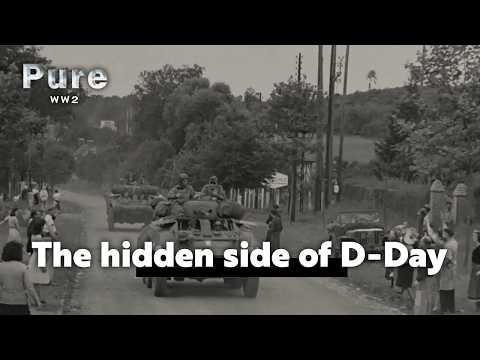
But as the clock ticked down to June 6, 1944, the tension was palpable. Would the illusion hold? The success of Operation Overlord—and the liberation of Europe—hung in the balance. In the early hours of D-Day, 7,000 ships carrying 132,000 men set sail for Normandy. Among them was 19-year-old John Roman, who had no idea where he was headed. The sea was rough, and fear gripped the young soldiers. As they approached the beaches, the German defenses unleashed hell. On Omaha Beach, later known as “Bloody Omaha,” over 3,500 men were killed or wounded in a matter of hours. But the Allies pressed on.
Meanwhile, the deception continued. Even after the landings, Garbo sent a message to the Germans claiming that Normandy was a feint and that the real attack would still come at Pas-de-Calais. Hitler, convinced, held back his reserves for weeks, giving the Allies precious time to secure a foothold. The phantom army had done its job.
But as the Allies pushed inland, the war took a darker turn. In the villages of Normandy, the liberators were greeted with joy, but not all encounters were innocent. The presence of thousands of young soldiers, far from home and hardened by battle, led to tensions. Some French women found love, while others became victims of violence. The rape of women like Marie, a 19-year-old farm worker, shocked the local population. The American military justice system responded swiftly—two soldiers were hanged for their crimes—but many cases went unreported, buried under the weight of gratitude for the liberation.
As the summer of 1944 wore on, the battle for Normandy raged. The Allies captured Cherbourg, and the port became a vital lifeline. In the rear areas, soldiers enjoyed brief respites, watching Hollywood films and dancing with local girls. John Roman met Jacqueline, a 17-year-old secretary, and their romance blossomed amidst the chaos. But the war was far from over, and the scars it left—both visible and invisible—would linger for generations.
The story of D-Day is one of courage and sacrifice, but also of deception and secrets. The ghost army and the double agents who made it all possible remain a testament to the power of ingenuity and the lengths to which nations will go to secure victory. Yet, as the Allies advanced, the true cost of liberation would continue to unfold, revealing both the best and worst of humanity.
But the story of the phantom army did not end with the Normandy landings. In fact, Operation Fortitude continued for weeks after D-Day, and its most audacious chapter was still being written. As the Allies struggled to break out of the Normandy beachhead, the Germans remained paralyzed by indecision. Hitler and his generals were still convinced that a second, larger invasion was imminent at Pas-de-Calais. The phantom army in Kent, they believed, was waiting for the right moment to strike.
This hesitation proved costly. The 15th Army, the most powerful German formation in the west, remained pinned in the north, far from the actual fighting. Every day that Hitler delayed, the Allies grew stronger. And the man who kept the illusion alive was none other than Juan Pujol García—Garbo.
In the weeks following June 6, Garbo sent a series of increasingly frantic messages to his German handlers. He warned them that the Normandy landings were a diversion, a mere prelude to the real blow. “The first wave has succeeded in drawing Allied attention,” he wrote, “but the true concentration of forces remains in Kent. Patton is ready. The attack on Pas-de-Calais will come within days.” The Germans believed him. They had no reason not to. Garbo had been right about so many things before.
But as the weeks passed, the Germans began to waver. The Allies had broken out of Normandy and were racing across France. Paris was liberated in late August. The war was moving east, and still the phantom army sat in Kent, waiting for an invasion that would never come. Garbo needed one final, masterful stroke to keep the deception alive.
On August 25, 1944, he sent his most desperate message yet. He claimed that his network of spies had confirmed the presence of Patton’s army, still intact, still ready. “The failure at Normandy has only strengthened their resolve,” he wrote. “The real invasion will come at Pas-de-Calais, and it will be devastating.” But this time, the Germans did not respond. The silence was deafening.
Back in London, Garbo’s handlers at MI5 were nervous. Had the Germans finally seen through the ruse? Had the phantom army been exposed? The answer came days later, in the form of a decoded message from Berlin. The German High Command had issued a directive: the 15th Army was to remain in Pas-de-Calais. They still believed. The deception had held.
For Garbo, the war was a personal triumph. He had fooled the entire German intelligence apparatus, saved thousands of Allied lives, and helped liberate Europe. But the cost had been immense. His wife, Araceli, had nearly died during the war, and his family had been torn apart by his secret life. After the war, he vanished, living in obscurity in Venezuela, his role in history largely forgotten.
Yet the legacy of Operation Fortitude lived on. The phantom army had been one of the greatest deceptions in military history, a testament to the power of imagination and the courage of those who dared to lie for a greater truth. And as the war in Europe drew to a close, the men and women who had made it all possible—from the inflatable tanks to the double agents—could finally rest, knowing that their secret war had helped change the course of history.
But for the soldiers on the ground, the war was far from over. In the forests of eastern France, John Roman and his comrades were preparing for the final push into Germany. The romance with Jacqueline had given him something to fight for, but the horrors he had witnessed in Normandy still haunted him. The war would leave scars that no amount of victory could heal.
And in the quiet villages of Normandy, the memory of the liberation—and the violence that had accompanied it—would linger for generations. The story of D-Day was not just one of heroism and sacrifice, but of the complex, often painful reality of war. The ghost army had done its part, but the true cost of freedom would be paid in ways that no one could have foreseen.
In the decades that followed, the ghosts of that summer refused to fade. John Roman returned to Ohio, married Jacqueline, and raised six children, but the nightmares of Utah Beach never fully left him. “I still see the faces of the men who fell beside me,” he confessed to an interviewer in 2014, his voice cracking. Jacqueline held his hand, her own memories of a war-torn youth mingling with gratitude and sorrow.
Garbo’s deception remained classified for years, his name unknown even to many historians. When his role was finally revealed, the world marveled at the quiet Spaniard who had outwitted Hitler. He never sought fame, preferring the anonymity of his Caracas bookstore. “I did what I had to do,” he said simply. “War is not won by armies alone, but by the courage to deceive.”
Today, the concrete bunkers of the Atlantic Wall crumble into the sea, and the inflatable tanks are long gone. But the lessons of Operation Fortitude endure: that ingenuity can triumph over brute force, and that the truth, however carefully constructed, can be a weapon as powerful as any bomb. The ghost army vanished, but its echo remains—a whisper in the archives, a story told to those who listen.
As we look back on the heroes and the shadows of D-Day, one question lingers: How many other untold stories of sacrifice and deception still lie buried in the past, waiting to be discovered?
Report this article
Select a reason for reporting:






