April 16, 1945. The Oder River, 50 kilometers east of Berlin. In the pre-dawn darkness, red flares shot into the sky, signaling the start of the largest artillery bombardment in history. Over 41,000 guns, mortars, and Katyusha rocket launchers unleashed a hurricane of fire upon the German defenses. The ground shook, houses trembled 60 kilometers away in Berlin, and the night turned into a hellish inferno of smoke and explosions. For the soldiers of the Red Army, this was the final push—the chance to claim Berlin before the Americans and British. For the German defenders, it was a desperate last stand on the Seelow Heights, the gateway to the capital of the Third Reich.
But as the first Soviet infantrymen advanced through the mud and smoke, they were met with a wall of fire from German machine guns and anti-aircraft guns. The heights, a natural fortress overlooking the Oder River, had been turned into a deadly killing ground. “This time we’re finished,” murmured terrified German recruits, many of them teenagers, as the bombardment began. Yet, the veterans of the Eastern Front, hardened by years of combat, knew exactly what was coming and prepared to fight to the death.
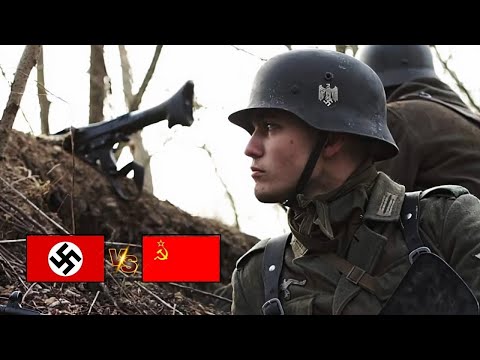
On one side stood Marshal Georgy Zhukov, the hero of Stalingrad and Kursk, commanding 2.5 million men and thousands of tanks. His plan was simple: overwhelm the enemy with brute force and take Berlin by April 22, Lenin’s birthday. On the other side was General Gotthard Heinrici, a seasoned veteran of World War I, who had meticulously prepared his defenses. He had predicted the Soviet bombardment and withdrawn his forward units, saving thousands of lives. Now, his soldiers waited in deep trenches and bunkers, ready to make the Red Army pay for every inch of ground.
As the first waves of Soviet infantry struggled across the Oder River, many drowned in the icy water, their assault boats leaking or sinking under enemy fire. “Only eight men from my battalion reached the western bank,” recalled a Soviet sergeant. Once ashore, they faced a maze of minefields and fortified positions. Zhukov, known for his ruthlessness, sent his men through the minefields without waiting for them to be cleared. For him, losing a few riflemen was preferable to losing a single tank.
By noon, the Soviet advance had stalled. Zhukov, frustrated and under pressure from Stalin, made a fateful decision: he ordered his tank armies to attack before the infantry had broken through. The result was chaos. Thousands of tanks and vehicles jammed the bridgehead, and the close support artillery could not advance through the muddy terrain. German 88mm guns, perched on the heights, picked off Soviet tanks one by one. “The entire sky to the east was burning,” described a German tank commander, watching the horizon through his periscope.
Stalin, furious at the lack of progress, called Zhukov. “Are you completely sure that tomorrow you will be able to take the Seelow line?” he demanded. Zhukov, struggling to maintain his composure, assured him that the heights would be broken. But the battle was far from over. The Germans, despite their dwindling numbers and supplies, fought with a ferocity that surprised even the hardened Soviet troops.
As night fell on April 16, both sides braced for the next day. The Seelow Heights had become a symbol of German resistance, and Zhukov knew that failure was not an option. The race to Berlin had begun, and the cost would be staggering.
The morning of April 17 brought no relief. Rain fell in sheets, turning the battlefield into a swamp of mud and blood, but the Soviet guns never fell silent. “The air smelled of burnt flesh and wet earth,” remembered a German medic from the 9th Parachute Division. Along the escarpment, the 88mm flak batteries, pulled from the ruins of the Western Front, kept up a murderous fire that tore through Soviet tank formations like paper.
Zhukov, still stinging from Stalin’s rebuke, ordered a second massive bombardment. For thirty minutes, thousands of guns pounded the heights, and then the infantry rose again. This time, the 8th Guards Army under Chuikov managed to claw its way into the first trench lines. Hand-to-hand fighting erupted in the fog and smoke, soldiers bayoneting each other in craters filled with rainwater and corpses.
But the Germans had one last card to play. From the summit, the 502nd SS Heavy Panzer Battalion unleashed its remaining Tigers. “They came out of the smoke like monsters,” recalled a Soviet T-34 commander. The Tigers destroyed a dozen tanks in minutes, but their fuel was running low, and ammunition was scarce. Each shot had to count.
By midday, the tide began to turn. The 1st Guards Tank Army, despite heavy losses, had finally reached the base of the heights. Katukov’s brigades, ordered to advance regardless of cost, began the grueling ascent. “The slope was so steep that our tanks had to zigzag, and every turn exposed our flanks to enemy fire,” wrote a Soviet lieutenant. In many places, the tanks became stuck in deep trenches, easy prey for Panzerfaust teams.
On the German side, General Heinrici received grim news: the 9th Army’s left flank had collapsed near Reitwein, and Soviet troops were pouring through the gap. He ordered the last reserves—the 11th SS Nordland Division—to counterattack. But the Scandinavian volunteers, many of them teenagers, were delayed by fuel shortages and Soviet air attacks. “We could hear the Russian tanks before we saw them,” said a Danish SS volunteer. “The ground shook, and then they were upon us.”
That evening, Zhukov’s patience snapped. He called a meeting of his commanders and, in a voice trembling with rage, threatened to send them all to penal battalions. “The heights must fall tomorrow, or we will all answer to Stalin,” he barked. Meanwhile, in the Kremlin, Stalin had already ordered Konev’s 1st Ukrainian Front to turn its tanks toward Berlin from the south. The race between the two marshals was now a personal duel, and neither could afford to lose.
April 18 dawned with a sky streaked crimson over the Seelow Heights, and the roar of engines soon drowned out the distant thunder of artillery. Waves of Sturmovik aircraft dove on the columns of the 11th SS Nordland Division before the Scandinavian volunteers could even reach the front. Panzergrenadiers, packed into open trucks, endured a rain of earth and shrapnel. “The road was littered with burning vehicles and men who would never ride again,” a Nordland sergeant wrote that night.
Brigadeführer Joachim Ziegler raced to inform General Wiedling that his division was stalled—the fuel trucks had not arrived. Wiedling, already watching his defenses crumble, received the news with cold fury. Every minute lost at Seelow was a minute the Red Army used to pour more tanks onto the heights.
On the Soviet side, Chuikov’s 8th Guards Army pressed relentlessly. The riflemen, many of them veterans of Stalingrad, fought their way from trench to trench, clearing bunkers with grenades and flamethrowers. “We had learned in the ruins of Stalingrad that the only way forward is through the enemy’s throat,” recalled a Soviet junior lieutenant. Behind them, Katukov’s tanks crawled up the slope, engines screaming, only to be met by the remaining Tigers of the 502nd SS Battalion.
That afternoon, a gap finally opened. The 295th Rifle Division, supported by a brigade of T-34s, broke through the German line near the village of Dolgelin. Heinrici, monitoring the reports from his command post, understood immediately what it meant. “The wall is broken,” he told his chief of staff. “Now we can only delay them.” He ordered the 56th Panzer Corps to withdraw toward the second defensive line, but the order came too late for many units already cut off.
In Berlin, the effects were felt far beyond the front. At the Propaganda Ministry, Joseph Goebbels received the news in silence, then turned to his staff and demanded new slogans for the radio broadcasts. The promised miracle weapons had not appeared, and the Führer’s headquarters beneath the Chancellery had gone quiet. In the streets, Volkssturm men—old men and boys—dug trenches with trembling hands while Hitler Youth couriers ran messages between command posts that no longer existed.
Zhukov, sensing the breakthrough, ordered the 1st Guards Tank Army to exploit the gap without pause. “Do not stop for anything. Berlin is waiting,” he radioed Katukov. But the tanks faced one final obstacle: the anti-tank ditch and minefields that Heinrici had prepared in depth. Soviet sappers worked under fire, clearing paths with their bayonets and bare hands.
By nightfall on April 18, the Seelow Heights were still contested, but the German line had been fatally cracked. The 9th Army’s left wing was in full retreat, and the road to Berlin lay open. In his bunker, Heinrici wrote a final entry in his diary: “The battle is lost, but the soldiers fought as men should. History will judge us, not the Führer.”
By the morning of April 19, the Seelow Heights had become a graveyard of German hopes. Soviet tanks, despite their losses, finally crested the ridge and poured down the western slope, their guns blazing at the retreating enemy. “The heights are ours,” Zhukov radioed to Stalin, though the cost had been staggering. In Berlin, the news was met with despair. Hitler, his hands trembling, ordered the last reserves—boys and old men—to defend the capital to the death.
General Heinrici, his army shattered, withdrew the remnants of the 9th Army toward the Spree forest, hoping to link up with the 12th Army. But it was too late. The Soviets had already encircled Berlin, and the noose was tightening. “We are cut off,” a German colonel reported. “There is no way out.” The Battle of Seelow Heights was over, and the road to the Reich Chancellery lay open.
On April 25, Soviet and American troops met at the Elbe River, sealing the fate of the Third Reich. In Berlin, the fighting raged street by street, house by house. The city became a hell of rubble and fire, where soldiers and civilians alike died in the thousands. Hitler, hidden in his bunker, refused to surrender, ordering phantom armies to counterattack. “The war is lost,” his generals whispered, but none dared say it aloud.
On April 30, as Soviet shells exploded above the Chancellery, Hitler took his own life. The next day, the red flag of the Soviet Union flew over the Reichstag. Berlin had fallen. On May 2, the remaining German forces in the city surrendered, and the Battle of Berlin was over. The Seelow Heights, the last great obstacle before the capital, had been the scene of one of the most brutal and decisive battles of the war.
For the soldiers who survived, the memories would never fade. “I still see the faces of the boys I sent to their deaths,” a Soviet general later admitted. “We won, but the price was beyond measure.” The Battle of Seelow Heights marked the beginning of the end for Nazi Germany, a final, desperate stand that delayed the inevitable but could not prevent it. The road to Berlin was paved with the bodies of countless soldiers, and the world would never be the same.
What do you think was the turning point of the Battle of Seelow Heights—the Soviet artillery, the German fuel shortages, or the sheer determination of the Red Army? Share your thoughts in the comments below.






