You think you know elite warfare? Think again. Deep in the suffocating darkness of the Vietnamese highlands, the Americans who believed they were the apex predators of the war ran into a handful of Australians who did something no amount of American firepower, technology, or courage could match. Something invisible. Something almost inhuman. Something that turned the most lethal operators on the planet into very confused, very humbled students.
This is not the story the History Channel told you. This is the account that survived in whispers between veterans for fifty years—never written down, never officially acknowledged. Because to acknowledge it would mean admitting that the best army in the world had to learn the most important lesson of that war from a group of men who barely made a sound.
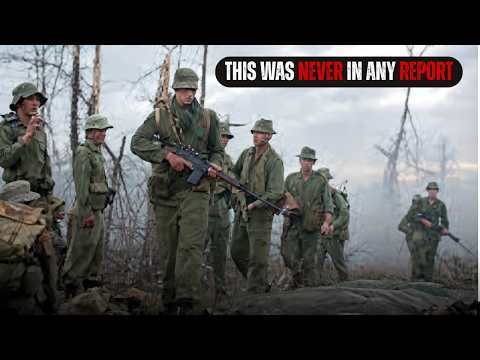
What turned a Navy SEAL point man to stone in the middle of a river? What was the sleeping camp incident that no American who survived it ever forgot? And what single philosophy born in the jungles of Malaya quietly rewrote the entire American special operations playbook? Fasten up. We are cracking this open.
The encounter between United States forces and the Australian Special Air Service Regiment during the Vietnam War is officially described as a successful coalition partnership. Clean, diplomatic, forgettable. But the men who were actually there—the ones who came home—will tell you something different when the cameras are off and the bourbon is poured. They will tell you that the partnership was not clean. It was a collision. A slow-motion, psychologically shattering collision between two completely different theories of violence. And the Americans, for a very long time, did not understand that they were losing the argument.
To understand what made this encounter so seismic, you have to go back before the jungle. Back to the separate forge fires that created these two warrior cultures—because elite units do not appear from nowhere. They are built layer by layer out of the specific nightmares of their history. And the nightmares that built these two forces were about as different as it is possible for nightmares to be.
The American special operations tradition in Vietnam was forged in speed. It was born in the crashing cold surf of the Pacific theater, where underwater demolition teams swam toward beaches that were already shooting at them, blew up the obstacles before the landing craft arrived, and got out before the smoke cleared. That culture—hit fast, hit hard, never stop moving—became the genetic code of the units that would eventually become the Navy SEALs.
By the time those men arrived in Vietnam, they were operating in the Mekong Delta with a doctrine that was almost poetic in its simplicity: neutralize the target, exploit the intelligence, extract before the enemy can organize a response. Speed was not just a tactic. Speed was the entire philosophy. Move faster than the enemy can think. Strike before the enemy can react. Disappear before the enemy can retaliate.
In the Delta—that labyrinth of rivers and reed beds and sudden open water—this doctrine was devastatingly effective. The SEAL teams became legends in those waterways. Ghost boats. Phantoms of the river. Men who could appear inside an enemy position in the middle of the night, execute a mission with surgical violence, and be gone before the sound of the shots had finished echoing across the water. They were the best in the world at what they did. They knew it. Their enemies knew it. And when they were eventually assigned to share operational zones with the Australians, they arrived with the quiet, unspoken confidence of men who have never seriously had to question their own methods.
The Australians arrived from a completely different direction—not geographically, but psychologically, doctrinally, and philosophically. Their lineage did not run through crashing surf and amphibious assault. It ran through the Libyan desert, through the sweltering counterinsurgency campaigns of Malaya and Borneo, through years of long-range patrol work in some of the most inhospitable terrain on earth. They had learned slowly, painfully, at a cost measured in lives, that in dense terrain against an enemy who knew the ground better than you did, aggression was a liability. Speed was a liability. Noise was a liability.
The only thing that kept you alive was your ability to be less present than the air around you. To move through a jungle and leave it exactly as you found it. To exist in hostile territory for days or weeks without ever revealing that you were there at all. Their doctrine was not built on the violence of action. It was built on the discipline of restraint—the willingness to watch and wait and gather and withdraw without ever pulling a trigger, because pulling a trigger was often the least effective thing you could do. By the time the Australian SAS deployed to Vietnam’s Phu Quoc Thai province, they had refined this philosophy into something that bordered on the spiritual. Silence was not a technique. It was a religion.
When the first joint patrols were authorized, the differences showed up within minutes—not hours, minutes. The SEALs arrived at the insertion point with the barely suppressed kinetic energy that characterized everything they did. Weapons checked, comms verified, boots hitting the ground with the purposeful authority of men who know exactly how good they are. The Australians stepped off with something that looked almost like nonchalance—except that nothing about them was careless. Every piece of equipment had been taped, wrapped, dulled, or padded. Metal buckles that might clink were bound in green cloth. Boot laces were tied in specific ways to prevent the small, rhythmic slapping sound that a loose lace makes on jungle floor. Their weapons were not slung for comfort. They were positioned for the exact movements each man had practiced thousands of times.
And when they stepped into the tree line and the canopy closed over them, they did something that made the American point man physically stop and look behind him. They vanished. Not literally—they were right there—but somehow the relationship between their bodies and the surrounding jungle shifted in a way that was difficult to articulate and even harder to explain. They became part of the texture of it.
The first real test came within two hundred meters of the insertion. A sound—low, indistinct, possibly movement, possibly an animal, possibly nothing—emerged from the vegetation ahead. The SEAL point man froze and signaled a halt with the automatic competence of a trained operator. He turned to check the Australians. They were already gone. Not gone in the sense of absent—gone in the sense of dissolved. The man who had been walking three feet to his left was now invisible, absorbed into a cluster of roots and dead fern so completely that the American had to stare for several seconds before the outline of a human shape resolved from the background. No sound had accompanied this transformation. No rustle. No footfall. The Australian had simply ceased to exist as a distinct object in the world.
The patrol held. Ten minutes passed. Twenty. The jungle spoke around them in its private language of insect noise and random moisture and the distant complaint of a bird. Thirty minutes. The American operators, trained to be the most patient men in the Delta, were beginning to feel the first tremors of frustrated impatience—not because they were weak, but because their entire doctrine was calibrated to a different clock. The Australians had not moved. Had not blinked, by any visible evidence. Had not adjusted their weight or shifted their grip or done any of the thousand small involuntary things that human bodies do when asked to remain motionless.
After nearly an hour, the Australian patrol commander turned his head—just his head. Everything else statue-still. And he breathed two words into the ear of the nearest American: “Nothing there.” And then they moved.
It was that first patrol that planted the seed. Not a firefight. Not a dramatic reversal. Not a near-death experience. Just a slow, quiet, deeply unsettling demonstration of what patience actually looks like when it is practiced at its highest level. The SEALs returned to base that evening with something they would not have been able to name at the time. It was not respect—they had come in with respect, the professional kind that elite units extend to each other as a courtesy. This was something more specific. It was the particular discomfort of a craftsman who has just seen someone else do his craft at a level he did not know was possible.
The second patrol produced the incident that became, in the private oral tradition of the men involved, the moment everything changed. The patrol had moved to the bank of a slow, coffee-colored stream that cut through the jungle at a shallow angle. For the SEALs, this was home territory. They were the finest waterborne operators in the world, and a river crossing held no fear for them. The instinct was immediate and entirely professional: cross fast, establish the far bank, maintain momentum. The point man moved toward the water.
He did not reach it. The Australian patrol commander’s hand appeared on his shoulder, and the weight of that hand communicated something that was not a suggestion. “Stop.” The commander pointed upstream—not at the bank, not at a threat, but upstream into the dense choking undergrowth where the stream bent out of sight. The order that followed was, by any conventional military logic, insane. They were going to wade three hundred meters upstream, submerged to the neck, fighting the current, before crossing.
The Americans accepted this with varying degrees of interior fury and exterior compliance. For forty-five minutes, they moved through the river like debris—slow, low, making no sound that the water itself did not already make—until they reached a rocky shelf where the stream bed was hard stone and their boots would leave no impression. They dragged themselves out. They melted into the ferns. They waited, still dripping, and they watched the bank they had originally intended to climb.
Fifty-five minutes later, a patrol of Viet Cong trackers emerged from the tree line on the far side, leading two hunting dogs on long braided leashes. The animals went directly to the water’s edge at the original crossing point. Noses down. Working. Looking for what was not there—because what was not there had walked three hundred meters in the wrong direction and was now invisible on a rock shelf, watching them fail. The trackers argued in low voices. The dogs lost the scent in the water. After several minutes, the patrol moved on.
And the Australians turned to look at the Americans, and nobody said anything, because nothing needed to be said. That was the recontextualization. That was the moment when everything the SEALs had filed under “excessive caution” got reclassified as something else entirely. What they had read as paranoia was calculation. What they had read as hesitation was prescience. The Australians had not been afraid of the river. They had been thinking three steps ahead of an enemy that the Americans had not yet learned to model. And the gap between those two things—between reacting to threat and anticipating consequence—was not a small gap. It was the gap between coming home and not coming home.
What followed over the next months was an apprenticeship—voluntary, informal, and humbling for the most lethal maritime commando force the United States had ever produced. The SEALs watched how the Australians navigated the jungle like water finding the path of least resistance, rolling each boot inward, timing every movement to the wind and the birds. They moved as though the jungle were a sleeping animal they were trying not to wake.
The stillness lessons were harder. One night, lying in ambush, an American found himself struggling within two hours—not with discomfort, but with the psychological weight of time pressing down on him. The Australians had gone somewhere inside themselves, to a place with no relationship to urgency at all. Just before dawn, an enemy column walked into the kill zone, talking, relaxed, certain they were alone. They were not.
Afterward, one SEAL sat a long time before cleaning his weapon. He had spent his whole career trying to be the sharpest knife in the drawer. And he understood, finally, that sometimes the most dangerous thing in the room is not a knife at all. Sometimes it is a stone.
The exchange was never one-directional. The Australians watched the Americans too—their compact carbines, their genius with helicopters, their relentless refusal to accept that anything could not be improved. Two cultures, each the missing piece of the other.
So here is the question that has never been answered: if the deadliest soldiers on earth had to unlearn everything to survive, what are we still getting wrong today? Tell me in the comments—I read every one.






