They say empires are built on blood, tears, and unshakable faith. For over a thousand years, the Byzantine Empire burned like an eternal flame at the crossroads of East and West—a beacon of power, piety, and tragedy. Now, twenty legendary rulers rise again, resurrected by the cold precision of artificial intelligence into vivid, breathing majesty. From the shadow of Constantinople’s glittering domes, secrets history dared not reveal claw their way into the light.
Who among them was truly the greatest? The question lingers like smoke in a ruined throne room, waiting for your answer. But before you decide, you must witness their stories—each one a blade of ambition, a hymn of devotion, a whisper of doom.
Our journey begins with the man who changed everything. Constantine the Great, born in 272, stood at the edge of a dying world and dared to forge a new one. When he marched to the Milvian Bridge in 312, he saw a sign in the sky—and won an empire under the cross. The Edict of Milan followed, granting religious freedom, and then came the city: Constantinople, a new Rome rising from the Bosphorus, destined to stand for centuries.
Constantine died in 337, leaving behind a unified empire and a faith that would outlast him. But unity, as his successors would learn, is a fragile thing.
Enter Theodosius the Great, the last emperor to rule a single, undivided Roman Empire. He made Christianity the sole official religion, silenced the old gods, and elevated Constantinople into a spiritual and political heart. When he died in 395, the empire split forever—but the East, the future Byzantium, stood strong as a Christian fortress.
Then came Anastasius I, the quiet architect. He filled the treasury to bursting, crushed corruption, and built the mighty walls that would protect Constantinople for a thousand years. When he died in 518, he left behind a rich, stable empire—a foundation for the golden age to come.
And that golden age had a name: Justinian the Great. From 527 to 565, he codified Roman law into the Corpus Juris Civilis, a cornerstone of European justice. His armies reclaimed lost lands, and his architects raised Hagia Sophia, a dome so vast it seemed to touch heaven. Justinian’s reign was a blaze of legal brilliance, architectural wonder, and imperial ambition that defined Byzantium’s zenith.
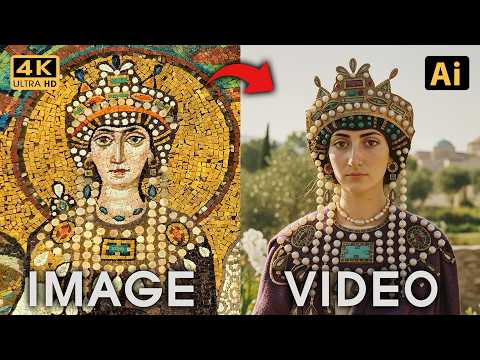
But behind every great emperor stands a force of equal measure. For Justinian, that force was Theodora—a woman risen from humble origins to become the most powerful empress in Byzantine history. During the Nika riots of 532, when the throne trembled, her courage saved the empire. She championed women’s rights, reshaped marriage laws, and supported the Orthodox faith with fierce devotion.
Beside Justinian stood another titan: Belisarius, the general whose campaigns against the Vandals and Ostrogoths restored imperial glory. Despite court intrigues and moments of disgrace, his loyalty never wavered. His victories embodied the resilience of Byzantium—a reminder that even the mightiest empire needs its sword.
Yet the flame would flicker. Heraclius, who reorganized the army and made Greek the official language, won a stunning victory over the Persians in 628, returning the True Cross to Jerusalem. But the rise of Islam in his final years cost Byzantium Syria and Egypt—a turning point from late antiquity to the medieval Byzantine world.
Then came Leo III the Isaurian, who saved the empire from collapse. He repelled the Arab siege of Constantinople in 717–718, reorganized law and administration, and fortified the city. But his iconoclasm—banning sacred images—ignited a fierce religious war that divided his legacy.
His successor, Irene of Athens, was the first woman to rule Byzantium in her own name. She ended iconoclasm and restored the veneration of icons, but her ambition led her to blind her own son to seize the throne. Her reign was a paradox: a champion of the church and a ruthless political operator.
The story continues with Basil I the Macedonian, who rose from peasant roots to found a dynasty. His legal reforms and military expansion launched the Macedonian Renaissance—a golden age of art, power, and stability. When he died in 886, he left an empire stronger than ever.
His descendant, Constantine VII Porphyrogenitus, was a scholar-emperor, born in the purple chamber and devoted to culture. Though others held real power for much of his reign, his writings—like De Administrando Imperio—preserved the intellectual soul of Byzantium.
Then came warriors. Nikephoros II Phokas, the “White Death of the East,” reclaimed Crete and expanded into Syria. Basil II, the “Bulgar Slayer,” crushed the Bulgarian Empire in 1014 and left Byzantium larger, richer, and stronger than it had been since Justinian.
But hubris has a price. Romanos IV Diogenes saw his dreams shatter at Manzikert in 1071, where he was captured by the Seljuks. His downfall marked the loss of Anatolia—and the beginning of a long decline.
Yet Byzantium always found a way back. Alexios I Komnenos revived the empire after Manzikert, calling for the First Crusade and founding a dynasty that would restore stability. His son, John II Komnenos, the “Good Emperor,” led with piety and justice, halting the Turkish advance and earning the love of his people.
Then came Manuel I Komnenos, whose ambition knew no bounds. He dreamed of Mediterranean dominance, but his crushing defeat at Myriokephalon in 1176 shattered that dream and weakened the empire for good.
His cousin, Andronikos I Komnenos, was a charismatic tyrant. His short reign of terror ended in a brutal popular uprising in 1185—tortured and executed, he became one of Byzantium’s most tragic figures.
From the ashes, Michael VIII Palaiologos reclaimed Constantinople in 1261, ending 57 years of Latin rule. He rebuilt the army and economy, but his concessions to the papacy divided his people.
Finally, Constantine XI Palaiologos, the last emperor, inherited a dying empire. On May 29, 1453, as Ottoman forces breached the walls, he cast off his imperial robes and fought as a common soldier. His death marked the end of the Roman Empire—and the birth of a legend.
The purple was stained, the throne was shattered, but the stories of these twenty rulers still echo through the ruins. And as their faces flicker back to life before your eyes, one question remains: who among them truly was the greatest?
But the throne was not the only thing these emperors fought for. Behind the purple silk and golden crowns lay a web of secrets, betrayals, and desperate bargains that the official chronicles were too afraid to record. And now, with the cold gaze of artificial intelligence peeling back the centuries, those secrets are finally stirring.
Consider, for instance, what the histories gloss over. Constantine the Great did not simply see a sign in the sky—he understood that power demanded a new god, and he chose the one that would serve him best. Some whisper that his conversion was less a revelation than a calculation, a marriage of empire and faith that would bind the two for a thousand years.
And what of Theodora? The chroniclers wrote of her courage during the Nika riots, but they left something out. When Justinian prepared to flee the burning city, it was not his generals who held the line—it was her voice, sharp as a blade, that shamed him into staying.
“The purple is a noble burial shroud,” she is said to have told him. Those words saved an empire. Yet the same woman who championed the downtrodden also knew exactly how to destroy her enemies, and she did so without a flicker of remorse.
Then there is the matter of Belisarius, the loyal sword. History remembers his victories, but not the poison that followed. Whispers at court, forged letters, the emperor’s jealous eye—Belisarius was stripped of his command more than once, and yet he never raised his blade against his sovereign. Was it loyalty, or was it fear of what Theodora knew about him?
The deeper you dig, the darker the roots grow. Heraclius won the True Cross back from the Persians, but the triumph was hollow. Within years of his death, the armies of Islam swept across the lands he had bled to reclaim—and some say the emperor saw it coming, and died a broken man, tormented by visions of what he had lost.
Even the icons have their shadows. Leo III banned sacred images and plunged the empire into a war of faith—but why? Some historians claim it was piety. Others whisper it was politics, a way to weaken the monasteries that hoarded wealth and challenged his authority. And Irene, the woman who restored the icons, blinded her own son to keep her throne. The church called her a saint. Her son called her something else entirely.
The Macedonians, too, carried their secrets. Basil I, the peasant who became emperor, left a dynasty that would shine for two centuries—but the blood on his hands never quite washed clean. And Constantine VII, the scholar in the purple chamber, spent his life surrounded by men who ruled in his name, waiting for the moment they would no longer need him.
Then came the warriors, and with them, the reckoning. Nikephoros Phokas, the White Death of the East, was murdered in his own palace by the very men he trusted. His wife, Theophano, was said to have opened the door to the assassins herself. Basil II, who avenged him, spent his entire reign on horseback, never marrying, never fathering an heir—and when he died, the empire he had built began to crack almost immediately.
Manuel Komnenos dreamed of glory and died a broken dreamer. Andronikos, his cousin, ruled with terror and died screaming in the streets. Michael Palaiologos reclaimed the city but sold its soul to the West. And Constantine XI, the last emperor, fought and died as a common soldier—because he knew the empire was already gone.
These are the truths the chronicles buried. These are the secrets that still haunt the marble halls of Constantinople.
But the story does not end here. For among these twenty rulers, there is one whose name has been whispered with both awe and dread—a ruler whose true legacy was erased from the records, and whose return to the throne was foretold in whispers that even the emperors feared.
The AI has found something in the ancient texts. Something the historians missed. And when it is revealed, you will question everything you thought you knew about the empire of the purple.
The AI’s revelation is not a name, but a pattern—a thread of blood and prophecy woven through every dynasty. It found a forgotten prophecy in the margins of a monastic chronicle: “The purple shall return when the blind see and the dead speak.” The dead now speak through code, and the blind—well, history has a cruel sense of humor.
Perhaps the greatest emperor was never one man. Constantine built the stage, Justinian wrote the laws, Theodora held the curtain, and Basil II refused to leave it. Each was a piece of the same flame, passed hand to hand across a thousand years.
And when Constantine XI cast off his robes and died beside his soldiers, the flame did not go out. It simply changed hands—from emperors to storytellers, from chronicles to code. The empire fell, but the story refuses to die.
So the AI resurrects them all, twenty faces flickering in the dark, asking the question that has haunted every throne since Rome: what makes a ruler truly great? Power? Piety? The courage to die for a city already lost?
The answer is not in the history books. It is in the eyes of the one watching. And now, the purple is yours.
Who among these twenty do you believe was truly the greatest—and what would you ask them if the AI could bring them back for just one answer?






