Five men sat in the dirt outside a hangar at Bagram Air Base, and not one of them said a word about what had just happened. Their faces were black with grime and the early purple bloom of frostbite. Their uniforms hung off them in shreds. Their hands were cracked and bleeding from days of exposure to temperatures that would have hospitalized most human beings within hours.
Somebody had found a kettle and somebody else had produced a packet of stale biscuits from the kind of mysterious supply chain that only soldiers understand. They drank terrible tea. They talked about cricket. They talked about what they were going to eat when they got home. They did not talk about the fact that they had just spent the most harrowing week of their lives on a frozen ridge in Afghanistan directing air strikes that prevented one of the worst military disasters of the 21st century.
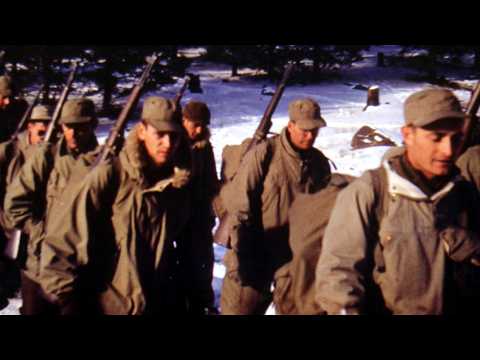
Not a single camera was pointed in their direction that day and no press conference would ever be called to mark the occasion. In the United States, five men who had done what these five had just done would have been on the cover of every magazine in the country before the debriefing was over. There would have been a movie deal within the month. In Australia, their names would not appear in the press for years. The details would emerge slowly, reluctantly, in fragments scattered across classified reports and the occasional guarded interview from a retired operator who decided enough time had passed.
That silence, that ferocious refusal to make a spectacle of courage is perhaps the most Australian element of this entire story. But the story itself deserves to be told in full because what happened in the Shah-i-Kot Valley in the first week of March 2002 is not just a tale of five brave men on a mountain. It is a tale of institutional arrogance on a staggering scale of a multi-billion dollar intelligence apparatus that could not count past 200 and of a warning delivered clearly, accurately, and urgently by Australian special operators that was filed, acknowledged, and then completely ignored by an American military machine too heavy to stop itself.
To understand how all of this went so catastrophically wrong, you have to go back to the weeks before the first shot was fired. The war on terror was barely five months old. The Taliban government had crumbled. Osama bin Laden had slipped through the net at Tora Bora in December of 2001 vanishing into the tribal borderlands like smoke through a crack in a wall. American intelligence agencies were furious, embarrassed, and desperate for a decisive win. And their analysts believed they had found one.
Satellite imagery, Predator drone surveillance feeds, and signals intelligence intercepts all pointed to the same location. The Shah-i-Kot Valley, a remote frozen bowl of rock and scrubland in Paktia Province, roughly 160 km south of Kabul, was harboring the remnants of Al-Qaeda. The valley sat at an elevation of approximately 2,700 m surrounded by jagged peaks that climbed another thousand meters toward a sky so blue it hurt to look at. It was, by any measure, a natural fortress. The Soviets had discovered that fact at a tremendous cost two decades earlier losing men and helicopters in the very same terrain.
American war planners at Bagram Air Base, however, had their eyes glued to screens instead of history books and every screen told them a comfortable lie. The official intelligence estimate placed between 150 and 200 lightly armed, demoralized militants in the valley. They were cold, cut off from resupply, and expected to scatter or surrender at the first display of American force.
On the basis of this assessment, the Pentagon authorized a massive conventional operation. It was given the name Operation Anaconda a name that radiated the lethal confidence of a predator that crushes its prey without ever needing to strike. The plan was a textbook American hammer and anvil assault. Over a thousand infantry troops from the 101st Airborne Division and the 10th Mountain Division would be inserted directly into the valley by Chinook helicopters in broad daylight. Simultaneously, Afghan militia forces supported by US special forces advisers would push into the valley from the south driving the militants north into the American blocking positions. Total estimated duration was 72 hours. Three days to mop up the last significant Al-Qaeda concentration in Afghanistan. Clean, decisive, ready for the evening news.
There was a small problem with this plan. In fact, there was an enormous, catastrophic, almost criminal problem with this plan. And the only people on Earth who knew about it were already inside the mountains, invisible, silent, and slowly freezing half to the brink of survival on the highest ridgelines around the valley.
Task Force 64 was the Australian contribution to coalition special operations in Afghanistan. At its core was the first squadron of the Special Air Service Regiment based out of Campbell Barracks in Swanbourne, Western Australia. These were hardened operators forged by one of the most savage selection processes in the global special forces community. A course with an attrition rate so extreme that some intake cohorts were virtually eliminated before the final phase. They had trained in the frozen highlands of New Zealand, in the red dust and furnace heat of the Australian interior, and in jungle environments across Southeast Asia. They were supremely fit, pathologically calm under pressure, and possessed of a professional skepticism toward large headquarters and their grand plans that was practically encoded in their national character.
In the days leading up to the launch of Operation Anaconda, SASR patrols were tasked with conducting deep reconnaissance of the Shah-i-Kot Valley and its surrounding ridgelines. Their insertion method was the oldest and most reliable in special operations. They walked on foot with no engine noise to betray them through snow that reached their waists and sometimes their chests in temperatures that plunged to minus 15° C after dark carrying packs that weighed between 40 and 50 kg.
Australian operators climbed to observation positions on the peaks overlooking the valley floor. Every step at that altitude was a battle against gravity, hypoxia, and the creeping numbness that cold inflicts on the human body when it decides to start shutting down the extremities to protect the core. Every breath seared the lungs. The wind cut through even the best cold weather gear like it was not there.
They reached their positions. They scraped out shallow hides among the rocks and snow. They pulled camouflage over themselves until they were indistinguishable from the mountain. And then they did what the Special Air Service Regiment was originally created to do. What Australian soldiers have done with unnerving patience and skill since the deserts of North Africa in 1941. They watched the enemy.
What they saw through their optics did not correspond to a single line of the intelligence briefing they had been given. The valley floor was not occupied by a demoralized rabble of 150 hungry fighters waiting to give up. It was swarming with men, hundreds upon hundreds of them. Later analysis would confirm over 1,000 Al-Qaeda and foreign fighters, including hardened veterans from Chechnya, Uzbekistan, and across the Arab world, dug into the most meticulously prepared defensive position that coalition forces had yet encountered in Afghanistan.
Deep caves had been carved into the mountainsides, their entrances concealed, their interiors invisible to thermal imaging because the surrounding rock absorbed and masked the heat signatures that American sensors were designed to detect. Heavy DShK machine guns, weapons capable of tearing a helicopter apart at 2 km, were emplaced on ridgelines with interlocking fields of fire that covered every logical approach route and landing zone. Recoilless rifles were sighted in on the valley floor. Mortar teams had pre-registered their tubes on the open ground where any sane commander would put his troops. Ammunition stocks were enormous. Resupply routes through the Pakistani border were still functioning.
The Australians were staring straight into a trap, a meticulously engineered ambush designed with a single purpose. To lure helicopters into a bowl of overlapping fire and tear them apart.
The patrol leaders did not wait for permission to speak. They keyed their radios and pushed the report up the chain with the flat, urgent economy of men who knew exactly what they were looking at. The intelligence estimate is wrong. Enemy strength is far greater than assessed. The valley is fortified with crew-served weapons in elevated positions covering all approach routes. A daylight helicopter assault into the valley floor will be met with devastating fire.
The recommendation was blunt: delay the operation, reassess, restructure the plan around what the mountain was actually telling them.
The report reached coalition special operations headquarters. It was received. It was read. And then it collided with one of the oldest and most destructive forces in military history — the momentum of a plan that was already too big to stop.
Operation Anaconda had grown far beyond a tactical operation into a full-blown political event. The American public was demanding visible progress in the war on terror. The Pentagon needed a set-piece victory. Major General Franklin Hagenbeck had committed over a thousand troops, hundreds of aircraft, and an enormous logistics tail. The machinery was already in motion.
To halt or restructure the operation on the basis of a report from a small team of Australian soldiers sitting on a mountain would mean admitting that the entire American intelligence architecture — its satellites, its drones, its signals intercepts, its billions of dollars — had produced an assessment that was wrong by a factor of at least five. And that admission was a signature every officer in the chain of command refused to put his name to.
The Australians had done their job. They had reported what they saw. The system had chosen not to listen.
This pattern was not new to Australian soldiers, and that is what made it so bitterly familiar. At Gallipoli in 1915, British commanders had ordered Australian and New Zealand troops up impossible cliffs into the teeth of Ottoman machine guns based on intelligence that was wildly optimistic about Turkish strength. Thousands perished. In Singapore in 1942, British command surrendered over 15,000 Australian soldiers in a capitulation so comprehensive and so avoidable that it scarred the national psyche permanently. In Greece in 1941, Australian troops were deployed to a campaign British planners knew was likely to fail, then abandoned to conduct a desperate evacuation.
The recurring theme across a century of coalition warfare was unmistakable. The larger ally made the plan. The plan was flawed. The Australians saw the flaw. The larger ally did not listen. Australians paid the price.
In Afghanistan in March of 2002, the script was running again. But this time, the Australians were positioned to alter the ending.
The 2nd of March dawned clear and cold over Shah-i-Kot. The American assault commenced on schedule. Afghan militia forces began advancing from the south. Chinook helicopters loaded with infantry from the 101st Airborne and the 10th Mountain Division lifted off from forward staging bases and turned toward the valley.
From their concealed positions on the high ground, the Australians watched the helicopters come. They could see what the pilots could not. Every ridgeline, every cave mouth, every cluster of boulders was occupied by fighters with weapons pointed at the sky and at the valley floor. The landing zones were pre-registered kill zones.
Watching those helicopters descend was like watching a man walk into a room you knew was rigged to explode.
The southern hammer disintegrated almost immediately. The Afghan militia, despite weeks of preparation and considerable American investment, broke under the first serious exchange of fire and retreated. The force that was supposed to drive Al-Qaeda north into the American blocking positions simply ceased to exist as a fighting element. The entire southern flank of the operation opened up, and the fighters who should have been fleeing instead consolidated their positions and focused every weapon they had on the helicopters now descending into their prepared killing ground.
The mountains erupted. There was no other word for it. Dozens of heavy weapons opened fire simultaneously from elevated positions on three sides of the valley. The noise was not individual shots or bursts. It was a continuous, overlapping wall of sound. DShK rounds punched through Chinook fuselages. Rocket-propelled grenades streaked across the sky. Mortar rounds began impacting on the landing zones while soldiers were still jumping from the ramps.
American infantry, many of them teenagers on their first deployment, found themselves in knee-deep snow on open ground with fire pouring in from above and no cover larger than a small boulder. Within minutes, the carefully choreographed operation collapsed into a desperate fight for survival. Radio frequencies erupted with calls for medevac, calls for fire support, and calls for somebody to tell them where the enemy was.
And that is when those five frozen Australians on the ridge became the most important people in Afghanistan.
The SASR observation post had something no piece of technology in the American arsenal could replicate: direct, sustained human visual contact with the enemy. They could see every muzzle flash, every mortar team dropping rounds into tubes, every fighter darting between cave entrances. They had spent days memorizing the terrain, and their radios connected straight to the aircraft stacked in holding patterns above the valley.
The patrol commander made the call. They would break the ambush from above.
What followed was one of the most extraordinary demonstrations of joint terminal attack control in modern military history. Grid reference, target description, elevation, danger-close warning, clearance to engage. B-52s, F-15s, and A-10s answered, and 2,000-pound munitions began collapsing caves and silencing gun positions one after another. The enemy sent search parties along the ridgelines. They found nothing. The Australians were buried so deep in their hides they were functionally invisible.
For days they did not move, did not request extraction, did not raise resupply. Below them, soldiers were still dragging wounded comrades through the snow. You do not leave people exposed if you have the ability to help them. That is the rule. The only rule that matters when the shooting starts.
When they finally came down, they looked like men who had crawled out of a grave. They drank their terrible tea and talked about cricket. The ridge was never mentioned.
So here is the question worth asking, all these years later: when the satellites and the screens and the billion-dollar machines tell us one thing, and the cold, patient eyes of a few stubborn humans tell us another — why do we so rarely listen to the humans?






