Step right up, ladies and gentlemen, and prepare to have your perceptions shattered. The dazzling musical The Greatest Showman had us all believing in the magic of P.T. Barnum—the visionary who turned societal outcasts into stars and followed his heart to create a spectacle of acceptance. But what if the man behind the curtain was less of a hero and more of a huckster? What if the heartwarming tale of love, family, and redemption was largely a fabrication? The true story of Phineas Taylor Barnum is a rollercoaster of ambition, deception, and controversy that makes the Hollywood version look like a fairy tale. And once you learn the facts, you might never watch the movie the same way again.
In this deep dive, we’re pulling back the curtain on The Greatest Showman to compare the cinematic fantasy with the gritty reality. From the fictional romance that never happened to the real-life exploitation of performers, we’ll expose the shocking truths that the movie conveniently left out. So grab your top hat and get ready—because the greatest show on earth was nothing like you imagined.
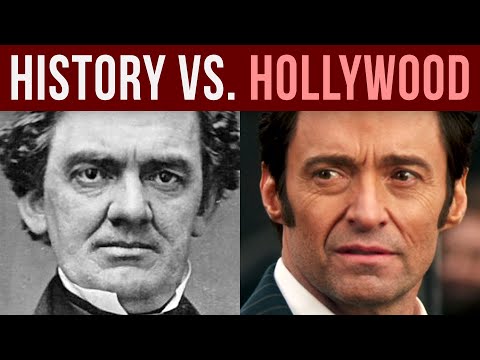
The most glaring difference between the film and reality? The characters of Philip Carlyle (Zac Efron) and Anne Wheeler (Zendaya) are entirely fictional. Their interracial romance and the brutal beating Philip endures are pure invention. In reality, Barnum’s museum featured real performers like General Tom Thumb (Charles Stratton), but with a twist: Barnum recruited Stratton at just four years old, not 22, and they were actually distant cousins. The film’s heartwarming narrative of Barnum as a savior of the marginalized? It’s a far cry from the truth. The real Barnum was a master of exploitation, showcasing people like Annie Jones—the bearded lady—whom he hired at just nine months old. He paid her parents $150 a week to display their child, a practice that today would be condemned as child exploitation.
But the movie’s most egregious fabrication involves Jenny Lind, the Swedish opera singer. In the film, Barnum’s infatuation with Lind nearly destroys his marriage, but in reality, there was no romantic affair. Lind was a philanthropic superstar who donated her entire $350,000 earnings (about $10 million today) to charity. She quit the tour not because of unrequited love, but because she was uncomfortable with Barnum’s relentless marketing tactics. And Barnum’s wife, Charity? The movie portrays her as a long-suffering spouse, but the real Charity was Barnum’s bedrock until her death in 1873. He remarried a year later and remained with his second wife until his own death in 1891. The romantic drama? Entirely manufactured.
And then there’s the fire. The movie suggests the museum was burned down by outraged citizens protesting the sideshow, but the true story points to arson motivated by Barnum’s pro-Union sympathies during the Civil War. The fire of 1865 was likely set by a Confederate sympathizer, not by moral crusaders. Barnum reopened his museum, only for it to burn again in 1868, prompting him to pivot to the circus business—at the age of 60. The circus he created would outlive him by 146 years, finally closing in 2017 amid declining attendance and criticism over animal abuse.
So why did Hollywood sanitize Barnum’s story? Perhaps because the truth is messier, darker, and far less family-friendly. The Greatest Showman is a celebration of imagination and acceptance, but the real P.T. Barnum was a complex figure—part visionary, part exploiter, and part huckster. As we continue to unravel the myths, you’ll discover that the line between showman and charlatan is blurrier than you ever imagined. Stay tuned for more revelations that will change the way you see the greatest showman of all.
But the discrepancies don’t end with the performers and the fire. The film’s opening act shows Barnum losing his desk job in a dramatic layoff, a narrative device designed to make him more relatable to modern audiences. In reality, Barnum never worked a mundane office job a day in his life. He ran a general store in Connecticut, and his primary income came from the state’s lottery network. When Connecticut banned lotteries, he was forced to sell the store—not because of a corporate downsizing, but because his entire business model had been outlawed overnight.
He moved to New York City and, by 1836, had started a variety troupe called Barnum’s Grand Scientific and Musical Theater. That venture saw a year of mixed success before the Panic of 1837—a financial crisis that plunged the nation into a three-year depression—nearly wiped him out. It was only after this period of hard times that he purchased Scudder’s American Museum, which he renamed Barnum’s American Museum. The movie skips this entire chapter of struggle, replacing it with a single scene of a pink slip.
And what about the museum itself? The film presents it as a haven for societal outcasts, a place where the marginalized could finally be celebrated. But the real Barnum was a master of hoaxes and humbug. He exhibited the Fiji Mermaid—supposedly a terrifying creature of the deep—which was, in fact, the head of a juvenile monkey sewn onto the back half of a fish. He promoted it as a genuine curiosity, and crowds flocked to see it. This wasn’t a celebration of difference; it was a calculated con.
The movie also glosses over the public backlash against Barnum’s museum. Many considered theaters dens of sin, and the oddities on display fueled their outrage. But the fire of 1865 wasn’t set by moral crusaders protesting the sideshow. It was likely the work of a Confederate arsonist angered by Barnum’s pro-Unionist lectures and exhibits. The film’s implication that the fire was a direct response to the performers themselves is a convenient narrative twist that shifts blame from politics to spectacle.
Perhaps the most revealing omission is Barnum’s age when he launched his circus. The film shows Hugh Jackman’s Barnum as a young, energetic dreamer, but the real Barnum didn’t enter the circus business until he was 60 years old—after losing not one but two museums to fire. The circus he created, later known as the Ringling Bros. and Barnum & Bailey Circus, operated for 146 years before closing in 2017 amid declining attendance and mounting criticism over animal abuse. That’s a far cry from the triumphant, feel-good finale the movie delivers.
So why does any of this matter? Because The Greatest Showman isn’t just a musical—it’s a myth-making machine. It takes a complicated, often ruthless showman and turns him into a champion of the underdog. It erases the exploitation, the hoaxes, and the hard-nosed business decisions that defined Barnum’s career. And in doing so, it asks us to celebrate a version of history that never existed. As we dig deeper, you’ll see that the line between entertainment and deception was one Barnum himself blurred every chance he got.
Consider the performers themselves. The film gives us Keala Settle’s Lettie Lutz, the bearded lady with the powerhouse voice and the wounded heart. But the real Annie Jones wasn’t a fully grown woman belting anthems about being brave—she was an infant, displayed in a cradle for paying crowds. By the time she was a toddler, Barnum’s promotional machine had already branded her “the infant Esau.” She grew up inside the museum’s walls, learning to perform before she could read. The movie’s message of empowerment rings hollow when you realize the empowerment started at nine months old.
Then there’s Fedor Jeftichew, the Russian known as Jojo the Dog-Faced Boy. The film never mentions him, but his story is perhaps the most haunting. He suffered from hypertrichosis, the same condition as his father, who had toured him as a sideshow act since childhood. When his father died, Barnum signed the sixteen-year-old to a contract and shipped him to America. Jojo was billed as a wild man, a creature captured in the Russian wilderness. He was, in truth, a grieving teenager with a medical condition, taught to growl at audiences for coins.
And what of the tattooed man, Captain George Constantines? The film gives him a few moments of screen time, but never probes the story he told about being kidnapped by Chinese Tartars and tattooed as punishment for rebellion. Experts confirmed his 388 tattoos were genuine Burmese work—but the tale of his capture? Unverified. Barnum didn’t care whether it was true. He cared that it sold tickets.
Here’s where the movie’s moral arithmetic gets truly interesting. The Greatest Showman frames Barnum’s museum as a refuge, a place where the world’s “oddities” could finally be seen as beautiful. But Barnum’s own contemporaries didn’t see it that way. Ministers preached against his museum as a den of sin. Reformers called it a temple of humbug. And they weren’t entirely wrong—Barnum himself coined the phrase “a little something for everybody” while openly admitting he was in the business of fooling the public.
He once wrote that “the public appears disposed to be amused even when they are conscious of being deceived.” That’s not the language of a man fighting for acceptance. That’s the language of a man who understood that wonder and exploitation were two sides of the same coin.
Yet the film’s most seductive lie isn’t about Barnum at all. It’s about us. We want to believe that entertainment can be pure, that the people who make spectacles are motivated by love rather than profit. The Greatest Showman gives us that fantasy in Technicolor and soaring harmonies. But the real story—the one buried beneath the sequins—is a reminder that the line between a visionary and a con artist is often just a matter of marketing.
And Barnum, whatever else he was, was the greatest marketer who ever lived.
By the time the curtain falls on the real P.T. Barnum’s life, the contrast with Hollywood’s version is staggering. The showman who sang about “the greatest show” was, in truth, a man who spent decades perfecting the art of the sell—not the art of acceptance. He didn’t rescue the marginalized; he monetized them. He didn’t stumble into greatness; he clawed his way there through hoaxes, fires, and relentless self-invention.
And yet, there’s a strange honesty buried in all the deception. Barnum never pretended his museum was a charity. He told audiences they were being fooled, and they lined up anyway. The film’s final message—that the noblest art is making others happy—might be the one piece of Barnum’s philosophy that rings true. He made people happy. He also made them pay.
So here’s the question worth asking: does it matter that The Greatest Showman rewrote history? Maybe not. Maybe the movie was never about the real Barnum—it was about the showman we wish he’d been. But if we can’t tell the difference between the spectacle and the truth, aren’t we the ones being played?
What do you think—should Hollywood stick to the facts, or is a beautiful lie worth more than an ugly truth? Sound off in the comments below.






