In the predawn darkness of June 5, 1967, the Sinai Peninsula was a vast graveyard—not yet of men, but of dreams. The air was thick with tension, the desert silent except for the distant rumble of tanks and the whispered prayers of soldiers. This was the moment when the ambitions of two men, Egyptian President Gamal Abdel Nasser and Israeli Prime Minister Levi Eshkol, would collide in a conflict so swift and decisive that it would reshape the Middle East for generations.
Nasser, the charismatic leader who had united Arabs with his vision of a modern, secular Arab world, had gambled everything on a confrontation with Israel. Eshkol, the cautious compromiser, had been dragged into war against his will. Both men would pay with their hearts—literally and figuratively—in the days to come.
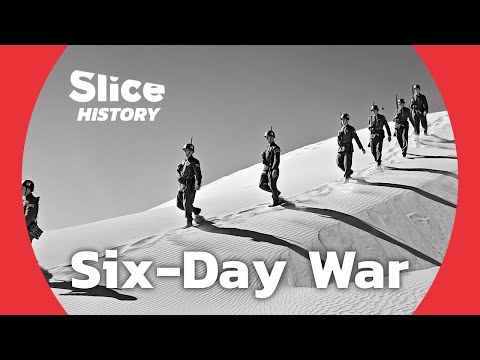
The crisis began not with a bang, but with a warning. In the early hours of May 14, 1967, an official convoy sped through the streets of Cairo to Nasser’s residence. The speaker of the National Assembly, Anwar Sadat, carried a startling message from the Soviet Union: Israel was massing troops on the Syrian border, preparing to invade. Nasser, flanked by his military commander-in-chief Field Marshal Amer, listened intently. The Soviets had been a reliable ally, and the warning seemed credible. “The order is given: the Egyptian Army is mobilized,” Nasser declared, setting in motion a chain of events that would soon spiral beyond his control.
Within 48 hours, three Egyptian divisions crossed into the Sinai—45,000 soldiers, 300 state-of-the-art tanks, and hundreds of armored personnel carriers. Television cameras captured the spectacle, making it look like a parade. But this was no parade. Nasser had deployed a massive force close to Israel’s border, a move with grave consequences for the entire region.
In Jerusalem, Levi Eshkol reviewed his troops on Independence Day, only a few hundred meters from the Jordanian border. The prime minister, known for his stuttering and unassuming demeanor, was the butt of jokes. Yet he was a man of compromise, desperately trying to find a path to peace. The Egyptian mobilization had put him in an impossible position. “Must Israel respond to this challenge?” he wondered aloud, even as his chief of staff, Yitzhak Rabin, urged him to call up reserves.
Rabin mobilized one armored division, and 3,000 men were called up. Among them was reservist Yehoshua Bar-Dan, who wrote in his diary: “11:00 p.m. at night a telephone rings. I have to leave in 10 minutes and help mobilize my unit. Gilla is shaking. I am nervous too.” The mobilization was chaotic—knocking on doors, frightened faces, husbands kissing their children goodbye. By 6:00 a.m., Bar-Dan was back home, kissing his wife and son before heading to the front.
Meanwhile, Israeli intelligence assessed that war was not imminent. But the population was on edge. That night, as a intelligence officer drove home, he heard the newly composed song “Jerusalem of Gold,” its words evoking a mythical, empty city waiting for its exiled sons to return. The song became an instant hit, capturing the mood of a nation bracing for the unknown.
Nasser, on his side, checked Soviet intelligence and found no Israeli troops on the Syrian border. War could have been avoided. But the Arab world had been roused by Egypt’s mobilization. Nasser, the hero of the masses, couldn’t let them down. “He cannot stop what he started,” observers noted. The Egyptian president felt he could use the situation to increase the profile of Arabs on the international scene. In Alexandria, he told a wildly cheering crowd that Egypt was ready for war.
For Nasser, this was familiar territory. In 1956, he had nationalized the Suez Canal, triggering a crisis that led to an Israeli-British-French invasion. The Egyptian Army was defeated, but a UN ceasefire allowed Nasser to turn military defeat into political triumph. He was forced to keep a UN peacekeeping force on Egyptian soil and allow the Straits of Tiran to stay open to Israeli ships. For 10 years, the strategic spot remained peaceful—thanks to the UN peacekeepers.
But now, Nasser was about to change that. He demanded that the UN peacekeepers withdraw from their posts along the border. “In case of war, Egypt cannot guarantee the UN safety,” he warned. The UN Secretary-General, U Thant, went along with Egypt’s request, and the peacekeepers packed up. From the other side of the border, the Israelis watched as the last UN forces left. “There’s nothing now between the Israeli Army and the Egyptian Army,” a CIA station chief in Tel Aviv reported.
Nasser had crossed the line. The withdrawal of UN troops removed the first international restraint of 1956. The future was uncertain. Eshkol, at home, learned of the withdrawal and worried that events were taking on a life of their own. His military adviser, Colonel Leor, wrote in his journal that Eshkol opened his heart to his deputy, to him, and mainly to his wife. Eshkol knew that the departure of the UN had brought the region closer to war.
With the UN gone, the Straits of Tiran were now under direct Egyptian control. Nasser was tempted to push his luck—to close the Straits to Israeli ships. But he worried: was the army ready? What if Israel attacked? Field Marshal Amer declared his troops ready. Nasser had little choice but to trust in his military, especially in Amer, his old comrade in arms. They had seized power together 15 years before, and their roles were fixed: Nasser took care of politics, Amer took care of the army. To break this pact could cause a dangerous shift in the balance of power.
But the Egyptian military was not all it seemed. It was large but ill-trained and less powerful than the Israelis. Nasser knew that closing the Straits could easily provoke a war. The Straits were Israel’s only southern access to the sea. Would the world allow Nasser to close them? Would it be a repeat of the Suez crisis? He made a decision—one that would be fateful for him and for Egypt. Speaking to a group of pilots, Nasser announced he would close the Straits of Tiran. “If the Jews want war, we welcome them,” he declared.
In Israel, Eshkol’s military adviser was awakened at 2:30 a.m. with the news. “I sat in bed, the blood gushing in my temples. I knew it was irreversible. Israel was going to war.” At 8 a.m., Eshkol met with his generals, including Rabin and the head of intelligence, Aaron Yariv. They told him Israel must respond with force. Rabin recommended going to war immediately. Eshkol listened but asked a simple question: “Are the Straits really blocked?” An oil tanker was expected to arrive soon. If the Egyptians blocked it, it could be the reason to go to war. But for the military, it didn’t matter whether the Straits were actually blocked—it was the symbolism that counted. “It was announced that it was closed, and for the Israelis to pull back with that happening, you can’t do it. Then you’ve been in effect defeated,” a general explained.
The question worrying the generals was whether failing to respond to Nasser would make Israel appear weak. It wasn’t just the freedom of navigation that was hanging in the balance—Israel’s credibility, determination, and capacity to exercise its right of self-defense were also being tested. After a long and tense meeting, the government decided to delay any decision on war for 48 hours. Israel’s foreign minister, Abba Eban, was dispatched on a lightning trip to Europe and North America, hoping Israel’s allies would force Egypt to step down and reopen the Straits.
In Egypt, the state radio was mobilized to push the government’s policy on Israel. Egyptian radio had started broadcasting in Hebrew, and the propaganda was having an effect. In Israel, with no Israeli television network, even Arabic television shows from Egypt were being closely watched. Egyptian editorial cartoons were reprinted in Israel, frightening Israelis with their fantasy of Israel crushed, pierced, and destroyed in a coming war. Israelis prepared for the worst: rabbis consecrated parks to serve as mass graveyards, people were called to donate blood, and trenches were dug.
The Arab propaganda had a deep impact beyond Israel. For many around the world, it ignited a fear that another Holocaust was in the making. Young Jewish volunteers poured into Israel. “I’m just going there because I feel the need to go there at this particular time,” one volunteer said. “Whatever they ask me to do, I feel that I’m identified strongly with Israel and I feel that they need me perhaps now more than they will next year.”
But if Egyptian propaganda was frightening Israelis and Jews around the world, it wasn’t having the same effect on Israel’s military command. Like the Israeli public, they were quite confident. Their private assessment: Israel was much stronger than its enemies. It was an opinion the military kept to itself.
Eshkol was caught in a dilemma. As defense minister, he knew his army had little to fear from the Arab forces. But as prime minister, he had to deal with a population growing more frantic every day. The papers ridiculed him, portraying him as an indecisive leader crushed by his enemies while he slept. Colonel Leor wrote: “These were very tough hours and days for Eshkol. Even his best friends from his own party demanded he give up the defense ministry. He does not understand why. What had he done? He knows no one can blame him for putting the country in danger.” Pressure was mounting, and he was more and more isolated.
Meanwhile, in Cairo, Nasser was also under increasing pressure. On May 23, U Thant came for last-minute negotiations, hoping to avert war. After a day of meetings, Thant and UN forces commander General Rikhye failed to move Nasser, but they gained a rare insight into his predicament. After the press photos, Nasser invited the men to a private dinner. They were the last foreigners to speak with him before the war. “The main point that really came out of it was that he was under tremendous political pressure. He said that the military are insisting that he go to war. He definitely indicated that he was afraid of a coup, assassination. I think this was also in his mind,” a diplomat recalled.
Nasser was now at a precipice. The Arab world was behind an invasion of Israel, and his military was clamoring for war—to strike the first blow. But Nasser hesitated. What would the Soviets do if he started a war? He decided to send his minister of defense, Shams Badran, to Moscow to test the waters. Will the Soviets support Egypt? If they say no, then Nasser has a good argument for waiting. According to diplomat Pavel Akopov, Badran got his response from Soviet Premier Kosygin in no uncertain terms.
As Nasser turned to Moscow, Eshkol turned to Washington. Foreign Minister Abba Eban met with President Lyndon Johnson, who was already embroiled in the war in Vietnam. But would Johnson send ships to force open the Straits of Tiran? “He expressed to me a sense of his own impotence that I had never heard either before or since from an American leader. He said that he was actually confined, contained, and frustrated by the Vietnam War. He said, ‘I will not be able to carry out what was then his policy of forcing the Straits with American power.’ And he then said, in a kind of deliberative oratory sort of mood, ‘Israel will not be alone.’ And this it decides to be alone,” Eban recalled.
Johnson’s words weren’t much help to Eshkol in his debates with the generals. Eshkol was now running out of options. Johnson had put the onus on the Israelis. The dilemma was always the same: should there be a preemptive strike or not? Eshkol’s cabinet voted—half were for war, half against. Meanwhile, outside his windows, there were demonstrations demanding that he be replaced as defense minister by Moshe Dayan, the heroic general of the 1956 Suez conflict. The question of letting Dayan into the government dominated the political agenda. Having Dayan as defense minister seemed to be the only answer to frighten Israel’s public into confidence.
Eshkol had one last chance to calm the public fear and keep the defense portfolio. He would go on radio and address the nation—his first public speech since the crisis began. “It is a horrible broadcast,” wrote Colonel Leor. “Eshkol with his stuttering conveyed more insecurity and confusion. I heard that soldiers at the front burst out crying.” Eshkol’s opposition exploited this as much as it could, and the night wasn’t over. Eshkol had to face his military command and explain himself. Leor called it “the night of the generals.” It was night, but in the war room, even the day was night. The neon tubes showed the generals in an ugly light. The generals declared that Israel was losing its power to deter its enemies. The country must answer Nasser’s threat. Eshkol responded, and with his back to the wall, he spoke more strongly than he ever had. “Since when does Israel make preemptive strikes? I do not accept the argument that just because a large Egyptian Army is sitting in the Sinai that we have to go to war. Deterrence does not mean that you always have to act. How long will we live by our swords? You asked for more weapons, you got them. You asked for 100 planes, you got them. You asked for tanks, you got them. But you did not get them so that one day we can say now we can destroy the Egyptian Army.”
In a move that took everyone by surprise, Jordan’s King Hussein invited himself to Cairo to meet with Nasser. The two men hadn’t spoken in years. For Nasser, Hussein was little more than a comic opera figure—a puppet of the English and the Americans. Just a few days earlier, Hussein had said to Western diplomats that Nasser’s closing of the Straits of Tiran was insane, that it would end badly for the Arabs, that they were not ready to fight Israel. But here he was in Cairo, ready to join in with Nasser. For King Hussein felt that to defend the West Bank, he needed Arab support. That support wouldn’t be forthcoming unless he mended his fences with Nasser, who was perceived by the Arab masses as the leader of the Arabs. Hussein had joined Nasser for two reasons: he felt he had protected Jordan from an Israeli invasion, and he had gotten in tune with his population, more than half of whom were Palestinians. It was Hussein himself who suggested to Nasser that his forces be commanded by an Egyptian general. “I conquered Jordan without sending a single soldier,” Nasser said to the Soviet ambassador. Israel now faced enemies on three fronts: Egypt, Syria, and Jordan. In the wings were both Iraq and Saudi Arabia. Israel was virtually surrounded. In just two weeks, Nasser had reversed the concessions he had made in 1956. The Arab nation was on the move, and millions of Arabs were behind Nasser.
In Tel Aviv, Eshkol finally broke down and agreed to give up the defense portfolio. Moshe Dayan became the minister of defense of a new government of national unity, which would manage the war. One thing about the significance of this appointment was immediately clear: it was an outright victory for all those in Israel who favored taking a much tougher line against Egypt. Or did General Dayan’s appointment mean that Israel was now about to commit herself to war at all costs? “I should think that just now it’s too late and too early—too late to react right away on the blockading of the Straits, and too early to draw any conclusion of the diplomatic management or way of handling the matter,” an observer said. Eshkol attended a crucial cabinet meeting. Would the country go to war or not? Dayan set the tone: “We cannot lose the initiative. The situation is getting more complex. It won’t matter that we shoot first. We have to act and act as quickly as possible.” The cabinet voted: 12 in favor of war, two against. Dayan proposed the official text of the decision: the government agrees to act militarily in a way that will relieve Israel from its encirclement. The government left to the defense minister and the prime minister the timing of the attack. “This is it,” wrote Leor. “The decision cannot be undone. I lay in bed reconstructing what had happened since we were on the balcony of the prime minister’s office on the eve of Independence Day. I also thought about Levi Eshkol. In three weeks, he had withstood unimaginable pressures from home and abroad. He had suffered an incredible injustice. But at that hour of the night, there was no room for sentiment.” At 6:00 a.m., the phone rang—the wakeup call he had ordered from the war room. For him, this call was the beginning. It was a sunny summer morning, but in one hour, a war would break out.
The war lasted six days. By June 10, Israel had captured the Sinai, Gaza, the West Bank, and the Golan Heights—a victory so total it stunned the world. Nasser’s army was shattered, his air force destroyed on the ground. “The dream of a mighty and unified Arab nation died in just six days,” historians would later write.
Three years later, at fifty-two, Nasser suffered a heart attack. His friends said he died of a broken heart. Eshkol, at seventy-four, died not long after the war—his wife said the same. Two men, opposites in every way, united in the quiet tragedy of their final hours.
The victors had their dreams too—of ancient lands and holy sites. But in the famous photo of the conquering generals entering Jerusalem, someone was missing: the man who had fought to avoid war. “For Israel, 1967 was a military success,” one historian noted, “but it redrew the map of the Middle East and mired the region in a never-ending cycle of occupation, terrorism, and reprisal.”
So who remembers the dreams of Levi Eshkol and Gamal Abdel Nasser—two leaders who tried, and failed, to hold back the tide of history? And what might the Middle East look like today if their dreams had survived?






