In the sprawling theater of World War II, where millions clashed and nations teetered on the brink, a handful of commanders made decisions that would echo through history. From the frozen steppes of Russia to the sweltering jungles of Burma, these men combined strategy and tactics in ways that altered the course of the conflict. But not all were equal—some were masters of maneuver, others of sheer will, and one was so incompetent he became a cautionary tale.
Their stories are not just of battles won or lost, but of personalities forged in the crucible of war. Each general had a unique approach, shaped by experience, ideology, and circumstance. And each left an indelible mark on the 20th century.
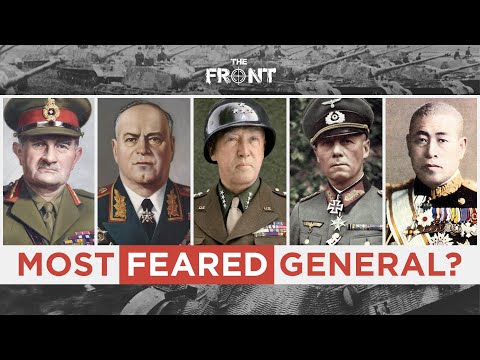
Take Georgy Zhukov, a peasant conscript who rose to become the Soviet Union’s most decorated commander. His masterpiece at Khalkhin Gol in 1939—where he encircled and crushed a Japanese army—was a preview of the encirclement tactics he would later perfect at Stalingrad. Stalin, paranoid of rivals, kept Zhukov close, knowing his popularity made him untouchable. “He was a soldier’s soldier,” one historian noted, “and a strategist who understood the brutal arithmetic of war.”
In the Pacific, Admiral Isoroku Yamamoto was a reluctant warrior. He had studied in America and knew its industrial might. “Should hostilities break out,” he warned, “it would not be enough to take Guam and the Philippines. We would have to march into Washington.” His prophecy fell on deaf ears, and he was ordered to attack Pearl Harbor anyway—a strike he knew would awaken a sleeping giant.
Meanwhile, in the deserts of North Africa, Erwin Rommel earned the moniker “Desert Fox” for his audacious surprise attacks. At Gazala in 1942, he feigned a thrust south of Tobruk, drawing British attention, then concentrated his armor in the north to defeat a larger, better-supplied force. “He was a troop leader with a gift for improvisation,” Joseph Goebbels wrote, “personally courageous and extraordinarily inventive.” Rommel’s tactics became textbook examples of maneuver warfare.
Far from the headlines, William Slim fought a forgotten war in Burma. Born lower-class, he clawed his way into a commission and learned jungle warfare from Indian regiments. Taking command of a defeated army in 1942, he reorganized it for jungle fighting, replaced trucks with mules, and targeted Japanese supply lines. “He may have been the best British general of the war,” one biographer argued, “yet his name is barely known.” Slim’s innovations starved the enemy and turned defeat into victory.
And then there was George S. Patton, the hard-driving American who led with swagger and aggression. After taking over a demoralized corps in 1942, he won the Tunisia campaign and later raced across France after D-Day. “We lead people,” he famously said. “Lead me, follow me, or get out of my way.” His blunt style inspired soldiers but often alienated peers. Patton’s legacy is one of relentless offense and controversial charisma.
Yet not every general was a genius. Grigory Kulik, a Soviet artillery chief and Stalin’s friend, made disastrous decisions—banning submachine guns, halting tank production, and dismissing rocket artillery. “What the hell do we need rocket artillery for?” he reportedly raged. “The main thing is the horse-drawn gun.” His incompetence cost countless lives, and in 1947, Stalin had him arrested and killed, fearing he was too capable—a final, ironic twist.
These six men—five brilliant, one disastrous—show the spectrum of command in WWII. Their choices, flaws, and triumphs remind us that war is not just about numbers, but about the humans who lead.
The lessons from these commanders extend far beyond the battlefields of the 1940s. Zhukov’s encirclement at Khalkhin Gol became a template studied by military academies worldwide, while Yamamoto’s foresight about industrial warfare remains a stark warning about underestimating an adversary’s capacity to rebuild. “The balance between strategy and tactics,” Sun Tzu wrote, “is the difference between victory and the noise before defeat.” Each of these men embodied that balance—or, in Kulik’s case, its catastrophic absence.
What made Rommel so effective wasn’t just his tactical brilliance but his willingness to exploit chaos. At Gazala, he personally led from the front, often exposing himself to enemy fire. His troops followed him not out of fear but out of awe. “The Desert Fox didn’t just outmaneuver the British,” one analyst observed, “he out-thought them, predicting their moves three steps ahead.” Yet even Rommel’s genius couldn’t overcome the logistical nightmare of North Africa—a reminder that tactics alone cannot win a war of attrition.
Slim’s story is perhaps the most instructive for modern commanders. Fighting in Burma, he faced a determined enemy, inhospitable terrain, and chronic supply shortages. His solution was radical: abandon conventional thinking. By replacing trucks with mules, he ensured mobility where roads didn’t exist. By targeting Japanese supply lines instead of frontal assaults, he turned the jungle itself into a weapon. “Slim understood that in Burma, the environment was the first enemy,” a historian noted. “He defeated it first, then the Japanese.”
Patton, by contrast, thrived on speed and shock. His Third Army’s dash across France after D-Day covered more ground in weeks than the Allies had in months. But Patton’s aggression came at a cost—his rivalry with British commanders like Montgomery nearly derailed Allied coordination. “Patton was a brilliant tactician but a poor diplomat,” one biographer wrote. “He won battles but lost friends.” Still, his famous quote—“We herd sheep, we drive cattle, we lead people”—captures the essence of his leadership: personal, direct, and unyielding.
And then there’s Kulik, the anti-genius. His refusal to mass-produce submachine guns left Soviet infantry outgunned by German troops armed with MP40s. His opposition to tank development nearly crippled the Red Army’s armored corps just as Hitler’s panzers were massing on the border. “Kulik was a political general, not a military one,” a Soviet historian later admitted. “His loyalty to Stalin was absolute; his competence was nonexistent.” When the NKVD finally arrested him in 1947, few in the military mourned.
These six men—Zhukov, Yamamoto, Rommel, Slim, Patton, and Kulik—represent the full spectrum of command. Their stories remind us that war is a human endeavor, shaped by character as much as by strategy. Some rose to the occasion; others crumbled under the weight. And one, tragically, was promoted far beyond his abilities—a lesson that resonates in any era.
But the story of command in World War II doesn’t end with these six. Beyond them stood a cast of commanders whose decisions shaped the war in ways that are still debated today. Some were brilliant but flawed; others were steady rather than spectacular. Together, they paint a fuller picture of what leadership under fire truly demands.
Consider Konstantin Rokossovsky, the Soviet marshal who masterminded the encirclement of the German Sixth Army at Stalingrad alongside Zhukov. Unlike many of his peers, Rokossovsky combined ruthless operational planning with a genuine concern for his soldiers’ lives—a rarity in Stalin’s army. “He never threw men away needlessly,” a subordinate recalled. “He spent shells and fuel, not blood.” His double envelopment at Stalingrad trapped nearly 300,000 Axis troops, a feat that turned the tide of the entire Eastern Front.
In the Mediterranean, Harold Alexander commanded with a quiet confidence that contrasted sharply with Patton’s theatrics. As deputy supreme commander in the Mediterranean, he coordinated Allied forces through the invasions of Sicily and Italy, managing ego-driven subordinates with patience. “Alexander’s gift was making coalition warfare work,” a British historian noted. “He kept the Americans and the British pulling in the same direction—no small feat.”
Then there was Chester Nimitz, the Pacific Fleet commander whose calm under pressure steadied American nerves after Pearl Harbor. Where Yamamoto gambled on a decisive strike, Nimitz played the long game. At Midway in June 1942, he positioned his carriers to ambush the Japanese fleet, sinking four enemy carriers in a single day. “Nimitz understood that the Pacific was a chessboard, not a boxing ring,” one naval analyst observed. “He traded space for time, then struck when the odds favored him.”
And who could forget Bernard Montgomery, the meticulous British field marshal who defeated Rommel at El Alamein? Where Rommel improvised, Montgomery prepared. He massed overwhelming force, drilled his troops relentlessly, and refused to attack until he was ready. “Monty was vain, difficult, and often insufferable,” a fellow officer admitted. “But he won, and he kept his men alive doing it.” His victory at El Alamein was the first major land victory against the Axis, a psychological turning point for the Allies.
Yet for every steady hand like Nimitz, there was a commander whose flaws proved costly. Mark Clark, the American general who led the Fifth Army in Italy, captured Rome in June 1944—but only after allowing the German Tenth Army to escape encirclement. His obsession with the symbolic prize of Rome handed the enemy a reprieve that prolonged the Italian campaign by months. “Clark traded a decisive victory for a photo opportunity,” a military historian later wrote. “It was a costly lesson in the difference between strategy and vanity.”
These commanders—Rokossovsky, Alexander, Nimitz, Montgomery, and Clark—show that leadership in war is never a single formula. Some won through preparation, others through audacity. Some inspired loyalty; others inspired fear. But all of them, for better or worse, left their fingerprints on the conflict.
What unites these commanders, from the brilliant to the catastrophic, is the weight of decisions made under impossible pressure. “In war, nothing is certain except the consequences of inaction,” one strategist observed. Zhukov encircled armies; Yamamoto foresaw doom; Rommel improvised; Slim adapted; Patton charged; Kulik bungled. Each choice rippled outward, shaping the fate of nations.
Perhaps the deepest lesson is that no single formula guarantees victory. Strategy without tactics, as Sun Tzu warned, is the slowest route to victory; tactics without strategy is the noise before defeat. The great commanders balanced both—and the worst, like Kulik, mastered neither. Their stories endure not because they were perfect, but because they were human, flawed, and decisive in moments that demanded nothing less.
So as we close this chapter on World War II’s commanders, we’re left with a question that echoes through every battlefield and boardroom alike: What truly separates a great leader from a disastrous one—training, character, luck, or the willingness to learn from failure?
We’ve shared our take. Now we want to hear yours. Which of these commanders surprised you most, and why? Drop your thoughts in the comments below—we read every single one.






