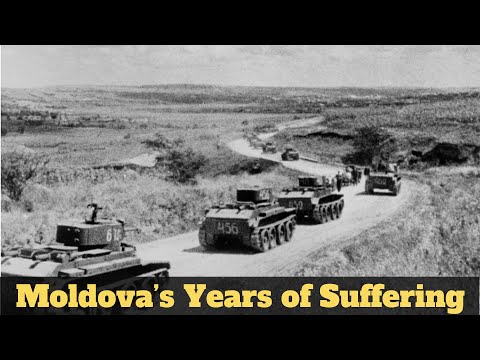
In the aftermath of the First World War, the political map of Eastern Europe was redrawn, and the seeds of a future conflict were sown. The collapse of the Russian Empire in 1917 and the subsequent civil war created a power vacuum in its western borderlands. In 1918, Bessarabia, a predominantly rural province between the Prut and Dniester rivers, declared union with the Kingdom of Romania. The Romanian government, backed by Allied recognition at the 1920 Treaty of Paris, incorporated the territory. But the Soviet government never accepted this transfer, maintaining its claim to Bessarabia as part of the former Russian imperial lands. This unresolved dispute would fester for two decades, setting the stage for one of the most brutal and overlooked theatres of World War II.
Throughout the interwar years, Soviet diplomacy continued to reject Romania’s sovereignty over Bessarabia. Romania integrated the region administratively and militarily, extending its laws, gendarmerie, and land reforms into the area. The population of Bessarabia, around 2.8 million by the late 1930s, was ethnically mixed: Moldovans (Romanian speakers) formed a majority alongside Ukrainians, Russians, Jews, Bulgarians, and Gagauz. Northern Bukovina, with roughly 800,000 inhabitants, was similarly diverse. Economic development was limited, with agriculture dominating production, while infrastructure lagged behind Romania’s western regions.
By the late 1930s, the rise of Nazi Germany and the Soviet Union as revisionist powers reshaped the strategic environment. The August 1939 Molotov-Ribbentrop Pact, a non-aggression treaty between Germany and the USSR, included secret protocols dividing Eastern Europe into spheres of influence. In this arrangement, Bessarabia was placed in the Soviet sphere. Although no immediate action was taken, the pact signaled a potential Soviet move against Romanian-held territories when circumstances allowed.
Romania, at the time a constitutional monarchy under King Carol II, sought to preserve its territorial integrity through balancing diplomacy. Its alliances with France and Britain offered nominal security guarantees, but these were undermined after the fall of France in June 1940. Romania’s military, numbering about 5,000,000 personnel on paper, faced severe equipment shortages, with much of its arsenal dating from the First World War. Armor consisted of fewer than 200 light tanks, and the Air Force fielded a mix of obsolete biplanes and a limited number of modern fighters, such as the PZL P.24.
The Soviet Union, meanwhile, had consolidated control over its western borderlands after the invasion of eastern Poland in September 1939 and the occupation of the Baltic states in June 1940. These moves expanded Soviet forward bases and brought large Red Army formations closer to Romanian territory. In June 1940, with France defeated and Britain isolated, Moscow issued an ultimatum to Bucharest, demanding the cession of Bessarabia and northern Bukovina.
The Romanian high command, recognizing the impossibility of resisting the USSR without external support, advised compliance. On 28 June 1940, the Romanian army began a hasty withdrawal from the provinces. The Soviet occupation proceeded rapidly. The Red Army deployed elements of the 9th and 12th Armies, totaling approximately 460,000 troops, supported by over 3,000 tanks and armored vehicles. The Romanian forces, about 160,000 in the affected sectors, were under orders to avoid direct confrontation, though incidents of sporadic armed clashes and harassment occurred during the retreat.
Soviet units entered Chișinău and other major towns within days, raising the Soviet flag and initiating administrative takeover. Under Soviet administration, Bessarabia and parts of Bukovina were reorganized into the Moldavian Soviet Socialist Republic and the Chernivtsi Oblast of the Ukrainian SSR. The annexation brought sweeping political and social changes. Land was redistributed under collectivization policies. Private trade was curtailed, and local institutions were replaced with Soviet structures. Political repression followed swiftly, with arrests targeting former Romanian officials, landowners, clergy, and individuals labeled as class enemies. Archival estimates indicate that between 1940 and early 1941, tens of thousands were deported to Siberia and Central Asia.
The rapid Sovietization process, coupled with the disruption of the pre-war economy, generated discontent among segments of the local population. Though others, particularly among poorer peasants and some minority groups, viewed Soviet policies as an opportunity for social advancement. The loss of Bessarabia and northern Bukovina deeply affected Romanian national policy. In Bucharest, the cession was perceived as a humiliation and a direct consequence of Romania’s diplomatic isolation. The territory’s strategic position, providing a bridgehead toward the lower Danube and the Carpathians, meant their loss also posed a security threat.
By the autumn of 1940, King Carol II had abdicated in favor of his son Michael, while General Ion Antonescu assumed power, aligning Romania more closely with Nazi Germany. The stage was set for the country’s participation in the coming Axis invasion of the Soviet Union in 1941, aimed in part at reclaiming these lost provinces.
On 22 June 1941, the Axis invasion of the Soviet Union, codenamed Operation Barbarossa, began. Romania, now a formal member of the Axis alliance, committed itself to the campaign with the stated objective of regaining Bessarabia and northern Bukovina under Marshal Ion Antonescu’s leadership. Romanian forces were integrated into the German Army Group South under the command of Field Marshal Gerd von Rundstedt. The Romanian Third and Fourth Armies, totaling approximately 400,000 personnel, were deployed alongside the German 11th Army, with the Prut River forming the starting line for operations into Soviet-held territory.
The Soviet defense in the region was organized under the Southern Front, commanded by General Ivan Tyulenev. This included elements of the 9th and 18th Armies, reinforced by mechanized corps and fortified sectors constructed since the 1940 annexation. Despite these preparations, the Red Army in Bessarabia was still in the process of mobilization and redeployment when the invasion began, creating vulnerabilities in its defensive network.
Romanian and German forces commenced the offensive with concentrated artillery barrages and air strikes targeting Soviet positions in key sectors such as Iași, Ungheni, and Cahul. The Romanian Air Force, operating primarily IAR 80 fighters and Savoia-Marchetti SM.79 bombers, coordinated with the Luftwaffe to achieve local air superiority. Initial ground assaults focused on securing bridgeheads across the Prut River. By 24 June, Axis forces had established crossings at multiple points despite determined Soviet counterattacks employing T-26 and BT-7 tanks as well as entrenched infantry.
The advance through Bessarabia was met with varying degrees of resistance. In the north, Romanian units encountered heavy opposition near Lipcani and Briceni, where Soviet fortified lines slowed progress and inflicted significant casualties. Further south in the direction of Chișinău, the German 11th Army’s motorized elements pressed forward rapidly, forcing Soviet withdrawals from forward positions. The Soviet command attempted to regroup along the Dniester River, using the terrain’s natural defensive features, but Axis pressure disrupted these plans.
Civilian populations in contested areas were caught between retreating Soviet units and advancing Axis forces. Villages along the front lines experienced shelling and air raids, while roads were clogged with military convoys, refugees, and requisitioned livestock. Some inhabitants, particularly those who had suffered under Soviet deportations in 1940–1941, welcomed the Romanian return, while others feared reprisals or were uncertain of the new political order. Reports from both sides noted instances of looting, property destruction, and rapid resource extraction as control shifted.
By early July, the Axis had made significant territorial gains, with Romanian and German troops advancing towards Chișinău and Cernăuți. Soviet resistance stiffened around these urban centers, where NKVD units coordinated with regular army forces to delay the offensive. Fighting in the approaches to Chișinău involved street-level skirmishes and the demolition of bridges to hinder Axis armor. Nevertheless, the coordination between Romanian infantry and German mechanized formations gradually overcame these defenses.
The northern sector, covering northern Bukovina, saw a simultaneous push by Romanian forces under General Nicolae Ciupercă, supported by German units, to reclaim the territory. The battle for Cernăuți involved encirclement maneuvers designed to cut Soviet escape routes toward the northeast. On 5 July, Axis forces entered the city, encountering scattered resistance before establishing control. This marked the restoration of Romanian administration in the region, at least temporarily.
Throughout this phase, logistics played a critical role. Romanian supply lines relied on overextended road networks, while the Germans prioritized fuel and ammunition for their own armored spearheads moving deeper into Ukraine. The summer heat, combined with dust and the strain on transport, slowed some operations. Yet the overall Axis momentum remained strong. By mid-July, with Chișinău captured and most of Bessarabia under Axis control, the focus began to shift toward operations east of the Dniester, marking the transition from territorial recovery to deeper involvement in the Eastern Front campaign.
With the capture of Chișinău and Cernăuți in early July 1941, Romanian forces achieved the primary political objective set before the invasion: the recapture of Bessarabia and northern Bukovina. Yet under the terms of their alliance with Nazi Germany, Romanian troops were not withdrawn after securing the Prut-Dniester line. Instead, Marshal Antonescu committed to further offensive operations eastward, supporting the German drive toward the Black Sea coast and the Ukrainian interior.
This decision was influenced by multiple factors: a desire to prove Romania’s value as an Axis partner, the expectation of securing additional territorial or economic benefits, and pressure from Berlin to maintain continuous engagement. In operational terms, the Romanian Fourth Army, commanded by General Nicolae Ciupercă, was tasked with advancing southward toward the Dniester Estuary and the strategic port city of Odessa. The Romanian Third Army under General Petre Dumitrescu moved in coordination with German units along the Dniester’s northern stretches, pushing toward Mohyliv-Podilskyi.
German command integrated Romanian divisions into corps-level formations for specific objectives, often assigning them to secure flanks, hold captured territory, or clear bypassed Soviet pockets. The Soviet Southern Front, reeling from the loss of Bessarabia, reorganized its forces for a defensive stand. Reinforcements from interior military districts began arriving, including fresh rifle divisions, artillery brigades, and Black Sea Fleet coastal defense units. Odessa, in particular, was fortified as a major stronghold with extensive trench networks, minefields, and reinforced bunkers prepared around its perimeter. Soviet naval assets supported the city’s defense by providing artillery fire from the sea and transporting supplies and reinforcements along the coast.
While the Axis advanced eastward, Romanian administration began reestablishing itself in the retaken provinces. Civil authorities moved quickly to replace Soviet institutions, reintroducing Romanian law, currency, and education systems. Land that had been collectivized under Soviet rule was partially returned to previous owners, though the chaos of war and lack of official records led to disputes and uneven restitution. In Chișinău, government buildings were repaired for administrative use, while the gendarmerie resumed policing duties. However, the security situation remained unstable, with reports of sabotage, armed resistance, and partisan activity in rural areas. These actions were often organized by remnants of the Soviet NKVD who had left behind small cells to disrupt Axis control.
The change in regime also brought reprisals. Individuals associated with Soviet administration, including local officials, communist party members, and collaborators, were subject to arrest, interrogation, or deportation. Jewish communities, already targeted by anti-Semitic legislation enacted in Romania before the war, faced new persecution including forced labor and mass arrests. These measures were justified by Romanian authorities as security precautions, but they deepened divisions within the civilian population and added a layer of fear to everyday life in the occupied territories.
Logistical challenges mounted as the front moved eastward. The Romanian army’s equipment shortages became more apparent the further it operated from home supply depots. Motor transport was insufficient to meet operational needs, forcing reliance on horse-drawn wagons for much of the supply chain. Ammunition resupply depended heavily on German-controlled railways, which prioritized German formations advancing toward the Dnieper. Fuel shortages limited the mobility of Romanian armored units, already few in number and equipped with light tanks vulnerable to Soviet anti-tank weapons.
The summer heat posed another difficulty. Dust clouds on unpaved roads reduced visibility and impaired air operations, while high temperatures strained both men and animals. Disease, especially dysentery and typhus, began to affect troop strength. Despite these obstacles, Axis forces pressed forward, buoyed by the broader German successes across the Eastern Front, where Army Group Center was driving towards Smolensk and Army Group North was advancing on Leningrad.
By late July, Romanian and German units were approaching the outer defenses of Odessa, where the Soviet command had concentrated significant forces to prevent a breach. Intelligence estimates suggested that over 30,000 Soviet troops were garrisoned in the city, supported by naval artillery and anti-aircraft guns. This marked the beginning of a new protracted phase of the campaign, one that would test the Romanian army’s capacity for sustained offensive operations against a well-prepared and determined enemy.
The siege of Odessa became a brutal test of Romanian endurance. Romanian artillery pounded the city’s defenses, but Soviet naval guns answered from the Black Sea. “Every meter of ground was paid for in blood,” wrote a Romanian officer in his diary. The defenders fought with a ferocity that surprised the Axis command.
By mid-October, Soviet forces executed a masterful evacuation under cover of darkness. Romanian reconnaissance units entered the city on 16 October to find abandoned positions and demolished port facilities. Odessa had fallen, but the prize was a shattered shell. Antonescu proclaimed it a great victory, though the cost was staggering.
The occupation that followed brought harsh reprisals and the deportation of thousands of Jews to Transnistria. Partisan resistance continued to plague Romanian garrisons, and the city remained a dangerous, contested space. For Romania, the capture of Odessa marked both the height of its military achievement and the beginning of its long retreat.
What do you think—was the capture of Odessa a strategic victory or a costly distraction for Romania? Share your thoughts below.






