In March 1968, a US intelligence colonel slammed a classified folder onto his desk at MACV headquarters in Saigon. The numbers were mathematically impossible. The Australian contingent was just 1,500 men—a rounding error compared to the half-million American troops holding the line. But the casualty statistics didn’t make sense. The kill ratio for the US Army was a hard-fought 1 to 10. For the Australian SAS, it was 1 to 500. The colonel demanded an explanation. The analyst didn’t offer a tactical briefing. He offered a warning: “Sir, you have to understand they aren’t fighting a war, they’re hunting.”
That distinction would haunt American command for the next five years. Because hunting meant ignoring the rule book. It meant tactics that weren’t written in any field manual—methods so silent and brutal that they made Green Berets feel like amateurs. The United States was fighting a war of firepower. The Australians were fighting a war of terror.
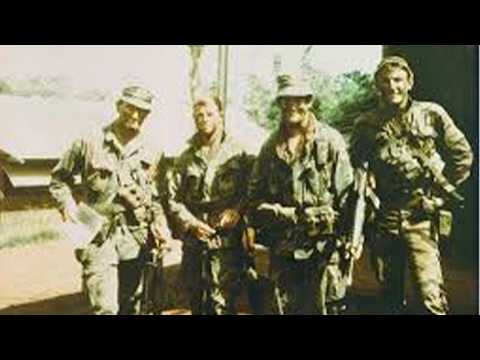
The first Australian SAS operators touched down at Vung Tau in July 1966. They stepped off the C-130 transport planes into a wall of humidity that hit like a physical blow. American advisers greeted them with barely concealed condescension. These were soldiers from a country of sheep farmers and surfers—a nation with a military budget smaller than what the Pentagon spent on coffee in a single month. What could they possibly teach the mightiest military machine on Earth?
The Australian contingent was supposed to be a political gesture, a friendly flag in a multinational coalition. Nothing more than a token force. That assumption was about to be shattered in the most brutal and humiliating way imaginable.
Three weeks after arrival at their base in Nui Dat, an SAS reconnaissance team pushed deep into the jungle northwest of the firebase. Their mission was straightforward on paper: locate enemy positions, report movements, avoid contact if possible, and extract after 72 hours. They were operating under American tactical doctrine—move during daylight, establish radio contact every four hours, follow trails when available. Standard operating procedure that had been tested and refined in Malaya and Borneo.
On day one, everything went according to plan. On day two, everything fell apart.
The enemy heard them coming from half a kilometer away. The crunch of boots on dried leaves. The metallic clink of equipment—canteens bumping rifle stocks, magazines shifting in pouches. The whispered conversation soldiers used to coordinate movement. Every sound was a death sentence in this jungle. But sound wasn’t the only betrayal. They smelled them, too. The chemical scent of standard-issue soap, insect repellent, toothpaste with its distinctive mint signature. Each compound screamed intruder to anyone who knew what to smell for—and the Viet Cong had been detecting foreign chemicals since before these Australians were born.
The ambush lasted 47 seconds. Two Australians went down with shrapnel wounds before the patrol could scramble into cover and return fire. The jungle erupted—muzzle flashes from multiple positions, the distinctive crack of rounds overhead. Then silence. The Viet Cong melted into vegetation like morning mist. No bodies left behind. No blood trails. Nothing but wounded Australians in a brutal education in humility.
That evening in the tactical operations center at Nui Dat, the patrol commander did what Australian SAS always did after contact: conducted a thorough debrief. But this one was different. The two wounded operators, stabilized but refusing evacuation, demanded to contribute. They weren’t leaving until they understood what had just happened. The question wasn’t why one contact happened in war. The question cut deeper: How did they know we were coming?
The answers that emerged would create the most effective jungle warfare unit in history—and the methods would remain classified for decades.
The observations came methodically, then faster. Each man contributed until the devastating picture emerged. The noise—every footstep announced their approach, every whispered word carried further than imagined. The smell—chemical signatures from soap and repellent marked them as foreign intruders in an environment where the enemy had lived for generations. The patterns—daylight movement, trail usage, regular radio schedules, all predictable, all exploitable by an enemy who had been fighting foreign armies for thirty years.
Everything conventional doctrine prescribed was wrong for this war. What the Australians did next would terrify everyone who witnessed it.
Within days, the refinements began. Every piece of equipment was re-examined with obsessive scrutiny. Metal surfaces were taped or wrapped in cloth—not some surfaces, every single metal surface. Magazines were loaded one round short to eliminate subtle spring tension clicking. Canteens were filled completely, not three-quarters full as standard practice, to prevent water sloshing that could carry dozens of meters through still jungle air. Dog tags were taped together, sewn into pouches, or removed entirely.
But equipment was just the beginning. What they did to themselves was even more extreme. Ration tin openers were discarded for knives that worked silently. Boot laces were replaced with parachute cord that wouldn’t creak when wet and dry repeatedly. Every buckle, every strap, every fastener was secured with tape, padded with cloth, or eliminated if it served no critical function.
The men practiced moving through dense undergrowth for hours—not walking, flowing, learning to feel obstacles before making contact. They developed a peculiar rolling gait, distributing weight gradually across the foot, preventing the audible crunch of compressed leaf litter. The transformation took weeks. Some veterans who’d fought in Malaya and Borneo couldn’t adapt. Those who did became something that seemed barely human.
They learned to breathe exclusively through their noses—slowly, deliberately, even under extreme exertion when every instinct screamed for gasping breaths. They practiced hand signals until complex tactical communications happened without a single sound. They learned to eat in silence, drink in silence, answer nature’s calls in silence. Every biological function was analyzed and modified until noise was eliminated or minimized to undetectability.
Reports from this period describe patrols moving fifty meters through dense bamboo without producing a single audible sound. Fifty meters of bamboo. Anyone who’s been near bamboo knows how impossible that sounds. The movement took over twenty minutes for fifty meters—a pace that seemed insane by conventional standards. But in this jungle, speed meant death. Silence meant survival. The Australians chose survival.
They seemed to flow through vegetation like water through rocks, leaving no disturbance, no trace, no sound. But silence was only the foundation. What came next would make conventional soldiers physically ill.
The real innovation pushed scent discipline further than any Western military had attempted. The Viet Cong knew every scent belonging in the jungle and every scent that didn’t. Their survival depended on that knowledge for three generations. The Australians decided to disappear into the jungle’s natural scent profile.
Three days before patrols, operators dramatically reduced scented products. They cut soap usage drastically, switching to unscented alternatives where possible. They adjusted diet before operations, avoiding foods affecting body odor. Some incorporated local foods when practical, though not to extremes, risking digestive problems at the wrong moment. They rubbed jungle mud into exposed skin and uniforms—sleeping in it, rolling in it, letting it cake and dry, embedding organic compounds that masked foreign scents.
By the time they moved into operational areas, their scent signature was dramatically reduced. Not eliminated—no outsider could completely disappear into the jungle’s olfactory landscape—but reduced enough to buy precious seconds of uncertainty when an enemy sentry caught a hint of something unfamiliar. Reduced enough to close distance before detection. Reduced enough to survive. Reduced enough to become ghosts.
The results were immediate. And for the enemy who had owned these jungles for decades, absolutely terrifying. Patrols that might previously have been detected within hours now operated undetected for days. Five-man teams moved through areas the Viet Cong considered exclusive territory—observing, reporting, and sometimes striking without any warning.
Enemy units began reporting strange occurrences through their communication networks—intercepts Australian signals intelligence collected with growing satisfaction. Comrades disappearing on routine trails. No contact, no struggle, no gunfire. Just gone. Supply caches compromised with no evidence of enemy presence. Sentries found at their posts, no longer breathing, with no alarm raised.
The Viet Cong had always owned the jungle. They were the ghosts, the shadows, the unseen threat that made American patrols move in fear. Now something hunted them, and they had no idea how to stop it. Something that moved without sound, left no scent, struck without warning, vanished without trace. Something that turned their own tactics against them with terrifying effectiveness.
They gave these hunters a name echoing through Vietnamese villages for years. Ma rung—the jungle ghosts. And the jungle ghosts were just getting started.
But the legend had one final chapter to write. In March 1968, a patrol was tasked to find a Viet Cong regional command that American technology had searched for weeks and failed to locate. The tracker attached to the team studied the briefing materials, then quietly disagreed with every satellite and sensor. Within hours he found the invisible highway—subtle disturbances in growth patterns, bark scuffed at hand height, moisture traces evaporating at predictable rates.
The patrol followed it for three days, moving sometimes only five hundred meters an hour. On the fourth dawn they found the base: an underground complex housing two hundred fighters, invisible from the air. Coordinates went out. B-52s from Guam reduced it to overlapping craters, and secondary explosions thundered for hours. Technology had failed. Human skill had succeeded.
The files stayed sealed until the 1990s. One 1969 observation captured it all: “Today I watched five Australians do what a battalion couldn’t accomplish. I don’t know whether to be inspired or ashamed of everything I thought I knew about warfare.”
Same war. Different rules. And all the difference in the world. The jungle ghosts earned their name—and the jungle never forgot.
So tell us: if the numbers were sitting on your desk in 1968, would you have buried them—or rewritten the book?






