The city of Ramadi was a ghost of its former self. By 2006, the capital of Anbar province had become the deadliest place in Iraq, a hornet’s nest of insurgent activity where American troops faced an average of 20 attacks a day. It was here, in the dusty streets and shattered buildings, that the Iraq War would reach a turning point.
But this was not the first time Ramadi had erupted in violence. Two years earlier, in April 2004, a bloody battle had already scarred the city, leaving 12 US soldiers and 250 insurgents dead. The Marines of 2nd Battalion, 4th Marines had fought house to house, ambushed at every turn. They thought they had cleared the city. They were wrong.
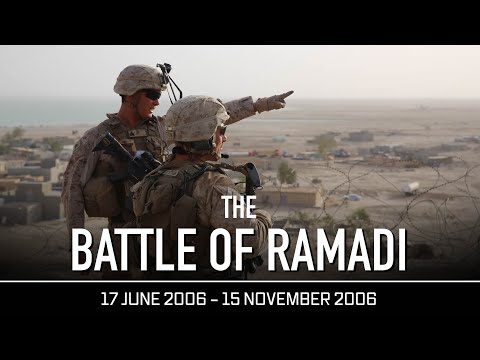
By 2006, Ramadi had become a stronghold for al-Qaeda in Iraq, led by the ruthless Abu Musab al-Zarqawi. His fighters had assassinated tribal leaders, bombed police stations, and turned the city into a breeding ground for rebellion. The US military was stretched thin, and many in Washington had written off Anbar province as a lost cause. Colonel Pete Devlin, the Marines’ intelligence chief, famously wrote that the prospects for securing the province were “dim” and that there was “almost nothing the US military can do.”
Yet, a new commander was about to take a different approach. Colonel Sean MacFarland of the 1st Brigade Combat Team, 1st Armored Division, arrived in Ramadi with a plan that defied conventional wisdom. Instead of relying on heavy artillery and air strikes, he would move his soldiers into the heart of the city, living among the people, and building relationships with local tribes. It was a gamble that would either break the insurgency or doom his men.
The battle began in June 2006, with US and Iraqi forces cordoning off the city and establishing combat outposts in residential neighborhoods. They paid rent to homeowners, handed out water and generators, and tried to win hearts and minds. But the insurgents fought back fiercely, launching suicide bombings and sniper attacks. On July 5th, Marines captured Ramadi General Hospital, a seven-story building that had been used as an enemy base. Inside, they found triggering devices for roadside bombs hidden in the ceiling.
As the months wore on, the fighting intensified. In November, a US tank fired into a building, killing six civilians, including five children. The incident threatened to derail the fragile trust that had been building. But then, something unexpected happened. Sunni tribes, who had once sided with al-Qaeda, began to turn against the terrorists. They were tired of the violence and the oppression.
Sheikh Abdul Sattar Abu Risha, a charismatic leader, founded the Anbar Salvation Council, uniting 20 tribes against al-Qaeda. “We finally said enough is enough,” he declared. The movement, known as the Anbar Awakening, would change the course of the war. But the fight was far from over. Al-Qaeda struck back, assassinating Sheikh Abu Risha in September 2007. His death only fueled the determination of his people.
By early 2007, US forces launched Operation Murfreesboro, a final push to clear the remaining insurgent strongholds in eastern Ramadi. They built a concrete wall around the Malaab district, cutting off al-Qaeda’s escape routes. In just 25 hours, the barrier was complete, and US troops swept through the neighborhood, killing 69 insurgents and capturing 32 more. The operation was a decisive victory.
But the battle for Ramadi was not just a military conflict—it was a struggle for the loyalty of the Iraqi people. And in the end, it was the tribes who tipped the balance. As one officer noted, “The vast majority of the turnaround is due to the sheikhs.”
The Anbar Awakening was not merely a tactical alliance; it was a seismic shift in the political landscape of Iraq. Sheikh Abdul Sattar Abu Risha’s vision of a unified Sunni front against al-Qaeda had given the Americans a crucial ally, but it also placed a target on his back. His assassination in September 2007 sent shockwaves through the province, yet it did not fracture the movement. Instead, it galvanized it. His brother, Sheikh Ahmed Abu Risha, stepped forward to lead, vowing to continue the fight.
With the Awakening gaining momentum, US forces were able to capitalize on the newfound intelligence and local support. Operation Murfreesboro, launched in early 2007, was a direct result of this cooperation. The concrete barrier that sealed off the Malaab district was erected in just 25 hours, a testament to the improved efficiency and coordination between US troops and Iraqi forces. As the wall went up, insurgents found themselves trapped, their supply lines severed. Over 40 engagements followed, with US and Iraqi forces killing 69 insurgents, capturing 32, and discovering eight large weapon caches.
The success of Murfreesboro was a turning point, but the battle for Ramadi was far from won. Al-Qaeda, though weakened, remained a lethal threat. In the months that followed, the terrorist group launched a series of retaliatory attacks, targeting both US troops and Awakening members. Suicide bombings and sniper fire continued to plague the city, and the fragile peace was tested repeatedly. Yet, the tide had turned. The local population, emboldened by the Awakening, began to actively cooperate with Coalition forces, providing tips and intelligence that led to the capture of key insurgent leaders.
By the summer of 2007, the situation in Ramadi had improved dramatically. Attacks on US forces had dropped by nearly 50%, and the city was experiencing a resurgence of economic activity. New businesses opened, markets thrived, and the streets, once deserted, began to fill with life. The US military, recognizing the importance of sustaining this progress, invested heavily in reconstruction projects. Clean water was restored, electricity was improved, and the main road through the city was cleared of blast barriers.
But the most significant change was in the hearts and minds of the people. The Anbar Awakening had given Sunnis a sense of agency and hope. They were no longer passive victims of violence but active participants in their own liberation. The police force, once infiltrated by insurgents, was now a source of local pride. Recruitment numbers soared, and by 2008, Ramadi had 8,000 police officers, the fastest-growing force in the province.
Yet, the cost had been high. Colonel MacFarland’s brigade lost 86 soldiers, sailors, and Marines during their eight-month deployment. The city itself bore deep scars, both physical and psychological. The memory of the violence would linger for years, a reminder of the darkest days of the war. But for now, there was a cautious optimism in the air. As one officer put it, “Al-Qaeda is defeated in Anbar.” The words were bold, perhaps premature, but they reflected a new reality on the ground.
The Second Battle of Ramadi was officially over, but its legacy was just beginning. The Anbar Awakening would become a blueprint for counterinsurgency operations across Iraq, and its leaders would go on to play pivotal roles in the nation’s political future. The battle had proven that military might alone could not win the war—it required the support of the people. And in Ramadi, that support had been won, one tribe at a time.
The victory in Ramadi was not just a military triumph; it was a testament to the power of trust and reconciliation. By 2008, the city that had once been the most dangerous place in Iraq was now a symbol of hope. The Anbar Awakening had transformed Sunni tribes from enemies into allies, and their courage had turned the tide of the war.
Yet, the peace was fragile. Al-Qaeda was down, but not out. The assassination of Sheikh Abu Risha was a stark reminder that the road to stability was paved with sacrifice. His brother, Ahmed, carried the torch, but the question remained: could the Awakening survive without its charismatic founder?
As US forces began to draw down, the future of Ramadi rested in the hands of its people. The police force, once a target of insurgents, now stood as a symbol of local resilience. But would they be able to hold the line when the Americans left?
The Second Battle of Ramadi was over, but the fight for Iraq’s soul was just beginning. What do you think was the true turning point in the battle for Ramadi—the military strategy or the tribal awakening? Share your thoughts in the comments below.






