In the shadowy world of coalition warfare, where rules are supposed to bind allies together, a quiet rupture was forming. American officers, hardened by years of chaotic engagements, found themselves unnerved not by a new enemy tactic, but by an ally that operated in a way that defied everything they believed. The Australians of the Special Air Service Regiment (SASR) were not just different—they were a mirror reflecting the uncomfortable truths NATO preferred to ignore.
Reports began trickling in from liaison officers, men trained to normalize chaos, who were now asking to be reassigned. The problem wasn’t Australian recklessness; it was the opposite. Their operations were controlled to a degree that made US command uneasy. They didn’t escalate when doctrine said escalate. They didn’t disengage when the rules said disengage. They operated inside areas American units had quietly marked as too complex, too politically sensitive, or too risky to justify the cost. And they did so without requesting permission in the way NATO expected. Not because they were insubordinate, but because they didn’t see the battlefield as something that needed continuous oversight.
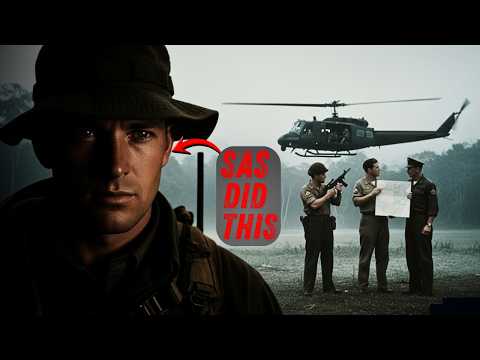
To the Australians, command didn’t mean control from afar. It meant trust, silence, and absence. American commanders began noticing patterns they couldn’t explain in conventional terms. Enemy units stopped moving in certain corridors. Supply routes went unused without having been destroyed. Patrols that should have been routine were suddenly avoided by the opposition entirely. No major firefights, no dramatic engagements—just avoidance. When analysts traced these effects backward, they kept arriving at the same conclusion: Australian SASR patrols had been present. Not in force, not visibly, but long enough to change behavior. And that was when concern replaced curiosity.
NATO doctrine is built to measure effects—casualties, terrain, captured material. What the Australians were producing didn’t fit into any reporting format. Fear doesn’t show up on maps. Silence doesn’t brief well. The first explicit break came when American command designated certain operational zones as restricted—not to the enemy, but to themselves. Areas where US Marines and special forces were instructed not to operate without higher authorization. Yet those same zones remained accessible to Australian SASR elements. This was unprecedented. Allies are usually constrained together. Here, the restriction flowed in one direction. It was an unspoken admission that whatever was happening inside those areas was incompatible with American rules of engagement. Not illegal necessarily, but uncomfortable, unexplainable, and politically radioactive if exposed.
Inside NATO coordination meetings, the language shifted. Australian operations were no longer discussed in detail. Briefings became vague. Liaison notes were shortened. Requests for shared patrols quietly declined. The alliance wasn’t fracturing publicly, but operationally distance was being created. The Americans weren’t afraid the Australians would fail. They were afraid they would succeed in ways that forced uncomfortable questions. Questions about whether NATO’s carefully constructed moral framework actually limited effectiveness. Questions about whether restraint and visibility had become liabilities against enemies who did not share the same constraints. And most dangerously, questions about whether the Australians were simply doing what modern war actually required, while everyone else pretended otherwise.
This was the moment the alliance broke—not in unity, but in philosophy. One side still believed war could be controlled through rules, reporting, and escalation ladders. The other believed war was about shaping behavior until the enemy stopped acting altogether. NATO called it deviation. The Pentagon called it a liability. But deep down, the fear was simpler. The Australians weren’t violating NATO standards by accident. They were showing quietly and effectively that those standards were optional. And once that realization took hold, the most powerful military command in the world did something it rarely admits to doing: it looked at an ally and decided it was safer not to look too closely at all.
The unease deepened as the Americans began to grasp the full scope of the Australians’ operational philosophy. It wasn’t just about silence or autonomy—it was about a fundamentally different understanding of time itself. US commanders measured success in weeks, in clear phases of an operation, in the tempo of advance and consolidation. The SASR measured it in months, in the slow accumulation of behavioral shifts that no single patrol could claim. They were playing a long game while the Americans were still arguing over the rules of the first quarter.
This temporal mismatch created a strategic blind spot. American intelligence assets, trained to detect movement and mass, found nothing to report when the Australians were at work. Enemy activity didn’t spike; it simply evaporated. Analysts were left staring at empty satellite imagery, unable to explain why a supply route that had been active for months suddenly went cold. The answer wasn’t in the imagery—it was in the absence of it. The Australians had made the route irrelevant without firing a shot, simply by being there, watching, and letting the enemy know they were watching.
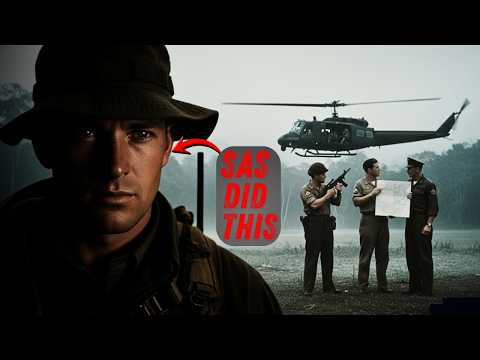
When US officers tried to replicate the effect, they failed. They deployed drones, set up observation posts, increased patrol frequency. The enemy adapted within days, routing around the new patterns, testing the edges of American surveillance. But with the Australians, the enemy never seemed to adapt. Because the Australians weren’t following a pattern—they were following the enemy’s own habits, and then quietly disrupting them at the margins. It was a form of warfare that required patience and a willingness to operate without visible results for weeks on end. American commanders, under pressure from above, couldn’t afford that kind of patience.
The breaking point came during a joint planning session for a major operation in a contested district. US planners had spent weeks developing a phased approach: clear the main road, establish a forward base, push patrols into the surrounding villages. The Australians, asked for their input, offered a single sentence. “We’ll go in first, and you can follow when the enemy stops moving.” The room went silent. It was not a boast—it was a statement of method. The Australians would infiltrate the district weeks before the main operation, living in the shadows, observing, and subtly shaping enemy behavior. By the time the American force arrived, the enemy would be hesitant, unsure, and disorganized. But the Americans would have no way to prove it. The operation would look like a routine clearance, and the Australians would be invisible.
That was the moment the US commander realized the true nature of the problem. The Australians weren’t just effective—they were making the Americans look like bystanders in their own war. Every success the SASR achieved without visible action was a silent indictment of the American way of war. And in the corridors of power, where perception mattered as much as reality, that was unacceptable.
The joint planning session ended without agreement. The American commander, a decorated veteran of three theaters, sat in his tent long after the others had filed out, staring at a map he no longer trusted. Every line on it felt like a lie he had been told by his own institution. He had spent his career learning to control the battlefield, and here was an ally proving that control was an illusion dressed up in briefing slides.
What followed was not a confrontation but a quiet withdrawal. The joint operation proceeded, but the Australians were folded in as a peripheral element—present, but structurally sidelined. Their patrols would go in, as promised, but no American officer would be told where or when. The liaison channel was reduced to a single daily update, stripped of detail. It was bureaucracy as a form of self-protection.
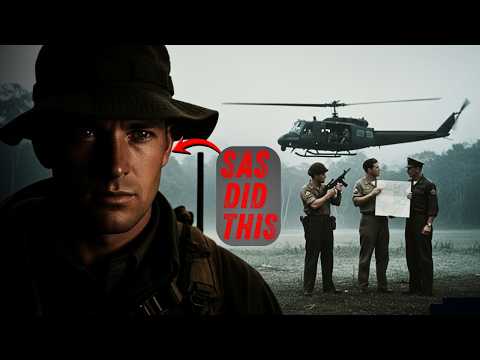
The operation itself unfolded exactly as the Australians had predicted. The main road was cleared with minimal resistance. The forward base was established on schedule. But the villages beyond it were strange—too quiet, too still. Enemy fighters who should have contested every step simply weren’t there. They had melted away weeks earlier, long before the first American vehicle crossed the line of departure. The official report credited surprise and overwhelming force. The officers who had been in the planning room knew better.
Among the junior ranks, the truth traveled faster than any classified cable. Soldiers talked. A corporal who had shared a cigarette with an SASR operator near the perimeter passed along a single sentence that spread through the battalion like a rumor: “They were here before we were. They’re still here now. You just won’t see them.” It was the kind of thing that got repeated in whispers, half-believed, and impossible to forget.
The senior leadership’s response was predictable. New guidance was issued—informal, unwritten, but unmistakable. Australian methods were not to be discussed in after-action reviews. Their contributions were to be acknowledged in the broadest possible terms. Any officer tempted to study their approach was gently redirected toward more conventional doctrine. The system had decided that the lesson was too dangerous to teach.
But the enemy had already learned it. Intelligence reports from the following weeks showed a pattern that made analysts uneasy. Opposition units were relocating away from areas where SASR patrols had last been active—not retreating in panic, but repositioning with something that looked almost like respect. They were treating certain ground as off-limits, not because it was defended, but because it was watched. The Australians had become a rumor in the enemy’s own ranks, and rumors are harder to kill than soldiers.
One intercepted transmission, translated and circulated at the highest levels, captured it plainly. An enemy field commander, frustrated by the sudden disappearance of his supply line, was heard demanding answers from a subordinate. The response was short: “The quiet ones are back. We move at night or not at all.” There was no mention of aircraft, artillery, or armored columns. Just the quiet ones. The Americans had spent years trying to become the thing the enemy feared most, and an ally had done it without firing a shot.
For the Pentagon, this was the final insult. The enemy had named their fear, and the name belonged to someone else. Every future operation would be measured against a standard the US military could not officially acknowledge. The Australians had not just changed the battlefield—they had changed the story, and the story was the one thing the institution could not control.
The final chapter was not written in the field but in the archives. When the deployment ended, the American officers who had watched the Australians most closely filed their reports with a careful kind of silence—the same silence they had once feared. They described effects without methods, outcomes without causes. The institutional machine absorbed the anomaly and smoothed it over, the way a body heals around a foreign object.
Years later, a young analyst reviewing old intelligence found a cluster of empty sectors on a declassified map. No battles, no strikes, no casualties—just a quiet where the enemy had chosen not to be. She traced the timeline back and found the same unit name, over and over, attached to nothing. “This doesn’t make sense,” she said to her supervisor. He didn’t look up. “It doesn’t have to. It’s already been decided.”
The Australians went home. No parades, no documentaries, no doctrine named after them. The system had done what systems do—it survived. But in the whispered stories of soldiers who had been there, in the enemy’s own fear of the quiet ones, the truth lived on, unacknowledged and unkillable.
The war that NATO could not admit existed had been fought, and won, in the spaces between the rules. And the most powerful military in the world had learned a lesson it would spend decades pretending it had never been taught.
What do you think—should the most effective methods be the ones we can never officially admit to using?






