In the sweltering heat of 1966, as the Vietnam War consumed Southeast Asia, a quiet but ferocious battle was brewing—not between soldiers and insurgents, but between allies. The United States, with its overwhelming firepower and relentless war of attrition, demanded that Australia fold its forces into the American war machine. But the Australians, battle-hardened from Malaya and Borneo, saw a different path. They refused to be swallowed whole.
“We will fight, but we will do it our way,” the Australian commanders insisted, defying the Pentagon’s push for total integration. This is the story of how a small nation stood up to a superpower and carved out its own sovereign kingdom of war in Phuoc Tuy province—a decision that would save lives, preserve villages, and redefine what it means to be an effective ally.
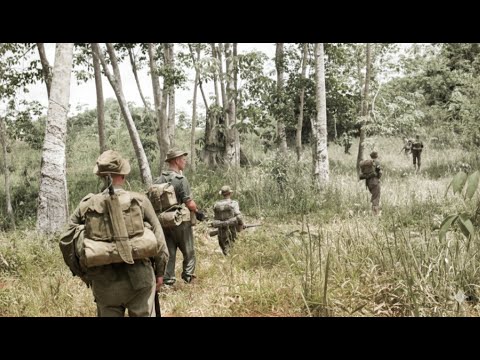
The tension was palpable. In Saigon, General William Westmoreland’s MACV command envisioned a unified allied force, every battalion a cog in the American war machine. But in Canberra and on the ground, Australian officers like Brigadier Oliver David Jackson saw the American strategy of search and destroy as a trap—loud, destructive, and ultimately counterproductive. They had learned in Malaya that winning hearts and minds required stealth, patience, and restraint, not body counts and B-52 strikes.
“If we become a mere link in the American chain, we will lose the very skills that make us effective,” they argued. And so, Australia dug in its heels, demanding operational autonomy. The result was the 1st Australian Task Force (1 ATF)—a self-contained mini-army with its own artillery, armor, engineers, and air support, answerable only to Australian commanders. It was a bold gambit, a declaration of military sovereignty that would test the alliance and ultimately prove that a middle power could outfight a superpower at its own game.
By mid-1966, the Australians had established their base at Nui Dat, a secluded hill surrounded by rubber plantations. Unlike the sprawling American super-bases like Bien Hoa, Nui Dat was a fortress of difference—austere, hidden, and designed for patrol-based defense. The Australians cleared a 4,000-meter exclusion zone, relocating villagers to prevent civilian casualties, and relied on silent foot patrols rather than massive artillery barrages. They had created a sanctuary where the war would be fought on their terms.
But the true test came in the villages and rice paddies of Phuoc Tuy. While American units measured success in enemy body counts, the Australians focused on area denial and population security. They practiced the ‘ink blot’ strategy—slowly expanding secure zones, building trust with locals, and providing permanent protection. They had the courage to say ‘no’ to American air strikes and artillery, choosing surgical cordon-and-search operations over indiscriminate firepower. This restraint infuriated some US officers, but it earned the Australians the trust of the Vietnamese people and the respect of their enemies.
As 1966 drew to a close, the Australians had proven their point: a small, disciplined force with tactical autonomy could achieve stability that massive firepower could not. But the fight was far from over. The Viet Cong were watching, adapting, and preparing to test the Australians’ resolve. And in the dense jungle of Phuoc Tuy, a battle was brewing that would cement the legend of the Diggers and their defiant independence.
The first major test came not in the villages, but in the rubber trees themselves. In August 1966, a Viet Cong force, emboldened by their success against the Americans elsewhere, attempted to overrun Nui Dat with a sustained mortar barrage. It was a probing attack, designed to test the Australians’ response time and their nerve. The rounds came screaming out of the darkness, exploding among the tents and hoochies, shredding canvas and sending shrapnel tearing through the night air.
But the Australians did not panic. There was no chaotic scramble for cover, no wild spraying of fire into the dark. Instead, the Diggers moved with a cold, practiced discipline. The mortar crews at Nui Dat responded within minutes, their counter-battery fire crashing into the suspected launch sites. The enemy, expecting the usual American response of massive, indiscriminate retaliation, found themselves facing something far more precise—and far more dangerous.
“They don’t fight like the Americans,” a captured Viet Cong officer would later admit. “They are quiet. They are patient. And they never waste a bullet.”
The attack was repelled, but it was the aftermath that revealed the true genius of the Australian approach. While American commanders would have declared the area a free-fire zone and leveled the surrounding hamlets in retaliation, the Australians did the opposite. They sent patrols into the villages, not to punish, but to reassure. They sat with the village elders, drank tea, and asked what the people needed. The message was unmistakable: the Australians were there to stay, and they were there to protect.
This philosophy was put to its most brutal test just weeks later, in the now-legendary Battle of Long Tan. On August 18, 1966, a company of 108 Australian soldiers—D Company, 6th Battalion, Royal Australian Regiment—was patrolling a rubber plantation when they stumbled into a force of over 2,000 Viet Cong and North Vietnamese regulars. They were outnumbered twenty to one, surrounded, and cut off by torrential monsoon rain.
The Americans, monitoring the radio traffic, offered immediate support—B-52 strikes, heavy artillery, anything to break the encirclement. But the Australian commander on the ground, Major Harry Smith, refused. “We are too close to the enemy,” he radioed back. “Your bombs would kill us before they kill them.” It was a decision that would have been unthinkable in the American command structure, where firepower was the default answer to every crisis.
Instead, the Australians relied on their own integrated assets. RAAF Huey gunships, flown by pilots who knew the terrain and the men on the ground, swooped through the rain at treetop level, strafing the enemy with surgical precision. Armored personnel carriers from the 3rd Cavalry Regiment smashed through the jungle, their machine guns cutting a path through the Viet Cong ranks. And a daring ammunition resupply drop, flown through a thunderstorm at near-zero visibility, kept D Company in the fight.
By nightfall, the battle was over. Eighteen Australians lay dead, but the enemy had lost over 245 men. It was a victory born not of overwhelming firepower, but of discipline, coordination, and the refusal to abandon their own tactics under pressure. The Battle of Long Tan became the defining moment of the Australian experience in Vietnam—proof that their independent, patient approach could withstand even the most ferocious assault.
But the Viet Cong were learning. They began to avoid the Australians, preferring to target the more predictable American units. The insurgents knew that the Diggers would not be baited into reckless pursuit, that they would not abandon their villages for the sake of a body count. In the shadowy world of Phuoc Tuy, the Australians had become the hunters, and the enemy was learning to fear the silence of the rubber trees.
Yet the enemy’s adaptation brought a new and insidious challenge. Frustrated by their inability to draw the Australians into a decisive, costly battle, Viet Cong commanders shifted their focus to the vulnerable arteries of Phuoc Tuy: the roads and the district outposts that connected the villages to the provincial capital. Mines and ambushes became the weapon of choice, not against soldiers, but against the symbols of progress. A lone Land Rover carrying a district chief, a convoy of rice trucks bound for Baria, a small Popular Force outpost guarding a bridge—these became the soft targets that fed the insurgency’s narrative of unstoppable momentum.
The Australians responded with a characteristic blend of patience and precision. They refused to be provoked into massive retaliatory sweeps that would only alienate the very population they were protecting. Instead, they expanded their ‘ink blot’ with a new layer of sophistication: the development of the Phuoc Tuy provincial reconnaissance units, small, elite teams of Vietnamese scouts trained and led by Australian advisors. These men, drawn from the local population, knew every trail, every hidden bunker, and every face in the villages. They became the eyes and ears of the task force, moving silently through the contested zones where a conventional patrol would be instantly detected.
The most significant of these units was the 1st Australian Civil Affairs Unit, a small band of engineers, medics, and linguists whose weapons were not rifles but wells, schoolbooks, and medical kits. They understood that the war for Phuoc Tuy would not be won by killing the enemy’s soldiers, but by winning the allegiance of the farmers who fed them. In villages like Hoa Long and Long Dien, the civil affairs teams dug deep water wells, built classrooms, and ran weekly medical clinics that treated everything from malaria to toothaches. The Viet Cong, who had long relied on the villagers’ fear and silence, found their grip slipping.
But the enemy was not passive. In late 1966, a Viet Cong main force battalion, the 275th Regiment, began infiltrating back into Phuoc Tuy from its sanctuaries across the provincial border. Their mission was to shatter the ink blots, to demonstrate that the Australians could not protect the people. They targeted a village that had recently hosted an Australian medical clinic, executing the village chief and burning the schoolhouse in a night of calculated terror. It was a direct challenge, a gauntlet thrown down in blood and ash.
The Australian response was swift, but not reckless. Brigadier Jackson, commanding 1 ATF, resisted the urge to flood the province with troops. Instead, he deployed a single company of infantry, supported by a troop of M113 armored personnel carriers, to establish a new fire support base deep in the contested area. The base, named Coral, was designed not as a permanent fortress, but as a temporary spike, a projection of power that would allow the Australians to dominate the ground without becoming a static target.
The Viet Cong, recognizing the threat, prepared to overrun the new base. They massed two battalions for a human wave assault, confident that the Australians, isolated and outnumbered, would crumble. But they had not reckoned with the discipline of the Diggers or the precision of their integrated firepower. When the attack came, it was met not with panic, but with a wall of coordinated fire from artillery, mortars, and the armored carriers that had been positioned in a lethal arc around the perimeter. The battle raged through the night, but by dawn, the enemy was broken, leaving over a hundred bodies in the wire.
The victory at Fire Support Base Coral was not just a tactical triumph; it was a strategic vindication. It proved that the Australian model—austere, independent, and integrated—could withstand the enemy’s most ferocious assaults. More importantly, it sent a clear message to the villagers of Phuoc Tuy: the Australians would not abandon them, and they would not bring destruction to their doorsteps in the name of retaliation.
As 1967 dawned, the province was transformed. The roads were open, the markets were bustling, and the Viet Cong’s shadow government was in retreat. But the Australians knew that the war was far from over. The enemy was patient, and the political will in Canberra was beginning to waver. The legend of Phuoc Tuy was being written, but its final chapters would be tested not just by the Viet Cong, but by the shifting tides of a war that was becoming increasingly unpopular back home.
The political tide turned with the Tet Offensive in early 1968. Though the Australians repelled every attack in Phuoc Tuy, the psychological shock rippled all the way to Canberra. “We won every battle in that province,” one Digger later recalled, “but the war was being lost in the living rooms of Australia.”
By 1970, the withdrawal began. The ink blots they had so patiently expanded were handed over to South Vietnamese forces, who lacked the same discipline and restraint. Villages that had flourished under Australian protection soon fell back into fear.
Yet the legend endured. Military academies from West Point to Sandhurst still study Phuoc Tuy as the gold standard of counterinsurgency. The Australians had proven that a small nation with the courage to say ‘no’ could outfight a superpower at its own game.
They left not with victory, but with something rarer—the respect of their enemies and the gratitude of a people they refused to abandon.
Was Australia’s defiant independence in Vietnam a masterstroke of principle, or a missed opportunity to reshape the entire American war effort?






