The frozen air hung heavy with dread as the men of Easy Company crouched in their foxholes, the silence of the snowy Belgian morning broken only by the distant rumble of German tanks. They had survived the siege of Bastogne, but now, on January 14, 1945, they faced a new nightmare: a frontal assault across 200 meters of open, snow-covered farmland toward a village bristling with enemy firepower. “I could not believe that they were going to give us some replacements and put us on the attack,” Staff Sergeant John Martin recalled. The company was understrength, exhausted, and led by a commander many feared would crack under pressure.
As the first rays of dawn painted the sky, the men of Easy Company lined up at the edge of the Bois Jacques, their breath misting in the frigid air. They were about to step into history—and into a hail of bullets.
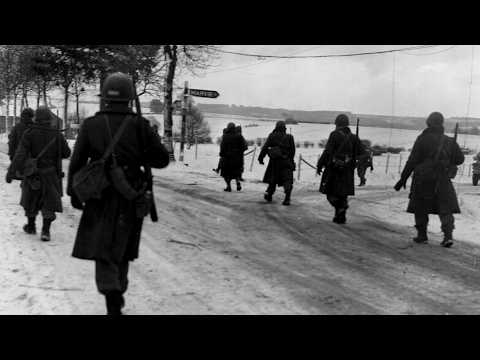
The plan was simple: a three-pratoon assault to seize the village of Foy, a vital crossroads on the road to Bastogne. But simplicity on paper rarely survives the chaos of combat. First Lieutenant Norman Dike, the company commander, was a veteran, yet whispers of doubt followed him. “Lieutenant Dike is going to get a lot of E Company men killed,” First Sergeant Carwood Lipton had warned Captain Richard Winters. Winters, now battalion executive officer, could only watch from the treeline as the attack unfolded.
At 8:30 a.m., the mortars thumped, signaling the start. Third Platoon launched a diversionary assault on the right, drawing German attention, while First and Second Platoons charged across the frozen fields. The snow slowed their advance, and German snipers quickly found their range. “The company was a bunch of sitting ducks out there in the snow,” Winters later wrote.
Then, disaster struck. Lieutenant Dike, hit in the shoulder, lost contact with First Platoon and froze behind a haystack, unable to issue orders. Men began to fall, pinned down by machine-gun fire from the village. “He fell apart,” Lipton said. The assault stalled, and Easy Company was on the brink of annihilation.
From the treeline, Winters saw the chaos. His first instinct was to charge in himself, but he knew he was needed in command. Scanning the faces around him, he spotted First Lieutenant Ronald Speirs—a man with a reputation for ruthlessness and bravery. “Speirs, take over that company, relieve Dyke, and take that attack on in,” Winters ordered.
Speirs didn’t hesitate. He sprinted through the snow, bullets kicking up around him, and reached the pinned-down men. After relieving Dike, he rallied the company and ordered I Company to support the assault. Then, in a move that would become legend, Speirs ran across open ground under heavy fire to coordinate with I Company, preventing friendly fire and reigniting the attack.
Meanwhile, Third Platoon was locked in a deadly duel with a German sniper. Staff Sergeant Darrell “Shifty” Powers, a marksman from rural Virginia, took aim. With Lipton drawing the sniper’s fire, Shifty squeezed the trigger. “Don’t miss, Shifty,” Lipton had said. The sniper fell, shot between the eyes. The platoon surged forward.
The Panzer IV at the crossroads remained, but a wounded soldier from Third Platoon limped forward with a bazooka and fired, disabling the tank. The crew bailed out, and the German defense crumbled. After three hours of brutal fighting, Foy was taken. Easy Company had suffered 82 casualties, including 15 dead, but they had prevailed.
As the men secured the village, they could not know that this was just one more chapter in their extraordinary journey—a journey that would end with them occupying Hitler’s mountain retreat. But for now, they were simply grateful to be alive, and to have each other.
The victory at Foy, however, did not bring rest. Even as the last German prisoners were marched to the rear, orders crackled over the radio: Noville lay ahead, and the push toward the German border could not wait. Easy Company, now barely a shadow of its former strength, was to lead the advance once more.
For the replacements who had survived their baptism of fire, the reality of war was now etched into their bones. They had watched men fall in the snow, heard the screams of the wounded, and felt the cold indifference of bullets. “You never forget the sound of a man calling for his mother,” one private later said. “It stays with you.”
Lieutenant Speirs, now firmly in command, moved among the men, his presence a strange comfort. He offered no speeches, no grand gestures—just a nod here, a quiet word there. But his calm under fire had already become the stuff of legend. “He was the kind of leader who made you believe you might actually survive,” Sergeant Lipton recalled.
As the company regrouped at the edge of Foy, Captain Winters arrived from the treeline. He walked the line, stopping to speak with the wounded and the exhausted. When he reached Speirs, the two men exchanged a look that needed no words. Winters later wrote: “Speirs had done what needed to be done. He saved the company.”
But there was no time for celebration. The 506th was ordered to continue the attack toward Noville, a village perched on higher ground that offered a commanding view of the surrounding countryside. The Germans had fortified it heavily, and the men knew the fighting would be brutal.
That night, the men of Easy Company huddled in abandoned farm buildings, their sleep broken by the distant thunder of artillery. Some wrote letters home by candlelight, unsure if they would ever be delivered. Others simply stared at the ceiling, replaying the day’s horrors in their minds.
Shifty Powers, however, found a moment of quiet. He sat by a window, cleaning his rifle, his mind drifting back to the shot he had taken in Foy. “I just did what I was trained to do,” he later said. “But I still see that man’s face sometimes.”
The next morning, the company moved out toward Noville, their boots crunching through the frozen snow. The road ahead was lined with wrecked vehicles and the bodies of fallen soldiers—both American and German. The sight was a grim reminder of the cost of the advance.
As they approached the village, German artillery opened up, sending shells screaming overhead. The men dove for cover, their hearts pounding. “This is it,” someone muttered. “This is where we die.”
But Easy Company had faced worse odds before. And they were still standing.
The shelling stopped as abruptly as it had begun, leaving a ringing silence that seemed louder than the explosions. Speirs was already on his feet, moving down the line, his voice cutting through the smoke. “First Platoon, on me. We’re taking that ridge before they can regroup.” The men rose from the frozen dirt, their faces pale but determined, and began the slow, agonizing push toward the high ground outside Noville.
The ridge was a patchwork of snow-covered shell craters and shattered pine trees, each one a potential grave. German machine-gun fire swept the slope in long, methodical bursts, forcing the Americans to crawl forward inch by inch. Sergeant Lipton, his face streaked with dirt and frost, crawled beside a young replacement who was shaking so violently he could barely hold his rifle. “Stay low, keep moving, and don’t stop for anything,” Lipton said, his voice steady. “You stop, you die.”
To the left, Shifty Powers had found a shallow depression behind a fallen log and was methodically picking off German gunners one by one. Each shot was deliberate, unhurried, as if he were back in the Virginia woods hunting deer. “Got another one,” he murmured to himself, working the bolt of his rifle. The machine-gun fire began to slacken, and the men of First Platoon surged forward.
What they found at the crest of the ridge stopped them cold. A German command post, hastily abandoned, with maps still spread across a wooden table and a radio crackling with static. But it was what lay beyond that made the men stare in silence. The valley below opened up toward Noville, and the village itself was burning—a dozen fires sending columns of black smoke into the gray sky. And moving through the streets, like ants fleeing a flooded nest, were German soldiers. Hundreds of them.
Speirs grabbed the radio handset and called back to battalion. “We’ve got a clear view of Noville. Enemy is withdrawing in force. Request permission to pursue.” The reply came back crackling and faint: “Negative. Hold the ridge. Artillery is coming.” Speirs slammed the handset down, his jaw tight. The men around him could see the frustration in his eyes—the same frustration that had driven him across the open ground at Foy.
But orders were orders. The company dug in along the ridge, scraping shallow foxholes into the frozen earth, and waited. The artillery came twenty minutes later, a thundering barrage that walked across Noville in a series of devastating explosions. Through binoculars, Winters watched from the rear as the village seemed to dissolve into fire and dust. “They’re getting pounded,” he said quietly to his radio operator. “But they’re not breaking.”
By late afternoon, the German withdrawal had become a rout. The road to Noville lay open, and the 506th was ordered to advance. Easy Company moved down from the ridge, passing the burning remnants of German trucks and the bodies of soldiers who had waited too long to flee. The men walked in silence, too tired to speak, too numb to feel anything but the cold and the weight of their rifles.
As they entered Noville, the first thing they saw was a church, its steeple shattered by shellfire, the bell hanging loose and silent. Inside, they found wounded German soldiers, abandoned by their comrades, lying on the pews. Some were barely alive. “Get the medics,” Speirs ordered. “We don’t leave anyone to die like this.” The men obeyed, though some grumbled. They had seen too much to feel much pity.
It was there, in the ruined church of Noville, that the reality of the war finally caught up with them. The men of Easy Company sat among the wounded and the dead, passing around a single canteen of water, and for the first time in weeks, no one gave an order. They simply sat, breathing, alive, waiting for whatever came next.
The silence in the church was broken only by the moan of a wounded German soldier and the distant crackle of flames. Lipton found a corner and slid down the wall, his eyes closed, his hands trembling for the first time since Bastogne. “We held the line,” he whispered to no one in particular. “We actually held it.” Around him, men nodded, too exhausted to speak.
Outside, Winters stood with Speirs, watching the last of the German columns disappear into the fog. “They’re finished,” Speirs said flatly. “The war’s not over, but they are.” Winters didn’t reply. He was thinking of the men they had lost—the ones who would never see the end of this winter, let alone the end of the war.
That night, the company received orders to rest and refit. Replacements would arrive within days. The men of Easy Company slept in the ruins of Noville, wrapped in blankets and greatcoats, the frozen ground their bed. Some dreamed of home. Others dreamed of nothing at all.
In the morning, Shifty Powers sat on a broken wall, watching the sun rise over the Ardennes. Lipton joined him, offering a cup of lukewarm coffee. “You ever think about what comes after?” Shifty asked. Lipton considered the question for a long moment. “I think about going home,” he said. “I think about not hearing artillery anymore.” Shifty nodded slowly. “Yeah,” he said. “That sounds good.”
They didn’t know then that they would push on to the Rhine, to Berchtesgaden, to the Eagle’s Nest. They didn’t know that their story would one day be told in books and on screens, that their names would become legend. All they knew was that they were alive, and that they had each other.
And sometimes, in the quiet moments between battles, that was enough.
What do you think—was Speirs’ run across the battlefield the true turning point of the assault on Foy, or was it Shifty’s single, perfect shot? Let us know in the comments below.






