The night of April 22, 1951, erupted in fire. Artillery shells screamed across the Imjin River, tearing into the Turkish brigade’s positions with devastating precision. Within hours, the entire front of the US 3rd Infantry Division was under relentless assault. But for the 900 Filipino soldiers of the 10th Battalion Combat Team, the worst was yet to come.
They stood alone on a crucial hill, watching as American and Turkish units fell back under the overwhelming Chinese advance. “The Chinese attacked us in waves all night,” recalled Corporal Luminoso Cruz. “My buddy and I just kept firing and firing our rifles.” The 10th BCT was about to face an entire Chinese division—at least 10,000 troops, with some estimates claiming 40,000. The odds were suicidal.
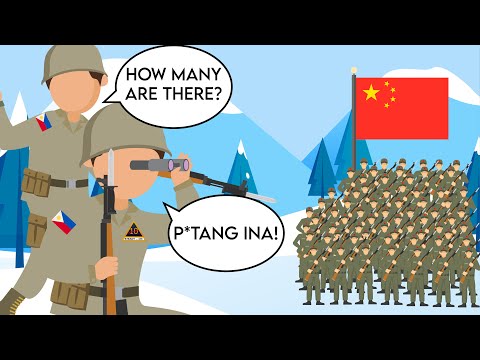
But retreat was not an option. These were not hardened commandos; they were drivers, medics, clerks, cooks, and even the unit chaplain—ordinary Filipinos who picked up rifles and refused to yield. As the Chinese onslaught intensified, the battalion’s position eroded, and most of the unit received orders to fall back to a secondary line. Most, but not all.
Captain Conrado Yap, commander of the tank company, made a decision that would etch his name into history. “He personally led a furious counter-attack to regain the hill position and rescue the trapped unit,” his Medal of Valor citation would later read. Yap and his men drove toward a hill overrun by the enemy, determined to save their comrades or die trying. Under a hail of enemy fire, Yap spotted a stricken soldier on the slope and started toward him—only to be mortally wounded by a burst of enemy fire.
Inspired by his sacrifice, the Filipinos fought with a ferocity that stunned the Chinese division. For hours, they held their ground, inflicting heavy casualties and buying precious time for the US 3rd Infantry Division to retreat safely. By dawn, the 10th BCT had scarcely given any ground. The Chinese offensive, once a tidal wave, had broken against a rock of Filipino resolve.
The battle of Yultong was over, but its legacy was just beginning. The 10th BCT had suffered 56 casualties, but they had killed over 500 Chinese troops—and proved that courage, not numbers, often decides the fate of nations.
Yet the story of Yultong does not end with the dawn of April 23. As the sun rose over the scarred hills, the men of the 10th BCT found themselves staring at a battlefield littered with the consequences of their defiance. Ammunition was running dangerously low. The wounded cried out for medics who were themselves bloodied and exhausted. And the Chinese, though bloodied, had not vanished—they were regrouping, probing for any sign of weakness.
Major Maximo Young, who had fought through the night, later reflected on what he had witnessed. “The battle of Yuldong was the greatest Filipino victory in the Korean War,” he would say. But in the immediate aftermath, victory looked less like triumph and more like survival. The 10th BCT had held, but holding was only half the fight.
The battalion’s commander, Colonel Dionisio Ojeda, understood the danger. The Chinese division had been mauled, but it still outnumbered his men ten to one. If the enemy realized how thin the Filipino line had become, they could simply overwhelm it with a second push. Ojeda needed to buy time—and he needed to make the Chinese believe the Filipinos were stronger than they appeared.
He ordered the tank company, now leaderless after Yap’s death, to make a show of force. The remaining tanks rumbled along the ridge line, engines roaring, their guns pointed menacingly toward the Chinese positions. It was a bluff, but a convincing one. The Chinese, still reeling from the night’s carnage, hesitated.
That hesitation was all the Filipinos needed. Under the cover of the tanks’ display, the 10th BCT began a disciplined withdrawal to join the rest of the US 3rd Infantry Division. They carried their wounded, recovered their dead, and left behind nothing the enemy could use. The Chinese division, battered and bewildered, did not pursue.
But the Chinese had not given up on their spring offensive. Far from it. The 10th BCT’s stand at Yultong had delayed one division, but the broader communist push continued to rage across the peninsula. The Filipino battalion, though bloodied, was ordered to regroup and prepare for what came next.
Back at the command post, a young lieutenant named Rafael Martinez scribbled in his journal by candlelight. “We came here as soldiers of a small nation,” he wrote. “Tonight, we fought like giants. But tomorrow, the war will ask for more.” He closed the journal and looked at the men around him—cooks, clerks, drivers, all of them now hardened by fire.
The Battle of Yultong was over. But the Korean War was far from finished, and the 10th Battalion Combat Team would soon discover that their greatest test was still ahead.
The days that followed Yultong were a blur of movement and exhaustion. The 10th BCT marched south with the rest of the US 3rd Infantry Division, their boots heavy with mud and their minds heavier with the faces of the men they had left behind. Captain Yap’s body was carried with them, draped in a Filipino flag that had been hastily sewn from a parachute and dyed with whatever the quartermaster could find.
Colonel Ojeda walked among his men each night, saying little but seeing everything. He noted the empty eyes of the cooks who had become riflemen, the way the medics now carried their bandages and their ammunition with equal care. “We are no longer the same battalion that arrived in Korea,” he told his officers one evening. “We are something else now. Something the enemy will remember.”
The Chinese spring offensive, however, had not finished with them. The PVA’s push southward was relentless, and the United Nations Command was scrambling to establish a new defensive line. The 10th BCT was ordered to take up positions near the town of Yeoncheon, a critical crossroads that the Chinese needed to control if they were to break through to Seoul.
Martinez, the young lieutenant, wrote again in his journal. “They are sending us back into the fire. But we are Filipinos. We do not break.” He underlined the last three words twice, as if to convince himself as much as anyone else.
On the morning of April 25, the battalion dug in along a series of low ridges overlooking the Yeoncheon valley. The ground was rocky and unforgiving, and the men worked in silence, their shovels striking stone with dull, rhythmic clinks. They had learned at Yultong that preparation was the difference between life and death.
The Chinese came at them again, but this time the 10th BCT was ready. The tanks, now commanded by Yap’s second-in-command, a stoic sergeant named Villanueva, were positioned to cover the most likely avenues of attack. The cooks and clerks, no longer novices, held the flanks with grim determination.
When the first wave of Chinese infantry emerged from the treeline, the Filipinos did not wait for orders. They opened fire in unison, their rifles cracking in a deadly chorus. The Chinese faltered, regrouped, and came again. And again. Each time, the Filipino line held.
But the enemy had learned from Yultong as well. This time, they targeted the tanks, sending forward teams of sappers with satchel charges. Villanueva saw them coming and swung his turret toward the threat. “Fire!” he shouted, and the tank’s main gun roared, scattering the sappers before they could reach their targets.
Still, the Chinese pressed on, their numbers seemingly endless. By midday, the 10th BCT had been pushed back to its secondary positions, and ammunition was running critically low. Ojeda radioed for support, but the American lines were stretched thin, and no reinforcements were available.
It was then that the battalion’s chaplain, Father Alvarez, stepped forward. He had been moving among the wounded all morning, offering prayers and words of comfort. Now he picked up a rifle from a fallen soldier and took his place in the line. “The Lord did not bring us this far to abandon us now,” he said quietly. The men around him stared, then nodded. If the chaplain was willing to fight, none of them had any excuse.
The afternoon wore on, and the Chinese attacks grew more desperate. But so did the Filipinos. They fought with the same ferocity that had saved them at Yultong, and by late afternoon, the enemy’s resolve began to crack. The Chinese division, already battered, could not sustain the assault.
As dusk fell, the sound of gunfire faded, replaced by the distant rumble of Chinese units withdrawing to the north. The 10th BCT had held again. But the cost had been high—more wounded, more dead, and a growing sense that the war would demand everything they had.
That night, Major Young gathered the survivors around him. “We have done what was asked of us and more,” he said. “But the war is not over. We must be ready for whatever comes next.” The men nodded, too exhausted to speak. They knew he was right. The spring offensive was still raging, and the 10th BCT would be called upon again.
The weeks that followed blurred into a single, unbroken rhythm of patrols, skirmishes, and sleepless nights. The 10th BCT was no longer a novelty to the Chinese commanders—it was a name they had learned to respect and, perhaps, to fear. But respect did not stop the bullets, and fear did not heal the wounded.
By late May, the spring offensive had spent itself. The Chinese, bled white by a hundred small stands like Yultong and Yeoncheon, pulled back across the 38th parallel. The war would grind on for two more years, but the great communist push to conquer the peninsula had failed. And in that failure, a small nation’s soldiers had played a part far larger than their numbers.
When the 10th BCT finally received orders to rotate home in 1952, the men who marched to the transport ships were not the same men who had landed at Pusan. They walked taller. They had gone to Korea as an unknown contingent from a struggling young republic. They were leaving as legends.
Major Young, who had fought at Yultong and lived to tell of it, later summed up what the battalion had meant. “We were not many, but we were Filipinos. And when the world asked who would stand, we answered.” His words would echo through the decades, carved into memorials and repeated in classrooms across the islands.
Captain Conrado Yap never came home. But his name became a beacon—a Medal of Valor recipient whose charge up that hill at Yultong became the standard against which Filipino courage would be measured for generations. The tank company he led would carry his memory into every battle that followed.
General Douglas MacArthur, who had watched the Korean War unfold from Tokyo, was said to have remarked, “Give me ten thousand Filipino soldiers and I will conquer the world.” Whether he spoke those words or not, the men of the 10th BCT had proven their truth. They had faced overwhelming odds and held. They had lost friends and kept fighting. They had shown that a nation’s spirit is not measured in divisions, but in the hearts of those who refuse to break.
The Battle of Yultong is still studied in military academies today—a textbook example of how a smaller force, well-led and fiercely determined, can shatter a larger enemy’s will. But for the Filipino people, it is something more. It is a reminder that courage is not the absence of fear, but the decision to stand anyway.
So now, as you read these words, consider the men who held that hill. Cooks and clerks. Chaplains and drivers. Ordinary Filipinos who became extraordinary in the fire of battle. Their story asks a question of every generation that follows: When the moment comes, will you stand?
What would you have done on that hill at Yultong—and does the courage of the 10th BCT inspire you to face your own battles today? Share your thoughts below.






