The darkness was absolute. Not a single light broke the black veil of the night, and the Allied sailors patrolling the waters around Savo Island had no idea they were being stalked by an invisible predator. Vice Admiral Gunichi Mikawa’s fleet had slipped through the Allied perimeter undetected, and the stage was set for one of the most devastating confrontations in US Navy history.
As the Japanese lookouts spotted the American ships from miles away, the Allies remained blissfully unaware. The first sign of danger came too late—a blinding searchlight, a thunderous roar of guns, and then chaos. In minutes, the sea would be lit by the fiery wrecks of Allied cruisers, and the night would echo with the screams of sailors fighting for their lives.
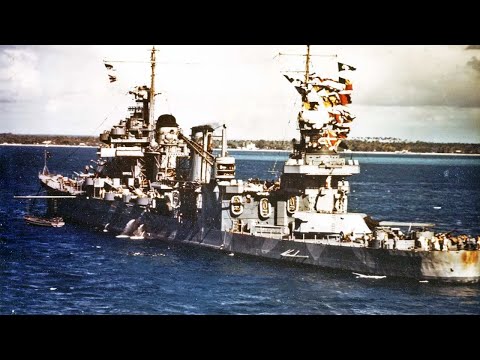
The Battle of Savo Island was not just a clash of steel and fire; it was a collision of two navies with vastly different doctrines. The Japanese had honed their night-fighting skills for decades, turning darkness into their ally. Their lookouts, blessed with exceptional night vision and trained to shield their eyes from gun flashes, could spot enemy ships where others saw only mist. Meanwhile, the Allies, exhausted and overconfident, relied on primitive radar and faulty communication.
Just days after the victory at Midway, the US Navy was riding high, but the Pacific Fleet was still weak. The invasion of Guadalcanal, code-named Operation Watchtower, was hastily planned. Admiral Ernest J. King had pushed for the offensive, but the Allies underestimated the Japanese response. When news of the landing reached Rabaul, Mikawa’s fleet was already racing toward the Solomons, determined to crush the amphibious operation before it could take root.
Mikawa’s plan was audacious: a night ambush. His fleet of five heavy cruisers, two light cruisers, and one destroyer slipped through the Slot, a treacherous stretch of water, undetected by Allied reconnaissance. Australian aircraft spotted them but dismissed the sighting as inconsequential. The Allies were lulled into a false sense of security, their commanders confident that their air networks would provide ample warning.
But the warnings never came. On the night of August 8th, Mikawa’s ships closed in on Guadalcanal. Allied ships detected mysterious aircraft but failed to report them. Fatigue and confusion reigned. The stage was set for a massacre.
As midnight approached, the Japanese lookouts spotted USS Blue, a destroyer guarding the eastern flank. Mikawa’s fleet maneuvered to infiltrate undetected, passing within a mile of the unsuspecting ship. The Japanese then launched float planes to illuminate the battlefield. The flares cast an eerie glow over the Allied southern force, and the battle erupted.
HMS Canberra was the first to bear the brunt. Shells ripped through her decks, killing her captain and knocking out power. Despite the chaos, she miraculously avoided 11 torpedoes, but she was severely damaged. USS Chicago was next. A torpedo struck her bow, and a barrage of gunfire decimated her mast. The American sailors, blinded and taken by surprise, struggled to return fire. Chicago retreated, leaving the two remaining destroyers isolated.
Meanwhile, the Japanese fleet moved north, toward the Allied northern force. Once again, the Allies failed to identify the approaching threat. Searchlights blinded them, and a hail of fire set USS Quincy ablaze. Quincy’s gunners managed to hit the Japanese flagship, but the damage was done. Two torpedoes sealed her fate. USS Vincennes was next, her deck engulfed in flames. Two torpedo strikes forced her captain to order abandon ship. USS Astoria fought back, but her commander’s confusion led to a temporary ceasefire. By the time she resumed fire, it was too late. She was a smoldering wreck.
At 2:16 AM, the Japanese guns fell silent. Mikawa’s fleet had achieved a decisive victory. Three US heavy cruisers were sunk, and over a thousand Allied sailors perished. The Japanese suffered only 58 casualties. The Battle of Savo Island was one of the worst defeats in US Navy history.
But Mikawa’s decision to withdraw instead of attacking the defenseless transport ships would later be questioned. Had he pushed forward, he could have turned a tactical victory into a strategic triumph. Instead, the Allies maintained their lifeline to Guadalcanal, and the battle became a harsh lesson in the perils of underestimating the enemy.
The night was over, but the war in the Pacific was far from finished. The Allies would learn from their mistakes, and the Battle of Savo Island would haunt them for months to come.
The retreating Japanese cruisers cut through the black water north of Savo Island, their crews still buzzing with the adrenaline of a lopsided triumph. Mikawa stood on the bridge of his flagship, Chōkai, staring into the void he had just carved out of the American fleet. The reports were still coming in—three heavy cruisers sunk, a destroyer crippled, more than a thousand enemy sailors dead—yet his expression remained carved from stone.
He knew what his staff was whispering behind him. The transports. The eighty-odd Allied cargo ships still sitting off Guadalcanal like sheep without a shepherd. One more pass, one more hour of darkness, and the entire Watchtower operation could be strangled in its cradle. The argument was seductive, and several of his captains had urged him to turn back.
But Mikawa was a man who weighed risk the way a jeweler weighs gold. His ships were scattered across miles of ocean after the melee. Torpedo tubes stood empty, reloading them would take precious hours, and his ammunition lockers were dangerously thin. Worst of all, he had no idea where the American carriers were. If those flattops were lurking within striking distance, a daylight engagement would be suicide.
He gave the order. Withdraw.
Dawn broke over Guadalcanal to reveal a scene that would sear itself into the memory of every sailor present. The waters off Savo Island were littered with debris—overturned lifeboats, oil slicks that shimmered like rainbows, and the bodies of men who had survived the shelling only to drown in the dark. The wounded ships that remained afloat limped toward safety, their decks slick with blood and seawater.
Aboard the transport USS George F. Elliott, the men of the 1st Marine Division watched the survivors come alongside and heard the stories that would spread through the fleet like wildfire. They had landed on the beaches of Guadalcanal believing the Navy would protect them. Now they were being told the Navy had been shattered in the night.
The news hit Admiral Richmond K. Turner like a physical blow. He had ordered the transports to begin unloading at first light, but the reports of the disaster forced his hand. With the covering force gutted and no guarantee that Mikawa would not return, Turner made the agonizing decision to withdraw the carriers and transports before they could be caught in the open. The Marines ashore would have to make do with what had already been landed—roughly half their supplies, and not a single piece of heavy artillery.
On the beach, Major General Alexander Vandegrift received the news with a grim calm that belied the storm in his chest. He had argued against the rushed timeline, warned that the operation was being mounted on a shoestring. Now his men were stranded on a hostile island with limited ammunition, no air cover, and a Japanese garrison that would surely counterattack.
He looked at the jungle-covered ridges beyond the beachhead and understood the truth that would define the coming months. There would be no rescue, no quick victory. Guadalcanal would be won or lost by the men already standing on its soil.
Far to the north, Mikawa’s fleet steamed back toward Rabaul, their crews celebrating a victory that would echo through the war. But the vice admiral himself remained silent, haunted by the knowledge that he had let the transports slip away. The Americans had been given a reprieve, and men like Vandegrift were not the kind to waste one.
Within days, the first Japanese counterattack would come—a battalion of troops landed east of the American perimeter, confident that the night battle had broken the enemy’s spirit. They would discover that the Marines on Guadalcanal, though abandoned by their fleet, had no intention of surrendering the island.
The jungle swallowed them whole. Colonel Kiyonao Ichiki’s nine hundred men moved through the palm groves and elephant grass with the quiet confidence of soldiers who believed they were walking into a rout. They had been told the Americans were broken, their fleet driven from the waters, their supply lines severed. A single night assault, Ichiki assured his officers, would sweep the beachhead clean.
He was wrong.
On the eastern bank of the Ilu River—soon to be known to the Marines as Alligator Creek—Lieutenant Colonel Edwin Pollock’s men had dug in behind a sandbar and a tangle of barbed wire. They had heard the Japanese coming for hours, the rustle of movement in the darkness, the occasional glint of steel. Vandegrift had ordered the perimeter tightened, and now the Marines waited with their rifles leveled at the black wall of jungle.
At 1:30 AM on August 21st, the darkness erupted. Japanese soldiers charged across the sandbar in waves, their officers waving swords, their voices raised in a scream that would haunt the survivors for decades. The Marine machine guns opened fire, and the first wave simply dissolved—men cut down mid-stride, bodies piling up on the sandbar until the water ran red.
Ichiki refused to believe the reports. He ordered his men forward again and again, and each time the guns tore them apart. By dawn, more than seven hundred Japanese soldiers lay dead along the creek, and Colonel Ichiki, his command shattered, took his own life with a pistol. The Marines had held.
But the victory at the Tenaru did not break the siege. The Japanese still controlled the skies over the Slot, and their destroyers—the famous Tokyo Express—came screaming down the channel every few nights to land fresh troops and shell Henderson Field. The Marines learned to dread the sound of the battleship guns and the drone of bombers that came with each full moon.
Vandegrift’s men fought on a diet of captured rice and scavenged rations. Malaria and dysentery swept through the lines, and the wounded lay in muddy tents because there was no way to evacuate them. The pilots of the Cactus Air Force, flying from the captured airstrip, were down to a handful of serviceable planes and pilots who could barely stand from exhaustion.
Yet the airfield held. Every Japanese convoy that came down the Slot met the Marine wildcats and the Navy dive bombers, and every transport that tried to reinforce the island was turned into a burning wreck. The battles raged through September and into October—the Battle of Edson’s Ridge, the naval slugfest off Cape Esperance, the near-disaster of the bombardment that nearly wiped out Henderson Field.
And still the Marines held.
Admiral Yamamoto, the architect of Pearl Harbor, understood what was happening. He had warned his government that Japan could not win a long war against American industry, and now that prophecy was being written in blood on a jungle island few Americans had even heard of a year before. He committed the Combined Fleet to a decisive battle, hoping to lure the American carriers into a trap and annihilate them once and for all.
The trap would be sprung in the waters northeast of Guadalcanal, where the Santa Cruz Islands waited. And this time, the Americans would not be caught blind in the darkness.
The Battle of Santa Cruz was a brutal, seesawing brawl fought in broad daylight. Japanese torpedo bombers crippled USS Hornet, and though the Americans bloodied the enemy carriers, the exchange cost them dearly. Yet Yamamoto’s grand trap had failed; the US fleet survived, and the Imperial Navy’s trained aircrews were bleeding out with every sortie.
By November, the war’s grinding logic had turned. The night battles that once belonged to Japan now met radar-guided American guns, and the Tokyo Express convoys were shattered in Ironbottom Sound. Mikawa’s triumph at Savo Island had bought time, not victory.
On Guadalcanal, Vandegrift’s ragged Marines were finally relieved, replaced by fresh Army divisions. In February 1943, the Japanese slipped away in the night one last time—this time abandoning the island, and their dead.
Henderson Field’s planes now ranged freely over the Slot, and the long Allied road to Tokyo had begun.
But was Mikawa’s withdrawal that August night a fatal hesitation—or the only sane choice for a commander who could not see the whole board? What would you have done? Tell us your verdict in the comments.






