The French trench was empty—or so it seemed. Fourteen German soldiers had just crossed 300 meters of open ground in the dark, cut through the wire, and dropped into a communication trench in the Lorraine sector. It was 5:05 AM. The officer leading them had spent two weeks preparing for this moment, rehearsing the route until his men knew it by feel. He had even crept into no man’s land twice to place a navigation marker—a mess tin with a spoon jammed into it—inside the enemy position. Now, as they moved deeper into the French trench, grenades suddenly came from the left. What followed was a 15-minute disaster. The group scattered into the maze of identical trenches, losing all sense of direction. The officer later wrote that no one knew where they were. He found the mess tin and used it to navigate back to the wire, but four of his 14 men did not come out. One was a seasoned NCO named Klopmann. No prisoners were taken. The mission had failed completely. The officer was Ernst Jünger, and his memoir, Storm of Steel, would become one of the most detailed accounts of German warfare on the Western Front.
Jünger’s story is just one of many that reveal the brutal reality of Germany’s stormtroopers—elite units forged to break the deadlock of trench warfare. But how did these raiders come to be, and what drove them to volunteer for missions with such staggering casualty rates?
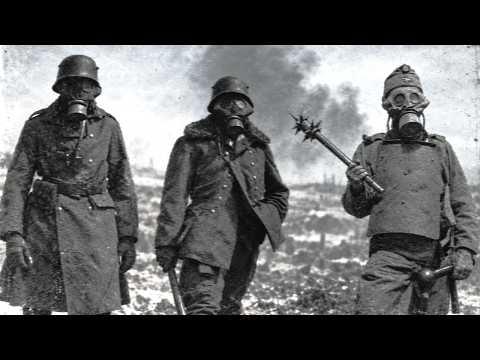
Born in 1895, Jünger was just 19 when he enlisted in Fusilier Regiment 73 at the outbreak of war in 1914. He arrived at the front that winter, where German trenches were already engineering marvels—concrete dugouts, drainage, electricity—designed for permanence. But surviving in a trench and winning a war were different things. The machine gun had turned the Western Front into a slaughterhouse, and traditional infantry attacks were suicidal. The German High Command needed a new kind of soldier: one who could close with a machine gun position and kill it before being killed.
The first attempt, SturmAbteilung Calsow, failed miserably. Major Calsow treated his unit as a technical exercise, and within two weeks of conventional deployment, it lost 180 men and six guns. Meanwhile, Major Bernhard Redemann was experimenting with flamethrowers, creating small Stoßtrupp teams to clear trenches with overwhelming short-range violence. But it was Willy Rohr who would forge the template for all stormtroopers.
Rohr, a 40-year-old infantry officer, took command of the remnants of Calsow’s unit in September 1915. He threw out assault guns and massed firepower, focusing instead on the specific problem of getting men into an enemy trench and keeping them alive. He recruited Jägers—hunters, gamekeepers—men who could move silently, read terrain, and act with individual initiative. At a training ground near Doncourt, he built replicas of French trenches and drilled his men relentlessly: raids with smoke, live grenades, full equipment. They rehearsed everything—approach, entry, fighting inside the trench, prisoner seizure, withdrawal—and they rehearsed failures as well as successes.
Rohr’s training manual, Anweisung für die Ausbildung beim Sturm-Bataillon, codified these lessons and was eventually read by every assault battalion commander on the Western Front. His men fired thousands of rounds in training, while standard infantry might fire a few hundred. Squad leaders were expected to devise their own fire plans and report reconnaissance findings directly to the officer leading the operation—a radical departure from the rigid hierarchy of the Imperial German Army.
By early 1917, the first official Sturmbataillon was established, and it became the model for 16 battalions across all German fronts. At full strength, Rohr’s unit was larger than a standard infantry battalion: up to five assault companies, a heavy machine gun company, an infantry artillery battery, a mortar company, flamethrower teams, and an engineer platoon. It was a combined arms formation in miniature, capable of attacking, exploiting, holding, and withdrawing with its own organic fire support.
What did these men carry over the wire? The standard Gewehr 98 rifle was too long for trench fighting, so stormtroopers replaced it with the shorter Karabiner 98a. Their primary weapon was the M1915 stick grenade, which could be thrown roughly 40 meters—far beyond the British Mills bomb. Men carried as many as they could manage, often eight or ten, and for reinforced positions, they bundled seven grenades around a central one to create a demolition charge. The Granatenwerfer 16 provided portable fire support, and for personal defense, raiders carried pistols like the Luger P08, some fitted with drum magazines holding 32 rounds. The MG08/15 light machine gun, though weighing 18 kg, could be carried forward by one man and set up in seconds. For silent work, they carried trench knives and sometimes weighted clubs.
One piece of equipment deserves special mention: the Stahlhelm. The distinctive German steel helmet was first issued to Rohr’s stormtroopers at Verdun in February 1916, before general issue. Along with ankle boots and gaiters replacing jackboots, and leather reinforcements on knees and elbows, these changes made the stormtrooper look and operate differently from the regular infantry.
Rohr’s first combat test came in October 1915 in the Vosges, using flamethrowers and grenade teams to take a French position. Two months later, at Hartmannsweilerkopf, his men used the full range of their equipment—Stahlhelm prototypes, trench knives, wire cutters, Karabiner 98a—and proved the method under realistic conditions. The big test came at Verdun in February 1916, where Rohr’s battalion led the first assault waves. The forward trenches fell quickly, but the push into the second line was harder. Rohr reported that the following infantry failed to exploit the gaps his men created because they had no experience of close-quarters fighting and had not used their grenades. He argued that the entire German infantry needed this training, and he was given permission to establish a school at Doncourt. Every division on the Western Front eventually sent officers and NCOs through his program.
The Storm Battalion carried out 70 missions during the Verdun Offensive, and on 3 September 1916, Rohr reported directly to Kaiser Wilhelm II after a successful assault. The expansion that followed transformed the experimental unit into a standard element of German offensive planning. By the end of 1916, 16 Storm Battalions existed across all German fronts, and the method was being replicated—though with varying degrees of fidelity. Some divisions adapted it intelligently; others applied it mechanically, missing the point that the system depended on individual initiative at the squad level.
The doctrine was also adapted for defense. In the winter of 1916–17, as Ludendorff redesigned German defensive thinking, assault troops were used to counter Allied raids, counterattacking immediately to cut off raiders before they could withdraw. This meant stormtroopers were on both sides of the same tactical problem—raiding and being raided—and they learned from both experiences.
What a standard raid looked like in the hands of a competent leader is best illustrated by a specific case. In May 1917, Lieutenant Fritz Rombach of Infantry Regiment 169 planned and executed one of the most methodically documented German trench raids of the war. Rombach spent three consecutive nights crawling alone or with one man into the French trenches, observing rotation schedules, sentry posts, and weak points. His raiding party consisted of 17 selected men plus a medical orderly and a light machine gun crew, supported by three Granatenwerfer 16 crews. The men were divided into five groups with specific roles: a three-man assault team to seize a prisoner, two three-man groups to cover flanks with grenades, a seven-man follow-up group to throw the initial volley, and the machine gun crew to suppress counterattacks. They carried only pistols and as many grenades as they could manage—rifles were left behind deliberately. Rombach had designated specific soldiers as prisoner escorts, so the assault could continue without disruption.
The party went forward on the fourth night and lay motionless in no man’s land for 30 extra minutes while a French working party of about 100 men operated within a few meters. When the working party left, Rombach waited another full minute, then blew his whistle. The assault team went over the parapet, Rombach fired a flare into the trench, and the first grenade explosion signaled the supporting fire. Approximately 150 hand grenades were thrown, the machine gun fired 500 rounds, and the grenade launchers put 80 rounds onto the flank. In the confined geography of a trench sector, that volume of fire made movement impossible for the French in adjacent sections. The raid was a precise, controlled operation—everything rehearsed, every man knowing his role, supporting fires coordinated at the planning stage. That level of preparation was what separated success from failure.
Ernst Jünger’s failed raid at Regnieville in late 1917 illustrates the other side. He had spent two weeks preparing 14 volunteers, including rehearsals and preliminary reconnaissance with Klopmann, the steady NCO he relied on. On one sortie, Jünger placed the mess tin with the spoon in the French trench wall. The raid launched at 5:05 AM. They crossed no man’s land without incident and dropped into the trench—it was empty. They moved deeper, then grenades came from an unmapped section. The group lost cohesion immediately in the maze of identical trenches. Jünger found the mess tin and brought the survivors back, but Klopmann was dead, and three others were dead or captured. The mission had failed. Jünger and his men received Iron Crosses and furlough, but a staff officer blamed Jünger for the failure. Jünger felt the staff officer had never been in a trench and had no idea what a plan on paper looked like once the grenades started flying. The tension between the men doing the work and the men planning it from behind the line runs through the entire history of German assault tactics.
On 22 June 1917, near Hulluch, a different kind of raid was executed by the 4th Thuringian Infantry Regiment No. 72. Planned by Major Zander and led by Lieutenants Heider and Sterl, the objective was the southern portion of the British trench system held by the 8th Bedfordshire Regiment. What makes this raid uniquely significant is the documentation: the German regimental history and the British war diary cross-reference each other in ways that confirm what each side recorded and omitted. The German account names Unteroffizier Stollertz and Drummer Brinkmann, who volunteered specifically for the assault party. After the fighting, Brinkmann found a wounded British prisoner who could not walk and carried him out on his back across no man’s land—an act noted in the regimental history. The German assault killed one British officer and five men in hand-to-hand fighting, and artillery and mortar fire killed 12 to 15 more. Eleven British soldiers were taken prisoner, their names recorded: Bugs, Burslem, Chinery, Colgan, Geeson, Gip, Gowd, Grant, Gregory, Mathems, and Rose. Three can be traced individually: Corporal Leonard F. Grant, Percy Mathems, and Albert Raymond Rose. The British war diary does not mention a German raid, only heavy trench mortar fire and enemy aircraft activity, and lists 12 missing—the 11 prisoners plus one unexplained. The two accounts confirm each other in the ways that matter.
The Americans who came to France in 1917 were initially attached to French units for training. On 3 November 1917, near Bathelemmont and Arracourt, a German assault company with combat engineers raided American soldiers from the 16th Infantry Regiment of the 1st Division. The raid began at 2:30 AM with a barrage targeting phone lines first, then engineers blew gaps in the wire. Two assault groups entered the trenches simultaneously. The entire action lasted under five minutes. Three American soldiers were killed—Corporal James B. Gresham, Private Thomas F. Enright, and Private Merle D. Hay—among the first American soldiers to die in action in the war. About 12 Americans were taken prisoner, including Sergeant Edgar Hallyburton, whose photograph was used by both sides for propaganda. The German unit reported the raid as a complete success.
The men who conducted such raids occupied a complicated position within the German army. They were elite troops, largely exempted from ordinary trench duty, moved up by truck just before an operation and pulled back immediately afterward. They received double rations when in reserve and performed no routine duties. The regular infantry understood this arrangement perfectly, which is one reason the assault troops were not universally admired. The stormtroopers went in first, opened the breach, and came back; the ordinary infantry followed, cleared the remaining resistance, held the captured ground, and stayed. The resentment was real and documented. But the assault troops took very high casualties—almost 30% in Jünger’s failed raid, and similar rates in other operations. They were a scarce resource, and men with the specific skills and psychological capacity for raids could not be easily replaced.
Selection criteria were unusual: men who were unmarried, under 25, and already holders of the Iron Cross—meaning they had demonstrated something in combat. The preference for unmarried men reflected an assessment of who would volunteer repeatedly for such dangerous work. Jünger described his own motivation: “Grown up in an age of security, we shared a yearning for danger, for the experience of the extraordinary.” And elsewhere, “We were enraptured by war.” These are not the words of a man compelled into danger; they are the words of one who actively sought it. The assault units selected for men drawn to this kind of work—not suicidal, not reckless, but with a combination of aggression and control, capable of closing with an enemy and choosing in the moment what to do next.
What it felt like to cross no man’s land in the dark, Jünger described in detail. Before a raid, the eyes and ears worked at maximum tension. The rustling approach of strange feet in the tall grass was “an unutterably menacing thing.” His breath came in shallow bursts, and he had to force himself to suppress the panting. There was a moment just before contact when you could hear the small mechanical click of a pistol safety being pressed off. His teeth were on the fuse pin of the stick grenade. The encounter, when it came, would be short and murderous. He described the psychological state as a paradox: “You tremble with two contradictory impulses, the heightened awareness of the huntsman and the terror of the quarry, both at the same time.” You are hunting and you know you are being hunted. That description requires translation for anyone who has not stood in the dark 100 meters from an armed man who wants to kill you. The heightened awareness was not metaphorical; it was the product of physiological changes under extreme stress—hearing improves, peripheral vision widens, reaction time shortens. The body makes itself into an instrument. But the quarry’s terror is the other side: the knowledge that what you are doing to the enemy, he may be doing to you. The men who could hold both states at once, who could function in that double awareness without freezing, were the men who came back from multiple raids.
When contact was made inside the enemy trench, Jünger wrote that trench fighting was “the bloodiest, wildest, most brutal of all.” There was no mercy there and no going back. The blood spoke from a shrill cry of recognition—recognition of the other man as the same thing you were, a man trying to kill you or be killed. Some historians have described Jünger’s account as “laconic voyeurism,” and there is something to that. He did not look away from what the fighting involved, and he described it without the moral commentary that most memoirists felt obliged to include. His description of facing a prisoner or an enemy soldier who had not yet decided whether to fight or surrender is simpler: “I set the mouth of the pistol at the man’s temple. He was too frightened to move.” The man’s fear is the detail. Jünger was not excited by that; he recorded it as a fact without elaboration. His view of his opponents was consistent: “It was always my endeavor to view my opponent without animus. I would always try and seek him out in combat and kill him, and I expected nothing else from him. But never did I entertain mean thoughts of him. And when prisoners came into his hands, I felt responsible for their safety.” How consistently that attitude was maintained in the heat of a trench fight is impossible to verify, but that he recorded it and kept it through multiple revisions suggests it was not a passing sentiment.
Not every German soldier came through the experience the way Jünger did. Ernst Toller, a playwright who enlisted with similar enthusiasm in 1914, suffered a complete physical and psychological collapse after 13 months at the front and was discharged in 1916. He became one of the most prominent pacifist voices in Germany after the war. His book I Was a German documents a trajectory exactly opposite to Jünger’s. Both responses were real, and the assault units contained men capable of both. Ordinary soldiers in the line left accounts of psychological deterioration with less ideological charge. A junior military physician named Wilhelm Fool wrote in November 1916, “I can no longer bear it at all. I’m so tired and weary that I would like to fall asleep and not wake up again.” He was a doctor, not a front-line infantryman, recording what he observed and what it had done to him by proximity. The assault troops absorbed the violence of the raids; the doctors absorbed what came back from them.
What sustained the assault troops psychologically across multiple raids is not directly answered by the surviving accounts. What they document is a particular social world within the assault companies—a bond of specific shared experience that set the men apart. Rombach’s men, preparing for the Juvan Court raid across three consecutive nights of reconnaissance, were not friends before the operation. They may or may not have been friends afterward. What they were afterward was men who had lain motionless in the dark for 30 extra minutes while a hundred French soldiers moved within a few meters, and who had then gone forward at the whistle and done what they had rehearsed. That experience and the particular quality of attention it requires is not fully communicable to someone who has not done it. The assault companies were small enough and the experience specific enough that the bonds formed in them were different in kind from those of a line infantry battalion.
By 1917, the assault battalion system had been tested at sufficient scale for the German High Command to consider applying it to an offensive that could break the strategic stalemate. The doctrine needed three things to function at army level: enough trained assault troops to lead multiple simultaneous penetrations, artillery support coordinated with the assault rather than simply preceding it, and a command system that allowed assault leaders to exploit success at the local level without waiting for orders. The third element was built into the system from the start—squad and platoon leaders were trained to act on their own judgment. When they found a gap, they pushed through it; when they found resistance, they went around it. The conventional doctrine of 1914, in which orders flowed from above and infantry waited, was explicitly reversed. An assault leader who stopped to request permission to advance was failing at his primary function.
The second element, artillery, was provided by Georg Bruchmüller, whose system of fire planning became one of the most sophisticated applications of artillery in the war. Bruchmüller, a retired officer recalled in 1914, built his approach on a simple principle: do not register guns on the target before the attack, because registration reveals the target and gives the enemy time to prepare. Instead, use precise mathematical calculations to predict where shells would fall without a single ranging shot, then fire the entire preparation within a short window so the defenders have no time to react before the assault troops are already in their trenches. His fire plan opened on enemy headquarters and communications first—telephone exchanges, relay stations, command posts—to cut the enemy’s nervous system. Then batteries and artillery positions, then the forward trench system, then a creeping barrage behind which the assault troops advanced. The entire sequence was planned to the minute. At Riga in September 1917, the preparation lasted five hours. At the Isonzo River in October 1917, working with Austrian and German mountain units including a young officer named Erwin Rommel, the combination produced a breakthrough that netted close to 300,000 Italian prisoners in less than two weeks.
The system came together in its largest form on 21 March 1918. Operation Michael, the first phase of the German spring offensive, opened on a 67-kilometer front against the British 3rd and 5th Armies. Fifty-six German divisions attacked behind Bruchmüller’s preparation, with assault battalions leading the advance. By the end of the first day, the German assault had penetrated to depths exceeding 8 kilometers in some sectors—the deepest single-day penetration on the Western Front since 1914. By the end of the week, Hutier’s 18th Army on the southern flank had advanced more than 50 kilometers. It was the largest military advance on the Western Front in four years. The assault troops moved through British rear areas in ways that British commanders found disorienting. They did not stop to consolidate when they encountered resistance; they went around it, pushed through gaps, and left strong points to be dealt with by follow-on infantry. General Sir Hubert Gough, commanding the British Fifth Army, reported that he could not understand why his reserve units were being attacked from directions that made no logical sense given the position of the front line. The answer was that there was no longer a front line in the conventional sense—the assault troops had fragmented it into disconnected pockets of resistance separated by ground the Germans already controlled.
The Spring Offensive ultimately failed for reasons independent of whether the assault tactics worked. They worked. The infantry advanced further and faster than anyone had managed since the war began. What broke the offensive was logistics. The assault troops outran their supply lines. Ammunition, food, and replacement weapons could not be moved forward fast enough over the old Somme battlefield—an almost impossible landscape of shell craters, collapsed trenches, and ruined roads. The stormtroopers who reached the old British supply dumps stopped to eat and drink because many had not had a proper meal in days. The tactical discipline that had built the assault system over four years broke down in the moment of its greatest success because the men were starving. There was also the problem of what selection had done. The assault battalions had spent four years drawing the most aggressive, most skilled, most initiative-taking men out of the line infantry and concentrating them at the point of attack. What remained in the line battalions was the average of what the German army had left. When the assault troops penetrated the British lines and moved on, those average infantrymen were supposed to follow and hold the ground. They looked at the British supply dumps and did what the stormtroopers had done—they stopped moving and ate. The opportunity passed while they ate. Ludendorff, who understood exactly what had happened, had no obvious solution.
The stormtroopers who survived the spring offensive faced an increasingly dire situation as summer turned to autumn. The Allied counteroffensive that began on 8 August 1918—what Ludendorff called the black day of the German army—reversed the gains of March in weeks. The assault battalions had taken casualties that could not be replaced, and the training school at Doncourt could not produce trained men fast enough. The system had been built on quality over quantity, and when those men were dead, the formations behind them had not learned to do what they had done.
Ernst Jünger was shot through the lung near Favreuil on 25 August 1918. A British sergeant pointed a revolver at him but did not fire, instead helping him past obstacles before leaving him. Two German soldiers tried to carry him to safety; both were shot and killed. Jünger survived, received the Pour le Mérite on 18 September 1918, and lived to age 102. Willy Rohr, the man who built the assault battalion concept, finished the war as a supply officer and resigned in humiliation. He died in Lübeck in 1930. Bernhard Redemann, who coined the term Stoßtrupp, became fire chief of Leipzig, applying the same logic of small teams and rapid entry to fire suppression.
The men who made up the assault parties—the Klopmanns, the Brinkmanns, the Rombachs—are mostly absent from the record. What remains is a coherent picture of what the raids required: more preparation than any other infantry operation, men who could function under extreme stress, and a kind of controlled aggression that is not the same as conventional bravery. They could be terrified and still move, disoriented and still think.
Jünger’s Storm of Steel went through multiple revisions, but its core remained what he wrote in 1920: a detailed, unsentimental account of what a young man with 14 men and a mess tin for a compass did in the dark between the wire. That is the account this channel is named for. It is where this story belongs.
What do you think—was the stormtrooper system a tactical revolution or a tragic dead end? Share your thoughts in the comments below.






