You’ve seen the film. You know the story. But you have no idea what really happened behind the cameras. One Flew Over the Cuckoo’s Nest is celebrated as a masterpiece, but its production was a psychological experiment that blurred the line between performance and reality in ways that would be unthinkable today.
Jack Nicholson’s performance was so disturbingly real that hospital staff mistook him for an actual patient. But he wasn’t the only one. What happened behind the scenes was darker, riskier, and far more unhinged than anything that made it onto the screen.
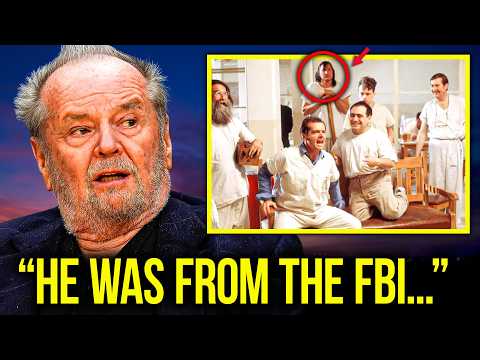
This wasn’t just a movie. It was a journey into madness. The film almost never happened. Kirk Douglas, not Jack Nicholson, was supposed to be Randall McMurphy. After starring in the Broadway version, Douglas purchased the film rights in 1963, convinced he’d created the role of a lifetime. But Hollywood slammed the door in his face for nearly a decade.
Every major studio rejected it. They called it too depressing, too controversial, too unmarketable. By the time independent financing was secured, Douglas had aged out of the role he’d fought so long to play. Telling my father he wouldn’t be playing McMurphy was one of the hardest conversations I’ve ever had, Michael Douglas admitted.
With Hollywood turning its back, the producers secured backing from a tiny company called Fantasy Films. Without studio executives breathing down their necks, they made a critical decision: film in an actual mental institution with real patients as extras. They filmed inside Oregon State Hospital, a functioning psychiatric facility.
The worn linoleum floors, the institutional green walls—these weren’t set decorations. This was somebody’s reality. Dr. Dean Brooks, the hospital’s superintendent, didn’t just allow filming. He insisted we hire actual patients as extras and crew members, revealed producer Saul Zaentz. About 80 patients worked on the film.
The line between moviemaking and reality started blurring from day one. Next time you watch the basketball scenes or group therapy sessions, pay close attention. Some of those people aren’t actors at all. They’re real psychiatric patients whose genuine behaviors were captured on film.
Even more surprising, director Miloš Forman was the producers’ fifth choice. The first four turned it down. Forman, who had fled communist Czechoslovakia, saw something in the story that American directors missed. I recognized something familiar, Forman revealed. The mental hospital as a metaphor for the totalitarian system I had escaped. I understood this story in my bones.
Perhaps most shocking of all, Ken Kesey, who wrote the original novel, hated what they were doing with his story so much that he removed himself entirely from the production. The author of this beloved American classic never even watched the finished film. Kesey wanted the story told from Chief Bromden’s perspective, as it was in the novel. When that fundamental approach was changed, it created a rift that never healed.
This troubled path to production—a decade of rejection, a father’s dream deferred, a foreign director who saw America through outsider’s eyes, real patients working alongside actors, and the original author walking away—created a perfect storm of creative tension. What emerged wasn’t just a movie. It was a cultural revolution disguised as a film.
What happened on set wasn’t just filmmaking. It was a psychological experiment that blurred the line between performance and reality in ways that would never be allowed today. The cast didn’t just act in a mental institution. They lived in one. Jack Nicholson and the actors playing patients actually slept in the hospital wards for the first week of production—in actual patient quarters, following hospital routines, eating institutional food.
After a few days, we started to feel institutionalized ourselves, revealed Danny DeVito, who played Martini. The locked doors, the structured schedules, the constant supervision, it gets into your head. This immersion went far beyond method acting. It started affecting the actors’ actual mental states.
Sydney Lassick, who portrayed the emotionally fragile Cheswick, had the most disturbing experience. During filming, he began having trouble separating himself from his character. The line between acting and genuine emotional distress became dangerously thin. There were days when he would stay in character between takes, trembling and emotional, disclosed Brad Dourif, who played Billy Bibbit. The hospital staff became so concerned about his mental state that they suggested he sleep at a hotel instead of in the ward.
You read that correctly. The psychiatric staff became worried about an actor’s actual mental health during filming. But the most mind-blowing casting decision involved the extras. Look closely during group scenes and you’ll notice something extraordinary. Some of those background performers move differently, respond differently, exist differently on screen. That’s because they aren’t acting at all.
There’s a scene where McMurphy leads a basketball game in the yard, noted assistant director Herby Smith. If you look carefully, you’ll notice some of the players move and respond differently. Those are actual patients participating in the film. Next time you watch, pay special attention to those background faces. You’re not watching performances. You’re witnessing genuine human behavior captured on film.
The casting process itself was unlike anything done before or since. Forman arranged improvisational sessions where actors interacted with patients, with the patients not knowing who was who. Miloš would bring in several actors auditioning for each role, explained Michael Douglas. They would mingle with patients in the dayroom, staying in character. Then he would ask the patients which new patient seemed most authentic. Their insights often influenced his casting decisions.
Think about that for a moment. The most realistic portrayals of mental illness in cinema history were literally chosen by people with mental illness who thought they were evaluating new patients, not actors.
Perhaps the most remarkable discovery was Will Sampson, the Native American actor who portrayed Chief Bromden. He had never acted professionally before. He was working as a rancher and firefighter when the casting director found him through a car salesman who knew tall Native Americans in the region. When Will walked onto the ward, something extraordinary happened, recalled Louise Fletcher. The actual patients responded to him with a kind of reverence. They sensed something special about him.
This unprecedented collaboration between filmmakers and a mental health community created something that transcended traditional filmmaking. The behaviors, mannerisms, and interactions depicted in the film weren’t merely researched or imagined. They were observed, absorbed, and respectfully recreated by a cast that had literally lived among the very people they were portraying. Dr. Brooks insisted that this integration benefited the patients therapeutically. Several later credited the experience with helping their recovery—proving that sometimes the line between portraying healing and actually creating it can be remarkably thin.
When the American Film Institute ranked the greatest movie villains of all time, Nurse Ratched placed fifth—the highest-ranking female character on the list. What makes this achievement even more remarkable is that Louise Fletcher accomplished this without raised voices, without physical violence, without any of the obvious tools villains typically use to terrify us. But the shocking truth behind this performance is that Fletcher’s approach to Ratched wasn’t just acting. It was psychological warfare against her own castmates.
What almost no one knows is that Louise Fletcher was cast just days before filming began after dozens of established actresses had rejected the role. Anne Bancroft, Ellen Burstyn, Colleen Dewhurst, Geraldine Page, and Angela Lansbury all turned it down flat. No actress wanted to play her, Fletcher revealed. They all thought she was too horrible, too evil. I was the only one who saw her vulnerability beneath the controlling exterior.
But Fletcher’s preparation for the role went far beyond understanding Ratched’s psychology. She made a decision that would create genuine tension on set. She deliberately isolated herself from the camaraderie that developed among the other actors. While Nicholson and the actors playing patients bonded during their weeks living in the hospital wards, Fletcher maintained her distance, staying in separate accommodations and avoiding social interaction with the cast between scenes.
I didn’t want to be their friend, Fletcher admitted. I needed to maintain that sense of separation, that cool distance that Ratched embodies. It was lonely, but that loneliness informed the character. This self-imposed isolation didn’t just help her performance—it created authentic reactions from her co-stars. They weren’t just acting uncomfortable around Nurse Ratched. They were genuinely unsettled by Fletcher’s presence.
When Louise walked onto the set in that uniform with her hair perfectly arranged and that smile that never reached her eyes, we fell silent, remembered Danny DeVito. It wasn’t acting. We were genuinely intimidated. She embodied authority in a way that triggered something primal in us.
Fletcher’s unique background gave her insights into Ratched that no other actress could have brought to the role. Her parents were both deaf, and she had grown up interpreting the world for them, developing an extraordinary sensitivity to nonverbal communication and the power dynamics between caregivers and those dependent on them. Because my parents were deaf, I became hyper-aware of how people communicate beyond words, Fletcher explained. I understood how institutions can infantilize people with disabilities while believing they’re helping them. That’s exactly what Ratched does.
This insight led Fletcher to make a crucial decision about her performance. Nurse Ratched would never raise her voice. Her power would be expressed through absolute control of her emotions and environment. This restraint makes the few moments when her composure cracks—particularly after McMurphy’s assault—all the more shocking.
What viewers don’t notice is the subtle physical transformation Fletcher undergoes throughout the film. As Ratched’s control is increasingly threatened by McMurphy, her appearance becomes progressively more rigid and armored. Watch how her uniform changes, suggested costume designer Aggie Guerard Rodgers. It starts out white and somewhat flexible. By the end, it’s starched to the point of looking like armor, and the buttons resemble medals. We were creating a visual representation of her militaristic response to the threat posed by McMurphy.
The final element that completed this iconic performance was Fletcher’s voice—controlled, measured, never revealing emotion except through the most subtle modulations. She developed a specific way of speaking that suggested absolute certainty while maintaining a facade of therapeutic concern. You know, Billy, what worries me is how your mother is going to take this, she says in one of the film’s most chilling moments—a line delivered with such gentle menace that it has haunted audiences for decades.
After winning the Academy Award, Fletcher experienced something few Oscar winners ever face. People became genuinely afraid of her in real life. After Cuckoo’s Nest, I went to a party and people literally backed away from me, Fletcher recalled. They were afraid of me. That’s when I knew we’d created something powerful, but I also realized it might limit my career. She was right. Despite winning cinema’s highest honor, Fletcher found it difficult to land major roles afterward. She had created a villain so memorable, so perfectly realized, that audiences and casting directors had trouble separating the actress from the character.
But the most chilling revelation came from the deleted scene that test audiences couldn’t handle—a sequence so disturbing it was cut entirely. There was a scene where McMurphy’s lobotomized body was wheeled past the patients, and the camera lingered on their faces, revealed editor Richard Chew. It was too much. People walked out.
That cut scene embodied what made the film dangerous: it refused to look away. And that’s why it endures. Not because it’s comfortable, but because it’s true.
So here’s the question that lingers long after the credits roll: When the system demands your silence, do you keep your head down and survive—or do you fight, knowing the cost?
What would you have done in McMurphy’s shoes? Would you have thrown that first punch, or swallowed your pride and lived? Tell us in the comments—we read every single one.






