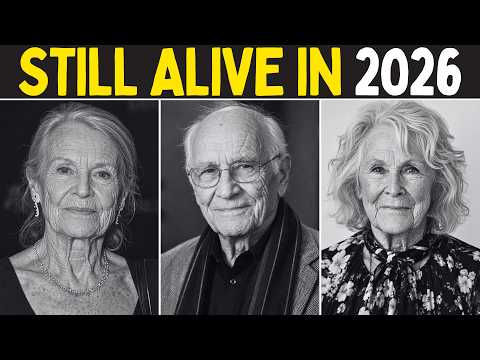
Did Hollywood really lose its greatest stars—or did the industry simply stop looking at them? While studios chase younger faces and endless remakes, dozens of screen legends are still alive in 2026, carrying stories today’s celebrities could never manufacture. And the final names are older than many films people now call ancient.
Subscribe now because Hollywood history disappears faster than most people realize.
Number 45: Ann-Margret. Explosive energy followed this performer into nearly every room she entered. She arrived during an era when studios wanted actresses to look glamorous but remain carefully controlled—she did not seem controllable. Her dancing, singing, and playful screen presence made even simple musical scenes feel dangerously alive. Bye Bye Birdie turned her into a sensation, while Viva Las Vegas paired her with Elvis Presley in one of the most electric screen partnerships of the 1960s.
Yet Ann-Margret proved she possessed more than excitement and beauty. Carnal Knowledge and Tommy brought Academy Award nominations, revealing dramatic vulnerability beneath the glamorous image. After a serious stage accident in 1972, she fought through injuries and returned to performing, surprising people who assumed her career was finished. Alive in 2026, she remains one of the last surviving performers who truly understood how to make Technicolor seem even brighter.
Number 44: Faye Dunaway. Perfection, ambition, and controversy have followed this actress for nearly her entire career. She did not build her reputation by appearing friendly or harmless. Her greatest characters often carried intelligence, desperation, pride, and a willingness to challenge every man standing in their way. Bonnie and Clyde turned her into an international star, helping push American cinema away from safe studio formulas. In Chinatown, she played Evelyn Mulwray with a fragile elegance that concealed devastating secrets. Then Network brought her the Academy Award for Best Actress as the ruthless television executive Diana Christensen.
Her performance in Mommie Dearest was initially attacked, only to become one of the most quoted and debated portrayals in popular culture. The film damaged her standing for years, but it also made her impossible to forget. Still alive in 2026, she remains a complicated symbol of New Hollywood—admired for her brilliance, criticized for her intensity, and remembered because she never seemed ordinary.
Number 43: James Brolin. A towering appearance and calm authority made this performer seem destined for success, but his path included rejection, television training, horror, science fiction, and even a narrowly missed opportunity to become James Bond. Everything changed with Marcus Welby, M.D. His portrayal of Dr. Steven Kiley earned an Emmy and two Golden Globes, making Brolin a major television figure. Film audiences later discovered him in Westworld and The Amityville Horror. Still alive and professionally active in 2026, Brolin has outlasted the contract system that first employed him.
Number 42: Patrick Stewart. Shakespeare, not science fiction, shaped the foundation of this actor’s career. He spent years with the Royal Shakespeare Company, developing a commanding voice and disciplined physical presence. When he was selected to lead Star Trek: The Next Generation, some observers doubted whether a bald English stage actor could replace the energy associated with the original series. Captain Jean-Luc Picard silenced those doubts. Stewart made intelligence feel heroic, turning diplomacy, moral debate, and personal restraint into gripping television. A second generation discovered him as Professor Charles Xavier in the X-Men films. Alive in 2026, Stewart stands among the rare actors who achieved worldwide fame relatively late, and then used it to keep exploring.
Number 41: Al Pacino. Intensity became his signature, but the quiet moments built his legend. He emerged from New York theater and nearly lost the role of Michael Corleone because studio executives questioned whether he possessed enough presence. Francis Ford Coppola defended him, and The Godfather became the beginning of one of cinema’s greatest transformations. At first, Michael barely speaks. By the conclusion, Pacino has turned him into a cold, isolated ruler. Serpico, Dog Day Afternoon, and The Godfather Part II confirmed that the performance was no accident. Later, Scarface created a louder, more explosive icon whose dialogue still echoes through popular culture. Still alive in 2026, Pacino remains an actor audiences discuss in extremes—but ignoring him has never been possible.
Number 40: Julie Christie. Sudden fame arrived during a decade that wanted new faces, new attitudes, and freedom from old studio rules. Julie Christie seemed to represent all three. Her rise began in Britain before Darling transformed her into the face of fashionable, restless 1960s London. The performance earned her an Academy Award and made her an international star. Greater popularity followed through Doctor Zhivago, where she played Lara, the woman at the emotional center of a romance disrupted by revolution and war. The close-ups of her face, framed by snow and candlelight, became among the most recognizable images of epic cinema.
Yet Christie repeatedly moved away from predictable stardom. In Fahrenheit 451, she played two contrasting women. McCabe and Mrs. Miller gave her a practical, guarded character in a revisionist Western, while Don’t Look Now placed her inside one of cinema’s most unsettling examinations of grief. Her performance in Away from Her brought another Academy Award nomination decades after her first triumph. Rather than chasing visibility, Christie protected her privacy and selected roles carefully. Alive in 2026, she remains an example of a star who became legendary, partly because she refused to let celebrity consume her.
Number 39: Jon Voight. One unforgettable walk through crowded New York streets changed the direction of this actor’s life. Midnight Cowboy made him a major figure. As Joe Buck, he arrived in the city wearing cowboy clothes and unrealistic confidence, only to discover loneliness, exploitation, and an unexpected friendship with Dustin Hoffman’s Ratso Rizzo. Deliverance placed him in another brutal journey, this time through the wilderness, where his character was forced to confront instincts hidden beneath a civilized exterior. His greatest award success came with Coming Home, playing a paralyzed Vietnam veteran whose anger slowly gives way to emotional connection. The role earned him the Academy Award for Best Actor.
Later work included Runaway Train, Heat, Mission: Impossible, Enemy of the State, Ali, and the television drama Ray Donovan. His public political positions have often divided audiences, creating debates that sometimes overshadow his acting. Still alive in 2026, Voight remains a performer whose best work refuses simple judgment. His characters frequently begin with confidence and end in uncertainty, revealing the fear, pride, and vulnerability hiding underneath masculine appearances.
Number 38: Christopher Lloyd. Wild white hair and enormous eyes eventually made him one of cinema’s most recognizable eccentrics, but serious theater came first. He spent years on stage before making his film debut in One Flew Over the Cuckoo’s Nest. Television made him famous through Taxi. His Reverend Jim Ignatowski seemed permanently confused by ordinary life, yet Lloyd gave the character warmth beneath the strange behavior. The role earned him two Emmy Awards. Then came Dr. Emmett Brown in Back to the Future. With frantic gestures and desperate warnings about time, Doc Brown became the role audiences would associate with Lloyd forever.
Other memorable roles followed in Who Framed Roger Rabbit, The Addams Family, Clue, Star Trek III, and Nobody. Whether playing a villain, professor, relative, alien commander, or mysterious stranger, Lloyd could make even a brief appearance feel larger than the surrounding film. Alive in 2026, he remains a beloved reminder that supporting actors sometimes create the characters audiences remember most clearly.
Number 37: Elliott Gould. Hollywood usually wanted leading men to appear polished and certain, but this performer became famous by looking as though he had just questioned every rule in the building. His breakthrough in Bob & Carol & Ted & Alice earned him an Academy Award nomination and captured the changing attitudes of the late 1960s. As Trapper John in Robert Altman’s MASH, Gould brought relaxed rebellion to a military comedy that challenged authority. He worked with Altman again in The Long Goodbye, transforming private detective Philip Marlowe into a confused outsider wandering through 1970s Los Angeles.
Gould’s career later slowed, but television and character roles brought him back to new audiences. He played Ross and Monica’s father on Friends and joined the criminal ensemble of Ocean’s Eleven and its sequels. His private life also connected him to Hollywood history through his marriage to Barbra Streisand, with whom he had actor Jason Gould. Still alive in 2026, Gould symbolizes a brief period when Hollywood allowed leading men to be awkward, anxious, and openly uncertain.
Number 36: Anthony Hopkins. Silence often creates more fear than shouting, and few actors understand that better than Anthony Hopkins. His early career developed through British theater, where he worked under the influence of Laurence Olivier and built the technical control that later defined his screen performances. Complete transformation came with The Silence of the Lambs. Hannibal Lecter appears for a surprisingly limited amount of screen time, yet Hopkins made every calm sentence feel dangerous. His controlled stare and precise voice earned him the Academy Award for Best Actor and created one of cinema’s most recognized characters.
Rather than become trapped by that success, he moved through Howards End, The Remains of the Day, Nixon, Amistad, The Mask of Zorro, and The Two Popes. In The Father, Hopkins portrayed a man experiencing a collapsing sense of reality. The performance earned him a second Academy Award decades after his first and demonstrated that age had deepened rather than weakened his abilities. Alive in 2026, Hopkins remains one of the most decorated and respected actors of his generation.
Number 35: Jane Fonda. Few Hollywood careers contain this many reinventions. She entered the industry beneath the shadow of her father, Henry Fonda, but quickly established an identity that repeatedly changed with the culture around her. Barbarella turned her into a symbol of 1960s fantasy, while Klute and Coming Home brought two Academy Awards. Her political activism created fierce controversy, especially after her visit to North Vietnam. Another transformation came through her exercise videos, which became a cultural and business phenomenon. Still later, Monster-in-Law, The Newsroom, and Grace and Frankie introduced her to generations born long after her first films. Alive in 2026, Fonda remains admired, criticized, and constantly discussed. Hollywood tried placing her into several boxes, and she repeatedly escaped every one.
Number 34: Dustin Hoffman. Nothing about the traditional leading man formula predicted this performer’s rise. When The Graduate placed him at the center of a major romantic comedy, his nervous uncertainty became the point, rather than a weakness. He immediately challenged that image with Midnight Cowboy, disappearing into the sickly and desperate Ratso Rizzo. Kramer vs. Kramer earned him the Academy Award for Best Actor, while Rain Man brought a second Oscar. Still alive in 2026, Hoffman remains central to the generation that replaced Hollywood glamour with emotional discomfort.
Number 33: Morgan Freeman. Recognition arrived slowly for the man who would eventually possess one of the world’s most recognizable voices. Major film stardom did not arrive until he was already past the age when Hollywood usually expects an actor’s breakthrough. The Shawshank Redemption gave Freeman perhaps his most enduring role. As Red, he narrates the story of imprisonment, friendship, and hope with a voice that feels both wise and wounded. Later, Million Dollar Baby earned him the Academy Award for Best Supporting Actor. Alive in 2026, Freeman represents the power of a career that matured rather than peaked early.
Number 32: George Takei. Behind the calm smile and famous voice stands a childhood shaped by one of America’s darkest wartime decisions. Takei was a young child when his Japanese-American family was forcibly confined in incarceration camps during the Second World War. Television viewers first knew him as Hikaru Sulu on Star Trek. Still alive in 2026, Takei is more than a surviving cast member from a famous series. He is a witness to injustice, a symbol of representation, and an entertainer who transformed painful memory into public education.
Number 31: Vanessa Redgrave. Acting was almost a family inheritance, yet talent, not ancestry, made this performer extraordinary. In Julia, Redgrave portrayed an anti-fascist activist whose courage changes the life of writer Lillian Hellman, earning her the Academy Award for Best Supporting Actress. The award ceremony became controversial when her political remarks received both applause and anger. Redgrave never allowed public criticism to silence her activism. Alive in 2026, she represents an older idea of the actor as public intellectual, someone expected not only to perform, but to engage with history and politics.
Number 30: Margaret O’Brien. Child stars from the studio era often vanished before adulthood, but this performer survived the system that once controlled nearly every part of her public image. Her greatest role came in Meet Me in St. Louis, playing Tootie, the mischievous youngest daughter of the Smith family. The Halloween sequence revealed her fearless energy, while the scene involving destroyed snowmen helped create one of the film’s deepest moments. Still alive in 2026, she is among the last people who can describe the MGM dream factory from personal experience.
Number 29: Alan Alda. Humor and intelligence rarely appeared as naturally connected as they did in the hands of this performer. Everything changed when he became Captain Benjamin Franklin Hawkeye Pierce in MASH. The series began as a military comedy, but evolved into a thoughtful examination of fear, friendship, medical responsibility, and the absurdity of war. Alda did more than act—he wrote and directed numerous episodes. After publicly revealing his Parkinson’s diagnosis, Alda continued performing and speaking with openness rather than retreating from view. Alive in 2026, he remains proof that warmth does not require simplicity.
Number 28: Woody Allen. Comedy clubs, television writing rooms, and small New York stages created the nervous screen personality that would eventually reshape American filmmaking. With Annie Hall, Allen combined comedy with emotional memory, fractured storytelling, and direct conversation with the audience. The film won Academy Awards for Best Picture, directing, screenplay, and actress Diane Keaton. His legacy remains fiercely debated because of long-running personal controversies and disputed allegations, which Allen has denied. Still alive in 2026, he remains one of American cinema’s most complicated surviving figures.
Number 27: Julie Andrews. A voice of remarkable clarity lifted this performer from difficult childhood circumstances to international stardom. Walt Disney cast her as the magical nanny in Mary Poppins, and Andrews won the Academy Award for Best Actress in her first major movie role. One year later, The Sound of Music turned her into one of the most beloved stars in cinema history. A surgical procedure in the 1990s permanently affected her singing voice, forcing another reinvention. Alive in 2026, Andrews remains a symbol of grace, but her real achievement is resilience.
Number 26: Sophia Loren. Poverty, wartime fear, and hunger shaped the childhood of a woman who would later embody international glamour. Her defining achievement came with Two Women, playing a mother attempting to protect her daughter during wartime chaos. She became the first actor to win an Academy Award for a performance primarily in a language other than English. Alive in 2026, Loren remains one of the final great international stars produced by post-war cinema—a performer who conquered Hollywood without surrendering the language, personality, and cultural identity that made her unique.
Number 25: Shirley MacLaine. A broken ankle belonging to another actress unexpectedly opened the door to one of Hollywood’s longest careers. After several nominations, she won the Academy Award for Terms of Endearment, playing the demanding but deeply loving Aurora Greenway. MacLaine also became famous for writing openly about spirituality, reincarnation, travel, and unexplained experiences. Later roles in Steel Magnolias, Postcards from the Edge, Downton Abbey, and Only Murders in the Building introduced her to new audiences. Alive in 2026, she remains fiercely individual, a performer who survived because she never allowed Hollywood to decide which parts of her personality were acceptable.
Number 24: Joan Collins. Before television audiences knew her as the queen of revenge, this British performer had already spent decades navigating studios on both sides of the Atlantic. Then Dynasty changed everything. As Alexis Carrington, Collins entered a successful series and made it a cultural phenomenon. Alexis wore extravagant clothes, delivered elegant insults, and battled her former husband Blake with relentless confidence. Alive in 2026, Collins remains one of entertainment’s great survivors. Hollywood offered her several possible endings, but she kept rewriting the story until she became more famous than many stars who had once received better opportunities.
Number 23: Carol Burnett. One tug of the ear became a private message shared with millions of viewers. The Carol Burnett Show made history by placing a woman at the center of a major network comedy variety program. The famous curtain dress from the Gone with the Wind parody remains one of television comedy’s greatest visual jokes. She continued appearing in programs such as Better Call Saul and Palm Royale, demonstrating precise comic timing long after her variety show ended. Alive in 2026, Burnett remains beloved not simply because she was funny, but because she made failure part of the entertainment.
Number 22: Michael Caine. That unmistakable London accent became proof that a working-class background did not need to be polished away before international success. His breakthrough in Zulu turned him into a serious film presence, while The Ipcress File introduced Harry Palmer, a spy far removed from James Bond’s luxury. Caine won supporting actor Oscars for Hannah and Her Sisters and The Cider House Rules. In 2023, he announced his retirement after The Great Escaper. Alive in 2026, Caine remains a model of endurance—more than 100 films, eight decades of work, and an identity Hollywood never managed to smooth into something less authentic.
Number 21: Kim Novak. A studio attempted to manufacture this actress as a replacement for another blonde star, but Kim Novak resisted becoming a product. Her most enduring performance came in Alfred Hitchcock’s Vertigo. As Madeline Elster and Judy Barton, Novak played a woman forced to become another man’s fantasy. Initially receiving mixed reactions, Vertigo eventually became recognized as one of cinema’s greatest films. Alive in 2026, Novak remains powerful precisely because she walked away. Her life challenges Hollywood’s assumption that fame must be maintained at any personal cost.
Number 20: George Chakiris. Movement came before dialogue for this performer. His life changed through West Side Story. Cast as Bernardo, leader of the Sharks, Chakiris brought physical authority, controlled anger, and tragic pride to the role. His performance earned the Academy Award for Best Supporting Actor. After that triumph, Hollywood struggled to offer roles equal to Bernardo, a familiar problem for performers from minority backgrounds. He eventually reduced his acting work and developed a successful career designing jewelry. Alive in 2026, Chakiris remains one of the last surviving principal performers from the original West Side Story film.
Number 19: Rita Moreno. One performer survived Hollywood stereotyping, typecasting, and decades of limited opportunities to become a member of the rare EGOT Club. Everything changed with Anita in West Side Story. Moreno’s energy drives America, while the later scenes reveal grief and anger beneath Anita’s confidence. The performance earned her the Academy Award for Best Supporting Actress, making her the first Latina acting winner. Later work included Oz, One Day at a Time, and Steven Spielberg’s new version of West Side Story. Alive in 2026, Moreno remains both entertainer and witness.
Number 18: Angie Dickinson. Confidence appeared effortless whenever this actress entered a scene, but her greatest roles depended on intelligence rather than glamour alone. As Feathers in Rio Bravo, she refuses to behave like a passive romantic interest. She later became one of television’s most important female crime stars through Police Woman. As Sergeant Pepper Anderson, Dickinson led an hour-long network drama during a period when women rarely occupied that position. Alive in 2026, Dickinson represents the difficult balance many actresses faced. Hollywood celebrated her beauty while often underestimating the control and wit beneath it.
Number 17: Barbara Bain. Cool concentration made this performer ideal for a series built around disguises, hidden identities, and impossible operations. As Cinnamon Carter in Mission: Impossible, Bain played an intelligence operative whose elegance concealed strategic skill. She won three consecutive Emmy Awards for the role. After leaving Mission: Impossible, she reunited with her husband Martin Landau in Space: 1999. Alive in 2026, Bain stands among the oldest surviving Emmy-winning television stars.
Number 16: Leslie Caron. A dancer from France became an international film star after Gene Kelly noticed her talent. Playing Lise opposite Kelly in An American in Paris, Caron entered cinema without years of film experience. She proved that she was more than a dancer through Lili, earning an Academy Award nomination. The L-Shaped Room presented her as a pregnant woman living independently in a worn London boarding house, earning another Oscar nomination. Alive in 2026, she is one of the final surviving stars associated with MGM’s grand musical era.
Number 15: Carroll Baker. Controversy arrived almost immediately for this actress, thanks to a film that challenged the limits of what Hollywood could show during the 1950s. Baby Doll made her famous, placing Baker at the center of a provocative battle between two men. Religious groups condemned its suggestive themes, and publicity transformed the young actress into a symbol of scandal. Europe offered a second career in Italian thrillers and dramas. Alive in 2026, Baker remains a fascinating survivor of both classical Hollywood and European exploitation cinema.
Number 14: Claire Bloom. A meeting with Charlie Chaplin gave this British actress the role that introduced her to international cinema. Chaplin selected her for Limelight, his melancholy story about an aging performer helping a young dancer recover her confidence. She played Lady Anne opposite Laurence Olivier in Richard III and brought emotional force to Look Back in Anger. Later films included The Spy Who Came in from the Cold, Crimes and Misdemeanors, and The King’s Speech. Alive in 2026, Bloom is an extraordinary link across eras.
Number 13: Vera Miles. One of cinema’s most famous showers often overshadows the woman who investigates what happened afterward. She reunited with Hitchcock for Psycho, playing Lila Crane, the determined sister searching for the missing Marion. Lila enters the Bates house, discovers the hidden figure in the cellar, and helps expose Norman Bates’s secret. Alive in 2026, Miles remains one of the last surviving performers to have worked extensively with both Hitchcock and Ford.
Number 12: Clint Eastwood. A television cowboy who was once dismissed by studio decision makers became one of the most powerful filmmakers in Hollywood. International stardom followed when Italian director Sergio Leone cast him in A Fistful of Dollars. Then Dirty Harry introduced Inspector Harry Callahan, a character whose methods created immediate controversy. Instead of remaining only an action star, Eastwood became a director. Unforgiven dismantled the mythology that had made him famous, earning Academy Awards for Best Picture and Director. Alive in 2026, Eastwood remains a remarkable contradiction, a symbol of tough individualism whose best films question violence, pride, and the very legends that created his career.
Number 11: Robert Wagner. Smooth charm made this actor seem perfectly suited to the studio system, but television ultimately gave him his most durable fame. He later starred with Stephanie Powers in Hart to Hart. As wealthy couple Jonathan and Jennifer Hart, they solved mysteries while maintaining a playful marriage. Younger audiences discovered Wagner as Number Two in the Austin Powers films, where his polished image became part of the joke. Alive in 2026, Wagner is among the final survivors of the 1950s studio contract era.
Number 10: Tippi Hedren. A television commercial changed this model’s life when Alfred Hitchcock noticed her face and decided he had discovered his next star. During the famous bedroom sequence in The Birds, Hedren endured days of live birds being thrown toward her, leaving her exhausted and injured. Marnie gave her an even more psychologically complex role. Hedren subsequently described controlling and inappropriate behavior by Hitchcock, saying her refusal damaged her career. Alive in 2026, Hedren remains more than Hitchcock’s discovery. Her later advocacy created a legacy that belongs to her alone.
Number 9: James Hong. Hundreds of credits were required before Hollywood finally placed this performer’s name on the Walk of Fame. His voice became equally recognizable through animation, especially as Mr. Ping, the loving goose father of Po in the Kung Fu Panda films. Late career recognition grew through Everything Everywhere All at Once. His Hollywood Walk of Fame star, awarded after a public campaign, felt long overdue. Alive in 2026, Hong represents extraordinary persistence. The industry changed around him because performers like Hong refused to vanish.
Number 8: Terry Moore. A childhood in front of cameras prepared this actress for nearly every version of Hollywood, from family adventures to serious drama and decades of public fascination. A dramatic breakthrough came through Come Back, Little Sheba, earning her an Academy Award nomination for Best Supporting Actress. Public attention also followed her claim that she had secretly married billionaire Howard Hughes aboard a ship during the 1940s. Alive in 2026, Moore is one of the final surviving actresses whose careers began before the Second World War ended.
Number 7: Marion Ross. Television audiences knew her as the reassuring mother of Happy Days, but Marion Ross had already worked for decades before entering the Cunningham family’s kitchen. As Marion Cunningham, she brought warmth to Happy Days without making the character foolish or invisible. Calling the Fonz “Arthur” became one of the show’s sweetest recurring details. Later appearances included The Drew Carey Show, Gilmore Girls, and voice work in animated programs. Alive in 2026, she remains one of the final major stars from television’s classic family sitcom era.
Number 6: Nancy Olson. One suspicious young writer walks into a decaying mansion and discovers that Hollywood’s glamorous past has become a prison. Nancy Olson played that writer in Sunset Boulevard, creating one of her generation’s most memorable supporting performances. As Betty Schaefer, Olson represented youth, ambition, and the possibility of an honest future. She appeared with William Holden in several other films, including Union Station and Force of Arms. Alive in 2026, Olson remains an invaluable witness to the creation of Sunset Boulevard.
Number 5: William Daniels. Several generations recognize this performer without realizing they are remembering different characters. Television later brought one of his greatest dramatic successes through St. Elsewhere. As Dr. Mark Craig, Daniels played an arrogant but brilliant surgeon whose sharp behavior concealed emotional complexity. Without appearing on screen, he became the voice of KITT in Knight Rider. Then Boy Meets World introduced Mr. Feeny. Alive in 2026 and approaching a full century of life, he remains a living connection between Broadway’s golden age and 1990s family television.
Number 4: Mel Brooks. Respectability was never the goal for this comedy legend. His first feature as director, The Producers, followed two men attempting to profit from a deliberately terrible Broadway musical. The premise was outrageous, but Brooks won the Academy Award for its screenplay. Blazing Saddles attacked racism and Western mythology through deliberate chaos. Young Frankenstein lovingly copied the visual style of old Universal horror films. Alive in 2026 after reaching 100 years of age, Brooks remains comedy’s joyful troublemaker.
Number 3: Dick Van Dyke. Almost no one moves with this much joy, especially after a full century of life. The Dick Van Dyke Show turned him into one of television’s defining performers. Film stardom followed through Mary Poppins. His Cockney accent as Bert became famously criticized, but the warmth, dancing, and imagination of the performance remained beloved. In December 2025, he celebrated his 100th birthday. Still alive in 2026, Van Dyke seems to represent something larger than career survival.
Number 2: Lee Grant. Hollywood took more than a decade of work away from this performer, but it could not erase her talent. Instead, Grant became trapped in the Hollywood blacklist after refusing to cooperate with the House Un-American Activities Committee. When the blacklist weakened, Grant returned with extraordinary force. Her role in Shampoo earned the Academy Award for Best Supporting Actress. Down and Out in America won the Academy Award for Best Documentary Feature. Alive in 2026, Grant is one of the last surviving witnesses to the blacklist era.
Number 1: Eva Marie Saint. At the top of this countdown stands a performer whose life reaches back beyond talking pictures becoming Hollywood standard. In On the Waterfront, she played Edie Doyle, whose brother’s suspicious death brings her into conflict with Marlon Brando’s Terry Malloy. The dropped glove scene became a master class in natural screen behavior. Alfred Hitchcock cast her opposite Cary Grant in North by Northwest. On July 4th, 2026, Eva Marie Saint reached the age of 102. She remains the living witness, and the final curtain has not fallen.
These 50 legends prove that classic Hollywood is not only history—part of it is still living among us. Their careers survived changing studios, changing audiences, public controversy, retirement, and the passing of nearly every co-star around them. Which surviving star surprised you most, and whose movies will you watch next? Share your answer below, like the video, subscribe to the channel, and help us keep these remarkable names alive for viewers who almost forgot them completely—until today.
Report this article
Select a reason for reporting:






