Fame could give them money, mansions, doctors, headlines, and escape from almost anything—except the moment a parent learns their child is gone. For these Hollywood legends, the spotlight could not shield them from the darkest tragedy of all: burying a child. From drowning accidents to sudden illnesses, from tsunamis to overdoses, the stories that follow are not about red carpets or Oscars, but about the raw, unthinkable grief that unites parents across every walk of life.
In the glittering world of Hollywood, where success is measured in box office numbers and star power, these parents faced the ultimate loss. Their fame may have brought them wealth and adoration, but it could not protect their children from fate. These are the stories of Anthony Quinn, Johnny Carson, Paul Newman, Charlie Chaplin, and many others—each one a painful reminder that grief knows no boundaries.
Anthony Quinn’s little boy drowned in a lily pond on W.C. Fields’ property. Christopher Quinn was just two and a half years old when he slipped away from his grandparents’ home in Los Angeles and wandered onto the nearby estate of the famous comedian. Fields was not home. Neither were Anthony Quinn nor his wife Katherine DeMille Quinn. The boy was found in the water and despite the desperate efforts of firefighters, he could not be revived. He was buried at Hollywood Forever Cemetery. Fields later had the pond filled in—a silent, permanent gesture of remorse.
Johnny Carson’s middle son, Rick, was 39 when his four-wheel-drive vehicle plunged 124 feet down a steep embankment near Cayucos, California. He had gone there to take photographs, his passion away from the glare of his father’s television empire. When Carson returned to The Tonight Show after his son’s death, he ended the broadcast by showing Rick’s photographs—one of wildflowers in the desert—and spoke quietly about the son he had lost. It was a rare, vulnerable moment from the king of late night.
Paul Newman’s only son, Scott, died at 28 from an accidental overdose of Valium and alcohol in a West Los Angeles hotel room. He had spent years trying to escape the shadow of his father’s name, working as an actor and stuntman under the professional name William Scott. In 1980, Paul Newman established the Scott Newman Center for drug abuse prevention and education—turning his grief into a mission that would help others avoid the same fate.
Charlie Chaplin’s first child, Norman Spencer Chaplin, lived only three days. Born with serious health problems, he died on July 10, 1919. That same day, work at Chaplin’s studio stopped. The daily production report recorded the reason in one stark line: “Did not shoot. Norman Spencer Chaplin passed on today, 4:00 p.m.” The baby was buried at Inglewood Park Cemetery, his grave marker bearing the family nickname “The Little Mouse.”
Vanessa Redgrave’s daughter, Natasha Richardson, was 45 when she fell during a beginner ski lesson in Quebec. At first, the fall did not seem serious—she refused medical help and even turned away an ambulance. But within hours, her condition worsened. She died two days later from an epidural hematoma. Years later, Vanessa Redgrave said she would never be reconciled to her daughter dying in the snow. Natasha left behind her husband Liam Neeson and their two sons.
Mary Tyler Moore received the call on October 15, 1980, that her only child, Richie, was dead. He was 24 and had been handling a small shotgun when it fired. The death was later ruled accidental, but the weapon—known as a “snake charmer”—was eventually taken off the market because of its hair-trigger instability. Moore later scattered his ashes into the Owens River in California.
Patricia Neal and Roald Dahl lost their seven-year-old daughter Olivia to measles encephalitis in 1962. Dahl later wrote about reading to her in bed, showing her how to make small animals from colored pipe cleaners, and hearing her say, “I feel all sleepy.” Within twelve hours, she was dead. Years later, Dahl used her story in a public appeal urging parents to immunize their children—a vaccine that could have saved her life.
Barbara Eden’s only child, Matthew Ansara, struggled with drug addiction for years. He was engaged and seemed to be turning his life around when he was found dead in his pickup truck at a gas station in 2001. He was 35. The death was attributed to an accidental heroin overdose. Eden had tried for years to become a mother—and then spent years watching her son battle his demons.
Gregory Peck’s eldest son, Jonathan, was found dead at his home in Santa Barbara in 1975. He was 30. Authorities described the death as self-inflicted. Peck later said his son had been under pressure from overwork, a failed love affair, and illness. More than a decade later, Peck told people it was the most terrible thing that had ever happened to him and that a parent never gets over that kind of loss.
Bill Bixby’s six-year-old son, Christopher, died during a weekend ski trip with his mother in 1981. What began as a rare childhood infection—acute epiglottitis—moved fast, and despite an emergency airway procedure, he lapsed into a coma and suffered cardiac arrest. He died on March 1.
Carroll O’Connor’s adopted son, Hugh, died at 32 after years of drug addiction. On March 28, 1995, Hugh called his father and told him he intended to end his life. Carroll called police, but they arrived too late. O’Connor later named the man he believed had supplied drugs to his son, and a jury rejected the man’s slander claim against him.
The losses continue—Robert Redford lost his first child, Scott, to sudden infant death syndrome at just two and a half months old, and decades later lost his son James to liver disease. Marlon Brando’s daughter Cheyenne took her own life at 25 after her half-brother killed her child’s father. Richard Attenborough lost his daughter Jane and granddaughter Lucy in the 2004 Indian Ocean tsunami. Art Linkletter lost three of his five children—one to a fall, one to a car accident, and one to lymphoma.
Each of these stories is a reminder that fame, fortune, and adoration cannot protect anyone from the deepest pain a parent can know. And for some, the losses would not stop at one.
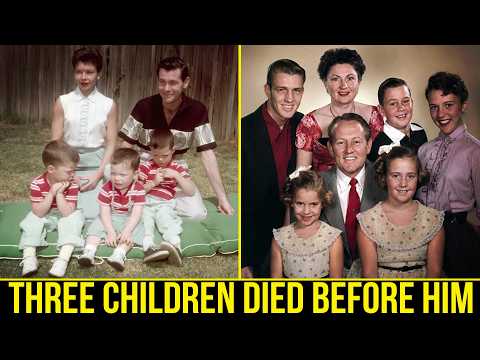
For Art Linkletter, the losses came in waves, each one more cruel than the last. His youngest daughter, Diane, was just 20 when she fell from a sixth-floor apartment in West Hollywood in 1969. Linkletter publicly blamed LSD and became one of America’s most visible anti-drug voices—but the official toxicology tests found no LSD in her body. His accusation was a public cry of grief, not a confirmed medical finding.
Then, in September 1980, his son Robert died in a car accident at 35. And in December 2007, another son, Jack, died of lymphoma at 70. Three of Art Linkletter’s five children died before their father did. He passed away in 2010 at 97, leaving behind two daughters who had survived him—a painful inversion of the natural order.
Robert Redford rarely spoke about his first son, Scott, who died of sudden infant death syndrome in 1959 at just two and a half months old. But in 2017, he reflected on how young he and his wife Lola were—he was 21, she was 20—when they lost their first child. More than sixty years later, Redford lost another son. James Redford battled primary sclerosing cholangitis for years, received two liver transplants in 1993, and founded an institute for transplant awareness. But the disease returned, and in November 2019, doctors found bile duct cancer. He died on October 16, 2020, at 58, at his home in Marin County.
Marlon Brando’s daughter Cheyenne was 20 and pregnant when her half-brother, Christian, fatally shot her child’s father, Dag Drollet, at Brando’s Los Angeles home in May 1990. Christian pleaded guilty to voluntary manslaughter and served a 10-year sentence. Cheyenne gave birth to her son, Tuki, the following month, but the trauma never left her. A French court in Tahiti later ruled her mentally disabled and unable to testify. She had made previous attempts on her life and spent time in psychiatric care.
On April 16, 1995, Cheyenne died at her mother’s home in Punaauia, Tahiti. Authorities described the death as self-inflicted—she had taken her own life by hanging. She was 25. Her son, Tuki, was raised in French Polynesia by members of the Drollet family, far from the Hollywood legacy that had brought so much pain.
Richard Attenborough’s eldest daughter, Jane Holland, was 49 when the Indian Ocean tsunami struck the coast of Khao Lak, Thailand, on Boxing Day morning in 2004. She was on holiday with her husband, Michael, their children Sam, Alice, and Lucy, and Michael’s mother, Audrey. The wave hit without warning. Early reports said 14-year-old Lucy died at the scene, while Jane and Audrey were missing and feared dead.
Michael and Sam survived. Alice, then 17, survived with serious injuries and was treated in a Thai hospital. Jane’s body was later identified, and Audrey Holland was also confirmed among the dead. Jane Attenborough Holland was 49. Lucy Holland was 14. Audrey was the third member of the family group confirmed dead after the tsunami—a single morning that took three generations from Richard Attenborough’s family.
These are the stories that no amount of fame could soften. The lily pond filled in by W.C. Fields. The photographs shown on The Tonight Show. The clinic founded in a dead son’s name. The vaccine appeal written by a grieving father. The ashes scattered into a river. Each one is a monument to a loss that never stopped hurting.
What binds these fifteen stories is not the fame that surrounded them, but the silence that followed. W.C. Fields filled in the pond. Johnny Carson showed the wildflowers. Paul Newman built a clinic in his son’s name. Grief took different shapes—some parents turned outward, some withdrew, and some never spoke of it again.
Charlie Chaplin’s studio report recorded a single line and then the cameras rolled again. Gregory Peck carried his son’s death for the rest of his life, telling people a parent never gets over that kind of loss. Vanessa Redgrave said she would never be reconciled to her daughter dying in the snow. These are not endings anyone chose—only endings they had to survive.
Perhaps that is why these stories still resonate. They strip away the red carpets and the Oscars and leave only the oldest, most human truth: a parent is never supposed to bury a child. Fame could give them everything except that one mercy.
Which of these stories stayed with you the longest—and why do you think we are so drawn to the private grief of public people? Share your thoughts in the comments below.
Report this article
Select a reason for reporting:






