You’ve heard of David Stirling and Paddy Mayne—the rebels who turned war into legend. But behind the chaos, one man held the SAS together when it nearly collapsed. His name was Pat Riley, and without him, the regiment might never have survived.
Born in Wisconsin in 1915, Riley grew up tough in a granite quarry before joining the Coldstream Guards. By 1941, he was in the Western Desert, part of an elite team under Jock Lewes. They called themselves the Tobruk Four, refining the tactics that would define the SAS.
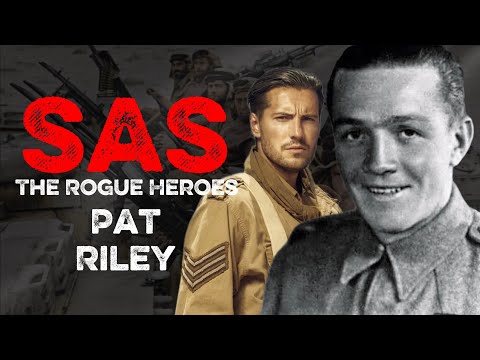
When Layforce disbanded, Stirling personally invited Riley to join L Detachment. Riley arrived at Kabrit and immediately adapted to the punishing training. But the first SAS mission, Operation Squatter, was a disaster—half the unit killed or captured. Riley’s aircraft was the only one to regroup intact.
Instead of collapsing, the SAS adapted. Riley, now Regimental Sergeant Major, was central to the recovery. Within weeks, SAS teams were destroying Axis aircraft in staggering numbers. 37 planes at Agheila, 27 at Tamet field. His discipline and methodical approach ensured standards were enforced.
In January 1942, Riley led one of the assault groups in a daring raid on Benghazi harbor. At 2:35 a.m., explosions lit the sky. Fuel tankers were destroyed, and the port was unusable for weeks. For his courage, Riley was awarded the Distinguished Conduct Medal.
As the SAS expanded, Riley took charge of training. He understood men, offering discipline without cruelty. He was also a stabilizing force—he once knocked Paddy Mayne unconscious to stop him from savagely beating another soldier.
By 1943, with Stirling captured and Lewes killed, Riley continued to serve under Mayne in Sicily and Italy. Later, he helped establish SAS training camps in Scotland and oversaw preparations for operations in France after D-Day.
After Germany’s surrender, Riley was deployed to Norway, then returned briefly to police work. But soon he volunteered for Malaya, helping shape modern special forces doctrine. He retired quietly, ran a hotel, and lived out of the spotlight.
In SAS Rogue Heroes, Pat Riley exists largely in the background. The real man was a founder, a fighter, a trainer, and a mediator. Without him, the SAS may not have survived long enough to become legendary.
But there’s one story that rarely gets told—the night Riley faced down a mutiny that could have ended the SAS before it ever became famous. It happened in early 1942, after the Benghazi raid. The men were exhausted, equipment was failing, and morale was dangerously low. Stirling was away, and whispers of resignation spread through the camp.
Riley called a muster. No speeches, no theatrics. He simply stood before them and said, “If you want to quit, quit. But do it tomorrow. Tonight, we fix the trucks.” Then he picked up a wrench and walked to the motor pool alone. One by one, the men followed.
That was Riley’s genius: he led by doing, not by shouting. He knew that soldiers don’t follow rank—they follow example. And in the months that followed, that quiet resolve became the backbone of the unit’s revival.
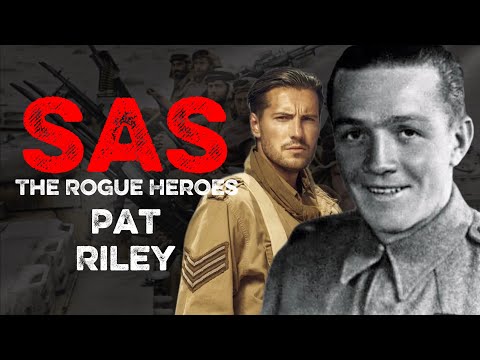
When the SAS finally disbanded in 1945, Riley didn’t mourn publicly. He simply shook hands with the men he’d trained and moved on. But his influence didn’t end there. In Malaya, he helped forge the Malayan Scouts into a capable counterinsurgency force, and his training methods—practical, relentless, and humane—became standard across British special forces.
Decades later, veterans still spoke of him with a mix of respect and affection. “Pat Riley never asked you to do anything he wouldn’t do himself,” one recalled. “And he’d do it twice as well.” That was the measure of the man.
He died in 1999, aged 83, largely unknown to the public. But in the quiet corners of Hereford and among those who wore the winged dagger, his name carries weight. Because legends aren’t built on noise alone—they’re built on the steady hands that hold everything together.
But the story that veterans told most often wasn’t about Benghazi or the airfields. It was about a night in the Scottish highlands, months before D-Day, when a training exercise went catastrophically wrong.
A young recruit—barely nineteen, fresh from the Home Counties—broke his leg on a night navigation course and lay shivering in a freezing bog for hours before anyone noticed he was missing. When Riley found out, he didn’t shout at the instructors. He didn’t write anyone up. He simply ordered the entire camp out of their bunks and led them himself back into the hills to find the boy.
They carried him down on a makeshift stretcher at four in the morning, Riley taking the heaviest corner without a word. “If one of us is lost,” he told the shivering men afterward, “we’re all lost. That’s the whole bloody point.”
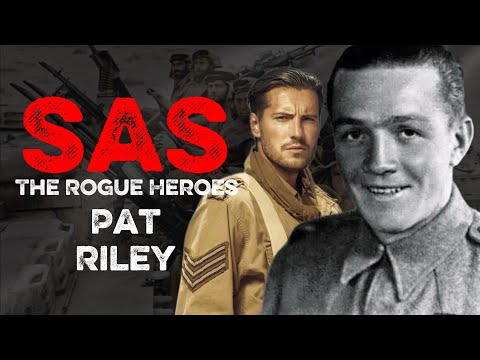
That lesson stuck. It became an unspoken rule in the SAS: no man left behind, not in combat, not in training, not ever. And it was Riley—not Stirling, not Mayne—who drilled it into them.
There was another side to him, too. The men who served under Riley remembered his dry, understated humor. Once, during an inspection, a young officer complained that Riley’s boots weren’t polished to regulation standard. Riley looked down at them, then back at the officer, and said, “They’re covered in sand from the desert where I earned them. You want me to polish that off?” The officer said nothing more.
But perhaps the most revealing story came from his time in Malaya. By then Riley was in his late thirties, a major with years of jungle fighting behind him, and he was training Malayan Scouts who had never seen combat. One recruit, terrified before his first patrol, confessed his fear to Riley. Instead of a lecture, Riley simply said, “Good. Fear keeps you sharp. Now pack your kit and stop wasting daylight.”
He led that patrol himself. And every man came back.
When Riley finally left the army, he didn’t write a memoir. He didn’t give interviews. He ran a hotel in the west of England, kept a garden, and rarely spoke of the war. But old comrades still found him. They’d turn up unannounced, share a drink, and swap stories. He never turned anyone away.
One of those visitors, decades later, asked him why he’d never sought recognition. Riley thought about it for a moment, then shrugged. “The regiment’s still standing,” he said. “That’s recognition enough.”
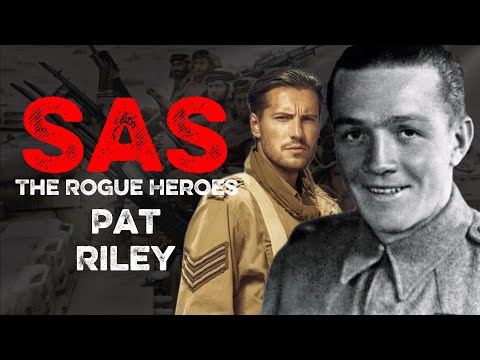
His wife Kay was the center of his quiet life, and when she died in 1996, something in him dimmed. He followed her three years later, in 1999, at the age of eighty-three. His funeral was small. But among the mourners were men who had served under him in the desert, in Sicily, in France, and in the jungles of Malaya—men who had become soldiers because Pat Riley showed them how.
Today, the SAS is one of the most feared and respected special forces units in the world. Its legend was built on daring raids and larger-than-life characters. But legends need foundations. And Pat Riley was one of the men who poured the concrete.
He never asked for the spotlight. He never needed it. He just did the work—quietly, relentlessly, and without complaint. And in the end, that’s what made him one of the true Rogue Heroes.
So when you watch SAS Rogue Heroes and see the explosions, the egos, the chaos—remember the man in the background with the wrench. The one who fixed the trucks, carried the stretcher, and knocked out Paddy Mayne when it mattered.
Because history’s loudest stories are rarely its most important ones. Pat Riley never sought the spotlight—he just made sure the lights stayed on.
And maybe that’s the truest kind of hero: the one who builds something that outlasts him, then walks away without asking for credit.
So here’s the question for you: who’s the unsung hero in your own life—the one who never gets the spotlight but holds everything together? Drop their story in the comments below. Sometimes history doesn’t need a rewrite—it just needs to be told properly.
Report this article
Select a reason for reporting:






